Introduction
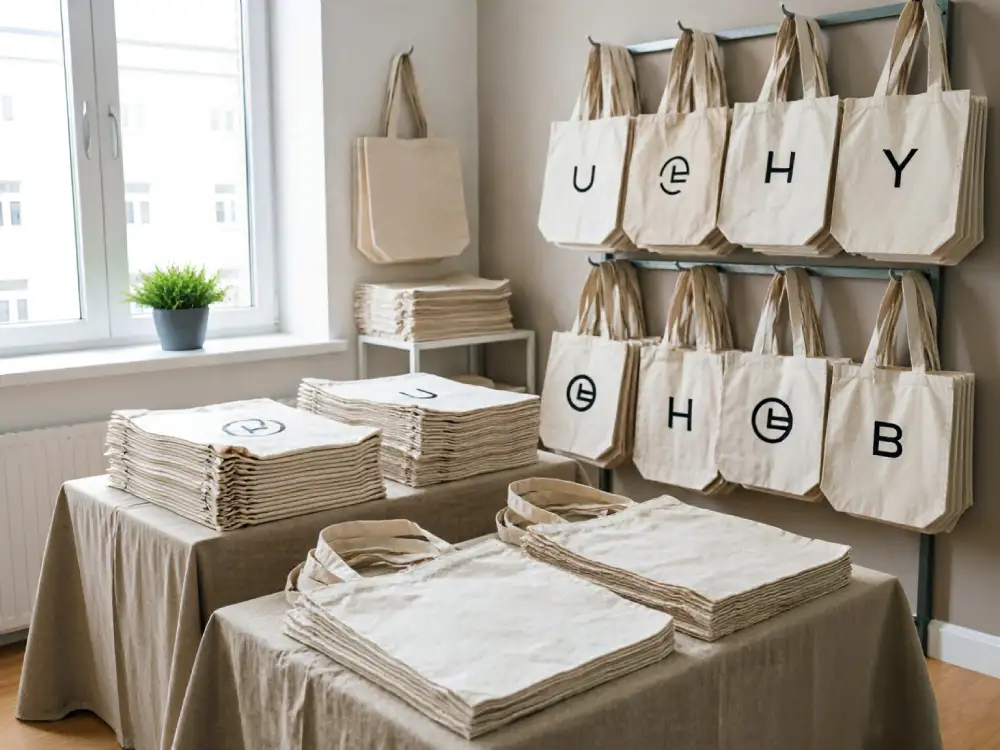
For businesses looking to scale packaging, retail carry solutions, or promotional merchandise, sourcing wholesale tote bags is no longer just a price exercise. It has become a strategic purchasing decision that affects unit economics, brand presentation, stock planning, and long-term supplier stability. From supermarket checkout programs to branded event giveaways, bulk tote bag purchasing must balance material quality, customization needs, shipping efficiency, and repeat-order reliability.
Many brands are also shifting away from disposable packaging toward reusable formats that create longer-lasting customer value. That shift is one reason demand continues to grow for cotton tote bags for sustainable everyday carry, especially among retailers and promotional buyers looking for practical bags that remain useful long after the initial transaction.
This guide explains how pricing works, why MOQ matters, what suppliers should be able to deliver, and how buyers can make more reliable volume purchasing decisions without sacrificing quality or branding impact.
What Are Wholesale Tote Bags and Why Businesses Buy in Bulk
Wholesale tote bags are tote bags purchased in larger quantities directly from manufacturers, factories, or bulk suppliers, usually at lower per-unit cost than small-volume sourcing. They are widely used in retail, bookstores, lifestyle brands, corporate promotions, trade shows, supermarkets, and gift programs where repeat usage and brand visibility matter.
Businesses buy in bulk for several practical reasons. The first is cost efficiency. Higher order volumes spread setup, material conversion, and print preparation across more units. The second is consistency. A wholesale program ensures the same size, stitch quality, color, and print appearance across multiple locations or campaigns. The third is operational predictability, because repeat orders become easier when specifications are standardized.
Bulk buying is also often driven by branding goals, not just packaging demand. Many companies do not purchase totes only to carry products. They also want repeated customer exposure in public spaces, events, and daily commuting scenarios. That is why custom tote bags for brand reach and recognition have become an increasingly important part of both retail merchandising and promotional planning.
Materials, Structure, and Technical Specifications
Cotton, Canvas, and Related Fabric Options
The material of a tote bag strongly influences price, print performance, durability, and perceived value. Standard cotton is often chosen for lower-cost promotions and general retail use. Canvas, which is typically made from heavier cotton yarns and a denser weave, is preferred when buyers want a more structured appearance and higher carrying confidence. Recycled cotton can support sustainability messaging, although consistency and surface smoothness may vary depending on blend and processing.
Canvas is especially relevant when businesses want a thicker handle feel, stronger shape retention, and a more premium finish. In these cases, suppliers are often asked to develop solutions closer to personalized canvas tote bags for distinct brand expression, where structure and visual presentation matter as much as basic functionality.
GSM and Load Capacity
GSM, or grams per square meter, is one of the most useful technical references when comparing tote bags. Although GSM does not determine strength on its own, it helps buyers estimate thickness, hand feel, and likely usage category. Stitching, gusset design, handle attachment, and bag size also affect real-world performance.
| Material Type | Typical GSM Range | General Thickness Feel | Estimated Load Capacity | Typical Business Use |
|---|---|---|---|---|
| Light cotton | 120–140 gsm | Thin | 3–5 kg | Promotions, events, lightweight retail items |
| Medium cotton | 150–200 gsm | Moderate | 5–8 kg | General retail, branded giveaways, bookstore bags |
| Heavy canvas | 220–300 gsm | Thick | 8–12 kg | Supermarket, premium retail, long-life reusable programs |
Structural Features That Affect Cost and Performance
Beyond fabric weight, several construction details affect both price and usability. Common examples include bottom gussets, side gussets, reinforced cross-stitching at handle joints, inside overlock seams, and custom handle length. A bag designed for supermarket or commuter use may require a deeper gusset and stronger stitching than a trade show giveaway bag. Buyers should assess the complete bag structure rather than only comparing GSM or fabric description.
Pricing Structure of Wholesale Tote Bags
What Determines the Cost
The unit cost of wholesale tote bags is shaped by a combination of material, bag size, construction complexity, print method, number of colors, finishing requirements, order quantity, and final packing configuration. Larger bags consume more material. Heavier fabrics raise base cost. Special stitching or handle reinforcement adds labor time. Printing complexity also affects setup and production flow.
Custom printing is one of the biggest cost variables. A plain stock bag will almost always cost less than a bag with multiple print colors, exact Pantone matching, or high-coverage artwork. This becomes even more noticeable when the project moves into branded, higher-visibility formats such as custom printed canvas tote bags for sustainable brand presence, where both material quality and print finish play a more important role in brand perception.
Indicative Bulk Pricing Logic
Although exact prices vary by specification, volume usually follows a predictable cost pattern. Smaller runs absorb setup and planning cost across fewer units. Mid-range volumes tend to offer more balanced economics. Higher-volume repeat orders usually produce the best per-unit outcome when the specification is stable.
| Order Volume | Typical Cost Trend | Best Used For |
|---|---|---|
| 500 pcs | Higher per-unit cost | Testing, pilot campaigns, market validation |
| 1,000–3,000 pcs | Moderate and practical | Regular wholesale purchasing |
| 5,000+ pcs | Best unit cost efficiency | Chain stores, major campaigns, repeat procurement |
MOQ Logic and Bulk Ordering Strategy
Why MOQ Exists
MOQ, or minimum order quantity, reflects the commercial reality of production. Fabric procurement, cutting, printing setup, sewing line preparation, quality control, and export packing all require time and cost before the first finished bag is completed. Manufacturers set MOQ so these fixed costs can be absorbed realistically. The more customized the project, the more important MOQ becomes.
Typical MOQ by Order Type
Simple cotton tote bags with limited print colors may start at lower minimums, while heavier canvas bags, customized dimensions, special handles, or advanced print requirements usually push MOQ upward. Buyers should not see MOQ only as a barrier. In many cases, it indicates the point at which production becomes commercially rational and quality becomes easier to stabilize.
How Smart Buyers Use MOQ Strategically
Experienced buyers often begin with a mid-sized validation order, then expand once the bag specification and demand pattern are proven. This reduces stock risk while still building a path toward better pricing. It is also common to improve sourcing efficiency by grouping multiple reusable bag formats under one supplier relationship. For example, some importers and retail buyers combine tote bag programs with cotton drawstring bags designed for lightweight reusable use to broaden their product offering while simplifying production coordination.
Comparison Analysis for Buyers
Wholesale vs Small-Volume Purchasing
| Factor | Wholesale Tote Bags | Small-Volume Buying |
|---|---|---|
| Unit cost | Lower | Higher |
| Customization | Stronger options | Often limited |
| MOQ requirement | Usually required | Often minimal or none |
| Supply consistency | Better for repeat orders | Less stable over time |
| Best for | Retail chains, wholesalers, campaigns | Trials, small events, urgent short runs |
Tote Bags vs Disposable Alternatives
Compared with disposable packaging, reusable tote bags deliver longer brand exposure and can reduce repeated packaging purchases over time. They also support stronger sustainability narratives when designed for real reuse rather than short-term novelty. This makes them especially attractive for bookstores, lifestyle retailers, food markets, cultural stores, and supermarket programs where the customer may reuse the bag repeatedly in daily life.
Real Business Use Cases
Supermarket and Grocery Programs
Supermarkets and grocery retailers often need high-volume tote bags that can carry mixed items while remaining cost-efficient. These buyers usually care most about reliable stitching, medium-to-heavy fabric weight, manageable carton packing, and supply continuity. Branding is important, but durability and carrying comfort remain the core performance criteria.
Bookstores and Cultural Retail
Bookstores, museum shops, and cultural retail spaces often choose tote bags because they combine practicality with lifestyle positioning. The bag becomes part of the brand experience. For these buyers, texture, shape retention, and print appearance may matter more than purely lowest cost sourcing.
Corporate Events and Promotional Campaigns
Corporate event buyers often use tote bags as commemorative packaging or branded giveaway tools. These programs may prioritize large printable areas, consistent logo placement, moderate fabric weight, and predictable delivery timelines. When the bag will be distributed publicly, branding clarity matters almost as much as bag cost.
Cost Structure, Logistics, and Supply Chain Planning
Freight and packing efficiency are often overlooked in early supplier comparisons. Two suppliers may quote similar bag prices, but total landed cost can vary depending on carton density, folding method, polybag use, pallet strategy, and shipping mode. A slightly better-packed tote bag program can reduce storage and freight inefficiency across large orders.
Lead time also affects purchasing success. Typical development samples may require around 5 to 7 days depending on artwork and specification. Bulk production often falls in the range of 15 to 30 days after sample approval, although order size, seasonal load, and fabric availability can shift actual timing. Buyers with recurring campaigns should build reorder planning into the sourcing schedule instead of relying on urgent replenishment.
Regulations, Sustainability, and Compliance
Buyers in Europe, North America, and Australia increasingly prefer reusable bag solutions that align with plastic reduction goals and broader sustainability expectations. However, sustainability claims should be used carefully. A tote bag is not automatically environmentally beneficial just because it is made from cotton. Durability, reuse frequency, and material sourcing all influence the credibility of the product’s environmental value.
Businesses should also verify applicable import, labeling, and material claim requirements in their target market. Claims such as “eco-friendly,” “reusable,” or “sustainable” should be backed by actual product design, sourcing logic, and, where relevant, certification status.
How to Choose a Reliable Tote Bag Supplier
A reliable tote bag supplier should be able to explain materials clearly, recommend GSM by use case, advise on print method, support repeatable quality, and communicate realistic MOQ and lead times. Buyers should also evaluate export experience, documentation discipline, and willingness to provide structured sampling before production.
Strong suppliers do more than quote prices. They help buyers reduce mistakes in size selection, handle construction, print placement, and packing efficiency. For businesses that need repeatable bulk supply, experienced manufacturers such as Youngpack, backed by Xiamen Youngpack Imp. and Exp. Co., Ltd., are better positioned to support long-term tote bag programs with more stable production and export coordination.
Conclusion
Wholesale tote bags should be evaluated as a sourcing system, not just as a low-cost product category. The strongest purchasing decisions are based on material suitability, print strategy, MOQ logic, operational consistency, and supplier reliability. Businesses that compare only the initial unit price often miss larger cost drivers such as freight efficiency, repeat quality, and reorder stability.
For most buyers, the best result comes from matching the bag specification to the business model. Lightweight cotton bags may suit promotions. Medium-weight cotton bags often work well for bookstores and general retail. Heavy canvas formats are stronger candidates for supermarkets and long-term reusable programs. When the supplier can deliver stable quality and realistic bulk planning, tote bags become more than packaging—they become a durable extension of the brand.
Frequently Asked Questions
1. What is the typical MOQ for wholesale tote bags?
Most suppliers require a minimum order quantity of 500 to 1000 pieces, depending on the bag material, printing method, and level of customization. Simpler stock-style bags may allow lower order thresholds, while fully customized wholesale tote bags usually require higher MOQs because of setup costs, material preparation, and print production planning.
2. How much do wholesale tote bags cost?
The cost of wholesale tote bags varies according to fabric type, GSM, bag size, stitching, printing method, color quantity, and total order volume. Lightweight cotton bags generally cost less than heavy canvas bags, and larger bulk orders usually reduce the per-unit price significantly. Buyers should compare total landed cost rather than only the initial quoted unit price.
3. Are cotton tote bags better than plastic bags?
For many business applications, cotton tote bags offer stronger long-term branding value and better reuse potential than plastic bags. Their commercial advantage comes from repeated use, improved brand visibility, and alignment with sustainability-focused packaging strategies. However, the actual environmental benefit depends on product durability, frequency of reuse, and the sourcing quality of the material.
4. Which printing method is best for bulk orders?
Screen printing is generally the best option for bulk orders because it offers a strong balance between durability, color consistency, and cost efficiency at higher volumes. Digital printing can be useful for smaller runs or more complex artwork, but for large-scale wholesale tote bag production, screen printing remains the most practical and widely used choice.
5. How do I choose a reliable tote bag supplier?
A reliable tote bag supplier should demonstrate stable production capacity, consistent fabric quality, dependable stitching standards, printing expertise, export experience, and clear communication. Buyers should also verify MOQ logic, lead time, sample support, and the supplier’s ability to handle repeat bulk orders without large quality variation between production runs.
Content Ownership:
The text, structure, and packaging insights shared in this article belong to Xiamen Youngpack Imp.and Exp.Co.,Ltd. Please contact us before reusing any part of this content.