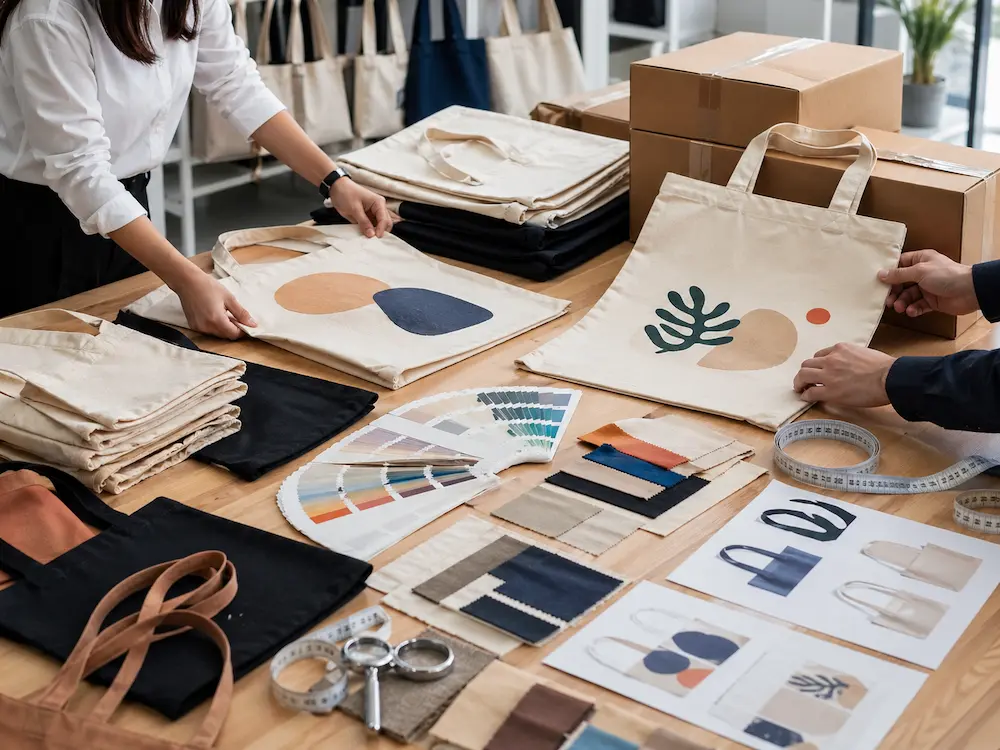
Buyers ask about durability all the time, but many still judge it too quickly. They squeeze the fabric, look at the thickness, and assume they know whether the tote bag will last. That is not enough. Some bags feel heavy and still fail early. Some simpler bags last surprisingly well because the specification is more honest and the construction is better thought through.
The truth is simple: what makes a tote bag durable is not one thing. It is a system. Fabric matters, but so do seams. Handles matter, but so does how they are attached. Bag shape matters, but so does what the user will actually put inside it. The bag has to survive real use, not just look acceptable in a sample room.
This is why businesses that want long-term reusable branding need to understand durability in practical terms, not just in marketing language.
Durability Starts with Honest Product Use
The first question is not “How strong is the fabric?” It is “What will this bag really carry?” A tote bag designed for brochures and light giveaways does not need the same kind of durability as a supermarket bag carrying bottles, boxed groceries, or books. Problems begin when buyers ask light-use bags to do heavy-use work.
This is why the same bag can feel durable in one project and weak in another. The bag is not failing randomly. It is being used outside the job it was really built for. A proper durability decision therefore starts with defining the real carrying pattern: daily errands, books, groceries, retail shopping, gifting, event use, or something else.
For general everyday use, products such as cloth tote bags can be very durable when the expected load stays within their natural use range. The same bag may disappoint if forced into grocery-level stress every week.
Fabric Weight Matters, but It Is Not the Whole Story
Fabric weight is one of the clearest durability indicators because heavier fabric usually gives the bag more body and more resistance to wear. A low-GSM tote tends to be softer, lighter, and better for light promotional use. A heavier canvas tote usually feels more reliable for repeat shopping or bookstore use.
But fabric weight alone is not enough. A heavy bag with weak sewing can still fail. A medium-weight bag with proper reinforcement can still perform very well. That is why experienced buyers treat fabric weight as one important sign, not as the whole quality verdict.
For stronger long-term reusable branding, products related to canvas tote bag printing often perform well because the canvas base usually supports better structure and stronger product life than lighter event-grade fabric.
Canvas Usually Feels More Durable Than Basic Cotton
In most practical sourcing situations, canvas has the advantage over lighter standard cotton because it is denser, stronger-feeling, and more resistant to repeated load stress. That is why so many shopping totes, retail merchandise bags, and premium reusable programs move toward canvas instead of very light cotton.
Canvas does not automatically win every comparison, but it usually offers more margin for error. A heavier canvas tote can survive imperfect user behavior better than a lighter cotton tote because the base material gives the bag more support. This matters when the end user is not thinking about bag engineering at all and simply starts filling it with whatever they bought.
That is one reason why visible-use products such as custom printed canvas bags often create stronger long-term brand value. The bag is more likely to stay in circulation because it feels capable enough to keep using.
| Durability Factor | What Strong Bags Usually Have | What Weak Bags Often Lack |
|---|---|---|
| Fabric | Appropriate weight for intended load | Too light for real use |
| Handles | Secure attachment and reinforcement | Simple stitching with no stress support |
| Seams | Clean, consistent sewing | Loose stitching or uneven seam quality |
| Bag shape | Structure matched to product load | Flat design used for bulky heavy contents |
| Use-case fit | Specification matches real customer behavior | Bag asked to do more than it was built for |
Handle Reinforcement Is One of the Biggest Durability Tests
If there is one place weak tote bags reveal themselves quickly, it is the handles. The handle area takes repeated stress every time the bag is lifted, filled, or carried over the shoulder. A bag with decent fabric and weak handle attachment is still a weak bag.
Strong tote bags usually have cleaner handle positioning, reinforced stitching, and better load distribution where the handles join the bag body. This does not always mean complex engineering. It means the bag was built with actual carrying stress in mind. Weak bags often use minimal attachment logic that looks acceptable on a flat table but becomes unreliable in repeated use.
Buyers who want durable bags should inspect the handle area much more carefully than they inspect logo placement.
Seam Quality Often Matters More Than Buyers Realise
Seams are where fabric becomes a bag. If the seams are weak, the material can be excellent and still not save the product. Side seams, bottom seams, gusset joins, and handle attachment points all need consistent sewing quality if the tote is supposed to last.
This is where strong factories separate themselves from weak ones. Good sewing is not only about neat appearance. It is about stitch consistency, tension control, edge handling, and reinforcement where the bag experiences stress. A tote that is meant for repeated retail or shopping use should not rely on decorative-looking stitching without real structural value.
Durability is built through sewing discipline just as much as through raw material choice.
Bag Shape and Gusset Design Affect Real Strength
Durability is not only about how strong the material is. It is also about how the bag manages volume and weight. A flat tote carrying only flat items may perform well for a long time. The same flat tote filled with bulky groceries or boxed goods may become strained because the load is fighting the bag shape.
This is where gusset matters. A bag with depth usually handles mixed shopping loads more naturally because the contents sit better and the stress is distributed more honestly. A tote without enough space for real contents often experiences awkward pulling at seams and handles, which can shorten useful life.
So when buyers ask what makes a tote bag durable, the answer includes not only strong fabric but also a carrying shape that suits the real job.
Print Method Can Also Influence Long-Term Performance
Durability is not only about whether the bag stays physically intact. It is also about whether the bag stays visually acceptable. A tote bag may keep carrying fine while the print begins to crack, fade, peel, or lose visual strength. From a brand perspective, that still counts as durability loss because the bag is no longer representing the brand well in public.
This is one reason why simple, well-matched branding often outperforms overcomplicated decoration. Products such as promotional canvas tote bags with logo often work well when the branding is clear, durable, and aligned with the base fabric rather than forcing a visually fragile print strategy onto the bag.
The strongest tote bag is the one that stays structurally useful and visually respectable over time.
Durability Depends on Matching the Right Bag to the Right Audience
A bag can be technically strong and still feel weak in the market if it is being used by the wrong audience in the wrong way. Students may overload it with books. Grocery shoppers may put bottles and cartons inside. Event visitors may only use it once. Retail customers may keep it for years if it feels good enough. The same tote bag is judged differently by each use pattern.
This is why durability is not only a factory issue. It is also a market-fit issue. The buyer needs to predict what kind of stress the real user will create. If the user is likely to carry heavy mixed items, the bag should be built accordingly. If the user is likely to use it lightly but repeatedly, comfort and visual longevity may matter more than very heavy construction.
That is one reason why products like promotional canvas tote bags often sit in a strong durability zone. They usually combine better structure with enough brand value that users want to keep carrying them publicly.
Washability and Maintenance Also Affect Durability
A tote bag that can be cleaned and still stay presentable has a better chance of remaining in use. Dirt, stains, and general wear often decide whether the customer keeps carrying the bag, even when the stitching is still fine. This is especially true for everyday-use totes that travel through supermarkets, offices, public transport, and repeated shopping trips.
Durability in real life is partly emotional. If the bag feels too worn too quickly, the user may stop using it even if it has not technically failed. Strong material, practical color, and durable branding all help here because they allow the bag to age more gracefully instead of looking exhausted too soon.
What Usually Makes Tote Bags Fail Early
Most early failures come from predictable mistakes. Fabric too light for the intended job. Handles sewn without proper reinforcement. Poor seam quality. Oversized bags made from underbuilt material. Flat totes used for bulky heavy loads. Weak print choices that degrade quickly. In nearly every case, the problem is not mystery. It is mismatch or weak execution.
This is why “durable tote bag” should not be treated as a marketing adjective. It should be treated as a product result created by the right combination of specification and manufacturing discipline.
| Common Failure Reason | Why It Happens |
|---|---|
| Handle tearing | Insufficient reinforcement at the main stress point |
| Side seam opening | Weak sewing or overloaded bag shape |
| Bag sagging badly | Fabric too light for repeated load |
| Print wearing out too quickly | Decoration method not matched properly to fabric and use |
| Customer stops using the bag | Bag feels weak, awkward, or looks worn too soon |
How Buyers Should Evaluate Durability Before Ordering
The smartest buyers test the sample like a real user would. Put real items inside it. Check the handle attachment. Look at the seam consistency. Feel whether the fabric still makes sense once the bag is filled. Judge whether the bag feels naturally suited to the intended routine or whether it is already close to its limits.
Ask practical questions. What weight range is this bag really comfortable with? Is the handle reinforcement standard or upgraded? Is the gusset helping the bag carry properly? What print method was chosen and why? A reliable supplier should be able to answer these questions clearly instead of hiding behind general quality language.
The more realistically the sample is judged, the more honestly durability can be predicted.
How to Choose the Right Supplier for Durable Tote Bags
A reliable supplier understands that durability is not only about making the bag thicker. They should be able to explain which part of the product is carrying the stress, what fabric direction suits the use case, how the handles are attached, and where the bag may fail if the spec is underbuilt.
Suppliers who only recommend “heavier fabric” without discussing use case, construction, and print logic are not really giving strong durability guidance. The better partner is the one who connects durability to the bag’s actual commercial role and customer routine.
This is where Youngpack-style product thinking becomes valuable. A strong tote bag is usually the result of honest specification, not just heavier-looking material or louder factory claims.
Conclusion
What makes a tote bag durable is the combination of the right fabric, the right construction, the right reinforcement, the right bag shape, and the right product honesty. Durable bags are not only thick. They are correctly built for the weight, movement, and repeat use they will actually face.
The strongest tote bag is not the one that sounds strongest in a quote. It is the one that survives the user’s real routine while still looking and functioning like a bag worth carrying. Buyers who understand that usually choose much better products.
How Buyers Should Think About Tote Bag Durability
What durability really means: A durable tote bag is not only a bag that does not tear immediately. It is a bag that continues to function well, hold its shape reasonably, and remain presentable enough that people keep carrying it. Real durability includes both physical performance and continued everyday usability.
Why buyers often judge it incorrectly: The most common mistake is assuming that thicker fabric automatically means stronger bags. Fabric matters, but weak handle attachment, poor seam control, wrong bag shape, and mismatched use case can ruin durability very quickly. A bag should be judged as a full product system, not only by surface impression.
How buyers should evaluate durability properly: The strongest way to evaluate durability is to compare material weight, handle reinforcement, seam quality, bag structure, and real carrying use together. A bookstore tote, a grocery bag, a gift tote, and a trade-show bag may all be tote bags, but they do not need the same durability logic. The better bag is the one that is honestly specified for its real job.
Options businesses usually weigh: Most buyers compare lighter everyday-use cloth totes against stronger canvas programs, simple promotional value against long-term public reuse, and lower first cost against better product life. The better answer depends on whether the bag only needs light use or whether it must survive regular shopping, books, groceries, or repeated visible carry.
Considerations before bulk approval: Before approving the order, businesses should test the sample with realistic weight, check the handle attachment closely, inspect seam consistency, and judge whether the print and overall product still look respectable after repeated use. Durability should be tested through real handling, not only through showroom impression.
The broader takeaway: The strongest tote bags are usually not the ones with the loudest quality claims. They are the ones whose material, sewing, shape, and carrying role are aligned honestly. That is also where Youngpack naturally fits as a B2B manufacturing and export partner for brands comparing tote bag durability, customization, and long-term reusable value.
FAQ
1. What is the most important factor in a durable tote bag?
There is no single most important factor, because durability usually comes from several parts working together. Fabric weight matters, but handle reinforcement, seam quality, and the overall bag structure are just as important. A tote bag made from strong material can still fail if the handles are weak or the seams are poorly sewn. The most durable tote bags are usually the ones where material, stitching, and use case are matched honestly.
2. Are canvas tote bags more durable than cotton tote bags?
In many practical situations, yes. Canvas tote bags are usually more durable than lighter standard cotton tote bags because they tend to be denser, more structured, and better suited to repeated shopping or heavier everyday loads. However, a well-made cotton tote can still be durable if the use case is lighter and the construction is strong. The right material still depends on what the bag is actually expected to carry.
3. Why do tote bag handles fail first?
Handles usually fail first because they are the main stress point. Every time the bag is lifted, the handle attachment area takes the weight of the contents. If the handles are not reinforced properly or if the bag is overloaded repeatedly, the handle area becomes the first weak point. That is why buyers should inspect handle attachment and stitching much more carefully than they inspect the logo or the surface print.
4. Does a higher GSM automatically make a tote bag more durable?
Not automatically. A higher GSM usually means heavier fabric, which often improves strength and structure, but it does not guarantee durability by itself. If the sewing is weak, the bag shape is wrong, or the handles are poorly attached, a heavy fabric bag can still fail. Higher GSM supports durability, but the finished construction is what determines whether the bag actually performs well over time.
5. What should buyers test before ordering durable tote bags in bulk?
Buyers should test real samples with actual weight inside them. They should check the fabric feel, seam quality, handle reinforcement, gusset shape, and whether the print still looks appropriate for repeated use. They should also judge whether the bag matches the intended customer routine honestly. A tote bag is only truly durable if it can survive the way the end user will really carry it, not just the way it looks in a product photo.
References
- Preferred Fiber and Materials Market Report — Textile Exchange — Textile Exchange.
- Retail Packaging and Reusable Bag Sourcing Best Practices — professional sourcing reference.
- Responsible Sourcing and Product Communication in Textile Supply Chains — industry trade reference.
- Guide to Reusable Bags and Long-Term Use Value — industry best-practice sourcing reference.
- Sustainable Packaging Guidelines — Australian Packaging Covenant Organisation — APCO.
- Textiles and the Environment — European Environment Agency — EEA.
- Fashion on Climate — Global Fashion Agenda and McKinsey & Company.
- Green Guides for the Use of Environmental Marketing Claims — Federal Trade Commission — FTC.
Original Knowledge Statement:
This article is based on the packaging industry experience and product knowledge of Xiamen Youngpack Imp.and Exp.Co.,Ltd. All rights reserved.