Packaging SnapshotThe minimum order quantity (MOQ) for Retail Paper Bags depends on manufacturing efficiency, material selection, printing requirements, and production planning—not a fixed industry rule. Understanding these factors helps importers and retailers purchase more efficiently while improving inventory control and reducing overall packaging costs.
Introduction
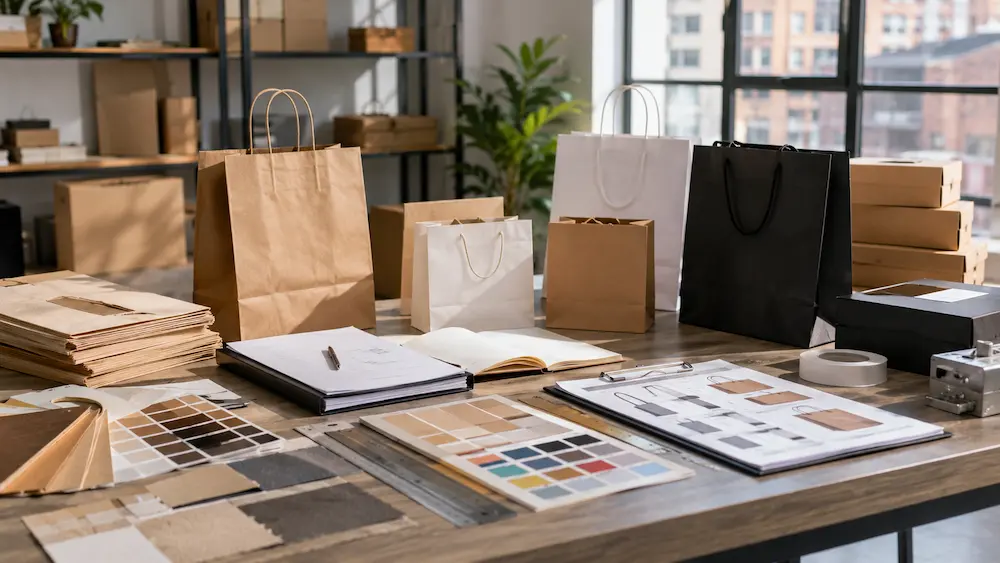
One of the first questions businesses ask when sourcing Retail Paper Bags is:
“What is your MOQ?”
Although the question sounds straightforward, the answer is rarely simple. Every Retail Paper Bags project is different, and the minimum order quantity varies according to the product specifications and manufacturing process.
Many first-time buyers assume that MOQ is simply a sales policy established by manufacturers. In reality, MOQ is closely linked to production efficiency, material utilization, machine setup, labour costs, and quality control. Manufacturers establish minimum production quantities so that every production run can operate efficiently while maintaining consistent quality and competitive pricing.
For retailers, distributors, importers, cafés, supermarkets, cosmetic brands, and fashion companies, understanding MOQ is not only about determining how many Retail Paper Bags to purchase. It is also about balancing procurement costs, inventory management, warehousing capacity, and future purchasing flexibility.
Professional buyers rarely focus on MOQ alone. Instead, they evaluate how production quantity affects unit cost, packaging consistency, logistics efficiency, and long-term supplier relationships.
This guide explains how MOQ is determined, which factors influence the minimum order quantity for Retail Paper Bags, and how businesses can make smarter purchasing decisions while maintaining premium packaging standards.
Why Do Manufacturers Set Minimum Order Quantities?
Many buyers believe manufacturers set high MOQs simply to increase order values.
However, the reality is quite different.
Before a single Retail Paper Bags order enters mass production, manufacturers must complete a series of preparation processes that require both time and resources.
Typical preparation includes:
- Purchasing paper materials
- Preparing printing plates
- Mixing printing inks
- Setting up printing equipment
- Adjusting bag-making machines
- Preparing handle attachment equipment
- Conducting production trials
- Establishing quality inspection standards
Whether a factory produces 500 Retail Paper Bags or 50,000 Retail Paper Bags, many of these preparation costs remain nearly identical.
Because these setup costs cannot be eliminated, manufacturers establish minimum order quantities that allow production to remain economically efficient while delivering stable product quality.
For experienced procurement teams, MOQ should not be viewed as a limitation. Instead, it represents the production efficiency required to manufacture Retail Paper Bags consistently, accurately, and at competitive prices.
Understanding this principle also helps buyers communicate more effectively with a professional Retail Paper Bags manufacturer, making negotiations more productive and realistic.
What Factors Affect the MOQ for Retail Paper Bags?
There is no fixed MOQ that applies to every project.
Several production variables directly influence the minimum quantity required for Retail Paper Bags.
Understanding these variables before requesting quotations helps buyers receive more accurate pricing while reducing unnecessary specification changes during production.
Paper Material
Paper selection is one of the most important factors affecting the MOQ of Retail Paper Bags.
Standard kraft paper is generally available with lower minimum order quantities because paper mills manufacture it in large volumes throughout the year. By comparison, specialty coated papers, textured papers, coloured papers, and premium art papers often require larger purchasing commitments from both suppliers and manufacturers.
Many environmentally conscious retailers begin with kraft paper bags for sustainable and natural packaging, allowing them to combine sustainable materials, stable production efficiency, and competitive MOQs without sacrificing premium appearance or durability.
When evaluating paper materials for Retail Paper Bags, buyers should compare:
- Brown kraft paper
- White kraft paper
- Recycled kraft paper
- Coated white paper
- Art paper
- Specialty textured paper
Selecting standardized materials usually provides greater purchasing flexibility, shorter production schedules, and more competitive pricing.
Printing Requirements
Printing complexity has a direct influence on MOQ.
Simple one-colour printing generally requires less machine preparation than fully customized packaging featuring multiple Pantone colours, full-colour graphics, metallic finishes, or specialty surface treatments.
Production requirements that commonly increase MOQ include:
- Multiple printing colours
- Pantone colour matching
- Full-colour CMYK printing
- Spot UV coating
- Hot foil stamping
- Embossing
- Debossing
- Matte or gloss lamination
Every additional production process increases machine setup time, production planning, and quality inspection requirements.
As a result, highly customized Retail Paper Bags typically require higher minimum order quantities than standard printed packaging.
Many brands begin with simplified printing specifications during their first production run and gradually introduce premium finishing options as annual purchasing volumes increase.
Bag Size Influences Production Efficiency
Bag dimensions are another important factor affecting the MOQ for Retail Paper Bags.
Standard bag sizes are usually easier for manufacturers to produce because the tooling, folding systems, and production settings have already been optimized.
Custom dimensions often require additional machine adjustments, increasing setup time and reducing production efficiency.
Businesses launching cosmetics, jewellery, confectionery, boutique fashion products, or promotional merchandise frequently begin with small paper bags for compact packaging and easy carry, allowing them to test new products while maintaining manageable inventory levels and practical minimum order quantities.
When selecting bag dimensions, buyers should evaluate:
- Standard versus custom sizes
- Material utilization
- Folding efficiency
- Handle positioning
- Carton packing efficiency
Choosing standard dimensions often gives buyers greater flexibility when negotiating MOQs while improving manufacturing efficiency.
Handle Construction Also Affects MOQ
Although the handle represents only one component of a paper bag, it has a noticeable impact on production planning.
Different handle types require different materials, production equipment, and assembly methods.
Common options include:
- Twisted paper handles
- Flat paper handles
- Cotton rope handles
- PP rope handles
- Ribbon handles
- Die-cut handles
Premium handles usually involve additional manual assembly or specialized equipment, increasing labour costs and production complexity.
When sourcing Retail Paper Bags, buyers should balance appearance, durability, production efficiency, and budget instead of selecting handle styles based solely on aesthetics.
MOQ Varies by Business Type
Different businesses purchase Retail Paper Bags for different reasons, so the ideal MOQ is rarely the same.
A local bakery may only require a few hundred Retail Paper Bags each month, while a national retail chain may consume tens of thousands during seasonal promotions. Likewise, an importer purchasing container loads of Retail Paper Bags will have very different inventory and logistics requirements compared with a boutique retailer.
Instead of pursuing the lowest possible MOQ, experienced procurement managers evaluate the quantity that provides the best balance between purchasing cost, warehouse capacity, cash flow, and future replenishment.
The following table provides a general reference for different industries.
| Business Type | Typical MOQ Range | Primary Purchasing Objective |
|---|---|---|
| Boutique Retail Store | 500–1,000 pcs | Flexible inventory management |
| Café & Bakery | 500–2,000 pcs | Frequent replenishment |
| Cosmetics Brand | 1,000–3,000 pcs | Premium brand presentation |
| Fashion Retailer | 2,000–5,000 pcs | Consistent retail packaging |
| Gift Shop | 1,000–3,000 pcs | Seasonal packaging |
| Supermarket Chain | 5,000–20,000+ pcs | Lowest long-term unit cost |
| Importer & Distributor | 10,000+ pcs | Container optimization |
These figures are general purchasing references rather than fixed industry standards. A professional Retail Paper Bags manufacturer will normally recommend the most appropriate MOQ according to your bag specifications, annual purchasing volume, production schedule, and shipping requirements.
For many growing brands, beginning with a moderate MOQ and increasing future order quantities is often a more practical strategy than placing an excessively large first order.
How to Reduce the MOQ for Retail Paper Bags
Many first-time buyers believe the MOQ is completely fixed.
In reality, manufacturers can often provide more flexible solutions when buyers understand how production efficiency works. There are several practical ways to reduce the MOQ for Retail Paper Bags while maintaining premium packaging quality.
Choose Standard Bag Sizes
Standard dimensions are already optimized for production.
Manufacturers can usually produce standard-size Retail Paper Bags more efficiently because the tooling, folding systems, and machine settings are already established.
Choosing standard sizes often reduces production preparation and makes lower MOQs easier to achieve.
Select Standard Paper Materials
Paper material directly affects purchasing flexibility.
Standard kraft paper is readily available throughout the year, while specialty papers usually require additional procurement from paper mills.
Many buyers who are launching new packaging programs begin with kraft paper bags for sustainable and natural packaging, allowing them to enjoy environmentally responsible materials together with more competitive MOQs and reliable production scheduling.
Once annual purchasing volumes increase, premium materials can be introduced without significantly affecting production efficiency.
Simplify Printing Specifications
Complex printing generally increases production costs and minimum order quantities.
If your first order is intended to test the market, consider reducing unnecessary decorative processes such as:
- Spot UV
- Foil stamping
- Embossing
- Debossing
- Soft-touch lamination
A clean, professional design often produces excellent branding results while keeping the MOQ for Retail Paper Bags more manageable.
Premium finishing can always be added to future production runs once demand becomes more predictable.
Combine Similar Products
Some manufacturers allow multiple artwork designs to share one production run when the specifications remain consistent.
For example, several Retail Paper Bags may use:
- The same dimensions
- The same paper material
- The same handle style
- The same printing process
while displaying different brand artwork.
This production method allows businesses to expand product variety without dramatically increasing minimum order quantities.
Discuss this option with your Retail Paper Bags supplier during the quotation stage.
MOQ Is Only One Part of the Total Purchasing Cost
Many buyers compare suppliers based solely on MOQ or unit price.
Professional procurement teams evaluate a much broader range of cost factors before making a purchasing decision.
The total investment in Retail Paper Bags includes:
- Manufacturing cost
- Printing cost
- Ocean or air freight
- Warehouse storage
- Inventory carrying cost
- Packaging handling
- Product turnover
- Future reorder frequency
A supplier offering the lowest MOQ may not provide the lowest overall purchasing cost.
Likewise, ordering significantly more Retail Paper Bags than necessary may reduce the unit price while increasing storage costs and tying up valuable working capital.
Instead of evaluating MOQ independently, successful buyers calculate the total cost of ownership over the entire purchasing cycle.
Businesses with stable annual demand often transition to paper bags wholesale for large scale packaging supply, allowing them to improve purchasing efficiency, reduce long-term packaging costs, simplify inventory planning, and establish stronger partnerships with experienced manufacturers.
Questions Every Buyer Should Ask Before Discussing MOQ
Instead of asking only,
“What is your MOQ?”
professional procurement managers ask questions that help them understand the supplier’s manufacturing capabilities.
Useful questions include:
- Can different artwork designs share one MOQ?
- Can multiple colours be printed during the same production run?
- Which standard bag sizes qualify for lower MOQs?
- Can repeat orders reduce the minimum order quantity?
- Which paper materials provide the greatest production flexibility?
- Can mixed SKUs be packed into the same shipment?
- Are sample orders available before mass production?
These discussions often uncover opportunities to reduce costs and improve production efficiency while maintaining the quality of Retail Paper Bags.
A knowledgeable Retail Paper Bags manufacturer will usually recommend production solutions that benefit both the supplier and the buyer.
Common MOQ Mistakes Buyers Should Avoid
Even experienced purchasing teams occasionally make decisions that increase procurement costs.
Understanding these common mistakes helps businesses make better long-term purchasing decisions.
Focusing Only on the Lowest MOQ
The lowest MOQ is not always the most economical option.
A slightly larger order of Retail Paper Bags may significantly reduce the unit price and improve overall purchasing efficiency.
Evaluate the complete procurement strategy rather than comparing MOQ alone.
Ordering More Than You Can Store
Ordering excessive quantities simply because the unit price is lower can create warehouse congestion, increase inventory costs, and leave businesses with outdated packaging if branding changes in the future.
Forecast actual sales demand before confirming production.
Ignoring Future Purchasing Plans
Businesses that communicate annual purchasing forecasts often receive better pricing, more flexible production scheduling, and improved supplier support.
Long-term cooperation benefits both the buyer and the manufacturer.
Frequently Changing Product Specifications
Constantly changing bag dimensions, paper materials, artwork, or handle styles reduces manufacturing efficiency and makes it more difficult to negotiate competitive MOQs for Retail Paper Bags.
Whenever possible, standardize specifications early and maintain consistency across future production runs.
Retail Paper Bags Procurement Checklist
Successful procurement begins long before a purchase order is issued. Professional buyers use standardized procedures to ensure every order of Retail Paper Bags meets the required quality, budget, and delivery expectations.
Before confirming production, review the following checklist with your Retail Paper Bags manufacturer.
| Procurement Item | What to Confirm |
|---|---|
| Bag Dimensions | Final width, gusset, and height are approved |
| Paper Material | Paper grade, GSM, and sustainability requirements confirmed |
| Printing Artwork | Final production files approved by all stakeholders |
| Brand Colours | Pantone or CMYK colours verified |
| Handle Type | Material, colour, and attachment method confirmed |
| Surface Finish | Matte, gloss, foil, embossing, or other finishes approved |
| Sample Approval | Physical production sample signed off |
| Carton Packing | Bags per carton and carton dimensions confirmed |
| Shipping Marks | Carton labels and destination information verified |
| Delivery Schedule | Production timeline and shipment date confirmed |
| Quality Inspection | Inspection standards agreed before shipment |
Completing this checklist before production minimizes unnecessary revisions and helps ensure every batch of Retail Paper Bags meets your brand standards.
Develop a Long-Term MOQ Strategy Instead of Focusing on Individual Orders
Many businesses negotiate MOQ for every order independently.
Experienced procurement managers take a different approach.
Rather than treating each purchase as a separate transaction, they develop a long-term purchasing strategy for Retail Paper Bags based on annual demand, sales forecasts, and product lifecycle planning.
A long-term strategy offers several advantages:
- More stable pricing throughout the year
- Improved production scheduling
- Better inventory planning
- Faster repeat orders
- Consistent packaging quality
- Stronger supplier relationships
When manufacturers understand your expected annual purchasing volume, they are often better positioned to recommend production schedules, optimize raw material purchasing, and provide more flexible MOQ solutions.
Long-term cooperation creates value for both the buyer and the supplier, resulting in a more efficient and reliable packaging supply chain.
Choosing the Right Manufacturer Matters More Than the Lowest MOQ
MOQ should never be the only factor when selecting a supplier.
The right Retail Paper Bags manufacturer contributes far more than production capacity. An experienced manufacturer can provide valuable advice on material selection, printing techniques, packaging optimization, and cost-saving opportunities that improve the overall purchasing process.
When evaluating suppliers, consider:
- Manufacturing experience
- Production capacity
- Quality management systems
- Material sourcing
- Printing technology
- Sustainability certifications
- Communication efficiency
- Sample quality
- On-time delivery performance
- After-sales support
A reliable manufacturer will work with you to find the most practical MOQ while ensuring your Retail Paper Bags meet the required standards for appearance, durability, and brand consistency.
MOQ is only one part of a successful sourcing strategy. Professional buyers evaluate supplier capabilities, production consistency, packaging quality, logistics efficiency, and long-term cooperation alongside minimum order quantities. Building a reliable manufacturing partnership often delivers greater value than simply negotiating the smallest possible order.
Conclusion
There is no universal MOQ for Retail Paper Bags because every packaging project has unique production requirements.
Paper materials, bag dimensions, printing complexity, handle construction, finishing options, and production efficiency all influence the minimum order quantity that a manufacturer can offer.
Instead of viewing MOQ as a purchasing barrier, successful businesses treat it as one element of a broader procurement strategy. By standardizing specifications, selecting practical materials, simplifying initial designs, planning inventory carefully, and building long-term relationships with experienced suppliers, buyers can optimize both purchasing costs and packaging performance.
Whether you are sourcing Retail Paper Bags for a boutique store, supermarket chain, café, luxury retailer, or international distribution business, understanding how MOQ is determined enables smarter purchasing decisions and more sustainable business growth.
The most successful procurement teams do not simply ask for the lowest MOQ. They seek the right balance between production efficiency, inventory management, cash flow, logistics, and long-term supplier collaboration. That balanced approach leads to consistent quality, stronger brand presentation, and greater value from every order of Retail Paper Bags.
FAQ
What is the typical MOQ for Retail Paper Bags?
There is no fixed MOQ for Retail Paper Bags. Standard products may start from around 500 pieces, while fully customized bags with special materials, printing, or finishes often require larger minimum order quantities depending on the manufacturer’s production process.
Why do custom Retail Paper Bags usually have higher MOQs?
Custom Retail Paper Bags require machine setup, printing plate preparation, colour calibration, material sourcing, and quality inspections. These fixed production costs make larger production runs more efficient and economical.
Can I reduce the MOQ for Retail Paper Bags?
Yes. Buyers can often reduce the MOQ by choosing standard bag sizes, using common paper materials, simplifying printing requirements, combining similar product specifications, and discussing flexible production options with the manufacturer.
Does a higher MOQ always mean a lower price?
Not necessarily. While larger orders often reduce the unit price, buyers should also consider freight costs, warehouse space, inventory carrying costs, and cash flow to determine the most cost-effective purchasing quantity.
How do I choose the right MOQ for my business?
The ideal MOQ depends on your sales volume, storage capacity, purchasing budget, product turnover, and future demand. A professional Retail Paper Bags supplier can help determine the most practical order quantity based on your business objectives.
What should I discuss with a Retail Paper Bags manufacturer before placing an order?
Before confirming production, discuss bag dimensions, paper material, printing specifications, handle type, sample approval, packaging method, quality inspection standards, delivery schedule, and future purchasing plans. Clear communication at the beginning of the project helps reduce production risks and ensures consistent packaging quality across every order.
References
- Forest Stewardship Council (FSC®) – Responsible Forest Management
- Sustainable Packaging Coalition (SPC) – Packaging Design Resources
- ISO 9001:2015 – Quality Management Systems
- ISO 18601 – Packaging and Environment
- TAPPI – Paper Testing Standards
- ASTM International – Paper & Packaging Standards
- European Paper Packaging Alliance (EPPA)
- Smithers – Global Packaging Market Research
Website Content Notice:Unless otherwise stated, all original articles published on this website are owned by Xiamen Youngpack Imp.and Exp.Co.,Ltd. and may not be copied or republished without authorization.