Paper Bags are widely used across retail, food service, and promotional packaging, but minimum order quantity remains one of the biggest concerns for buyers sourcing from China. This guide explains how MOQ works in real factory production, what typical order thresholds look like for different bag types, and how buyers can plan efficiently without increasing cost or risk.
Paper Bags are often evaluated based on appearance and sustainability, but from a manufacturing perspective, order feasibility and production stability matter far more. For buyers sourcing from China, understanding how minimum order quantity is calculated helps avoid unrealistic expectations and costly trial orders.
MOQ is not a sales barrier—it reflects how factories manage material procurement, machine setup, and labor efficiency during batch production.
Why Do Paper Bag Factories Set Minimum Order Quantities?
In paper bag manufacturing, every order requires preparation before production begins. Paper rolls must be allocated, machines calibrated, and cutting dies aligned. These steps involve fixed workload regardless of order size.
When quantities fall below a practical threshold, setup cost and material waste increase significantly, making stable quality difficult to maintain.
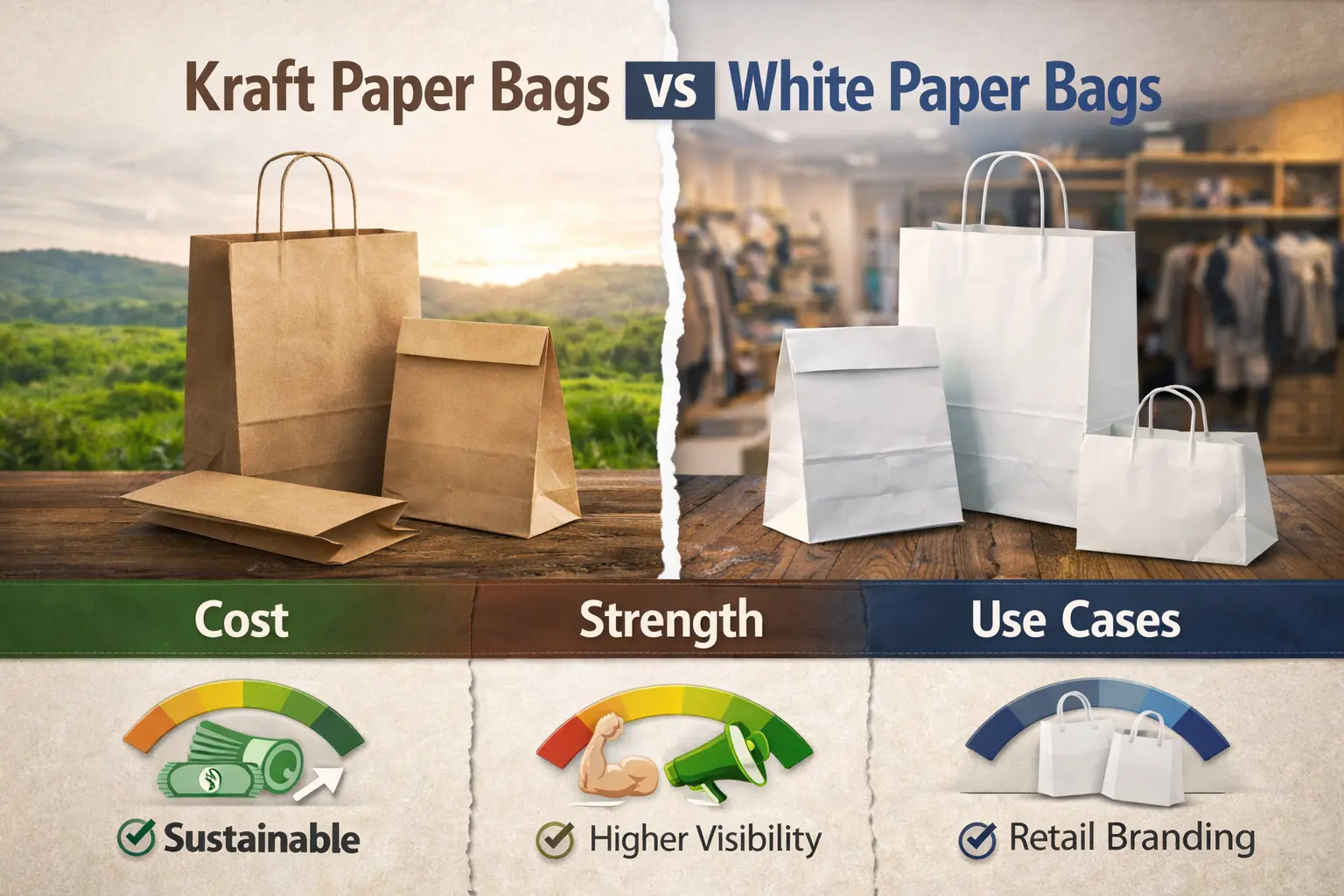
Typical MOQ Ranges for Paper Bags
| Paper Bag Type | Common Order Threshold | Primary Cost Driver | Typical Use Case |
|---|---|---|---|
| Plain kraft bags | 3,000 – 5,000 units | Paper material | Retail & takeaway |
| Branded printed bags | 5,000 – 10,000 units | Printing setup | Brand presentation |
| Heavy-duty carry bags | 8,000 units+ | Structure & reinforcement | Distribution & logistics |
| High-volume supply programs | 10,000 units+ | Batch efficiency | Chain stores & wholesale |
How Printing and Material Choice Affect MOQ
Surface printing significantly affects order thresholds. Products such as printed paper bags for clear brand presentation require plate preparation, color alignment, and test runs, all of which raise the minimum feasible quantity.
Material selection also matters. Standard kraft paper is widely stocked, which is why kraft paper bags for sustainable and natural packaging usually allow more flexible starting quantities compared with coated or specialty papers.
Expert Commentary & Practical Insights
Factory Production Manager Response:
“MOQ reflects setup workload, not supplier preference. Once setup is complete, stable batch output becomes the priority.”
Export Operations Consultant Response:
“Buyers who approach MOQ planning early—before finalizing artwork—always achieve better cost control.”
Manufacturing Perspective:
“Trying to force very small quantities often creates quality issues rather than savings.”
MOQ Considerations for Bulk and Carry Bags
For chain stores and distribution-driven programs, MOQ is usually less restrictive. Solutions such as paper bags bulk for high-volume packaging programs benefit from standardized sizes and recurring production.
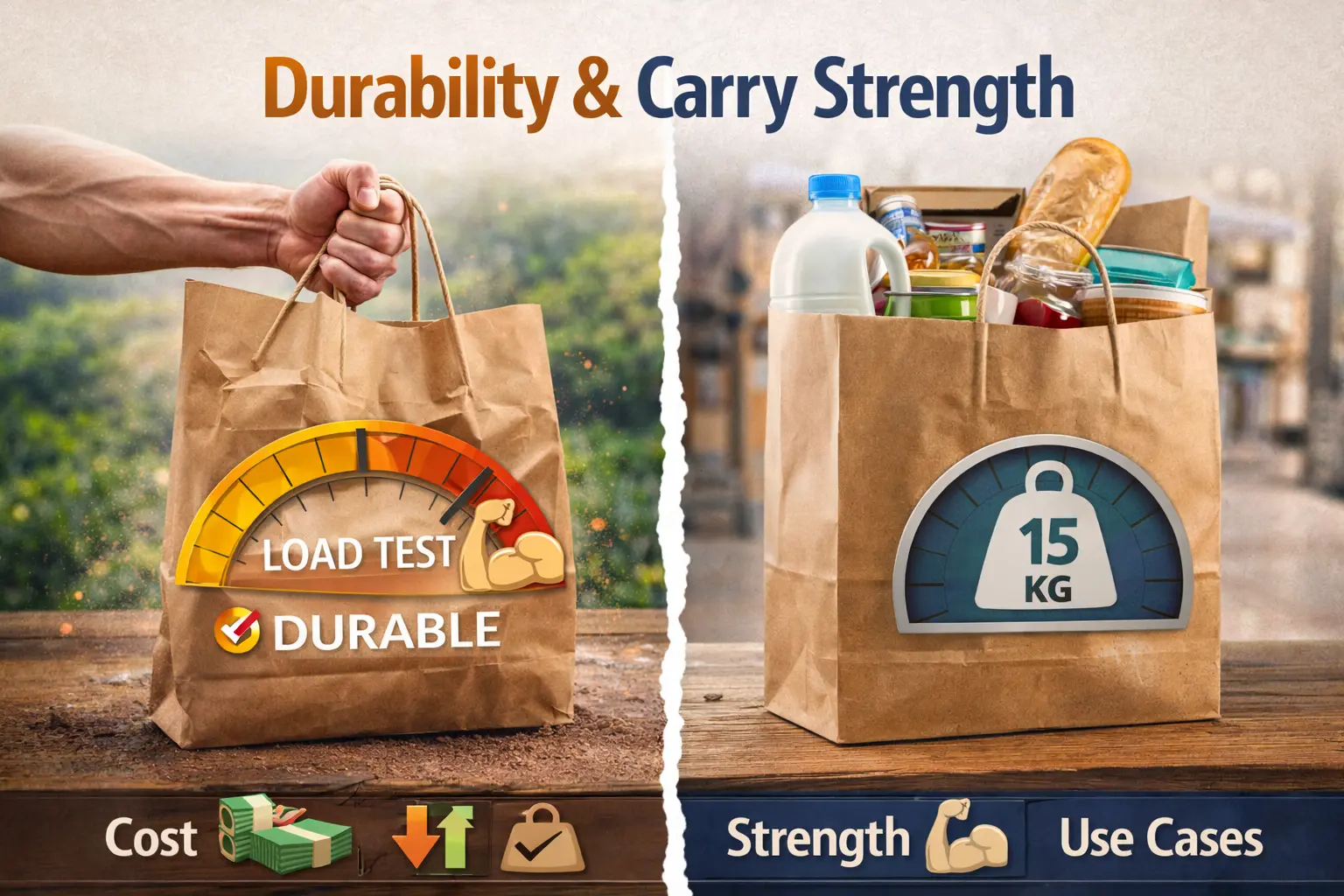
When load capacity and durability are required, bulk paper bags with handles for efficient carry and distribution involve additional reinforcement steps, which naturally increase minimum quantities.
Final Note / Practical Takeaway
Minimum order quantity should be treated as a planning parameter, not a limitation. Buyers who align bag design, materials, and production timing with factory workflow consistently achieve better pricing and more reliable supply.
FAQs
What is the lowest MOQ for paper bags in China?
Most factories accept starting quantities of 3,000–5,000 units for standard plain bags, depending on size and material.
Why do printed bags require higher order quantities?
Printing introduces fixed setup steps such as plate making and calibration, which require larger batches to remain cost-effective.
Can different bag sizes be combined under one MOQ?
Usually not, unless sizes share the same cutting layout and material specification.
Does higher MOQ always reduce unit cost?
In most cases, yes. Larger batches distribute setup cost more efficiently.
Is MOQ flexible for long-term buyers?
Yes. Repeat programs with predictable demand often receive greater flexibility.