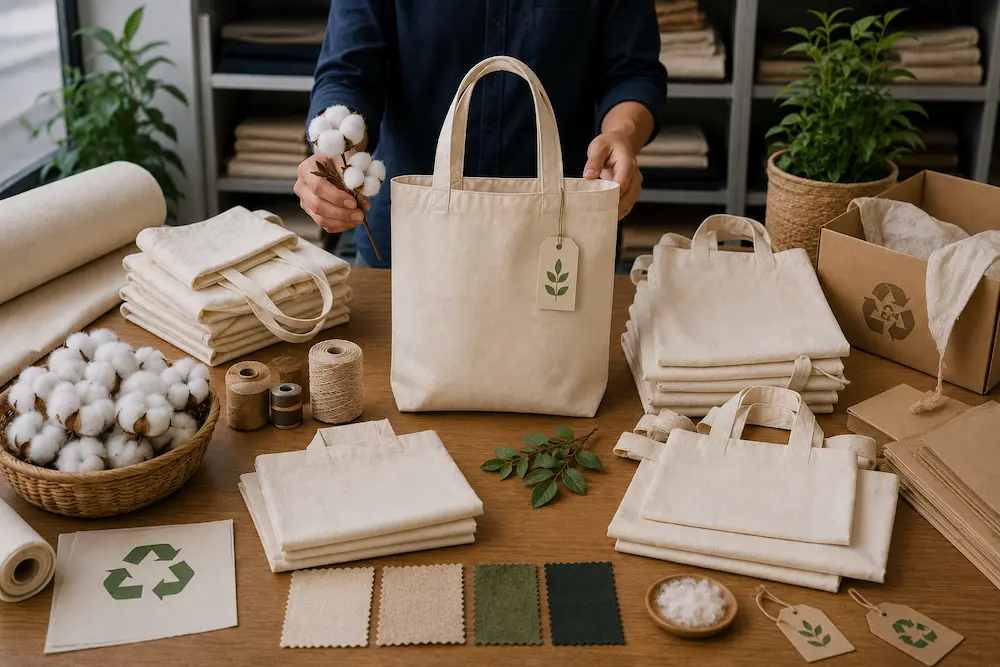
Organic cotton tote bags have become increasingly popular as businesses and consumers pay more attention to sustainability, reusable packaging, and environmentally responsible sourcing. But many buyers still misunderstand what “organic cotton” actually means.
Some assume organic cotton only refers to softer fabric. Others believe every natural cotton bag automatically qualifies as organic. In reality, organic cotton follows a much stricter agricultural and production standard.
For businesses sourcing tote bags, this distinction is increasingly important. Many international retailers and consumers now pay closer attention to environmental marketing claims, especially in markets where sustainability regulations and green branding standards continue to grow. A cotton tote bag made from standard natural cotton cannot automatically be promoted as “organic” unless the raw materials and manufacturing processes meet recognized certification requirements.
Understanding how organic cotton tote bags are produced helps businesses make better sourcing decisions and avoid misleading environmental claims.
What Makes Cotton “Organic”?
Organic cotton is grown using farming methods that avoid synthetic pesticides, chemical fertilizers, and genetically modified seeds. Instead of relying heavily on chemical-intensive agriculture, organic cotton farming focuses more on natural soil management, crop rotation, biodiversity, and reduced environmental impact throughout the growing process.
The goal is not only to produce cotton fiber, but also to support more sustainable long-term agricultural practices with lower chemical exposure for both the environment and farming communities. Organic farming systems often place greater emphasis on soil health, water conservation, and maintaining balanced ecosystems compared with conventional cotton production methods.
In most cases, certified organic cotton production also requires traceability and compliance with recognized textile certification systems. These systems help verify that the cotton meets specific standards from raw material sourcing through later processing stages such as spinning, weaving, dyeing, and manufacturing.
This is the key difference between regular cotton and organic cotton. Both come from cotton plants, but the agricultural methods behind them are very different. Conventional cotton production may involve intensive chemical treatment and higher synthetic input, while organic cotton production follows stricter environmental and traceability requirements designed to support more responsible textile sourcing practices.
How Organic Cotton Tote Bags Are Manufactured
The manufacturing process for organic cotton tote bags is similar to standard cotton tote production in terms of weaving, cutting, sewing, and printing. The major difference begins with the raw material source.
Organic cotton fabric is produced from certified organic cotton fiber before being converted into tote bag material.
Businesses often choose custom printed cotton tote bags made with organic fabric when sustainability messaging becomes part of the overall brand strategy.
However, the bag itself is not automatically “fully sustainable” simply because organic cotton is used. Printing methods, dyeing processes, shipping distance, and product lifespan also affect the overall environmental impact.
Organic Cotton Tote Bags vs Regular Cotton Tote Bags
Organic cotton and regular cotton tote bags may look visually similar, but they differ significantly in sourcing standards, environmental positioning, and often overall cost structure.
Conventional cotton farming typically relies more heavily on synthetic fertilizers, pesticides, and large-scale chemical treatment during cultivation. Organic cotton farming, by comparison, reduces or eliminates many of these inputs depending on certification requirements and approved agricultural practices. The production process usually follows stricter environmental guidelines designed to support soil health, biodiversity, and lower chemical exposure.
Organic cotton fabric may also have a slightly different texture or appearance because some manufacturers use fewer chemical finishing treatments during processing. In some cases, the fabric feels softer, more natural, or less heavily processed compared with conventional cotton materials. However, fabric quality still depends heavily on yarn construction, weaving quality, fabric weight, and manufacturing standards rather than organic status alone.
From a business perspective, organic cotton tote bags are often selected more for sustainability positioning and brand image than purely for appearance. Many retailers, supermarkets, cosmetic brands, bookstores, and lifestyle companies use organic cotton packaging to support eco-friendly branding strategies and communicate environmentally responsible values to consumers.
At the same time, experienced buyers understand that organic cotton products usually involve higher sourcing costs due to certification management, supply chain traceability, and more limited raw material availability. This is why businesses often evaluate organic cotton tote bags not only as packaging products, but also as part of broader sustainability marketing and long-term brand positioning strategies.
| Feature | Organic Cotton Tote Bags | Regular Cotton Tote Bags |
|---|---|---|
| Farming method | Reduced synthetic chemicals | Conventional agricultural methods |
| Environmental positioning | Eco-focused branding | General-purpose use |
| Material cost | Usually higher | Usually lower |
| Certification possibility | Common | Less common |
| Promotional value | Strong sustainability appeal | Broad commercial flexibility |
Why Businesses Choose Organic Cotton Tote Bags
Many companies now use organic cotton tote bags as part of broader sustainability and reusable packaging initiatives.
Common business applications include:
- Eco-friendly retail packaging
- Corporate sustainability campaigns
- Reusable shopping programs
- Trade show merchandise
- Organic product packaging
- Fashion and lifestyle branding
- Environmental awareness promotions
Products such as custom cotton tote bags made with organic fabric are especially common among brands trying to strengthen environmentally responsible brand positioning.
Organic Cotton Does Not Automatically Mean Higher Durability
One common misconception is that organic cotton tote bags are automatically stronger or more durable than regular cotton bags.
In reality, durability depends more heavily on:
- Fabric weight (GSM)
- Weave density
- Sewing quality
- Handle reinforcement
- Bag construction
An organic cotton tote bag can still be lightweight and promotional, while a regular cotton canvas tote may be significantly heavier and stronger.
Material certification and physical durability are not the same thing.
Certifications Often Matter in Organic Cotton Sourcing
Many businesses request certification documentation when sourcing organic cotton products because environmental claims are now more closely examined in international retail and import markets. Common textile certification systems may help verify material traceability, organic farming compliance, and responsible production standards throughout the supply chain.
Buyers should always confirm what the supplier means when claiming “organic cotton” because the terminology is sometimes used loosely in the market. In some cases, suppliers may describe products as organic simply because the fabric contains a percentage of organic fiber, even when the full material composition or manufacturing process is not fully certified.
Some suppliers may also use blended materials or partially organic fabrics rather than fully certified organic cotton. For example, a tote bag may combine conventional cotton with organic cotton fibers, or use certified organic fabric without maintaining certification throughout dyeing, printing, or final production stages. These differences can significantly affect how the product may legally or commercially be marketed in different countries.
Experienced sourcing teams usually request supporting documentation before approving bulk production. This may include certification records, transaction certificates, fabric composition details, testing reports, or supply chain verification documents. Careful verification helps businesses reduce compliance risk, maintain accurate sustainability claims, and avoid potential disputes related to misleading environmental marketing.
Printing Methods Affect Sustainability Positioning
The printing method used on organic cotton tote bags also affects environmental positioning.
Water-based inks, low-impact dyes, and reduced chemical printing systems are often preferred for eco-focused projects.
Businesses developing sustainability-centered branding programs often combine organic fabric with environmentally conscious printing approaches.
Products such as cotton tote bags are frequently selected for reusable campaigns where long-term repeated use becomes more important than short-term promotional distribution.
Organic Cotton Tote Bags Usually Cost More
Organic cotton tote bags typically carry higher production cost than conventional cotton bags because:
- Organic farming has lower production scale
- Certification systems increase compliance cost
- Raw material pricing is often higher
- Supply chain traceability adds complexity
However, many businesses accept the higher cost because the bags support sustainability branding, corporate responsibility goals, and premium product positioning.
The value is often connected to marketing perception and environmental messaging rather than simply material performance alone.
Reusable Use Matters More Than Marketing Claims Alone
One important sustainability reality is that reusable behavior matters heavily.
An organic cotton tote bag that is reused frequently over a long period generally creates more practical environmental value than a disposable promotional bag used only once. Sustainability is not determined only by raw material selection. Real environmental impact is also influenced by how often the product stays in active use.
This is why bag design, comfort, durability, and usability remain critically important even in eco-focused product programs. A poorly designed tote bag that feels uncomfortable, weak, or inconvenient may quickly be discarded regardless of whether the material itself is environmentally friendly.
Customers only create long-term reuse value if the tote bag remains practical for daily life. Comfortable handles, suitable sizing, durable stitching, washable fabric, and versatile appearance all increase the likelihood that customers continue carrying the bag repeatedly for shopping, commuting, travel, or daily errands. In many cases, long-term repeated use becomes one of the most important factors behind the actual sustainability performance of reusable tote bags.
Organic Cotton Tote Bags Are Popular in Lifestyle Branding
Organic cotton tote bags have become especially common among:
- Organic food brands
- Natural cosmetics companies
- Sustainable fashion labels
- Wellness brands
- Eco-conscious retailers
- Environmental organizations
The material itself helps reinforce broader brand identity and environmental positioning.
Even lightweight alternatives such as custom drawstring bags bulk sometimes adopt organic cotton fabric when businesses want stronger eco-focused merchandising consistency across multiple packaging categories.
How Businesses Should Evaluate Organic Cotton Tote Bags
Businesses should evaluate organic cotton tote bags based on several practical factors:
- Certification authenticity
- Fabric weight and durability
- Printing compatibility
- Expected product lifespan
- Freight efficiency
- Brand positioning goals
- Customer reuse potential
The best sourcing decisions balance sustainability positioning with actual product usability rather than relying only on marketing language.
Conclusion
Organic cotton tote bags are reusable bags made from cotton grown using more environmentally focused agricultural methods with reduced synthetic chemical input. They are widely used for eco-friendly branding, retail packaging, and sustainable promotional campaigns across industries such as retail, supermarkets, bookstores, cosmetics, and lifestyle products.
However, true product value depends not only on organic certification, but also on durability, usability, responsible production practices, and whether customers continue reusing the bag over time. A tote bag that is technically organic but poorly designed or quickly discarded may create far less practical environmental value than a durable reusable bag that remains in long-term daily use.
This is why experienced buyers evaluate organic cotton tote bags from both sustainability and commercial perspectives. Fabric strength, stitching quality, comfortable handles, washable performance, and practical sizing all influence whether customers genuinely continue carrying the bag repeatedly. Long-term reuse is often one of the most important factors behind the real environmental impact of reusable packaging products.
Responsible sourcing also includes supply chain transparency, certified materials, reliable production standards, and realistic environmental claims rather than marketing language alone. The most successful organic cotton tote bag programs combine sustainability, functionality, durability, and everyday usability into one balanced product strategy.
How Businesses Should Think About Organic Cotton Tote Bags
What organic cotton tote bags really represent: Organic cotton tote bags are not simply standard cotton bags with different marketing language. They are connected to farming systems that reduce synthetic chemical usage and support more environmentally focused sourcing practices.
Why many buyers misunderstand organic cotton: Some businesses assume organic cotton automatically means stronger quality or complete sustainability. In reality, durability depends more on fabric weight and construction quality, while overall sustainability also depends on printing methods, shipping efficiency, and long-term reusable behavior.
How companies should evaluate organic cotton bags: Strong sourcing decisions compare certification authenticity, fabric performance, print compatibility, production transparency, and actual customer reuse potential together. Organic material alone does not guarantee a better commercial product if the bag itself lacks practical usability.
Options businesses commonly evaluate: Many brands compare organic cotton tote bags against regular cotton, recycled materials, canvas bags, and lightweight promotional packaging alternatives. The right solution depends on whether the priority is sustainability branding, reusable functionality, premium retail presentation, or large-scale promotional distribution.
Considerations before bulk production: Before approving production, businesses should confirm certification documentation, fabric GSM, printing methods, handle durability, and freight efficiency carefully. Eco-focused marketing claims without proper verification can create sourcing and branding risks later.
The broader takeaway: Strong organic cotton tote bag sourcing is not only about material selection. It is about creating reusable products that customers genuinely continue using over time while supporting transparent and commercially realistic sustainability goals. That is also where Youngpack naturally fits as a B2B manufacturing and export partner for brands seeking better balance between eco-focused positioning, production quality, scalable sourcing, and long-term reusable product value.
FAQ
1. What is an organic cotton tote bag?
An organic cotton tote bag is made from cotton grown without synthetic pesticides, chemical fertilizers, or genetically modified seeds. The cotton follows more environmentally focused agricultural standards compared with conventional cotton farming.
2. Are organic cotton tote bags better for the environment?
Organic cotton farming is generally associated with reduced chemical usage and more sustainable agricultural practices. However, the total environmental impact also depends on manufacturing, printing, shipping, and how often the tote bag is reused.
3. Why are organic cotton tote bags more expensive?
Organic cotton tote bags usually cost more because organic farming has lower production scale, certification systems increase compliance costs, and raw material traceability adds additional supply chain complexity.
4. Are organic cotton tote bags stronger than regular cotton bags?
Not necessarily. Durability depends more on fabric weight, weave density, sewing quality, and reinforcement rather than whether the cotton is organic or conventional.
5. How can buyers verify organic cotton claims?
Buyers should request certification documents and material traceability information from suppliers. Reliable sourcing usually includes verification of organic textile standards rather than relying only on marketing descriptions.
References
- Organic Cotton Production and Textile Standards — sustainable textile industry reference.
- Reusable Cotton Bag Manufacturing Guide — textile sourcing reference.
- Organic Textile Certification and Supply Chain Traceability — compliance reference.
- Environmental Impact of Cotton Agriculture Study — sustainability research reference.
- Reusable Packaging and Eco Branding Analysis — retail marketing reference.
- Cotton Fabric Performance and Durability Guide — textile engineering reference.
- Eco-Friendly Promotional Product Trends Report — branding industry reference.
- Sustainable Textile Supply Chain Management — export manufacturing reference.
Content Ownership:
The text, structure, and packaging insights shared in this article belong to Xiamen Youngpack Imp.and Exp.Co.,Ltd. Please contact us before reusing any part of this content.