Retail tote bags are more than shopping bags—they are reusable marketing tools that enhance customer experience, strengthen brand recognition, and support sustainable retail practices. Choosing the right material, size, printing method, and purchasing strategy helps retailers maximise long-term value while reducing packaging waste.
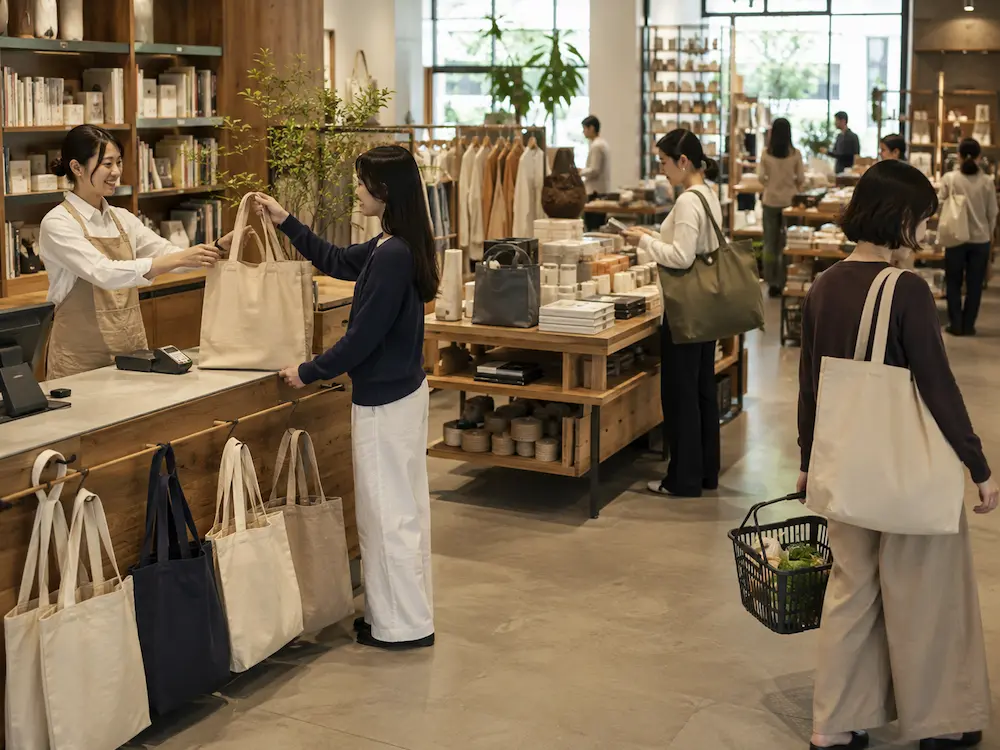
Retail competition has changed significantly over the past decade.
Customers no longer judge a retail business solely by the products it sells. They also evaluate packaging quality, shopping experience, environmental responsibility, and overall brand image. Every interaction—from entering the store to carrying purchases home—contributes to how customers remember a business.
For this reason, reusable tote bags have become one of the most valuable packaging investments for modern retail stores.
Unlike disposable paper or plastic bags, a quality tote bag continues to accompany customers long after a purchase has been completed. Every reuse creates another opportunity for the retailer’s brand to be seen in supermarkets, cafés, offices, universities, gyms, public transport, and shopping districts.
For retailers, this creates an unusually high return on investment. Instead of functioning as a single-use expense, a well-designed tote bag becomes a long-term marketing tool that combines practical value with continuous brand exposure.
Choosing the right tote bag, however, requires more than selecting an attractive design. Retail buyers must consider material selection, durability, printing quality, customer expectations, order quantities, merchandising strategy, and long-term branding objectives.
This guide explores the best tote bag options for different retail environments and explains how businesses can make purchasing decisions that improve both customer satisfaction and commercial performance.
Why Retail Stores Are Increasingly Choosing Reusable Tote Bags
Consumer expectations have changed dramatically.
Many shoppers actively prefer retailers that demonstrate environmental responsibility while offering attractive and practical packaging. A reusable tote bag addresses both expectations at the same time.
Unlike disposable packaging, reusable bags become part of a customer’s everyday routine.
Customers may use the same bag for grocery shopping, commuting, travelling, visiting cafés, attending university, or carrying personal belongings. Every occasion creates another impression of the retailer’s brand.
This extended product lifecycle makes tote bags one of the most cost-effective promotional products available to retail businesses.
Rather than investing exclusively in traditional advertising, retailers can create long-term visibility through packaging that customers genuinely appreciate.
| Packaging Type | Average Usage | Brand Exposure | Customer Value |
|---|---|---|---|
| Plastic Bag | One use | Very Low | Low |
| Paper Bag | 1–3 uses | Limited | Moderate |
| Cotton Tote Bag | Hundreds of uses | High | High |
| Canvas Tote Bag | Long-term daily use | Very High | Premium |
The growing popularity of reusable shopping habits means customers increasingly view quality tote bags as useful products rather than disposable packaging.
Retailers benefit because customers associate durable packaging with product quality and professional service.
Benefits of Tote Bags for Retail Businesses
A professionally designed tote bag provides advantages beyond simple product transportation.
It strengthens brand recognition, improves customer satisfaction, and supports long-term marketing initiatives.
Some retailers even discover that customers intentionally return to stores because they appreciate the quality of previous promotional bags.
Strengthening Brand Recognition
Brand recognition depends on repeated visual exposure.
Every time customers carry branded packaging, they unintentionally introduce the retailer to new audiences.
Unlike digital advertising, which disappears within seconds, reusable bags remain visible for months or even years.
Retailers that invest in attractive graphics, premium fabrics, and durable construction often gain substantially more exposure than those relying on disposable shopping bags.
For businesses seeking stronger retail branding,printed cotton tote bags for brand visibility and promotion provide an effective way to combine practical packaging with continuous marketing visibility.
Improving Customer Experience
Packaging influences how customers remember a shopping experience.
Premium retail brands understand that customer satisfaction extends beyond the purchased product.
Receiving purchases in a durable reusable tote bag creates additional perceived value.
Customers often feel they are receiving an extra product rather than simply packaging.
This positive emotional response increases the likelihood of repeat purchases and word-of-mouth recommendations.
Supporting Sustainability Goals
Sustainability has become an important purchasing factor across many retail sectors.
Consumers increasingly appreciate businesses that reduce disposable packaging while encouraging reusable alternatives.
Although no packaging solution is completely impact-free, a durable tote bag designed for repeated use generally delivers greater long-term environmental benefits than products intended for immediate disposal.
This alignment with customer expectations strengthens brand reputation while supporting corporate sustainability initiatives.
Choosing the Right Tote Bag Material
Material selection determines how customers perceive quality, durability, and brand positioning.
Different retail environments require different material characteristics.
| Material | Durability | Print Quality | Typical Retail Application |
|---|---|---|---|
| Cotton | Good | Excellent | Fashion, gifts, cosmetics |
| Canvas | Excellent | Excellent | Premium retail, bookstores |
| Non-woven PP | Moderate | Good | Promotions, supermarkets |
| RPET | Good | Very Good | Sustainable retail |
Cotton Tote Bags
Cotton remains one of the most popular materials because it combines affordability with an attractive natural appearance.
Cotton fabrics accept screen printing, digital printing, embroidery, and heat transfer techniques exceptionally well, making them suitable for retailers that emphasise branding.
Cotton bags are lightweight enough for daily use while providing sufficient durability for repeated shopping trips.
They are especially suitable for:
- Fashion boutiques
- Cosmetic retailers
- Gift stores
- Organic food shops
- Lifestyle brands
Customers often associate cotton with authenticity and sustainability, making it particularly attractive for brands promoting environmentally conscious values.
Canvas Tote Bags
Canvas offers higher fabric density, stronger construction, and longer service life. Retailers selling premium products frequently select canvas because it reflects higher perceived value.
Canvas also supports larger carrying capacities, making it suitable for bookstores, home décor retailers, and department stores where heavier products are common.
For retailers planning nationwide campaigns or chain-store distribution, custom canvas bags bulk for high-volume marketing campaigns can improve purchasing efficiency while maintaining consistent branding across multiple locations.
Choosing the Right Tote Bag Size for Retail Stores
Selecting the correct size is just as important as choosing the right material. A bag that is too small may not accommodate purchased products, while an oversized bag can increase production costs, shipping expenses, and unnecessary material consumption.
Retail buyers should evaluate the average size and weight of their products before selecting a standard specification.
| Retail Sector | Recommended Size | Typical Products |
|---|---|---|
| Fashion Boutique | 35 × 40 cm | Clothing, accessories |
| Gift Shop | 30 × 35 cm | Souvenirs, gifts |
| Grocery Store | 38 × 42 × 10 cm gusset | Food and daily essentials |
| Bookstore | 40 × 38 × 12 cm | Books and magazines |
| Cosmetic Store | 25 × 30 cm | Beauty products |
| Home Décor Store | 42 × 45 × 12 cm | Household accessories |
A gusseted tote bag provides additional depth, making it suitable for bulky retail products, while flat bags work well for lightweight items such as clothing or promotional materials.
Retailers should also consider handle length. Long shoulder handles generally provide greater convenience for shoppers carrying purchases over longer distances, while short handles create a cleaner appearance for premium boutiques.
Printing Methods That Strengthen Retail Branding
Printing quality directly affects how customers perceive a retail brand.
Even a well-made tote bag can lose its marketing value if the printing appears faded, misaligned, or inconsistent.
Retailers should select printing methods according to artwork complexity, production quantity, fabric type, and budget.
| Printing Method | Advantages | Suitable Retail Applications |
|---|---|---|
| Screen Printing | Durable, economical, vibrant colours | Large retail programmes |
| Digital Printing | High-resolution graphics | Fashion and lifestyle brands |
| Heat Transfer | Multi-colour artwork | Short promotional campaigns |
| Embroidery | Premium appearance | Luxury retail |
| Woven Labels | Sophisticated branding | Designer collections |
Screen Printing
Screen printing remains the most widely used method for retail tote bags because it balances quality and affordability.
For chain retailers ordering thousands of bags, screen printing provides consistent colours, excellent durability, and attractive unit pricing.
Simple logos, bold typography, and minimalist graphics usually produce outstanding results.
Digital Printing
Digital printing has become increasingly popular among fashion retailers and boutique brands.
Its ability to reproduce detailed artwork, gradients, and photographic images makes it suitable for limited collections and seasonal promotions.
Retailers launching new product lines often use digital printing to create distinctive packaging without investing in large printing plate setups.
Embroidery
Embroidery communicates premium quality through texture rather than colour alone.
Although embroidery increases production costs, many luxury retailers prefer embroidered logos because they reinforce craftsmanship and exclusivity.
Small embroidered logos placed near the upper corner of a canvas tote often create a more refined appearance than oversized printed graphics.
Best Tote Bags for Different Retail Industries
Different retail sectors require different packaging strategies.
The ideal tote bag for a supermarket may not suit a luxury boutique, and a bookstore has different functional requirements from a cosmetics retailer.
Understanding these differences helps purchasing managers make better long-term investments.
Fashion Retail Stores
Fashion retailers often view tote bags as extensions of their collections.
Rather than functioning only as shopping bags, they become lifestyle accessories that customers continue using.
Important design priorities include:
- Premium cotton or canvas fabrics
- Minimalist logo placement
- Seasonal colour palettes
- Comfortable shoulder handles
- High-quality stitching
Many successful fashion brands intentionally design tote bags that complement their clothing collections, encouraging customers to reuse them in everyday settings.
The more attractive the bag, the greater its marketing lifespan.
Grocery Stores and Supermarkets
Supermarkets prioritise durability and carrying capacity.
Customers frequently purchase heavier products such as bottled drinks, canned foods, and fresh groceries.
Recommended features include:
- Reinforced cross stitching
- Bottom gussets
- Strong long handles
- Heavy-duty canvas or thick cotton
- Washable construction
A reliable grocery tote should comfortably withstand repeated loading without stretching or tearing.
Gift Shops
Gift retailers often focus on presentation.
Customers purchasing gifts appreciate attractive packaging that enhances the overall shopping experience.
Gift shop tote bags commonly feature:
- Decorative illustrations
- Seasonal graphics
- Soft natural colours
- Medium-sized dimensions
- Premium finishing details
Many customers reuse attractive gift bags for future occasions, extending the retailer’s visibility.
Bookstores
Books are considerably heavier than clothing or cosmetics.
Bookstores therefore require bags with higher structural strength.
Canvas fabrics between 220 and 340 GSM are frequently selected because they provide sufficient support for multiple hardcover books.
Wide handles also improve carrying comfort.
Bookstores often choose understated designs with literary quotations, artistic graphics, or simple monochrome logos that appeal to readers.
Cosmetic and Beauty Retailers
Beauty brands typically emphasise elegance and refinement.
Their tote bags often feature:
- Light-coloured cotton fabrics
- Fine typography
- Metallic printing
- Compact sizes
- Soft handle construction
Because cosmetic products are generally lightweight, heavy canvas fabrics are not always necessary.
Instead, visual quality becomes the primary purchasing criterion.
Home Décor and Lifestyle Stores
Home décor retailers often sell products with irregular shapes and varying sizes.
Customers purchasing candles, tableware, decorative accessories, or storage products benefit from larger tote bags with reinforced bottoms.
Neutral colours such as natural beige, charcoal, olive green, or black complement many interior design brands while remaining practical for repeated use.
Tote Bags Versus Drawstring Bags for Retail Promotions
Although tote bags dominate retail packaging, drawstring bags also provide valuable promotional opportunities.
Each style serves different objectives.
| Feature | Tote Bags | Drawstring Bags |
|---|---|---|
| Shopping Packaging | Excellent | Moderate |
| Everyday Use | Excellent | Good |
| Sports Promotions | Moderate | Excellent |
| Event Giveaways | Good | Excellent |
| Premium Retail | Excellent | Moderate |
Retailers frequently combine both products within broader promotional programmes.
For example, a clothing retailer may provide reusable tote bags for customer purchases while offering drawstring bags with logo for branding and promotions during fitness campaigns, outdoor events, or back-to-school promotions.
Similarly, seasonal marketing initiatives can include personalized drawstring bags for promotional merchandise programs alongside reusable shopping totes to reach different customer groups while maintaining consistent brand identity.
This combination allows retailers to diversify promotional merchandise without sacrificing branding consistency.
Designing Tote Bags That Customers Actually Want to Reuse
The greatest marketing value comes from repeat use.
Retailers should therefore design tote bags that customers genuinely enjoy carrying.
Important design principles include:
- Timeless colour combinations
- Clean layouts
- Comfortable proportions
- Durable construction
- Practical carrying capacity
- Minimal but recognisable branding
Many brands make the mistake of covering every available surface with promotional graphics.
In reality, customers are often more willing to reuse bags featuring elegant, understated designs.
The objective is not simply to advertise.
It is to create a product that naturally fits into customers’ everyday lives.
When a tote bag becomes part of a customer’s routine, the retailer benefits from continuous organic exposure without additional advertising costs.
Bulk Purchasing Strategies for Retail Chains
For independent retailers, ordering a few hundred tote bags may be sufficient for seasonal promotions. However, regional chains and national retailers usually require thousands or even tens of thousands of bags distributed across multiple locations.
Purchasing in larger quantities offers several advantages beyond lower unit prices. Manufacturers can optimise material purchasing, streamline production scheduling, reduce machine setup frequency, and improve packaging efficiency. These savings are often reflected in the final quotation.
Nevertheless, buyers should avoid ordering excessive quantities simply to achieve a lower unit cost. Packaging designs evolve, seasonal branding changes, and marketing campaigns may be updated throughout the year. Ordering more bags than can reasonably be used within 12 to 18 months may create unnecessary inventory costs.
A balanced purchasing strategy considers expected sales volume, promotional schedules, available warehouse space, and future branding plans.
| Purchasing Strategy | Advantages | Potential Challenges |
|---|---|---|
| Small Seasonal Orders | Flexible designs, lower inventory | Higher unit cost |
| Quarterly Orders | Balanced inventory management | Moderate setup costs |
| Annual Bulk Orders | Lowest unit price | Larger storage requirements |
| Multi-Location Distribution Orders | Consistent branding across stores | More complex logistics |
Retail chains often benefit from forecasting demand by store location rather than placing identical quantities for every branch. Stores in shopping centres, tourist destinations, or city centres may require significantly more promotional packaging than smaller suburban locations.
Understanding the Main Cost Factors
The selling price of a tote bag is influenced by far more than the fabric alone.
Every design decision affects manufacturing complexity and overall production cost.
Some cost factors are immediately visible, while others become significant only during production.
Material Selection
Fabric is usually the largest contributor to total cost.
A lightweight cotton bag intended for promotional giveaways requires considerably less raw material than a heavy-duty canvas shopping bag designed for long-term daily use.
Organic cotton, recycled cotton, and speciality fabrics may also increase material costs due to certification requirements and sourcing limitations.
Fabric Weight
Higher GSM fabrics generally provide:
- Greater durability
- Better structure
- Improved perceived value
However, heavier fabrics also consume more raw material and increase shipping weight.
Retailers should select fabric weight according to product positioning rather than assuming heavier is always better.
Printing Complexity
Printing costs increase when artwork includes:
- Multiple spot colours
- Large coverage areas
- Photographic images
- Metallic finishes
- Special effects
A clean one-colour logo often delivers stronger branding while remaining considerably more economical than complex full-surface graphics.
Construction Details
Additional sewing operations also influence production costs.
Examples include:
- Bottom gussets
- Side gussets
- Internal pockets
- Zippers
- Magnetic closures
- Reinforced cross stitching
- Woven labels
- Custom hangtags
Every additional feature requires extra labour and quality inspection. Retail buyers should carefully evaluate whether each feature adds meaningful customer value.
Building Long-Term Customer Loyalty Through Tote Bags
Retail packaging influences customer behaviour more than many businesses realise. A practical, attractive tote bag often becomes associated with a positive shopping experience.
When customers repeatedly use a retailer’s tote bag, they are repeatedly reminded of the original purchase. This subtle reinforcement contributes to long-term brand familiarity.
Many successful retailers intentionally incorporate tote bags into loyalty programmes.
Examples include:
- Free reusable bag after spending a certain amount.
- Limited-edition designs for loyalty members.
- Seasonal tote bag collections.
- Anniversary promotional bags.
- Exclusive artist collaboration designs.
These programmes encourage repeat visits while transforming packaging into a collectible item. Instead of viewing tote bags purely as packaging expenses, retailers increasingly recognise them as investments in customer retention.
Sustainability Trends Shaping Retail Packaging
Environmental responsibility continues to influence purchasing decisions across nearly every retail sector. Consumers increasingly expect businesses to reduce unnecessary waste while offering reusable alternatives. For tote bags, sustainability involves much more than selecting environmentally friendly materials.
Responsible design also includes:
- Long product lifespan
- Durable construction
- Efficient material utilisation
- Minimal packaging waste
- Optimised shipping efficiency
- Responsible production practices
A reusable tote bag that remains functional for several years often provides significantly greater environmental value than a disposable alternative that requires constant replacement.
Retailers should therefore prioritise durability alongside material selection.
Current industry trends include increasing demand for:
| Sustainability Trend | Retail Benefit |
|---|---|
| Organic cotton | Strong environmental positioning |
| Recycled cotton | Circular economy messaging |
| Recycled polyester | Resource conservation |
| Plastic-free packaging | Reduced packaging waste |
| Water-based printing inks | Lower environmental impact |
| Minimalist packaging | Reduced material consumption |
Consumers increasingly recognise these initiatives, making sustainable tote bags an effective way to reinforce responsible brand values.
Common Mistakes Retail Buyers Should Avoid
Even experienced purchasing teams occasionally make decisions that reduce the effectiveness of their packaging programmes.
Understanding common mistakes helps avoid unnecessary costs and disappointing customer experiences.
Choosing the Lowest Price Instead of the Best Value
The cheapest quotation rarely represents the best investment. Low-quality fabrics, weak stitching, or inconsistent printing may reduce customer satisfaction and shorten product lifespan.
Instead of focusing solely on price, retailers should evaluate total value, including durability, branding effectiveness, and expected reuse.
Ignoring Target Customers
Different customer groups have different expectations. Luxury shoppers generally expect premium packaging. Students may prioritise practicality. Families often value carrying capacity.
Selecting a tote bag that reflects customer lifestyles increases the likelihood of repeated use.
Ordering Without Testing Samples
Production samples provide an opportunity to verify:
- Fabric quality
- Printing accuracy
- Colour consistency
- Handle strength
- Overall appearance
Approving production without reviewing physical samples increases the likelihood of costly revisions later.
Overcomplicating the Design
Retailers sometimes attempt to include too many marketing messages on a single bag. Large slogans, multiple logos, excessive colours, and crowded graphics often reduce overall visual appeal. Simple designs usually age better and remain attractive for much longer.
Future Trends in Retail Tote Bags
Retail packaging continues to evolve alongside changing consumer expectations. Several developments are likely to influence future tote bag design.
One significant trend is increased personalisation. Retailers are exploring limited-edition artwork, regional collections, and seasonal graphics that encourage customers to collect multiple designs. Another trend is multifunctional construction.
Future tote bags may include:
- Interior bottle holders
- Laptop compartments
- Foldable storage features
- Detachable pouches
- Reversible colour schemes
Digital technology may also influence retail packaging through QR codes that connect customers to product information, loyalty programmes, promotional campaigns, or sustainability stories.
At the same time, minimalist aesthetics remain highly popular. Many premium retailers are moving towards understated branding with clean typography, neutral colour palettes, and timeless designs that customers are comfortable using every day.
How to Select the Right Tote Bag Manufacturing Partner
Selecting a reliable manufacturing partner is just as important as choosing the right tote bag design. A capable supplier should provide support throughout the development process rather than simply manufacturing according to drawings.
When evaluating suppliers, retail buyers should consider:
| Evaluation Criteria | Why It Matters |
|---|---|
| Material expertise | Helps select suitable fabrics |
| Printing capabilities | Supports different branding requirements |
| Sampling process | Reduces production risk |
| Quality control | Ensures consistent products |
| Production capacity | Supports future business growth |
| Export experience | Improves logistics reliability |
| Communication efficiency | Speeds up project management |
Establishing long-term partnerships often results in better product consistency, more efficient development cycles, and improved purchasing efficiency over time.
Conclusion
Retail packaging has evolved into an important component of brand strategy.
A reusable tote bag no longer serves only as a practical way to carry purchases. It represents the retailer’s identity, communicates quality, supports sustainability initiatives, and creates continuous brand exposure every time it is reused.
The best tote bag for a retail store depends on several interconnected factors, including product category, target customers, brand positioning, material selection, printing quality, and long-term purchasing strategy.
Cotton tote bags remain an excellent choice for boutiques, gift shops, and lifestyle retailers seeking natural aesthetics and versatile branding opportunities. Heavy-duty canvas bags are well suited to bookstores, premium retailers, and supermarkets where durability and higher carrying capacity are essential. Retailers can also complement their packaging strategy with promotional drawstring bags for specific campaigns, sporting events, and customer giveaways.
Rather than treating tote bags as disposable packaging, forward-thinking retailers increasingly view them as long-term marketing assets. A thoughtfully designed bag extends the customer experience beyond the checkout counter, encourages repeat use, reinforces brand recognition, and contributes to lasting customer loyalty.
By combining practical functionality, attractive design, responsible material selection, and reliable manufacturing, retail businesses can transform a simple reusable tote bag into one of the most effective branding tools available.
Choosing Retail Tote Bags That Deliver Long-Term Value
Retail tote bags have become an essential part of modern retail branding. From material selection and printing quality to customer usability and sustainability, every design decision influences how shoppers perceive a brand.
By investing in durable, reusable tote bags that align with brand identity and customer expectations, retailers can create packaging that continues promoting their business long after each purchase. Well-designed tote bags not only improve the shopping experience but also generate ongoing brand visibility through repeated everyday use.
FAQ
1. What is the best tote bag material for retail stores?
The best material depends on the products being sold and the brand’s positioning. Cotton tote bags are ideal for boutiques, gift shops, and cosmetic retailers because they provide a natural appearance and excellent print quality. Canvas tote bags offer greater durability and are better suited to bookstores, supermarkets, and premium retail stores where heavier products are carried.
2. How can retail stores use tote bags to increase brand visibility?
Retail stores can strengthen brand visibility by using reusable tote bags with consistent branding, high-quality printing, and practical designs that customers are happy to reuse. Every time the bag is carried in public, it creates additional exposure without ongoing advertising costs.
3. What factors affect the price of custom retail tote bags?
Several factors influence pricing, including material type, fabric weight (GSM), bag dimensions, printing method, print coverage, handle construction, additional features, packaging requirements, and total order quantity. Larger production runs generally reduce the cost per bag.
4. Are reusable tote bags suitable for promotional campaigns?
Yes. Reusable tote bags are widely used for product launches, seasonal promotions, customer appreciation programmes, loyalty rewards, grand openings, and retail events. Because customers continue using them after the promotion ends, they deliver long-term marketing value.
5. Should retail stores choose tote bags or drawstring bags?
Both products have advantages. Tote bags are better suited for everyday shopping, premium retail packaging, and customer purchases, while drawstring bags work well for promotional giveaways, sporting events, school campaigns, and lightweight merchandise. Many retailers successfully use both products within different marketing activities.
References
- ISO 9001:2015 Quality Management Systems
- Global Organic Textile Standard (GOTS)
- Textile Exchange – Preferred Fiber & Materials Market Report
- OEKO-TEX® Standard 100
- ASTM International Textile Standards
- International Trade Centre (ITC) – Export Packaging Resources
- Sustainable Packaging Coalition – Packaging Design Guidance
- European Environment Agency – Sustainable Consumption and Circular Economy Reports
Content Ownership:
The text, structure, and packaging insights shared in this article belong to Xiamen Youngpack Imp.and Exp.Co.,Ltd. Please contact us before reusing any part of this content