Quick Summary:
Tote bags can support nonprofit organisations as fundraising merchandise, donor appreciation gifts, volunteer kits, awareness campaign products, membership gifts, and event packaging. Lightweight cotton can suit high-volume campaigns, while heavier cotton and canvas can provide greater perceived value for merchandise and donor programmes. Buyers should evaluate campaign objectives, fabric weight, dimensions, artwork, printing, quantity, landed cost, fulfilment, sampling, production lead time, and inventory risk before bulk production.
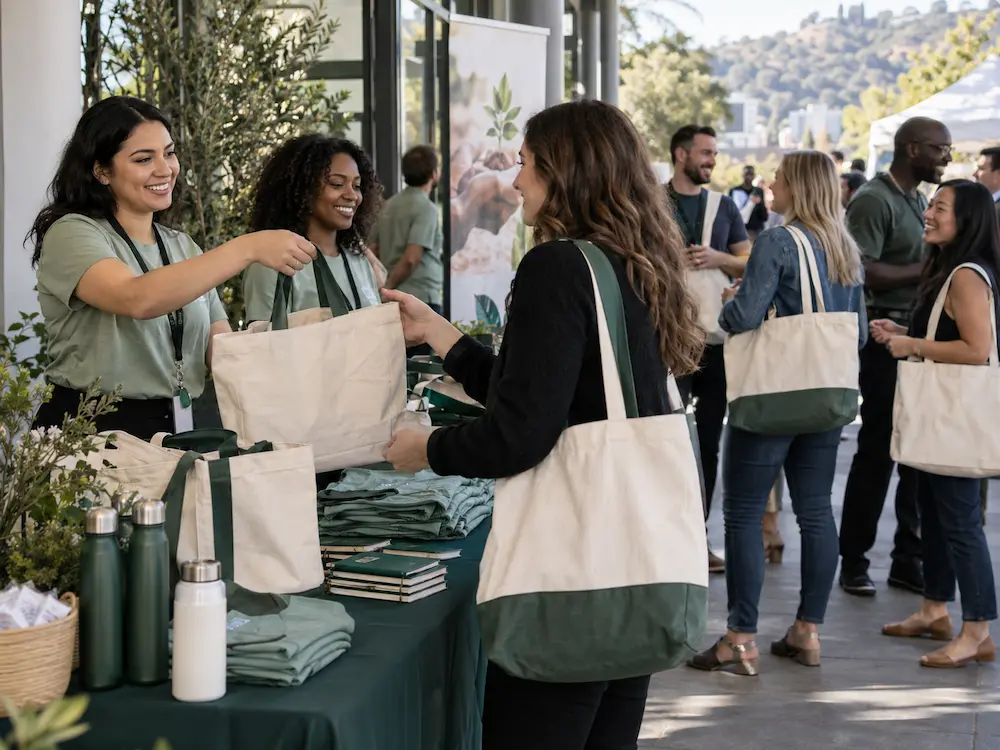
Why Tote Bags Work for Nonprofits and Fundraising
Nonprofit organisations constantly need practical ways to connect supporters with their missions.
Fundraising dinners, charity walks, community programmes, museum shops, membership campaigns, volunteer projects, school fundraisers, awareness events, donor programmes, and online merchandise stores all require physical products that can communicate identity while providing genuine value.
Tote bags are particularly versatile because they can combine communication and utility.
A custom tote can be:
- Sold as fundraising merchandise
- Offered as a donor thank-you gift
- Included in membership programmes
- Distributed to volunteers
- Used as event packaging
- Included in supporter welcome kits
- Sold through museum or charity shops
- Used during awareness campaigns
Unlike a leaflet or disposable event bag, a reusable tote may continue circulating after the original campaign ends.
A supporter might later use it for groceries, books, work, school, travel, or everyday shopping.
This repeated use can create additional opportunities for the organisation’s identity or campaign message to remain visible.
However, tote bags do not automatically become effective fundraising products simply because a logo is printed on them.
Material, design, usefulness, pricing, production quantity, and campaign strategy all influence the result.
| Nonprofit Application | Bag Type | Main Objective | Typical Contents/Use |
|---|---|---|---|
| Charity Walk | Lightweight cotton | Event distribution | Water, programme, gifts |
| Donor Gift | Heavy cotton/canvas | Appreciation | Premium supporter gift |
| Volunteer Programme | Medium cotton tote | Organisation | Shirt, handbook, supplies |
| Fundraising Shop | Printed canvas tote | Merchandise sales | Standalone product |
| Awareness Campaign | Printed cotton tote | Visibility | Everyday reuse |
| Membership Programme | Premium tote | Retention/value | Member welcome kit |
| Community Event | Lightweight tote | Distribution | Information, giveaways |
| Museum/Cultural Charity | Designed canvas tote | Retail fundraising | Merchandise |
The best specification should therefore begin with the campaign objective.
Different Roles of Tote Bags in Nonprofit Programmes
One organisation may use tote bags in several different ways.
Understanding these roles helps procurement teams avoid applying one specification to every campaign.
Fundraising Merchandise
A tote can be sold directly to supporters through:
- Online shops
- Events
- Charity stores
- Museum shops
- School programmes
- Social campaigns
In this case, the tote itself needs sufficient perceived value to justify the selling price.
Donor Gifts
Organisations may provide tote bags to donors after reaching a defined contribution level.
Here, the product represents appreciation rather than a simple giveaway.
Material quality and presentation may therefore require more attention.
Event Bags
Charity runs, community events, fundraising dinners, and conferences may distribute bags containing programmes, sponsor materials, gifts, and supplies.
Cost and packing efficiency become more important when quantities increase.
Volunteer Bags
Volunteers may receive:
- T-shirts
- Identification
- Water bottles
- Handbooks
- Event supplies
A reusable tote keeps these items organised and can also help create visual consistency among the volunteer team.
Tote Bags as Fundraising Merchandise
Selling tote bags can create a tangible exchange between the organisation and supporter.
Instead of simply making a donation, the supporter receives a functional product connected with a cause or organisation they value.
The financial model should nevertheless be calculated carefully.
Consider a simplified example.
| Item | Illustrative Amount |
|---|---|
| Retail Price | $20.00 |
| Bag + Printing | $4.50 |
| Freight/Fulfilment Allocation | $2.00 |
| Payment/Platform Cost | $1.00 |
| Illustrative Contribution Before Other Costs | $12.50 |
This does not mean every $20 sale generates $12.50 in final fundraising profit.
Staff time, marketing, storage, tax treatment, unsold inventory, event expenses, and other costs may also apply.
The table simply demonstrates why organisations should calculate the economics of merchandise rather than focusing only on retail price.
Designing a Tote People Actually Want to Buy
Supporters may appreciate the organisation, but they still evaluate merchandise as consumers.
A bag with a very large institutional logo may appeal to highly committed supporters but have limited broader lifestyle appeal.
A more design-led approach might combine:
- Illustration
- Campaign artwork
- Typography
- Cause-related messaging
- Artist collaboration
- Subtle logo placement
This is where custom printed tote bags for impactful brand presence can become more than simple logo carriers.
The printed surface can communicate the campaign visually while the bag remains useful as an everyday product.
Donor Appreciation Tote Bags
Donor gifts serve a different purpose from fundraising merchandise.
They recognise participation and can help make the donor relationship feel more tangible.
A donor tote might be offered:
- After a recurring donation milestone
- At a membership level
- During an annual campaign
- As part of a major donor package
- At fundraising dinners
The specification should reflect the intended donor group.
A lightweight promotional tote may be sufficient for broad campaigns.
Higher donor tiers may justify:
- Heavier cotton
- Canvas
- Internal pockets
- Better handles
- Embroidery
- Premium printing
- Individual packaging
The objective is not necessarily luxury. It is alignment between the gift and the supporter experience.
Personalised Bags for Recognition Programmes
Some organisations may want to recognise individual supporters, volunteers, ambassadors, or programme participants.
Personalisation can include:
- Names
- Initials
- Volunteer roles
- Campaign years
- Membership categories
For smaller recognition programmes, personalised tote bags for distinct brand expression can create a stronger individual connection than one universal design.
However, individual personalisation increases production complexity.
Organisations should confirm whether names will be printed, embroidered, labelled, or added after the main production run.
Tote Bags for Charity Events
Fundraising events often require a bag simply because participants receive many separate items.
A charity event kit might contain:
- Programme
- Sponsor materials
- Water bottle
- T-shirt
- Wristband
- Snacks
- Information leaflet
- Small gifts
A tote consolidates these materials.
For high-volume events, simple construction may be preferable.
The product needs to be:
- Easy to unpack
- Quick to fill
- Comfortable to carry
- Economical to ship
- Strong enough for the intended contents
Adding unnecessary features can increase cost without improving the participant experience.
Awareness Campaigns
Awareness campaigns have a slightly different objective.
Here, visibility may matter as much as fundraising revenue.
A campaign tote may feature:
- Cause symbol
- Educational message
- Illustration
- Campaign slogan
- Organisation logo
Because the bag may appear in public after the campaign, artwork should be designed for continued use.
A supporter who carries the tote for months potentially gives the campaign more opportunities for visibility than one who carries it only during a fundraising event.
That makes design and usefulness important.
Volunteer Welcome Kits
Volunteers are central to many nonprofit programmes.
Providing an organised welcome kit can help teams prepare for events or ongoing programmes.
A volunteer tote might include:
- Branded shirt
- Identification badge
- Handbook
- Water bottle
- Notebook
- Safety information
- Event supplies
The bag can then be reused during the programme.
For multi-day events, shoulder-length handles can be particularly practical because volunteers may need their hands free.
Choosing Cotton and Canvas for Nonprofit Tote Bags
Cotton and canvas are common choices because they provide printable surfaces and a familiar reusable format.
| Material | Structure | Typical Cost | Best Use |
|---|---|---|---|
| Lightweight Cotton | Soft | Lower | Large campaigns |
| Medium Cotton | Moderate | Medium | Volunteers/events |
| Heavy Cotton | Stronger | Medium | Donor gifts |
| 8 oz Canvas | Structured | Medium | Fundraising merchandise |
| 10 oz Canvas | Strong | Medium–High | Premium merchandise |
| 12 oz Canvas | Heavy | Higher | High-value programmes |
The appropriate material depends on budget and use.
Heavier is not automatically better.
If 20,000 bags are being distributed at a one-day campaign containing only a leaflet and small gift, a heavy canvas specification may create unnecessary material, freight, and cost.
Lightweight Cotton for Large Campaigns
Lightweight cotton is useful where quantity and distribution efficiency matter.
Applications include:
- Charity walks
- School fundraisers
- Public awareness events
- Community campaigns
- Volunteer programmes
Benefits can include:
- Lower unit cost
- Reduced carton weight
- Efficient folding
- Large print area
- Easy storage
However, buyers should test the expected load.
Thin fabric and narrow handles may not be appropriate for books, bottled drinks, or heavy merchandise.
Heavy Cotton and Canvas for Premium Programmes
Canvas can be particularly suitable when the tote is sold as merchandise.
A stronger fabric can create greater perceived value and support repeated use.
Applications include:
- Museum stores
- Charity merchandise shops
- Art organisations
- Membership programmes
- Donor gifts
- Premium campaigns
The bag can become part of the organisation’s product range rather than temporary promotional packaging.
Choosing Fabric Weight
Fabric weight should match intended performance.
Common cotton and canvas specifications may include 8 oz, 10 oz, and 12 oz fabrics, depending on construction and application.
| Fabric Level | Typical Use | Consideration |
|---|---|---|
| Lightweight | Mass distribution | Cost efficiency |
| Medium | Volunteer/event bags | Balanced performance |
| 8 oz Canvas | Merchandise | Everyday durability |
| 10 oz Canvas | Premium merchandise | More structure |
| 12 oz Canvas | Heavy-use tote | Higher weight/cost |
The finished bag should always be evaluated as a complete construction.
Fabric weight alone does not determine strength.
Handle attachment, seam construction, stitching, dimensions, and load distribution also matter.
Choosing the Right Tote Bag Size
Size affects material cost, usability, and freight.
Nonprofits should identify the intended contents before requesting quotations.
| Application | Recommended Format | Main Requirement |
|---|---|---|
| Fundraising Merchandise | Medium tote | Everyday usability |
| Volunteer Kit | Medium gusseted tote | Organisation |
| Charity Event | Medium tote | Distribution |
| Donor Gift | Premium medium tote | Presentation |
| Books/Education | Strong medium-large tote | Load support |
| Event Gift Set | Gusseted tote | Product depth |
A medium tote around 38 × 42 cm is commonly useful for general applications, while gussets of approximately 10–15 cm can add capacity for three-dimensional products.
These dimensions should be treated as starting points rather than universal specifications.
Handles and Reinforcement
Handle construction should reflect the expected load.
Important variables include:
- Handle length
- Width
- Fabric
- Stitching
- Reinforcement
Long handles allow shoulder carrying and are convenient for events and everyday use.
For heavier merchandise, wider handles can improve comfort.
Cross-stitch or box-X reinforcement may be appropriate when greater handle strength is required.
Gussets, Pockets, and Closures
Additional features can improve functionality but also increase cost.
Gussets
Useful for:
- Water bottles
- Gift boxes
- Merchandise sets
- Books
Internal Pockets
Useful for:
- Phones
- Keys
- Membership cards
- Small personal items
Zippers
Can add security but increase manufacturing complexity.
Snap Closures
Provide a simpler closure option.
For fundraising merchandise, extra features can sometimes help justify a higher selling price. For mass event giveaways, simple construction may be more economical.
Printing Methods for Nonprofit Tote Bags
Printing is central to campaign communication.
| Method | Suitable For | Main Advantage |
|---|---|---|
| Screen Printing | Logos and simple graphics | Efficient at volume |
| Heat Transfer | Multicolour designs | Flexible artwork |
| Digital Printing | Detailed illustrations | Visual detail |
| Embroidery | Small premium logos | Tactile finish |
| Woven Labels | Subtle identity | Professional presentation |
Screen Printing
Screen printing works particularly well for:
- Charity logos
- Campaign messages
- Simple illustrations
- Event names
For larger quantities, setup costs can be distributed across more units.
Digital Printing
Detailed artwork can help turn the tote into merchandise.
Museums, art organisations, environmental groups, and cultural nonprofits may use illustrations rather than conventional promotional layouts.
Embroidery
Embroidery can work for premium donor gifts and membership programmes.
It is generally more expensive than simple printing, so it may be less suitable for high-volume giveaways.
Logo Placement and Visual Identity
Consistent visual identity helps supporters recognise an organisation.
Logo size, position, colour, and surrounding artwork should therefore be controlled.
For programmes requiring strong consistency across repeated orders, custom logo tote bags for consistent visual identity can help establish repeatable specifications for future campaigns.
Useful production documentation includes:
- Logo dimensions
- Position measurements
- Pantone references
- Print method
- Print sides
- Fabric colour
These details are especially valuable when the organisation reorders the same design.
Storytelling Through Custom Cotton Bags
Nonprofit branding differs from conventional commercial branding because the organisation often needs to communicate a mission.
A tote can help tell that story visually.
Instead of printing only the organisation name, artwork might incorporate:
- Wildlife
- Landscapes
- Educational illustrations
- Cultural artwork
- Community imagery
- Campaign symbols
For organisations seeking a softer textile aesthetic, custom cotton tote bags for natural brand storytelling can provide a suitable format for combining practical use with mission-oriented artwork.
The message should remain clear without making the design so campaign-specific that future reuse becomes unlikely.
Tote Bags for Brand Visibility and Promotion
Fundraising and awareness frequently overlap.
An organisation may sell a tote to generate revenue while also hoping supporters carry it publicly.
In this situation, tote bags printed for brand visibility and promotion can perform both functions when the artwork and product quality encourage repeated use.
However, visibility should be viewed as an opportunity rather than a guaranteed result.
A bag creates exposure only when people choose to carry it.
This reinforces the importance of useful dimensions, comfortable handles, attractive artwork, and adequate durability.
Fundraising Economics and Pricing
Nonprofits should calculate merchandise economics before placing a bulk order.
A simplified formula is:
Selling Price − Landed Product Cost − Fulfilment Costs − Transaction Costs = Contribution Before Other Campaign Costs
Landed product cost may include:
- Bag manufacturing
- Printing
- Packaging
- International freight
- Duties or taxes where applicable
- Domestic transport
Fulfilment may include:
- Warehousing
- Picking
- Packing
- Postage
Marketing and staff costs may also need to be considered separately.
Illustrative Fundraising Scenarios
Consider three hypothetical scenarios:
| Scenario | Sale Price | Landed Cost | Other Direct Cost | Illustrative Contribution* |
|---|---|---|---|---|
| Basic Cotton Tote | $15 | $4 | $2 | $9 |
| Printed Canvas Tote | $25 | $7 | $3 | $15 |
| Premium Tote | $35 | $11 | $4 | $20 |
*Illustrative only and before other organisational, marketing, tax, inventory, or overhead costs.
The premium bag produces a higher contribution per sale in this example, but that does not mean it is automatically the better strategy.
A lower-priced product might sell more units.
The organisation should consider:
- Audience willingness to pay
- Campaign objective
- Expected sales volume
- Inventory risk
- Fulfilment capacity
Bulk Ordering and MOQ
Custom tote bag production includes fixed setup costs.
These can involve:
- Sampling
- Artwork preparation
- Screen preparation
- Material sourcing
- Cutting setup
- Production scheduling
For many customised programmes, a minimum order quantity around 500 pieces can provide a practical starting point, although the exact MOQ depends on material, dimensions, fabric colour, printing, accessories, and other specifications.
Larger orders can reduce unit costs, but ordering too many bags creates inventory risk.
Planning Campaign Quantity
Quantity should be based on the distribution model.
For event giveaways:
Expected Participants + Staff + Sponsors + Contingency
For merchandise:
Expected Sales + Existing Inventory + Campaign Duration + Reorder Lead Time
For donor programmes:
Eligible Donors + Expected New Donors + Replacement Allowance
Avoid ordering a very large quantity only to achieve a lower unit price.
Unsold merchandise still consumes cash and storage space.
Sampling Before Bulk Production
A physical sample allows organisations to verify:
- Fabric
- Colour
- Dimensions
- Handles
- Stitching
- Artwork
- Print size
- Print position
- Overall appearance
If the tote will contain a volunteer kit or donor gift set, those actual products should be placed inside the sample.
This confirms that the bag works in practice.
Artwork Approval
Nonprofit artwork may include:
- Organisation name
- Logo
- Campaign message
- Website
- Event date
- Sponsor information
All details should be reviewed carefully before production.
Campaign dates are particularly important because an error can make the entire production run unusable.
Vector artwork is generally preferable for logos and many printing processes.
Final artwork approval should document size, placement, colours, and orientation.
Production Lead Time
Fundraising events often have fixed dates.
A typical procurement process includes:
- Specification confirmation
- Quotation
- Artwork preparation
- Sampling
- Sample approval
- Material sourcing
- Mass production
- Quality inspection
- Shipping
- Campaign distribution
Mass production may commonly require approximately 15–30 days depending on specification, quantity, customisation, and factory scheduling.
Many standard projects should allow around 3–4 weeks after artwork approval for production planning, with international freight requiring additional time.
Campaign managers should therefore build contingency into the schedule.
Quality Inspection
Bulk nonprofit orders should be checked before shipment.
| Inspection Area | Key Requirement |
|---|---|
| Material | Correct fabric |
| Fabric Weight | Agreed specification |
| Dimensions | Within tolerance |
| Handles | Correct length and attachment |
| Stitching | Secure construction |
| Printing | Correct artwork |
| Print Position | Consistent |
| Colour | Acceptable consistency |
| Cleanliness | No major stains |
| Packing | Correct quantity |
Merchandise sold to supporters may require a higher cosmetic standard than free event giveaways because buyers are purchasing the tote as a finished consumer product.
Packing and Distribution
Distribution strategy affects packaging requirements.
Bags may be:
- Shipped individually to donors
- Sold through an online shop
- Distributed at events
- Stored at regional offices
- Supplied to charity shops
- Included in membership packs
Individually mailed products may need different folding and packaging from bags delivered in bulk to an event.
Organisations should communicate these requirements before production.
Sustainability and Environmental Claims
Nonprofits—particularly environmental organisations—need to be careful with sustainability claims.
Terms such as:
- Sustainable
- Eco-friendly
- Green
- Environmentally friendly
should not be used casually without appropriate support and context.
Relevant considerations include:
- Fibre source
- Recycled content
- Organic certification
- Manufacturing
- Printing
- Transportation
- Product durability
- Expected reuse
Where specific material claims are important, recognised certification and traceability documentation may help support them.
The practical objective should also be to create a bag people continue using.
Common Procurement Mistakes
| Mistake | Potential Result |
|---|---|
| Buying only by lowest unit price | Poor supporter experience |
| Ordering before defining the campaign | Wrong specification |
| Oversized logos | Reduced everyday reuse |
| Incorrect bag dimensions | Poor functionality |
| Skipping samples | Unexpected production result |
| Ordering excessive inventory | Capital tied up |
| Ordering too late | Event delivery risk |
| Ignoring fulfilment cost | Weak fundraising economics |
| Unsupported environmental claims | Credibility/compliance risk |
| Not testing handles | Performance problems |
Many of these issues can be prevented by defining the campaign objective before requesting quotations.
Future Trends in Nonprofit Tote Bags
Nonprofit merchandise is increasingly competing with conventional consumer products for attention.
This encourages organisations to think more carefully about design and usefulness.
Artist Collaborations
Charities can collaborate with illustrators, photographers, or designers to create merchandise supporters want to own independently of the fundraising message.
Limited Campaign Editions
Limited editions can create stronger connections to specific campaigns or anniversaries.
More Subtle Cause Branding
Some organisations may move away from oversized logos towards design-led merchandise with smaller institutional identification.
Merchandise With Practical Longevity
Better dimensions, stronger handles, and useful construction can encourage repeated use.
Integrated Online Fundraising
Totes can form part of broader merchandise collections alongside apparel, stationery, bottles, and other supporter products.
Conclusion
Tote bags for nonprofits and fundraising can serve several purposes within one organisation.
They can be fundraising merchandise, donor appreciation gifts, volunteer bags, membership products, awareness tools, and practical packaging for charity events.
The best specification depends on the programme.
Lightweight cotton can support high-volume community campaigns and event distribution. Medium-weight cotton can provide a practical balance for volunteer programmes and supporter kits. Heavier cotton and canvas can create greater perceived value for merchandise, donor gifts, cultural organisations, museums, and premium fundraising campaigns.
For procurement teams, the process should begin with the objective rather than the bag.
Is the tote being sold? Given away? Mailed to donors? Distributed to volunteers? Used to carry an event kit? Intended primarily for awareness?
Once the role is defined, buyers can determine dimensions, fabric weight, handles, gussets, printing, artwork, packaging, and order quantity.
Fundraising economics should also be evaluated using total landed and fulfilment costs rather than retail price alone. A lower unit cost is valuable only when the finished product meets supporter expectations and the organisation can distribute or sell the inventory effectively.
Sampling, artwork approval, quality inspection, and realistic production planning remain essential, particularly when a campaign has a fixed launch or event date.
Most importantly, the tote should provide genuine utility.
When supporters continue using a well-designed bag for shopping, books, work, travel, or everyday activities, the product extends beyond the original transaction. It becomes a functional reminder of the organisation and its mission—while potentially creating additional opportunities for awareness long after the original fundraising campaign has ended.
Building Nonprofit Tote Bag Programmes Around Mission, Utility, and Budget
Successful nonprofit tote bag programmes begin with a clearly defined purpose. Organisations should first determine whether the bag will be sold as fundraising merchandise, provided as a donor gift, distributed to volunteers, included in a membership programme, or used during an awareness campaign. Each application creates different requirements for material, construction, presentation, quantity, and cost.
Once the campaign objective is established, procurement teams can select appropriate cotton or canvas weights, dimensions, handles, gussets, printing methods, artwork, packaging, and order quantities. Physical sampling, accurate artwork approval, quality inspection, and realistic production planning can reduce risk before a large campaign begins.
For fundraising programmes, unit price should also be considered alongside freight, fulfilment, transaction costs, inventory risk, and expected selling price. Most importantly, the finished tote should provide genuine utility. A bag that supporters continue carrying after the original campaign can remain a practical product and a visible reminder of the organisation and the cause it represents.
FAQ
1. What type of tote bag is best for nonprofit fundraising?
The best tote bag depends on how the organisation intends to use it. Lightweight cotton bags can be practical for charity events, awareness campaigns, and high-volume giveaways, while medium-weight cotton provides greater durability for volunteer programmes and supporter kits. Heavier cotton or canvas bags are often more suitable for fundraising merchandise, donor gifts, museum shops, membership programmes, and premium campaigns where the tote itself needs stronger perceived value.
2. Can nonprofits sell custom tote bags as fundraising merchandise?
Yes. Tote bags can be sold through online stores, fundraising events, charity shops, museums, schools, community programmes, and membership campaigns. Organisations should calculate the complete economics rather than treating the selling price as fundraising profit. Manufacturing, printing, packaging, freight, fulfilment, transaction fees, unsold inventory, and other campaign expenses may all affect the amount ultimately available to support the organisation’s activities.
3. How should a nonprofit design tote bags that supporters will continue using?
The design should balance organisational identity with everyday usability. Instead of relying only on a large logo, nonprofits can use illustrations, cause-related artwork, campaign messages, cultural designs, or subtle branding. Practical dimensions, comfortable handles, suitable fabric weight, and attractive artwork can increase the likelihood that supporters continue carrying the bag after the original campaign or event.
4. How many custom tote bags should a nonprofit order?
Quantity should be based on the distribution model rather than unit price alone. Event programmes can estimate expected participants, volunteers, sponsors, staff, and a reasonable contingency allowance. Merchandise programmes should consider expected sales, existing inventory, campaign duration, storage capacity, and reorder lead time. Ordering significantly more bags only to obtain a lower unit price can create unnecessary inventory and tie up campaign funds.
5. What should nonprofits check before approving bulk tote bag production?
Buyers should confirm fabric composition and weight, finished dimensions, gussets, handles, stitching, print size, artwork position, colours, packaging, carton quantities, and total order quantity. A physical pre-production sample should be reviewed whenever practical, particularly for merchandise and donor gifts. If the bag will contain an event or volunteer kit, the sample should also be tested with the actual products that will be placed inside it.
References
- Global Organic Textile Standard (GOTS). Global Organic Textile Standard and Certification Requirements.
- OEKO-TEX®. STANDARD 100 by OEKO-TEX® — Textile Testing and Certification.
- Textile Exchange. Preferred Fiber and Materials Resources and Market Information.
- International Organization for Standardization (ISO). ISO 14021 — Environmental Labels and Declarations: Self-Declared Environmental Claims.
- ASTM International. Standards and Test Methods Relevant to Textile Materials and Performance.
- U.S. Federal Trade Commission. Guides for the Use of Environmental Marketing Claims (Green Guides).
- Sustainable Packaging Coalition. Sustainable Packaging and Circular Packaging Resources.
- International Trade Centre (ITC). Packaging and Export Resources for International Trade.
Source Credit Requirement:
If you would like to quote part of this article, please clearly credit Xiamen Youngpack Imp.and Exp.Co.,Ltd. as the original source. Full-text reproduction is not permitted.