Quick Overview
Reusable tote bags have become an essential part of modern farmers markets. They provide practical carrying solutions for fresh produce while helping farms, vendors, and market organisers increase brand visibility, improve customer experience, and support sustainable retail practices. Choosing durable materials, reinforced construction, and professional printing ensures long-term value for both businesses and shoppers.
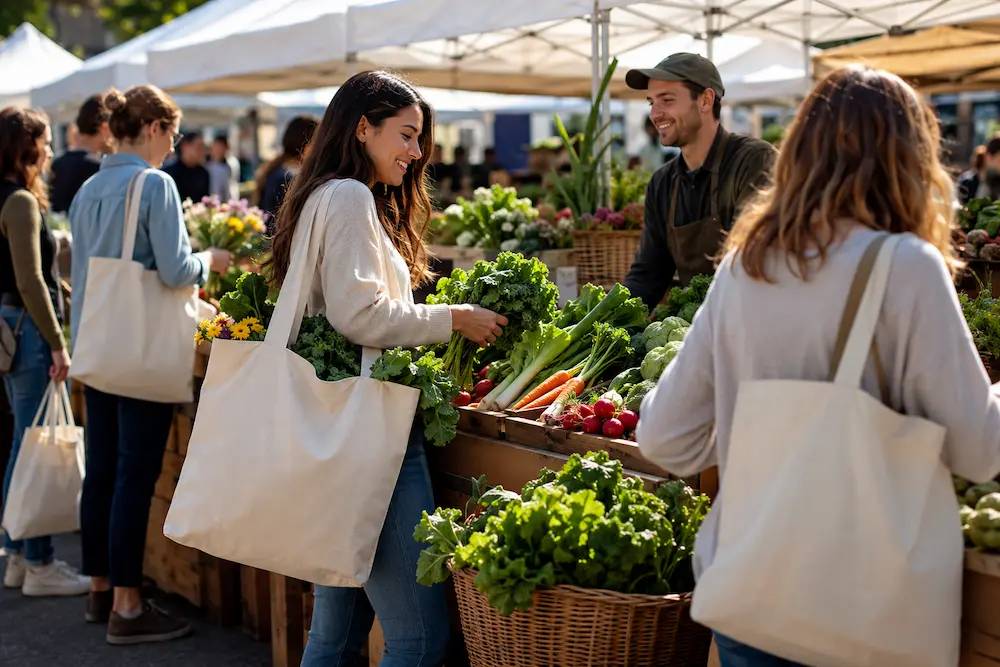
Why Farmers Markets Continue to Choose Reusable Tote Bags
Farmers markets have become an important part of sustainable retail, connecting local producers directly with consumers seeking fresh, seasonal, and locally sourced products.
Unlike supermarkets, farmers markets often focus on environmental responsibility, community engagement, and supporting regional agriculture. These values naturally align with reusable tote bags.
Customers visiting farmers markets frequently purchase a variety of items during a single trip, including fresh vegetables, fruit, bread, cheese, flowers, eggs, herbs, coffee, and handmade products. Carrying these purchases requires bags that are both durable and comfortable.
Reusable tote bags provide an ideal solution.
Rather than relying on disposable plastic bags, shoppers can carry heavier products safely while reducing packaging waste.
For vendors, every reusable bag also becomes a travelling advertisement.
After leaving the market, customers continue using the bag at supermarkets, libraries, gyms, workplaces, and shopping centres, giving local farms and market organisers ongoing brand exposure without additional advertising costs.
| Packaging Type | Typical Lifespan | Reusability | Brand Visibility |
|---|---|---|---|
| Plastic Bags | One use | Very Low | Very Limited |
| Paper Bags | Several uses | Low | Limited |
| Cotton Tote Bags | Hundreds of uses | High | Excellent |
| Canvas Tote Bags | Years of use | Very High | Outstanding |
Because of these advantages, reusable tote bags have become one of the most effective promotional tools available to farmers markets.
Benefits of Tote Bags for Farmers Markets
Reusable tote bags benefit every participant in the market ecosystem.
Customers enjoy practical carrying solutions, vendors strengthen brand recognition, and organisers promote environmentally responsible shopping habits.
Improving Customer Convenience
Farmers market purchases are often heavier than conventional retail shopping.
Customers may carry:
- Fresh vegetables
- Fruit
- Glass bottles
- Honey jars
- Fresh bread
- Flowers
- Dairy products
- Handmade goods
Strong tote bags distribute weight evenly while remaining comfortable to carry throughout the market.
Wide shoulder straps also reduce strain compared with narrow plastic handles.
Long-Term Brand Promotion
Unlike disposable packaging, reusable tote bags continue promoting farms and local businesses every time customers use them.
Many successful farms intentionally design attractive bags that shoppers enjoy carrying throughout the year.
For vendors seeking practical everyday packaging, cloth tote bags for everyday carry and brand display offer an excellent balance of durability, comfort, and professional presentation.
Supporting Sustainable Shopping
Sustainability has become one of the defining characteristics of farmers markets.
Reusable bags support these values by reducing single-use packaging while encouraging responsible consumer behaviour.
Many customers now arrive at markets expecting to use reusable shopping bags, making them an essential part of the shopping experience.
Choosing the Best Materials
Material selection affects durability, appearance, carrying comfort, and branding opportunities.
| Material | Durability | Best Applications |
|---|---|---|
| Cotton | Good | Everyday shopping |
| Canvas | Excellent | Heavy groceries |
| Cloth | Good | Promotional events |
| Recycled Cotton | Good | Sustainable markets |
Cotton Tote Bags
Cotton remains one of the most popular materials because it combines affordability with an attractive natural appearance.
It performs well for:
- Fresh produce
- Artisan food
- Organic products
- Community markets
- Farm shops
Cotton also accepts high-quality printing, allowing farms to reproduce detailed logos and illustrations.
Canvas Tote Bags
Canvas offers greater strength and is particularly suitable for heavier groceries.
Customers purchasing potatoes, pumpkins, bottled drinks, or multiple kilograms of vegetables benefit from reinforced canvas construction.
For farms seeking premium promotional packaging, canvas tote bag printing for sustainable brand visibility combines durable materials with long-lasting print quality, creating reusable bags that continue representing the brand for years.
Cloth Tote Bags
Cloth tote bags provide a lightweight option for vendors selling smaller purchases such as herbs, baked goods, handmade soaps, candles, and gift products.
Their flexible construction also makes them easy for shoppers to fold and store between market visits.
Choosing the Right Fabric Weight for Market Shopping
Farmers markets often sell products that are significantly heavier than typical retail purchases.
A single shopping trip may include fresh vegetables, fruit, bottled beverages, jars of honey, homemade sauces, artisan bread, flowers, and dairy products. When combined, these purchases can easily exceed several kilograms.
For this reason, fabric weight plays an important role when selecting tote bags.
Heavier fabrics generally provide better structural support, improved durability, and longer service life.
| Fabric Weight | Recommended Use | Typical Load |
|---|---|---|
| 140–160 GSM | Promotional giveaways | Light groceries |
| 180–220 GSM | Everyday farmers market shopping | Mixed produce |
| 240–280 GSM | Heavy grocery shopping | Bottles, vegetables, bread |
| 300+ GSM | Premium reusable market bags | Large weekly shopping trips |
Rather than choosing the lightest available fabric to reduce purchasing costs, vendors should consider the customer’s long-term experience.
A stronger tote bag is more likely to remain in daily use, creating significantly greater brand exposure over its lifetime.
Selecting the Right Bag Size
Different market vendors require different carrying capacities.
Fresh produce occupies considerable space, while baked goods, flowers, and handcrafted products require different proportions.
Selecting the appropriate dimensions improves customer convenience and protects products during transport.
| Vendor Type | Recommended Bag Size | Typical Products |
|---|---|---|
| Fruit & Vegetable Stall | 40 × 40 × 12 cm | Mixed produce |
| Bakery | 38 × 42 cm | Bread and pastries |
| Flower Vendor | 35 × 45 cm | Bouquets |
| Honey Producer | 38 × 40 × 10 cm | Glass jars |
| Artisan Food Vendor | 40 × 42 × 12 cm | Mixed speciality foods |
Many reusable grocery bags include bottom gussets that expand carrying capacity while helping products remain upright. This design is particularly useful when transporting bottles, jars, and delicate baked goods.
Handle Construction for Heavy Produce
Handle quality is often one of the most overlooked purchasing considerations.
Fresh groceries generate continuous downward pressure, especially when customers carry bags for extended periods through outdoor markets or public transport.
Professional tote bags should include:
- Reinforced cross stitching
- Long shoulder handles
- Heavy-duty sewing thread
- Balanced handle positioning
- Double-stitched seams
These features improve both comfort and durability. Long shoulder straps also allow shoppers to keep both hands free while browsing additional market stalls.
Printing Methods for Farmers Market Branding
A professionally printed tote bag allows farms and market organisers to communicate their identity well beyond the market itself.
Many customers intentionally reuse attractive shopping bags because they appreciate natural designs and environmentally friendly branding.
The most suitable printing method depends on artwork complexity, order quantity, and budget.
| Printing Method | Advantages | Best Application |
|---|---|---|
| Screen Printing | Cost-effective and durable | Farm logos |
| Digital Printing | Detailed artwork | Seasonal illustrations |
| Heat Transfer | Full-colour graphics | Limited campaigns |
| Embroidery | Premium appearance | Farm gift shops |
| Woven Labels | Luxury branding | Organic product collections |
Simple illustrations inspired by farming, vegetables, orchards, flowers, or rural landscapes often create stronger emotional connections than heavily promotional graphics.
For businesses seeking premium retail presentation, promotional canvas tote bags with logo for brand visibility offer durable construction together with professional branding suitable for long-term promotional use.
Tote Bags for Fruit and Vegetable Vendors
Fresh produce vendors usually serve customers purchasing multiple items during a single visit.
Their packaging should comfortably accommodate:
- Leafy vegetables
- Root vegetables
- Citrus fruit
- Apples
- Tomatoes
- Potatoes
- Seasonal produce
Strong canvas construction helps prevent stretching while maintaining the bag’s appearance after repeated use. Many farms also include attractive botanical illustrations or hand-drawn vegetable artwork that reflects their local identity.
Tote Bags for Organic Food Producers
Organic food brands often emphasise sustainability throughout every stage of their business.
Reusable tote bags naturally support this message.
Popular design elements include:
- Natural cotton colours
- Minimalist typography
- Botanical illustrations
- Farm landscapes
- Organic certification messaging
- Earth-tone colour palettes
These designs communicate authenticity while reinforcing customer confidence in environmentally responsible production.
Tote Bags for Bakeries and Artisan Food Producers
Fresh bread, pastries, handmade pasta, specialty coffee, cheeses, and gourmet products require packaging that feels premium while remaining practical.
Many artisan food producers choose thicker cotton or canvas fabrics because they communicate quality consistent with handcrafted products.
Reusable bags also encourage repeat visits, particularly when customers associate the packaging with high-quality local food.
Tote Bags for Flower Growers
Flower vendors have unique packaging requirements.
Bouquets vary considerably in height, meaning tote bags should offer sufficient vertical space without crushing delicate flowers.
Popular features include:
- Taller proportions
- Comfortable shoulder straps
- Strong base construction
- Lightweight fabrics
- Elegant floral artwork
Many customers continue using these bags for shopping after flowers have been enjoyed, extending promotional value beyond the original purchase.
Farmers Market Events and Promotional Campaigns
Seasonal events provide excellent opportunities for introducing limited-edition tote bags.
Examples include:
- Spring harvest festivals
- Summer produce markets
- Autumn pumpkin festivals
- Apple harvest celebrations
- Christmas markets
- Local food festivals
Exclusive event bags create excitement among returning visitors while encouraging additional purchases.
For large promotional campaigns, many organisers select promotional canvas tote bags for brand visibility and marketing because they combine practical everyday use with extended brand exposure across local communities.
Complementary Promotional Products
While tote bags remain the primary reusable shopping solution for farmers markets, some organisers also provide additional promotional merchandise during seasonal campaigns.
For example, staff members, volunteers, or event participants may receive lightweight accessory bags for personal belongings, registration materials, or giveaway items. In these situations, black drawstring bags for modern promotional use can complement reusable tote bags by offering a practical option for event logistics without replacing the main shopping bag used by customers.
Using multiple promotional products allows organisers to create a consistent visual identity across different market activities while meeting the needs of vendors, staff, and visitors.
Bulk Purchasing Strategies for Farmers Markets
Whether you operate a weekly community farmers market, manage multiple agricultural cooperatives, or purchase packaging for dozens of vendors, buying tote bags in bulk requires careful planning. While unit price is an important consideration, it should never be the only factor influencing purchasing decisions.
The lowest-cost bag is not necessarily the most economical choice over its lifetime. Bags that wear out quickly, lose their shape, or fade after repeated washing provide limited marketing value and may even negatively influence customer perceptions of the vendor’s products.
Professional buyers should evaluate the following factors before placing large production orders.
| Purchasing Factor | Why It Matters |
|---|---|
| Fabric quality | Determines lifespan and carrying strength |
| Stitch reinforcement | Prevents handle failure under heavy loads |
| Printing durability | Maintains brand visibility over years of use |
| Colour consistency | Protects brand identity across multiple orders |
| Production lead time | Supports seasonal market schedules |
| Packaging efficiency | Reduces storage and transportation costs |
| Factory quality control | Improves consistency between production batches |
Many experienced buyers divide annual demand into two or three production runs instead of ordering an entire year’s inventory at once. This strategy offers several advantages:
- Improved cash flow management
- Reduced warehouse space requirements
- Greater flexibility for seasonal artwork
- Easier inventory control
- Lower risk of obsolete packaging
For markets introducing new branding, requesting pre-production samples before approving full-scale manufacturing remains one of the safest purchasing practices.
Inventory Planning for Seasonal Markets
Unlike supermarkets, farmers markets often experience dramatic seasonal fluctuations.
Summer and autumn typically generate the highest customer traffic because fresh produce is abundant, while winter markets may focus more on baked goods, preserves, handmade crafts, and festive gifts.
Inventory planning should therefore reflect seasonal purchasing behaviour.
| Season | Typical Products | Estimated Tote Bag Demand |
|---|---|---|
| Spring | Herbs, seedlings, flowers | Moderate |
| Summer | Fresh fruit and vegetables | Very High |
| Autumn | Pumpkins, apples, harvest produce | Peak |
| Winter | Artisan gifts and festive foods | Moderate |
Market organisers should coordinate packaging orders well in advance of peak trading periods. Delayed production during harvest season can create shortages that disrupt customer service and promotional campaigns.
Maintaining a safety stock of approximately 10–15% above projected demand can help prevent unexpected shortages caused by weather, special events, or unusually high visitor numbers.
Sustainability Beyond Reusable Packaging
Providing reusable tote bags is only one part of building a more sustainable farmers market.
Many successful markets combine reusable packaging with broader environmental initiatives, including:
- Eliminating single-use plastic bags
- Encouraging customers to bring existing reusable bags
- Using recyclable shipping cartons
- Reducing unnecessary internal packaging
- Choosing water-based printing inks where appropriate
- Supporting local manufacturing when feasible
Durability should remain the primary sustainability objective.
A reusable bag that lasts for several years replaces hundreds of disposable shopping bags, reducing material consumption while delivering significantly greater promotional value for vendors.
Farmers markets can also educate customers about proper bag care, encouraging regular washing and continued reuse rather than frequent replacement.
Common Mistakes When Buying Farmers Market Tote Bags
Even experienced organisers occasionally make purchasing decisions that reduce the long-term effectiveness of reusable bags.
The following issues are among the most common.
| Common Mistake | Possible Consequence |
|---|---|
| Choosing fabric that is too thin | Reduced carrying capacity |
| Ignoring handle reinforcement | Premature handle failure |
| Ordering only by price | Lower customer satisfaction |
| Selecting unsuitable bag sizes | Poor usability |
| Overcomplicated artwork | Higher printing costs |
| Skipping sample approval | Unexpected production quality |
One of the most frequent mistakes is underestimating how heavy farmers market purchases can become.
Customers rarely buy a single product. Instead, they often combine vegetables, fruit, bread, dairy products, bottled drinks, and handmade goods into one shopping bag.
Designing tote bags for realistic carrying conditions improves customer satisfaction while extending product lifespan.
Future Trends in Farmers Market Tote Bags
Consumer expectations continue to evolve alongside broader sustainability trends.
Over the next several years, farmers market tote bags are expected to incorporate:
- Organic cotton fabrics
- Recycled textile materials
- Minimalist branding
- Local artist collaborations
- Seasonal limited-edition collections
- QR codes linking to farm information
- Educational sustainability messaging
- Higher-quality woven labels
- Premium reinforced construction
Customers increasingly appreciate products that combine practicality with authentic storytelling.
Rather than displaying only a company logo, future tote bags are likely to feature illustrations of local farms, regional landscapes, seasonal produce, or information about sustainable agriculture.
This approach transforms the tote bag into a communication tool as well as practical packaging.
Conclusion
Farmers markets represent far more than places to purchase fresh food.
They bring together local farmers, artisan producers, community organisations, and environmentally conscious consumers who value quality, authenticity, and sustainability.
Reusable tote bags support these values while providing practical benefits for both shoppers and vendors.
A well-designed tote bag safely carries fresh produce, protects delicate purchases, and offers long-term brand visibility every time it is reused in daily life. Whether used by independent farms, organic food producers, bakeries, flower growers, or market organisers, durable cotton and canvas tote bags continue promoting local businesses long after customers leave the market.
By selecting suitable materials, reinforced construction, professional printing, appropriate sizes, and reliable manufacturing partners, buyers can invest in packaging that strengthens customer loyalty, enhances brand recognition, and supports sustainable retail practices for years to come.
For modern farmers markets, reusable tote bags are no longer simply shopping bags—they are lasting brand ambassadors that reflect the values of local agriculture, responsible consumption, and community engagement.
Why Farmers Markets Continue Investing in Reusable Tote Bags
Farmers markets continue to grow because consumers increasingly value fresh food, local businesses, and sustainable shopping habits. Reusable tote bags support all three objectives by replacing disposable packaging with durable products that customers use repeatedly.
For vendors, every reusable bag becomes a mobile advertisement that strengthens brand recognition far beyond the market itself. By selecting high-quality cotton or canvas tote bags with thoughtful designs and durable construction, farmers markets can improve customer satisfaction while creating lasting promotional value for local producers and community events.
FAQ
1. Why are reusable tote bags popular at farmers markets?
Reusable tote bags are popular because they provide a durable and environmentally friendly alternative to disposable packaging. They comfortably carry fresh produce, baked goods, flowers, and artisan products while giving vendors long-term brand exposure every time customers reuse them.
2. What material is best for farmers market tote bags?
Cotton and canvas are the most commonly used materials. Cotton tote bags are lightweight, breathable, and ideal for everyday shopping, while canvas tote bags offer greater durability for carrying heavier groceries such as vegetables, bottled drinks, and multiple food items.
3. How can vendors use tote bags for marketing?
Vendors can customise tote bags with farm logos, seasonal artwork, market branding, or promotional messages. Attractive reusable bags encourage customers to carry them regularly, turning every shopping trip into an opportunity for ongoing brand visibility.
4. What size tote bag is recommended for farmers markets?
A medium to large tote bag with dimensions around 40 × 40 × 10–12 cm is suitable for most farmers market purchases. Bags with bottom gussets provide additional capacity and better stability when carrying produce, bread, jars, and bottles.
5. What should buyers consider before ordering tote bags in bulk?
Buyers should evaluate material quality, fabric weight, handle reinforcement, stitching, printing durability, production lead time, quality control, and supplier reliability. Ordering product samples before mass production helps ensure consistent quality and reduces purchasing risks.
References
- Global Organic Textile Standard (GOTS). Global Organic Textile Standard Certification Guidelines.
- OEKO-TEX®. STANDARD 100 by OEKO-TEX®.
- Textile Exchange. Preferred Fiber & Materials Market Report.
- ASTM International. Standards for Textile Performance and Durability.
- Sustainable Packaging Coalition. Design Guidelines for Sustainable Packaging.
- International Trade Centre (ITC). Export Packaging and Labelling Resources.
- European Environment Agency. Circular Economy and Sustainable Consumption Reports.
- Food and Agriculture Organization (FAO). Sustainable Food Systems and Local Agriculture.