Tote Bags for Clothing Brands — Quick Summary
Tote bags for clothing brands can function as retail packaging, reusable fashion accessories, merchandise, gift-with-purchase products, launch items, and customer brand touchpoints. Lightweight cotton can suit high-volume campaigns, medium-weight cotton can balance presentation and packing efficiency, while structured canvas can support premium merchandise and streetwear collections. Fashion buyers should evaluate fabric hand feel, proportions, handle length, printing, colour accuracy, garment capacity, packaging, sampling, quality control, and repeat-order consistency rather than selecting bags by unit price alone.
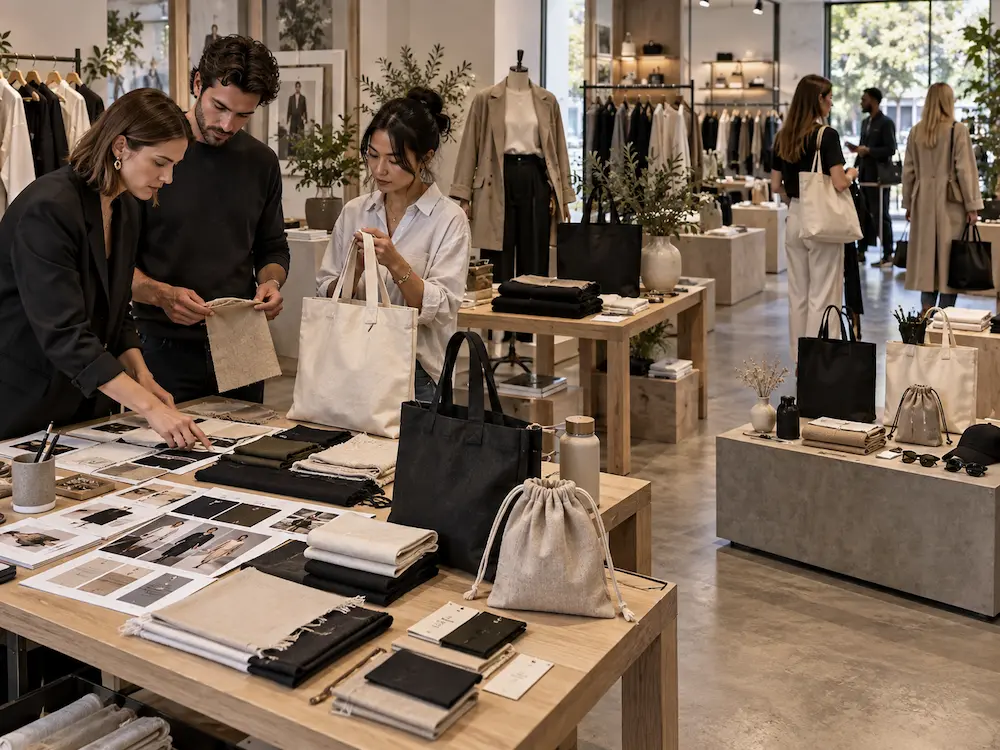
Why Clothing Brands Use Tote Bags
Packaging is part of the fashion experience.
A customer does not interact only with the garment. They encounter the brand through store interiors, websites, labels, hangtags, boxes, tissue paper, shopping bags, delivery packaging, and other details surrounding the product.
For this reason, tote bags can play a larger role for clothing brands than simply carrying a purchase home.
A custom tote can function as:
- Retail shopping packaging
- Reusable customer bag
- Brand merchandise
- Gift-with-purchase item
- Influencer package component
- Fashion event bag
- Product-launch merchandise
- Pop-up store packaging
- Membership gift
- Limited-edition accessory
A customer might receive the bag with a purchase and later carry it to university, work, a café, the gym, a market, or another shopping trip.
At that point, the packaging has become a reusable fashion object.
That transition is particularly valuable for clothing brands.
| Fashion Application | Tote Direction | Main Priority |
|---|---|---|
| Boutique Packaging | Medium cotton | Presentation |
| Premium Fashion | Heavy cotton/canvas | Perceived quality |
| Streetwear | Printed canvas | Graphic impact |
| DTC Brand | Foldable cotton | Fulfilment efficiency |
| Pop-Up Store | Printed tote | Campaign visibility |
| Product Launch | Limited-edition tote | Exclusivity |
| Gift With Purchase | Lightweight-medium cotton | Cost/value balance |
| Fashion Merchandise | Premium canvas | Retail value |
The correct specification should therefore reflect the positioning of the clothing brand.
Tote Bags as Part of Fashion Brand Identity
Fashion brands communicate through visual consistency.
Typography, colour, photography, fabric, packaging, retail interiors, and product styling all contribute to how the customer perceives the label.
The tote should fit into this system.
A minimalist clothing label may prefer:
- Natural cotton
- Black single-colour printing
- Small centred logo
- Clean construction
A streetwear company may choose:
- Heavy canvas
- Oversized proportions
- Large graphics
- Contrasting handles
- Double-sided artwork
A luxury-oriented independent label might use:
- Heavy cotton
- Embroidery
- Internal pocket
- Small woven label
- Premium finishing
There is no universal fashion tote specification.
The product should communicate the same visual language as the clothing collection.
From Shopping Bag to Fashion Accessory
One of the most important opportunities for fashion brands is transforming packaging into something customers intentionally reuse.
Traditional shopping bags primarily transport purchases.
A successful fashion tote can continue functioning after the original transaction.
This changes the design criteria.
Instead of asking:
“Can it carry a shirt home?”
the brand should ask:
“Would our customer carry this bag with an outfit next week?”
That question affects:
- Proportions
- Fabric
- Handle drop
- Print size
- Artwork
- Colour
- Construction
For fashion brands, aesthetics and functionality are closely connected.
Retail Packaging for Clothing Stores
Physical fashion stores need bags that work efficiently at checkout.
Typical products include:
- T-shirts
- Shirts
- Trousers
- Dresses
- Knitwear
- Accessories
Unlike groceries, these products are generally relatively lightweight but can occupy substantial volume.
Bag dimensions therefore need to reflect folded garment size.
A narrow bag may crease or compress clothing.
An unnecessarily oversized bag increases fabric use and storage requirements.
Retailers should test samples with representative garments.
Custom Cotton Tote Bags for Everyday Fashion Use
Cotton can work particularly well for fashion labels because it provides a soft textile appearance that integrates naturally with apparel.
For brands that want packaging to continue into everyday customer use, custom cotton tote bags supporting everyday brand use can provide a versatile starting point.
Cotton totes can support:
- Retail packaging
- Merchandise
- Seasonal campaigns
- Pop-ups
- Gifts
- Membership programmes
The fabric specification can then be adjusted according to the brand’s price positioning.
DTC and E-Commerce Fashion Brands
Direct-to-consumer brands face different packaging conditions from physical stores.
The tote may need to fit inside an outer shipping carton or mailing package.
This makes:
- Foldability
- Thickness
- Weight
- Packing dimensions
particularly important.
A very heavy canvas tote may look premium but increase fulfilment weight and package volume.
A medium-weight cotton tote may provide a better balance for an e-commerce gift-with-purchase programme.
DTC brands should therefore evaluate the entire fulfilment system rather than the tote in isolation.
Fashion Launches and Pop-Up Stores
Pop-up stores and collection launches create temporary physical environments where merchandise and packaging can reinforce the campaign concept.
A tote may feature:
- Collection artwork
- Launch date
- City
- Artist collaboration
- Seasonal colour
- Limited-edition graphic
Because these events often generate social content, the bag may also appear in customer photographs.
Visual impact can therefore matter more than in standard everyday packaging.
Tote Bags as Fashion Merchandise
Fashion brands can also sell totes independently.
In this case, the bag competes with other accessories.
Customers evaluate:
- Fabric
- Design
- Construction
- Handle comfort
- Price
- Brand relevance
A low-cost promotional tote may not meet the expectations associated with a premium clothing label.
Merchandise-quality totes may therefore require heavier material, stronger construction, more refined printing, or additional details.
Streetwear and Lifestyle Brands
Streetwear provides one of the clearest examples of the tote as merchandise.
Graphic identity is often central to the brand.
The tote can carry:
- Large artwork
- Typography
- Collection graphics
- Cultural references
- Collaboration designs
Oversized proportions can also become part of the aesthetic.
However, oversized bags should still be functional.
Design should balance visual impact with comfortable carrying.
Choosing Materials for Fashion Tote Bags
Material has a strong effect on perceived value.
| Material | Appearance | Structure | Typical Fashion Application |
|---|---|---|---|
| Lightweight Cotton | Soft/casual | Low | Giveaways |
| Medium Cotton | Natural/refined | Moderate | Retail packaging |
| 8 oz Canvas | Structured | Medium | Everyday merchandise |
| 10 oz Canvas | Premium | Strong | Fashion accessory |
| 12 oz Canvas | Heavy | High | Premium merchandise |
| Recycled Textile | Variable | Variable | Material-led collections |
The most expensive fabric is not automatically the best choice.
The material should support the brand’s positioning and intended use.
Lightweight Cotton
Lightweight cotton can work for:
- Promotional campaigns
- Influencer kits
- Event giveaways
- Entry-level packaging
- High-volume launches
It is easy to fold and economical to ship.
However, very lightweight fabric may not communicate the desired quality for a premium fashion label.
Medium-Weight Cotton
Medium-weight cotton can provide a useful balance.
It can feel substantial enough for repeated use while remaining relatively easy to fold and pack.
Applications include:
- Boutique shopping bags
- DTC gifts
- Brand merchandise
- Seasonal packaging
Natural cotton can also complement brands using neutral, organic, or understated visual identities.
Custom Printed Cotton for Natural Brand Expression
Fashion brands often want the textile itself to contribute to the design.
Natural cotton texture can create a softer visual effect than synthetic packaging.
For brands using illustration, typography, or understated graphics, custom printed cotton tote bags for natural brand expression can provide a suitable platform for combining textile texture with brand artwork.
Print testing is important because ink behaves differently on different fabric surfaces.
Canvas
Canvas provides greater structure.
This can make the bag feel more like an accessory than temporary packaging.
Common options may include:
- 8 oz
- 10 oz
- 12 oz
Heavier canvas can support:
- Premium merchandise
- Book-style totes
- Oversized fashion bags
- Limited editions
- Artist collaborations
However, heavier fabric increases cost and shipping weight.
Recycled and Alternative Materials
Some fashion brands may explore:
- Recycled cotton
- Recycled canvas
- RPET
- Blended textiles
Material selection should align with both performance and communication.
If recycled content is part of the marketing story, buyers should request appropriate documentation rather than relying solely on supplier descriptions.
Cotton vs Canvas for Clothing Brands
| Factor | Cotton | Canvas |
|---|---|---|
| Hand Feel | Soft | More substantial |
| Structure | Flexible | Structured |
| Foldability | High | Moderate |
| Shipping Efficiency | Generally better | Heavier |
| Printability | Strong | Strong |
| Merchandise Value | Moderate–High | High |
| Retail Packaging | Excellent | Excellent |
| Premium Accessory | Possible | Particularly suitable |
The decision should be made around the customer experience.
Choosing Fabric Weight
Fabric weight can influence how customers interpret quality.
However, fashion brands should avoid choosing the heaviest material purely to create a premium impression.
A heavy bag may be:
- More expensive
- More difficult to fold
- More costly to ship
- Excessive for light garments
The goal is to select sufficient weight for the desired silhouette and durability.
Selecting Tote Bag Dimensions
Fashion tote dimensions should consider both garments and styling.
A medium format around 38 × 42 cm can provide a useful starting reference for many everyday totes.
Brands may adjust proportions to create different looks:
Tall tote: More vertical, editorial silhouette.
Wide tote: Useful for folded garments.
Oversized tote: Strong fashion statement and greater capacity.
Compact tote: Suitable for accessories or premium gift packaging.
Dimensions should be prototyped rather than selected only from a catalogue.
Flat vs Gusseted Fashion Totes
Flat totes create a clean, simple silhouette.
They work well for:
- T-shirts
- Lightweight clothing
- Printed merchandise
- Everyday accessories
Gusseted totes provide additional internal depth.
They can be useful for:
- Knitwear
- Multiple garments
- Shoe boxes
- Gift sets
- Larger purchases
The gusset can also change how the bag looks when carried.
Fashion buyers should therefore consider it as both a functional and aesthetic feature.
Handle Length and Silhouette
Handle length changes the visual proportions of a tote.
Short handles create a hand-carried appearance.
Long handles create a relaxed shoulder-carry style.
A handle drop around 26–30 cm can be a practical reference for many shoulder totes, although exact dimensions should match the bag.
Fashion brands may also experiment with:
- Wide cotton webbing
- Contrasting handles
- Self-fabric handles
- Rope
- Extra-long straps
These details can become part of the design language.
Printing Methods for Clothing Brands
Fashion artwork can range from minimal logos to complex illustrations.
| Printing Method | Suitable For | Fashion Effect |
|---|---|---|
| Screen Printing | Logos/graphics | Clean and versatile |
| Digital Printing | Detailed artwork | High visual detail |
| Heat Transfer | Multicolour designs | Flexible |
| Embroidery | Small branding | Premium texture |
| Woven Label | Subtle identity | Apparel-like detail |
| Foil Detail | Select designs | Decorative accent |
The printing method should be selected after artwork is finalised.
Screen Printing
Screen printing remains practical for many fashion totes.
It works particularly well for:
- Logos
- Typography
- Graphic illustrations
- Limited colour palettes
For large quantities, screen setup costs can be distributed across more units.
Digital Printing
Digital methods can be appropriate for detailed artwork and complex colour.
This can support:
- Artist collaborations
- Illustrated collections
- Photographic-style graphics
- Limited-edition merchandise
The exact process should be tested on the chosen fabric.
Embroidery
Embroidery can create a tactile premium effect.
It works particularly well for:
- Small logos
- Monograms
- Minimal symbols
Large embroidery areas can become expensive and may affect fabric behaviour.
Sampling is therefore important.
Logo Placement and Minimal Branding
Fashion brands do not always need large logos.
A small logo can communicate confidence and allow the bag to integrate more easily into everyday styling.
Common placements include:
- Centre
- Upper centre
- Lower corner
- Side panel
- Internal pocket
- Woven side label
Logo placement should be measured rather than described simply as “small” or “centre.”
Large Graphics and Statement Artwork
Streetwear and youth-focused labels may intentionally use oversized graphics.
The print can become the central feature of the tote.
Large artwork requires attention to:
- Maximum print area
- Seams
- Fabric texture
- Ink coverage
- Artwork resolution
- Colour accuracy
The print supplier should confirm the usable artwork area before the final design is approved.
Colour Matching and Fabric Colour
Colour accuracy is particularly important for fashion.
A brand may use a signature:
- Green
- Blue
- Red
- Beige
- Black
- Off-white
Pantone references can help communicate intended print colour.
However, printed colour can appear different depending on the underlying textile.
A physical sample provides a more reliable reference than screen appearance alone.
Tote Bags for Seasonal Collections
Fashion brands operate around collections.
Tote artwork can change by:
- Spring/Summer
- Autumn/Winter
- Holiday
- Capsule collection
- Collaboration
- Anniversary
The basic bag specification can remain consistent while artwork changes.
This simplifies repeated sourcing.
Limited-Edition Merchandise
Limited editions can create stronger merchandise value.
A brand might produce:
- 500 launch totes
- 1,000 collaboration totes
- City-exclusive designs
- Event-exclusive artwork
Scarcity should be genuine if it is used in marketing.
From a manufacturing perspective, limited editions require careful quantity planning because small batches may carry higher unit costs.
Tote Bags vs Drawstring Bags for Clothing Brands
Tote bags are not the only textile packaging option.
Drawstring bags can be useful where closure, compact storage, or a sportier appearance is desirable.
| Application | Tote Bag | Drawstring Bag |
|---|---|---|
| Fashion Boutique | Excellent | Moderate |
| Streetwear | Excellent | Excellent |
| Sportswear | Good | Excellent |
| Footwear | Good | Excellent |
| Event Giveaway | Excellent | Excellent |
| Premium Shopping | Excellent | Moderate |
| Gym/Lifestyle | Good | Excellent |
| Gift Packaging | Good | Excellent |
The right choice depends on the collection.
Canvas Drawstring Bags for Fashion Packaging
For footwear, streetwear, accessories, or premium gift packaging, custom canvas drawstring bags for eco-friendly branding can provide a more enclosed format than an open tote.
Brands should still be cautious with broad environmental terminology and ensure any sustainability claims are supported by appropriate evidence.
Drawstring construction can be particularly useful for:
- Shoes
- Accessories
- Gift sets
- Travel products
Lightweight Drawstring Backpacks
Sportswear and youth-oriented clothing brands may need something customers can carry hands-free.
In these situations, drawstring backpacks for lightweight promotional carry can provide an alternative to traditional tote construction.
Potential uses include:
- Gym collections
- Sports launches
- Campus campaigns
- Festival merchandise
- Activewear events
Lightweight drawstring backpacks should still be tested against the expected load.
Drawstring Bags With Logo for Promotions
Fashion launches, influencer events, and brand activations may also use drawstring bags with logo for branding and promotions when a compact, casual packaging format better matches the campaign.
This is particularly useful when the brand wants:
- Simple closure
- Compact storage
- Hands-free carrying
- Youth-oriented styling
Totes and drawstring bags can also coexist within the same packaging system.
Packaging Accessories and Gift Sets
Fashion tote programmes can include additional components.
Examples include:
- Tissue paper
- Hangtags
- Woven labels
- Ribbon
- Inner pouches
- Gift boxes
These details can create a stronger unboxing or retail experience.
However, every additional component increases:
- Cost
- Assembly time
- Packing complexity
- Inventory management
Brands should add accessories only when they contribute meaningfully to the intended presentation.
Bulk Ordering and MOQ
Custom fashion totes involve fixed setup costs.
These may include:
- Sampling
- Artwork preparation
- Printing screens
- Material sourcing
- Cutting setup
- Production scheduling
A minimum order quantity around 500 pieces is common for many custom cotton and canvas programmes, although actual requirements depend on material, colour, construction, artwork, and accessories.
Fashion brands should consider whether one large order or several smaller seasonal orders better fits their inventory strategy.
Cost Factors
| Cost Factor | Potential Impact |
|---|---|
| Fabric Weight | High |
| Custom Fabric Colour | High |
| Bag Size | High |
| Gussets | Medium |
| Premium Handles | Medium |
| Screen Printing | Low–Medium depending on colours |
| Large Print Coverage | Medium–High |
| Embroidery | Medium–High |
| Internal Pocket | Medium |
| Zipper | Medium–High |
| Woven Labels | Low–Medium |
| Individual Packaging | Variable |
| Quantity | High |
A premium fashion tote does not necessarily need every available feature.
Design restraint can often create a stronger result.
Sampling and Prototyping
Sampling is particularly important for fashion brands because tactile and visual qualities matter.
A prototype allows the team to evaluate:
- Hand feel
- Fabric colour
- Structure
- Proportions
- Handle drop
- Print scale
- Logo position
- Stitching
- Overall styling
The sample should ideally be photographed and tested with actual clothing products.
This can reveal issues that are difficult to identify from a technical drawing.
Artwork Approval
Artwork files should be production-ready.
Vector formats are generally preferred for logos and line artwork.
Approval should document:
- Artwork dimensions
- Print position
- Pantone references
- Number of colours
- Print sides
- Print method
Low-resolution files should not be enlarged for large tote graphics without checking image quality.
Quality Inspection for Fashion Tote Bags
Fashion products are judged visually.
Inspection should therefore cover both construction and appearance.
| Inspection Area | Key Check |
|---|---|
| Fabric | Correct texture and weight |
| Colour | Approved range |
| Dimensions | Correct proportions |
| Handles | Length and alignment |
| Stitching | Clean and consistent |
| Sharp and correctly positioned | |
| Logo | Correct scale |
| Cleanliness | No visible stains |
| Shape | Consistent |
| Packaging | Correct presentation |
Even when a defect does not affect carrying performance, it may still be unacceptable for premium retail merchandise.
Packing for Fashion Retail and E-Commerce
Packing requirements depend on distribution.
Physical stores may prefer bulk carton packing.
E-commerce brands may need each tote folded to fit into fulfilment packaging.
Merchandise programmes may require:
- Individual protective packaging
- Barcode labels
- Hangtags
- SKU labels
These requirements should be confirmed before production because they affect labour and cost.
Multi-Store Distribution
Fashion chains operating multiple stores should establish a standard master specification.
This can include:
- Fabric
- Weight
- Colour
- Dimensions
- Handles
- Printing
- Packaging
- Carton quantity
Store allocation can then be planned separately.
For example, flagship locations may receive larger quantities than smaller stores.
Inventory Planning
Fashion packaging demand can be seasonal.
Brands should consider:
- Sales forecasts
- Store openings
- Promotional periods
- Collection launches
- Holiday peaks
- Production lead time
- Freight lead time
Ordering excessive inventory simply to reduce unit price can create storage and cash-flow problems.
Sustainability and Fashion Packaging
Fashion brands increasingly make environmental statements around packaging.
These claims should be specific and evidence-based.
A cotton tote should not automatically be described as:
- Sustainable
- Zero-impact
- Completely green
without supporting context.
Brands using:
- Organic cotton
- Recycled cotton
- Recycled polyester
should verify relevant material documentation when making specific claims.
Designing the tote for repeated practical use can also be an important objective.
Reducing Unnecessary Packaging
A reusable textile bag can still be overpackaged.
Fashion buyers should consider whether the tote genuinely needs:
- Individual plastic packaging
- Multiple paper inserts
- Extra wrapping
- Oversized cartons
Protection requirements remain important, but unnecessary packaging can add cost and conflict with a simplified brand presentation.
Common Fashion Tote Bag Sourcing Mistakes
| Mistake | Potential Result |
|---|---|
| Selecting fabric only by price | Weak perceived quality |
| Choosing fabric without sampling | Unexpected hand feel |
| Oversized logo without design testing | Poor visual balance |
| Wrong proportions | Unattractive silhouette |
| Handles too short | Limited usability |
| Ignoring folded garments | Wrong capacity |
| Low-resolution artwork | Poor print |
| No Pantone reference | Colour inconsistency |
| Excessive accessories | Higher cost/complexity |
| Skipping pre-production sample | Bulk production surprises |
| Ordering too much seasonal stock | Inventory risk |
| Unsupported sustainability claims | Credibility risk |
How to Build a Fashion Tote Bag RFQ
A professional request for quotation should include technical details.
For example:
Material: Natural cotton canvas
Weight: 10 oz
Size: 38 × 42 cm
Handles: 3 × 65 cm
Construction: Flat tote
Printing: Black screen print, two sides
Artwork: Vector file supplied
Quantity: 5,000 pcs
Packaging: Bulk packed
Application: Fashion retail merchandise
This is more useful than asking:
“Please quote 5,000 premium fashion tote bags.”
Future Trends in Tote Bags for Clothing Brands
Fashion tote programmes are increasingly becoming extensions of merchandise design rather than generic packaging.
Merchandise-First Design
Brands can design the tote as an accessory first and packaging second.
Artist Collaborations
Illustrators, photographers, and designers can create limited graphics specifically for textile bags.
Smaller, More Intentional Branding
Some brands may favour subtle logos combined with stronger overall design.
Multi-Use Textile Packaging
Totes and drawstring bags can be designed to remain useful for storage, travel, shopping, or daily carrying.
Material Transparency
Brands may communicate more specific fibre composition and sourcing information instead of relying on vague environmental terminology.
Collection-Based Packaging
Packaging can increasingly follow fashion calendars, with different artwork for capsules, collaborations, or seasonal launches.
Conclusion
Tote bags for clothing brands occupy a unique position between packaging and fashion merchandise.
They can carry garments from a store, arrive inside an e-commerce order, support a product launch, become a gift with purchase, appear in influencer kits, or be sold as accessories in their own right.
Because of this versatility, fashion brands should not select custom tote bags using price alone.
The finished product communicates something about the label.
Fabric texture influences perceived quality.
Dimensions influence silhouette.
Handle length affects styling.
Printing affects visual identity.
Construction influences how long the customer continues using the bag.
A lightweight cotton tote may be appropriate for a high-volume launch or promotional campaign. Medium-weight cotton can provide a balanced option for boutiques and everyday retail packaging. Structured canvas can support premium merchandise, streetwear collections, artist collaborations, and long-term customer use.
Drawstring formats can provide an additional option for footwear, sportswear, accessories, activewear, and promotional programmes where closure or hands-free carrying is useful.
For procurement teams, the most reliable development process is to begin with the clothing brand’s customer and use case.
What garments will the bag carry?
Will customers receive it free or buy it?
Will it be used in stores, e-commerce, or both?
Should it fold easily for fulfilment?
Does the design need to look like merchandise?
How accurately must colours match the wider collection?
Once these questions are answered, material, weight, dimensions, handles, printing, accessories, packaging, and quantity can be defined more precisely.
Physical sampling is particularly important for fashion brands because photographs and technical specifications cannot fully communicate hand feel, structure, proportions, and visual balance.
The strongest result is therefore not simply a tote with a clothing brand’s logo printed on it.
It is a textile product whose material, shape, artwork, construction, and presentation feel consistent with the clothing brand itself—and useful enough that customers choose to carry it long after the original purchase.
Turning Fashion Packaging Into a Reusable Brand Product
For clothing brands, a custom tote bag can occupy the space between packaging and merchandise. Its fabric, proportions, handles, printing, colour, and construction all influence whether customers perceive it as temporary shopping packaging or as an accessory worth carrying again.
The sourcing process should therefore begin with the brand’s actual products and customer experience. Lightweight cotton may suit promotional distribution and e-commerce gifts, medium-weight cotton can support everyday retail packaging, while structured canvas can provide the substance required for premium merchandise, streetwear, limited editions, and collaborative collections. Drawstring formats can complement totes for footwear, sportswear, accessories, and products requiring a more enclosed packaging format.
The strongest fashion tote programme combines visual identity with practical use. When fabric selection, dimensions, handle proportions, artwork, printing, sampling, packaging, and quality control are developed as part of the wider fashion system, the bag can continue representing the clothing brand long after the original garment purchase has left the store.
FAQ
1. What type of tote bag is best for a clothing brand?
The best tote bag depends on the clothing brand’s positioning, products, distribution channel, and intended use. Lightweight cotton can work for high-volume promotions and gift-with-purchase programmes, while medium-weight cotton is suitable for everyday fashion retail packaging. Heavier cotton or canvas can provide greater structure and perceived value for premium merchandise, streetwear collections, limited editions, and artist collaborations. Brands should evaluate fabric hand feel, dimensions, handle length, print quality, foldability, and overall visual presentation before confirming production.
2. What fabric weight should fashion brands choose for custom tote bags?
There is no single fabric weight suitable for every clothing brand. Lightweight fabrics can reduce cost and packing volume for promotional programmes, while 8 oz, 10 oz, or 12 oz canvas can create progressively more structured products for merchandise and premium applications. The ideal specification should provide enough structure and durability for the intended use without adding unnecessary material, weight, or freight cost. Physical sampling is particularly useful because fabric weight alone does not fully describe hand feel or finished appearance.
3. Are cotton tote bags suitable for premium fashion brands?
Yes. Cotton and canvas tote bags can be developed for premium fashion applications when material quality, construction, proportions, printing, and finishing are carefully controlled. Premium specifications may include heavier canvas, wider handles, reinforced stitching, embroidery, woven labels, internal pockets, custom fabric colours, or carefully positioned minimalist branding. The finished tote should reflect the same visual language and quality expectations as the clothing brand rather than appearing like generic promotional merchandise.
4. Should clothing brands choose tote bags or drawstring bags?
Tote bags are particularly suitable for fashion retail, everyday carrying, merchandise, boutiques, and lifestyle branding. Drawstring bags can be more appropriate for footwear, sportswear, activewear, accessories, gift packaging, and campaigns requiring a compact bag with closure or hands-free carrying. Some clothing brands use both formats, selecting totes for retail and lifestyle applications while using drawstring bags for footwear, gym products, travel accessories, or promotional collections.
5. What should fashion brands check before ordering custom tote bags in bulk?
Fashion brands should check fabric composition, weight, colour, hand feel, dimensions, handle length, stitching, print quality, logo position, colour matching, packaging, and overall appearance. A pre-production sample should ideally be tested with actual garments and photographed in realistic retail or lifestyle situations. Buyers should also confirm artwork files, Pantone references, production lead time, packing requirements, carton quantities, quality-control standards, and repeat-order specifications before approving mass production.
References
- International Organization for Standardization (ISO). Textile Testing, Quality Management, and Product Specification Standards.
- ASTM International. Textile Standards and Test Methods for Fabric and Product Performance.
- Global Organic Textile Standard (GOTS). Organic Textile Processing and Certification Requirements.
- Textile Exchange. Preferred Fibers, Recycled Materials, and Textile Standards Resources.
- OEKO-TEX®. STANDARD 100 by OEKO-TEX® — Textile Testing and Certification.
- U.S. Federal Trade Commission. Guides for the Use of Environmental Marketing Claims (Green Guides).
- European Commission. EU Strategy for Sustainable and Circular Textiles and Related Circular Economy Resources.
- GS1. Retail Product Identification, Logistics, Packaging, and Supply Chain Standards Resources.
Source Credit Requirement:
If you would like to quote part of this article, please clearly credit Xiamen Youngpack Imp.and Exp.Co.,Ltd. as the original source. Full-text reproduction is not permitted.