Bookstore tote bags combine practical book carrying with long-term brand promotion. Choosing durable cotton or canvas materials, appropriate fabric weights, reinforced handles, and professional printing helps bookstores improve customer satisfaction, strengthen brand recognition, and support sustainable retail initiatives.
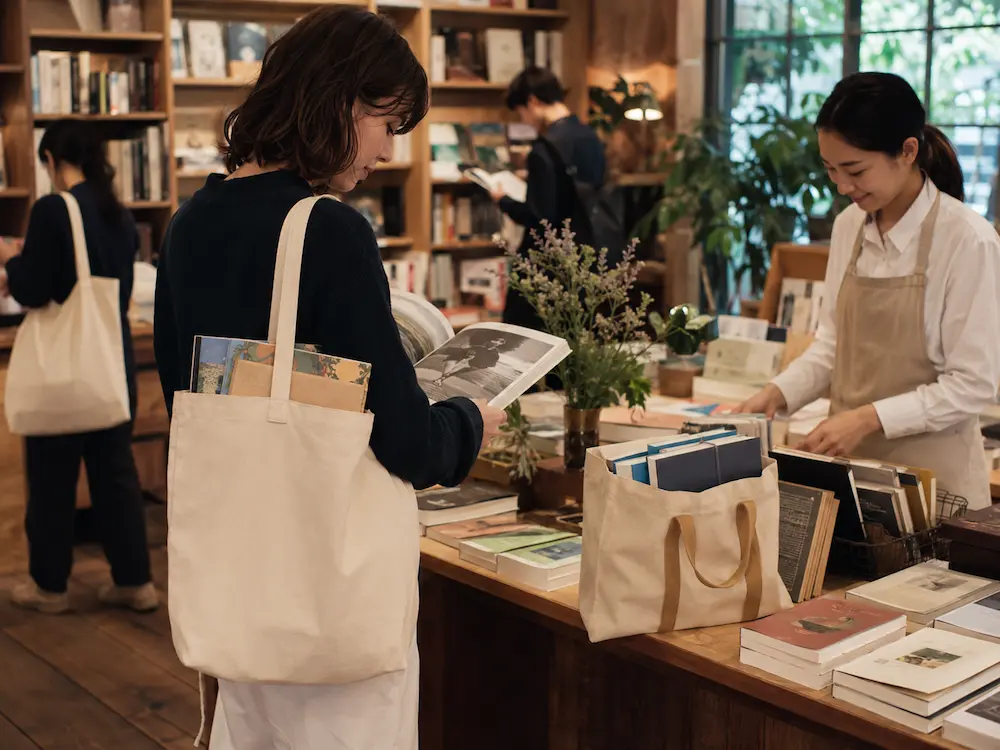
Why Bookstores Continue to Choose Reusable Tote Bags
Although digital publishing has transformed the book industry, physical bookstores continue to play an important role in retail and community life.
Independent bookshops, national bookstore chains, museum gift stores, university bookshops, and cultural retailers all face similar challenges. They need packaging that protects books, represents their brand professionally, supports sustainability initiatives, and provides customers with practical value beyond the purchase itself.
Reusable tote bags meet all of these objectives.
Unlike disposable paper bags that are often discarded after a single journey home, reusable tote bags remain in circulation for months or even years. Customers use them for shopping, commuting, studying, travelling, library visits, and everyday errands.
Every reuse creates another opportunity for the bookstore’s branding to be seen.
Instead of functioning only as packaging, a well-designed tote bag becomes part of the customer’s daily routine.
For bookstores operating in increasingly competitive retail environments, this ongoing visibility creates marketing value that continues long after the original transaction.
| Packaging Type | Average Lifespan | Customer Value | Branding Exposure |
|---|---|---|---|
| Paper Bag | One or two uses | Low | Limited |
| Plastic Bag | Short-term | Low | Limited |
| Cotton Tote Bag | Hundreds of uses | High | High |
| Canvas Tote Bag | Years of regular use | Very High | Excellent |
Bookstores that invest in reusable tote bags are therefore investing not only in packaging but also in customer experience and long-term brand recognition.
The Benefits of Tote Bags for Book Retail
Books require packaging that performs differently from ordinary shopping bags.
Unlike clothing or lightweight accessories, books have significant weight, sharp corners, and rigid edges that place additional stress on fabrics and stitching.
A poorly designed bag may stretch, tear, or become uncomfortable to carry after only a short distance.
A professionally manufactured tote bag solves these problems while offering additional commercial advantages.
Improving the Customer Experience
The shopping experience does not end when a customer pays for their books.
Packaging forms the final interaction between the customer and the bookstore.
Receiving a durable reusable tote bag creates a stronger impression than receiving disposable packaging.
Customers often feel they have received an additional useful product rather than simply a shopping bag.
This small detail increases perceived value and encourages positive memories of the purchase.
Book lovers frequently return to bookstores that provide thoughtful customer experiences, and attractive packaging contributes to that perception.
Extending Brand Visibility
Unlike traditional advertising, reusable tote bags continue working without additional investment.
Customers carry them to universities, cafés, public transport, libraries, workplaces, and shopping centres.
Every journey introduces the bookstore’s brand to new audiences.
For retailers planning larger promotional campaigns, cotton tote bags bulk for large-scale brand distribution provide an efficient solution for maintaining consistent branding across multiple stores, book fairs, and educational events.
Supporting Sustainable Retail
Many readers value sustainability alongside education and culture.
Reusable packaging aligns naturally with these expectations.
Bookstores can reduce dependence on disposable bags while encouraging customers to adopt practical reusable alternatives.
Durability is particularly important.
A tote bag that remains useful for several years generally provides greater long-term environmental value than packaging designed for immediate disposal.
Choosing the Best Materials for Bookstore Tote Bags
Material selection determines both carrying performance and customer perception.
The correct material depends on the bookstore’s positioning, average purchase weight, budget, and branding objectives.
| Material | Durability | Print Quality | Suitable Applications |
|---|---|---|---|
| Cotton | Good | Excellent | Independent bookstores |
| Canvas | Excellent | Excellent | Premium bookstores |
| Cloth | Good | Very Good | Everyday retail |
| Recycled Cotton | Good | Excellent | Sustainable bookstores |
Cotton Tote Bags
Cotton remains one of the most popular options because it balances affordability with attractive natural aesthetics.
Cotton fabrics accept a wide variety of printing methods while remaining comfortable for everyday use.
They are particularly suitable for:
- Independent bookstores
- Literary cafés
- Community bookshops
- Educational retailers
- Children’s bookstores
Cotton creates a warm and approachable appearance that complements many bookstore environments.
Canvas Tote Bags
Canvas provides greater structural strength.
Its heavier construction allows customers to carry several hardcover books comfortably without excessive stretching.
Canvas is especially suitable for:
- Premium bookstores
- Museum bookshops
- University bookstores
- Collector’s editions
- Art publications
Bookstores wanting stronger visual impact often choose canvas tote bag printing for sustainable brand visibility because durable printing combined with premium fabric creates long-lasting promotional value.
Cloth Tote Bags
Cloth tote bags provide another practical option for retailers seeking lightweight reusable packaging.
They combine flexibility with comfortable carrying performance and work well for everyday shopping.
Many retailers choose cloth tote bags for everyday carry and brand display because they offer an effective balance between practicality, attractive presentation, and brand visibility.
Choosing the Right Fabric Weight for Carrying Books
Books place greater demands on tote bags than many other retail products.
A single hardcover novel may weigh between 500 and 900 grams, while customers often purchase several books during one visit. Academic textbooks, art books, and reference publications can be even heavier.
For this reason, bookstores should evaluate fabric weight carefully rather than selecting materials based solely on cost.
Fabric weight is commonly measured in GSM (grams per square metre). Although higher GSM fabrics generally increase production costs, they also improve durability, structural stability, and customer confidence.
| Fabric Weight | Typical Application | Recommended Book Weight |
|---|---|---|
| 140–160 GSM | Promotional giveaways | One or two paperbacks |
| 180–220 GSM | Everyday bookstore bags | Several paperback books |
| 240–280 GSM | Premium bookstore packaging | Multiple hardback books |
| 300+ GSM | Museum stores and collector editions | Heavy books and gift items |
Retail buyers should avoid selecting extremely lightweight fabrics simply to reduce purchasing costs.
A tote bag that fails after several uses may negatively affect customers’ perceptions of the bookstore’s quality.
Instead, selecting an appropriate fabric weight ensures that customers continue using the bag for years, generating ongoing brand exposure.
Selecting the Right Bag Size
Bookstores sell a wide variety of products. In addition to books, many retailers offer stationery, journals, greeting cards, educational materials, puzzles, gifts, and lifestyle products.
The tote bag should comfortably accommodate the majority of typical purchases.
| Bookstore Type | Recommended Size | Typical Products |
|---|---|---|
| Independent Bookshop | 35 × 40 cm | Novels, magazines |
| University Bookstore | 40 × 42 × 10 cm | Textbooks, notebooks |
| Museum Bookshop | 38 × 40 cm | Art books, souvenirs |
| Children’s Bookstore | 32 × 35 cm | Children’s books, toys |
| Gift Bookshop | 40 × 40 × 12 cm | Mixed retail products |
A gusseted design is particularly useful for customers purchasing multiple books because it increases carrying capacity while distributing weight more evenly.
Retailers should also consider folded storage dimensions. Customers are more likely to reuse tote bags that fold easily into handbags, backpacks, or luggage.
Handle Construction and Reinforcement
Handles are often overlooked during product selection.
However, they experience the highest stress during everyday use.
Books concentrate weight into a relatively small area, placing continuous pressure on stitching and fabric.
Professional bookstore tote bags should include:
- Reinforced cross stitching
- Comfortable shoulder-length handles
- Balanced handle positioning
- Strong seam construction
- Quality thread suitable for repeated use
Long shoulder handles generally improve carrying comfort, particularly for students and commuters who walk longer distances after shopping.
Some premium bookstores also choose wider handles to reduce pressure on customers’ shoulders when carrying heavier purchases.
Printing Methods for Bookstore Tote Bags
The visual design of a tote bag influences whether customers continue using it after leaving the bookstore.
A clean, elegant design often enjoys a much longer lifespan than highly promotional artwork.
Selecting the appropriate printing method depends on artwork complexity, production quantity, and brand positioning.
| Printing Method | Advantages | Best Applications |
|---|---|---|
| Screen Printing | Durable, economical | Large bookstore chains |
| Digital Printing | Detailed artwork | Independent bookstores |
| Embroidery | Premium appearance | Museum stores |
| Heat Transfer | Full-colour graphics | Limited editions |
| Woven Labels | Sophisticated branding | Luxury book retailers |
Screen Printing
Screen printing remains the most widely used option because it combines durability with cost efficiency.
Simple logos, literary quotations, and minimalist graphics produce particularly attractive results.
For bookstores planning annual promotional campaigns, screen printing offers excellent consistency across large production runs.
Digital Printing
Digital printing enables bookstores to reproduce illustrations, watercolour artwork, photographs, and complex graphics.
Independent bookstores frequently use digital printing for artist collaborations, literary festivals, and seasonal collections.
Because digital printing requires less setup, it is also suitable for smaller production quantities.
Premium Decorative Finishes
Some premium bookstores introduce additional decorative techniques to create exclusive merchandise.
Examples include:
- Metallic foil printing
- Embossed labels
- Woven side labels
- Interior printed messages
- Decorative swing tags
These small enhancements help transform a tote bag into a collectible product rather than ordinary packaging.
For bookstores introducing premium promotional merchandise, promotional canvas tote bags with logo for brand visibility combine durable construction with distinctive branding that customers are proud to carry.
Tote Bags for Independent Bookstores
Independent bookstores rely heavily on community relationships.
Their customers often appreciate local culture, independent publishing, and carefully curated book selections.
Packaging should reflect these values.
Popular design characteristics include:
- Natural cotton fabrics
- Hand-drawn illustrations
- Literary quotations
- Minimal branding
- Earth-tone colour palettes
Many independent bookstores collaborate with local artists to create exclusive tote bag designs available only through their stores.
Limited-edition collections encourage repeat visits while strengthening emotional connections with customers.
Tote Bags for National Bookstore Chains
Large bookstore chains require consistency across hundreds of retail locations.
Packaging must maintain the same appearance regardless of where customers make purchases.
Chain retailers typically prioritise:
- Consistent colour matching
- Standardised dimensions
- Reliable print quality
- Efficient logistics
- Competitive bulk pricing
Centralised purchasing also improves inventory management while reducing overall procurement costs.
University Bookstores
University bookshops serve a unique customer group.
Students frequently purchase:
- Textbooks
- Laboratory manuals
- Stationery
- Laptops accessories
- Campus merchandise
- Graduation gifts
These products require tote bags capable of carrying relatively heavy loads throughout busy campuses.
Many universities also incorporate institutional branding into tote bag designs, encouraging students to continue using them long after graduation.
Because students often reuse bags daily, university bookstores benefit from years of ongoing brand visibility.
Museum Bookshops
Museum bookstores combine retail with cultural education.
Customers often purchase:
- Exhibition catalogues
- Art books
- Limited-edition publications
- Prints
- Cultural gifts
Packaging should therefore communicate premium quality.
Museum tote bags frequently feature:
- Elegant typography
- Minimal graphics
- High-quality canvas
- Fine art reproductions
- Neutral colour palettes
Many museum visitors continue using these bags as souvenirs, extending the museum’s cultural identity into everyday life.
Children’s Bookstores
Children’s bookstores have different design priorities.
Packaging should appeal both to children and their parents.
Popular design features include:
- Bright illustrations
- Educational themes
- Animal characters
- Alphabet graphics
- Soft colours
- Comfortable lightweight construction
Parents particularly appreciate reusable bags that children can also use for school, library visits, or extracurricular activities.
As a result, children’s bookstore tote bags often remain in active use for many years.
Using Tote Bags for Author Signing Events
Author signing events create memorable experiences that often attract loyal readers, local media, and new visitors to bookstores. While the books themselves are the main attraction, the overall event experience also influences how customers remember the occasion.
Reusable tote bags have become popular event merchandise because they are practical, attractive, and useful long after the event has finished.
Bookstores frequently prepare limited-edition tote bags featuring:
- Event dates
- Exclusive illustrations
- Author signatures reproduced as artwork
- Literary quotations
- Anniversary celebrations
- Special book launch graphics
Unlike disposable promotional materials, a high-quality tote bag continues travelling with customers to libraries, cafés, universities, offices, and public transport, extending the visibility of both the bookstore and the author.
Many independent bookstores intentionally produce small quantities of exclusive event bags to create a sense of rarity. Customers often purchase them as souvenirs even if they already own several reusable bags.
Tote Bags for Book Fairs and Literary Festivals
Book fairs present different challenges from traditional bookstore retail.
Visitors often purchase multiple books from different publishers and spend several hours walking through exhibition halls. Heavy purchases make durable reusable bags particularly valuable.
Organisers frequently provide tote bags at registration, while publishers distribute branded bags at exhibition stands.
| Event Type | Recommended Tote Bag |
|---|---|
| Local Book Fair | Cotton tote bags |
| International Publishing Fair | Heavy canvas tote bags |
| Literary Festival | Premium printed tote bags |
| Children’s Reading Festival | Colourful lightweight cotton bags |
| Academic Conference | Reinforced canvas tote bags |
Large-scale events also benefit from unified branding.
When publishers, sponsors, and organisers coordinate tote bag designs, visitors receive consistent visual experiences throughout the exhibition.
For promotional campaigns targeting thousands of visitors, many organisers choose promotional canvas tote bags for brand visibility and marketing because they combine durability with excellent long-term advertising value.
Reading Clubs and Community Engagement
Modern bookstores are increasingly becoming community spaces rather than simple retail outlets.
Many organise:
- Monthly reading clubs
- Children’s storytelling sessions
- Poetry evenings
- Writing workshops
- Educational seminars
- Local author discussions
Reusable tote bags support these activities by strengthening the sense of belonging among participants.
Some bookstores create club-exclusive tote bags that are available only to members or event attendees. These designs often become conversation starters, helping readers recognise one another during future events.
Community-oriented merchandise also reinforces customer loyalty because participants associate the tote bag with enjoyable shared experiences rather than a single purchase.
Membership and Loyalty Programmes
Many bookstores operate membership schemes that reward repeat customers.
Reusable tote bags fit naturally into these programmes.
Examples include:
- Complimentary tote bags for new members
- Premium bags after reaching spending milestones
- Limited-edition annual membership designs
- Birthday gift bags
- Anniversary appreciation gifts
These incentives provide customers with practical rewards while increasing everyday exposure for the bookstore’s brand.
Unlike discount vouchers, reusable bags continue creating value long after they have been awarded.
Seasonal Promotions and Holiday Campaigns
Seasonal marketing remains an important part of bookstore retail.
Major sales periods often include:
- Back-to-school promotions
- Summer reading campaigns
- Christmas gift shopping
- World Book Day
- Children’s Book Week
- Graduation season
Retailers frequently introduce temporary tote bag designs that celebrate these occasions without changing their core brand identity.
For example, a Christmas edition may feature festive illustrations, while a summer reading campaign may use bright seasonal colours and travel-inspired graphics.
Limited seasonal collections encourage customers to visit regularly to discover new merchandise while helping bookstores refresh their packaging throughout the year.
Bulk Purchasing Strategies for Bookstores
Ordering reusable tote bags in bulk requires more planning than comparing prices alone.
Bookstore buyers should evaluate the total value of each production run, considering quality, durability, logistics, and future inventory requirements.
Important purchasing factors include:
| Purchasing Factor | Why It Matters |
|---|---|
| Fabric quality | Determines carrying performance |
| Printing durability | Maintains long-term branding |
| Stitch reinforcement | Prevents handle failure |
| Production consistency | Supports multiple retail locations |
| Packaging efficiency | Reduces logistics costs |
| Supplier reliability | Ensures on-time delivery |
Ordering larger quantities generally lowers the unit price, but excessive inventory can occupy valuable warehouse space and reduce flexibility when updating designs.
Many retailers therefore schedule several production runs throughout the year instead of placing a single annual order.
Inventory Planning for Multiple Bookstore Locations
Bookstore chains often distribute packaging across dozens or even hundreds of retail locations.
A structured inventory strategy helps maintain consistent stock levels while avoiding unnecessary storage costs.
Key planning considerations include:
- Average monthly sales volume
- Seasonal demand fluctuations
- Promotional campaign schedules
- New store openings
- Book fair participation
- Product launch calendars
Forecasting demand based on historical sales data allows buyers to maintain stable inventory while reducing emergency production orders.
Retailers should also establish minimum stock levels that trigger timely replenishment before shortages occur.
Sustainability and Responsible Book Retail
Environmental responsibility has become an important purchasing consideration for many readers.
Bookstores are well positioned to support sustainable retail because their customers often value education, environmental awareness, and responsible consumption.
Reusable tote bags contribute to these objectives by replacing large numbers of disposable shopping bags over their lifetime.
Additional sustainable practices include:
- Choosing natural fibres
- Using recyclable packaging materials
- Reducing unnecessary plastic accessories
- Selecting durable printing techniques
- Encouraging customers to reuse existing bags
Sustainability should also include product longevity.
A bag that remains useful for several years generally creates greater environmental benefits than one requiring frequent replacement.
Common Mistakes When Purchasing Bookstore Tote Bags
Even experienced buyers occasionally overlook practical details during product selection.
The following mistakes are among the most common.
| Common Mistake | Potential Result |
|---|---|
| Selecting fabric that is too light | Bags wear out quickly |
| Ignoring handle reinforcement | Handles may fail under heavy books |
| Choosing unsuitable dimensions | Books do not fit comfortably |
| Overly complex artwork | Higher production costs |
| Ordering without physical samples | Unexpected quality differences |
| Focusing only on unit price | Reduced long-term value |
Bookstores should request pre-production samples whenever possible to evaluate construction quality, printing accuracy, stitching, and carrying comfort before approving mass production.
Future Trends in Bookstore Tote Bags
Consumer expectations continue to evolve alongside retail trends.
Future bookstore tote bags are likely to emphasise:
- Organic and recycled fibres
- Minimalist design aesthetics
- Limited-edition artist collaborations
- Higher-quality textile finishes
- Digital artwork integration
- Stronger sustainability messaging
Bookstores are also increasingly viewing tote bags as retail merchandise rather than complimentary packaging.
Customers willingly purchase attractive designs that reflect literary culture, artistic creativity, or local community identity.
This shift transforms reusable bags from operational expenses into products that generate additional revenue while strengthening brand recognition.
Conclusion
Bookstores have always been places where ideas travel beyond the printed page.
Reusable tote bags extend that journey by allowing customers to carry books safely while continuing to promote the bookstore wherever they go.
Whether serving an independent neighbourhood bookshop, a university bookstore, a museum gift shop, or a national retail chain, a well-designed tote bag enhances customer satisfaction, protects valuable purchases, and reinforces a bookstore’s identity through repeated everyday use.
By carefully selecting suitable materials, appropriate fabric weights, reinforced construction, professional printing, and reliable manufacturing partners, bookstores can transform ordinary shopping bags into long-term branding assets.
Rather than viewing tote bags as disposable packaging, successful retailers increasingly recognise them as practical marketing tools that create lasting customer relationships, support sustainability goals, and deliver measurable value long after each purchase.
Building Stronger Bookstore Brands with Reusable Tote Bags
Reusable tote bags have become valuable assets for modern bookstores. Beyond protecting books during transport, they encourage repeat brand exposure, enhance customer satisfaction, and support environmentally responsible retail practices.
By selecting suitable materials, durable construction, attractive printing, and reliable manufacturing partners, bookstores can create packaging that continues representing their brand throughout customers’ everyday lives while delivering lasting commercial value.
FAQ
1. Why are tote bags ideal for bookstores?
Tote bags are durable, reusable, and capable of carrying the weight of books safely. Unlike disposable paper bags, they continue promoting a bookstore’s brand long after the purchase while improving the overall customer experience and supporting sustainable retail practices.
2. Which material is best for carrying heavy books?
Canvas is generally the best option for carrying multiple hardback books because of its strength and durability. Cotton tote bags are suitable for everyday book purchases, while heavier canvas fabrics provide additional support for textbooks, art books, and collector’s editions.
3. What printing method works best for bookstore tote bags?
Screen printing is ideal for simple logos and large production runs because it is durable and cost-effective. Digital printing works well for detailed illustrations, artistic designs, and limited-edition collections, while embroidery offers a premium appearance for museum stores and specialty bookshops.
4. How can bookstores use tote bags for marketing?
Bookstores use tote bags for customer purchases, author signing events, literary festivals, membership programmes, seasonal promotions, and book fairs. Because customers reuse the bags repeatedly, they provide ongoing brand exposure without continuous advertising costs.
5. What should bookstores consider when buying tote bags in bulk?
Bookstores should evaluate fabric quality, stitching, handle reinforcement, printing durability, production consistency, inventory planning, and supplier reliability rather than focusing solely on the lowest unit price. A durable tote bag delivers better long-term value and stronger brand visibility.
References
- ISO 9001:2015 – Quality Management Systems.
- Global Organic Textile Standard (GOTS).
- Textile Exchange – Preferred Fiber & Materials Market Report.
- OEKO-TEX® Standard 100.
- ASTM International – Textile Standards.
- Sustainable Packaging Coalition – Design Guidelines.
- International Trade Centre (ITC) – Export Packaging Resources.
- European Environment Agency – Circular Economy and Sustainable Consumption Reports.
Source Credit Requirement:
If you would like to quote part of this article, please clearly credit Xiamen Youngpack Imp.and Exp.Co.,Ltd. as the original source. Full-text reproduction is not permitted.