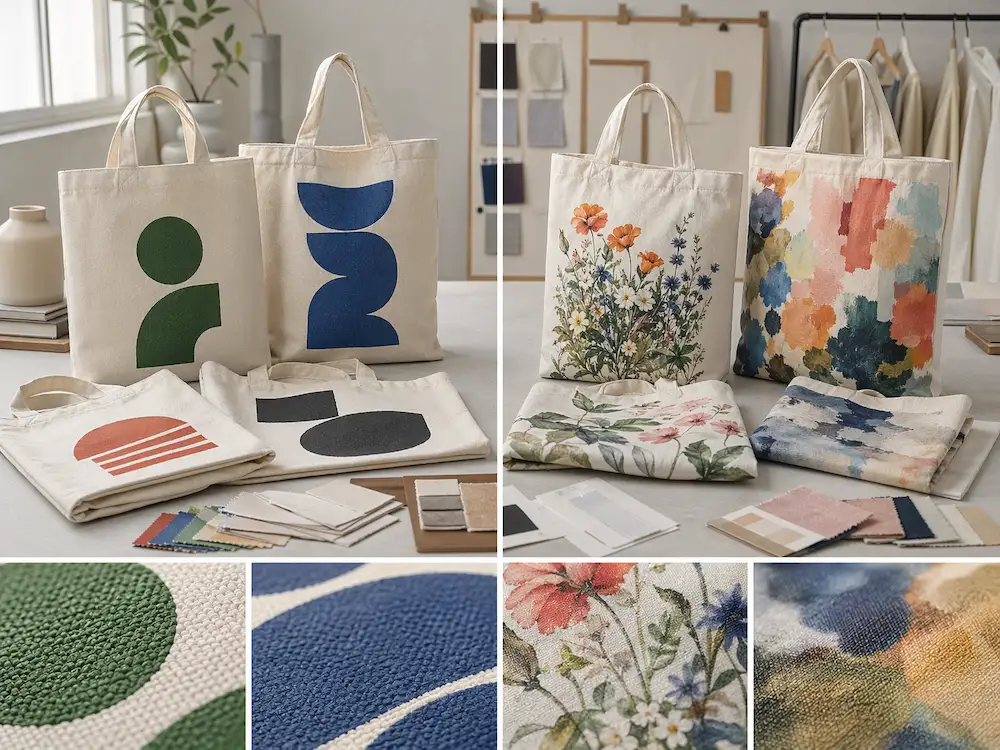
Most beginners think tote bag printing is just a logo on fabric. In real sourcing, it is one of the most important technical decisions in the whole product. The print method affects cost, lead time, setup charges, artwork quality, fabric behavior, and how long the bag keeps looking good in public use. A great design on the wrong print method can look cheap. A simple logo on the right method can look strong, clean, and highly commercial.
This is why learning tote bag printing methods matters. It is not only for designers or factories. It matters for brand owners, wholesalers, retailers, event buyers, and marketing teams because the printing method changes the bag’s value after it leaves the factory. If the bag is meant to act like moving brand media, the print choice directly affects how well it performs.
The good news is that the core printing methods are not difficult to understand once they are explained in practical business terms rather than factory jargon.
Why Printing Method Matters More Than Beginners Expect
Printing is not just decoration. It is the bridge between the bag and the brand. The method changes color sharpness, detail level, tactile feel, durability, and price structure. Some methods reward large simple orders. Others reward visual complexity or short-run flexibility. Some look best on cotton and canvas. Others work better on synthetic or coated materials.
That means there is no single “best” tote bag printing method. A supermarket reusable bag, a bookstore merchandise tote, a conference giveaway, and a premium retail tote should not all follow the same printing logic. The print route should match the product role.
This is exactly why products such as tote bags printed or custom logo tote bags can look dramatically different in market performance even when the logo is technically the same.
The Most Common Tote Bag Printing Methods
For beginners, the most useful printing methods to understand are screen printing, digital printing, heat transfer printing, sublimation in certain cases, and embroidery as a non-print decoration option. In practical tote bag sourcing, screen printing and digital printing usually matter most because they cover the majority of standard business projects.
Screen printing is usually the most common method for simple promotional branding. Digital printing is usually more useful when the design includes multiple colors, gradients, or more detailed illustrations. Heat transfer sits in a more selective position, often used when the artwork or quantity makes it practical. Embroidery is not technically a print method, but beginners often compare it with printing because it changes branding style in a similar decision stage.
The smarter approach is not to memorize methods first. It is to understand what kind of artwork and order logic each method suits.
Screen Printing: The Classic Method for Simple Logos
Screen printing is usually the first print method buyers encounter because it remains one of the most economical and dependable options for larger orders with simple artwork. It works especially well for bold logos, one-color or limited-color prints, block graphics, and large repeat runs where the design stays the same across many bags.
The main advantage of screen printing is repeat efficiency. Once the setup is done, the cost per bag becomes more attractive at higher volumes. The print often looks clean, direct, and highly readable from normal viewing distance, which is why it remains so strong in promotional use.
This makes screen printing especially useful in exhibitions, conferences, schools, supermarkets, awareness campaigns, and visibility-led products such as promotional canvas tote bags with logo where the goal is broad public recognition rather than highly artistic image detail.
| Printing Method | Best For | Main Strength | Main Limitation |
|---|---|---|---|
| Screen Printing | Simple logos, large runs | Strong cost efficiency at scale | Less suitable for complex multi-color artwork |
| Digital Printing | Detailed artwork, smaller runs | High artwork flexibility | Usually less efficient for large simple orders |
| Heat Transfer | Selected designs and limited runs | Useful for some custom graphics | Depends heavily on artwork and fabric fit |
| Embroidery | Small premium logos | Textured, upscale look | Not ideal for large or detailed graphic areas |
Where Screen Printing Works Best
Screen printing works best when the logo is simple, the quantity is meaningful, and the project does not need photo-style detail. It is usually the strongest commercial choice when the bag is a distribution tool first and a design object second. A clean bold logo on cotton or canvas can look much more professional than beginners expect.
It is especially strong on canvas-based programs because the fabric and the print often support each other well visually. That is one reason canvas tote bag printing is so common in visible reusable bag projects. The print does not need to be complicated if the bag itself already feels substantial and worth keeping.
In plain language, screen printing is usually the business-first choice for standard branded totes.
Where Screen Printing Has Limits
Screen printing becomes less attractive when the design includes gradients, photo effects, many colors, or fine visual detail. Each additional color usually increases setup complexity. That does not always make it impossible, but it can make the method less efficient or less visually suitable than other routes.
It is also less convenient when the buyer wants many small design variations or a short experimental run. Because setup matters, screen printing rewards consistency more than variation. Beginners often make the mistake of choosing screen printing for highly artistic designs simply because it is familiar. That usually creates compromise in either cost or visual result.
So screen printing is excellent, but mostly when the artwork is disciplined and the volume justifies it.
Digital Printing: Better for Detailed Artwork and Shorter Runs
Digital printing is usually the easier answer when the design is more complex. It works well for illustrations, gradients, photographic effects, multiple tones, and smaller runs where setting up multiple screens would not make commercial sense. This makes it especially useful in boutique retail, artist collaborations, museum products, lifestyle brands, and limited-edition promotions.
The big advantage is flexibility. A design with many colors or more visual nuance can usually move into production more easily without the same setup burden as screen printing. That makes digital printing appealing for businesses that want a more expressive look or need multiple design variations.
It is often the better fit for products such as custom canvas bags with logo when the bag itself is expected to look more like a designed retail product rather than a simple corporate giveaway.
Where Digital Printing Works Best
Digital printing works best when the artwork matters as much as the bag. If the logo is more than just a logo, or if the brand is using visual storytelling rather than block-color identity, digital printing often creates a better result. It is also better when the buyer wants smaller batches, test runs, or a less rigid setup process.
This makes digital printing highly useful in retail collections, branded gift products, creative events, museum shops, or campaigns where every bag design needs to feel more tailored. It can also work well when the bag is part of premium branded merchandise and the print needs to carry more personality.
That is why buyers who care about more expressive product results often compare digital routes with custom printed tote bags rather than thinking only in terms of simple promotional printing.
Where Digital Printing Has Limits
Digital printing is not always the most efficient route for high-volume simple logos. If the design is only one color and the quantity is large, screen printing usually makes more economic sense. Digital is strongest where artwork flexibility matters enough to justify the different cost logic.
It also depends heavily on material and surface behavior. The print may behave differently on different bag fabrics, especially when the texture becomes more pronounced. So beginners should never assume digital printing automatically gives a better result. It gives a better result only when the artwork and bag material actually support it.
In other words, digital printing solves the complexity problem, not every printing problem.
Heat Transfer Printing: Useful but More Selective
Heat transfer printing sits in a more selective space. It can be useful for certain logos, specific graphics, limited quantities, or projects where the artwork is prepared in a way that suits transfer production well. In some cases it gives buyers a practical route without the setup demands of screen printing.
But this is not a default choice for every tote bag project. The success of heat transfer depends heavily on artwork type, bag material, intended durability, and user expectations. Some projects use it well. Others should avoid it. Beginners should think of heat transfer as a conditional method rather than the automatic third option after screen and digital.
The smart question is whether the bag’s use case and fabric justify it, not simply whether the supplier offers it.
Embroidery: Not Printing, but Often Compared with It
Embroidery is not a print method, but beginners frequently compare it with print because it changes the brand look in the same selection stage. Embroidery usually works best for smaller logos, brand marks, monograms, or understated premium effects. It often creates a more textured, upscale impression than printed decoration.
However, it is not suitable for large graphic areas or highly detailed illustration. It is strongest when the brand wants restraint, texture, and a more premium merchandise feel. For big promotional campaigns or graphic-heavy designs, embroidery is usually the wrong route.
So embroidery should be understood as a style choice rather than a direct substitute for broad-format tote bag printing.
How Fabric Changes the Printing Decision
The bag material matters almost as much as the artwork. Cotton and canvas often work very well with standard tote bag printing methods because they offer familiar surfaces and good commercial results. But even within cotton or canvas, texture and fabric weight can change how the print looks and feels.
A heavier canvas bag may support a cleaner premium feel, especially for bold logo work. A lighter cotton bag may be perfect for casual promotions but less suited to certain detailed print expectations. That is why print method should never be chosen independently from material.
For strong natural-brand retail and public reuse, many businesses land on products like custom logo tote bags or canvas-based printed bags because the material and the branding support one another well.
How Order Quantity Changes the Best Printing Method
Quantity changes the economics more than beginners expect. A method that looks expensive at a low run may become highly efficient at scale. A method that feels convenient for a small batch may become a poor value on a large simple order. This is why there is no print method answer without quantity.
For example, a small batch of detailed artwork often points toward digital printing. A large run of simple logo bags often points toward screen printing. The artwork and the order volume must be judged together, not separately. Buyers who ignore this often choose the wrong route because they compare only first-unit cost or only visual preference.
| Order Situation | Usually Better Printing Direction | Main Reason |
|---|---|---|
| Large quantity, simple logo | Screen printing | Better repeat economics |
| Small quantity, complex artwork | Digital printing | Better artwork flexibility |
| Premium small mark | Embroidery | Higher-end tactile look |
| Special limited graphic need | Heat transfer or digital | Depends on design and bag material |
How Beginners Should Match Printing Method to Business Goal
The easiest way to choose the right method is to stop thinking in factory terms and start thinking in business terms. If the goal is large-scale visibility with a simple logo, screen printing is often the strongest answer. If the goal is smaller-scale design quality and more expressive artwork, digital printing is often the better answer. If the goal is a small premium emblem, embroidery may make sense.
This becomes even clearer once the bag’s life after distribution is considered. A trade-show bag, a premium retail tote, and a reusable supermarket bag are not solving the same marketing problem. The print method should reflect the product’s future role, not only the supplier’s machinery.
That is why beginners who understand business purpose usually make better print choices than beginners who only compare methods by name.
How to Talk to a Supplier About Printing
When speaking with a supplier, buyers should not only ask “what printing methods do you offer?” They should ask which method fits the artwork, the bag material, the order quantity, and the intended use. A good supplier should be able to explain where the cost comes from, what the visual limitations are, and which route makes the most commercial sense.
Buyers should also ask for real sample references, not only mockups. Tote bag printing often looks very different in real production than it does in a flat digital rendering. If the bag matters to brand image, the printing method should be judged through physical product logic, not only screens.
This is where Youngpack-style sourcing guidance matters. The strongest supplier is usually the one that prevents the wrong printing choice before the order begins.
Conclusion
Tote bag printing methods are much easier to understand once you stop treating them as factory jargon and start treating them as business tools. Screen printing usually works best for simple logos and larger runs. Digital printing usually works best for detailed artwork and smaller or more varied orders. Heat transfer is useful in selected situations. Embroidery fits smaller premium brand marks.
The right printing method is the one that matches the artwork, the bag material, the quantity, and the role of the bag after distribution. Beginners who learn that early usually avoid the most expensive printing mistakes.
How Buyers Should Think About Tote Bag Printing Methods
What this comparison really measures: Tote bag printing methods are not just production options. They represent different business strategies. Screen printing usually supports repeatable, high-visibility branding at scale. Digital printing usually supports more artwork freedom and better short-run flexibility. Other methods can be useful in narrower situations, but the strongest decision almost always begins with artwork, quantity, and product role.
Why beginners often choose the wrong method: The most common mistake is selecting a print method by habit or by the supplier’s default recommendation. That often leads to simple logos being overcomplicated, or detailed artwork being forced into a method that was never meant to handle it well. The best print route is the one that fits the bag’s purpose after distribution, not just the factory’s equipment list.
How buyers should compare methods properly: The strongest way to compare print methods is to evaluate artwork complexity, color count, quantity, fabric type, and long-term brand goal together. A trade-show tote, a bookstore merchandise bag, a supermarket reusable tote, and a museum gift tote may all be printed bags, but they should not all follow the same production logic.
Options businesses usually weigh: Most buyers compare simple large-run logo programs against smaller design-led runs, bold brand visibility against richer graphic expression, and standard promotional economics against more curated retail presentation. The better choice depends on whether the bag is mainly solving a distribution problem or a visual identity problem.
Considerations before placing the order: Before approving production, businesses should review actual printed samples, not only digital mockups. They should check how the artwork behaves on the chosen fabric, compare setup logic against order size, and make sure the print method still makes sense once the bag is used in public. That practical product check is where most expensive mistakes can still be avoided.
The broader takeaway: The strongest tote bag printing method is the one that aligns artwork, quantity, fabric, and brand role honestly. That is also where Youngpack naturally fits as a B2B manufacturing and export partner for buyers comparing print methods while needing practical guidance on product fit, branding, and repeat-order quality.
FAQ
1. What is the most common printing method for tote bags?
The most common tote bag printing method is usually screen printing. It is widely used because it works very well for simple logos, bold graphics, and larger production runs. It is especially common in promotional programs, event bags, supermarkets, and standard branded tote orders where the artwork is not highly complex and the quantity is large enough to make setup worthwhile.
2. Is digital printing better than screen printing for tote bags?
Not always. Digital printing is usually better when the design has more colors, fine details, gradients, or artistic elements, especially in smaller runs. Screen printing is usually better when the design is simple and the order quantity is larger. The better method depends on artwork complexity, volume, and fabric, not on which method sounds newer or more advanced.
3. Can beginners choose the right print method just by looking at the logo?
Not completely. The logo matters, but so do quantity, bag material, and business use. A simple logo on a high-volume promotional bag often points toward screen printing. A detailed illustration on a limited-edition retail tote often points toward digital printing. Beginners should always compare artwork together with order size and bag fabric before deciding on the print route.
4. Does the tote bag material affect the printing method?
Yes, very much. Cotton and canvas often work well with the most common tote bag printing methods, but the fabric texture, weight, and finish still affect the result. A heavier canvas bag may support stronger premium branding, while a lighter cotton bag may suit simpler promotional printing. The print method should always be matched to the actual bag material, not selected in isolation.
5. What should buyers ask suppliers about tote bag printing?
Buyers should ask which printing method best suits the artwork, what the setup costs are, how the method performs on the selected fabric, how durable the result is likely to be, and whether physical samples are available. A strong supplier should explain why one method is commercially better than another instead of simply offering every possible option without guidance.
References
- Preferred Fiber and Materials Market Report — Textile Exchange — Textile Exchange.
- Textiles and the Environment — European Environment Agency — EEA.
- Green Guides for the Use of Environmental Marketing Claims — Federal Trade Commission — FTC.
- Retail Packaging and Reusable Bag Sourcing Best Practices — professional sourcing reference.
- Responsible Sourcing and Product Communication in Textile Supply Chains — industry trade reference.
- Guide to Reusable Bags and Long-Term Use Value — industry best-practice sourcing reference.
- Fashion on Climate — Global Fashion Agenda and McKinsey & Company.
- Sustainable Packaging Guidelines — Australian Packaging Covenant Organisation — APCO.
Rights Reserved Notice:
All rights to this article, including its wording, structure, and commercial packaging insights, are reserved by Xiamen Youngpack Imp.and Exp.Co.,Ltd.