One of the most common questions buyers ask is simple:
“How much does tote bag printing cost?”
Unfortunately, there is no single answer.
Two tote bags that appear almost identical can have dramatically different prices depending on materials, printing methods, artwork complexity, production quantity, and finishing requirements.
Understanding how tote bag printing costs are calculated helps businesses budget more accurately and avoid unexpected sourcing expenses.
Whether you are ordering promotional giveaways, retail merchandise, event bags, or branded reusable shopping bags, understanding the complete cost structure allows you to compare quotations more effectively.
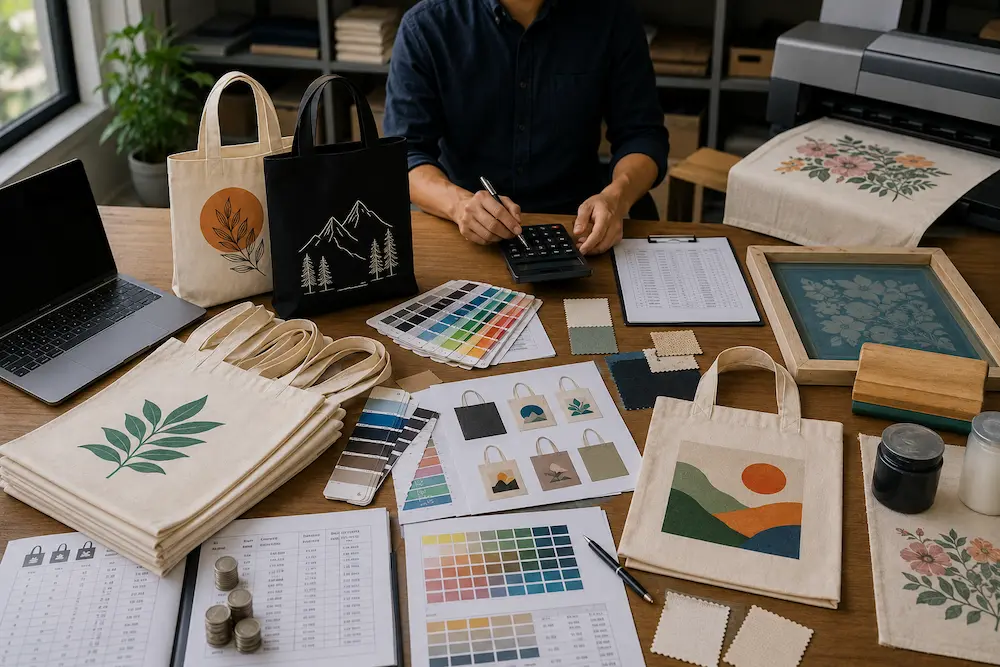
Why Tote Bag Printing Costs Vary So Much
Many buyers assume printing is the largest cost component.
In reality, tote bag pricing usually consists of several separate elements:
- Fabric
- Cutting and sewing
- Printing
- Reinforcement
- Packaging
- Quality control
- Shipping
The printing itself may represent only part of the total production cost.
For example, a premium canvas tote bag with reinforced handles may cost significantly more than a lightweight cotton tote even when both use the same logo design.
This is why comparing quotations without understanding specifications can be misleading.
The Four Main Cost Components
Most custom tote bag projects include four major cost categories.
| Cost Component | Typical Impact |
|---|---|
| Fabric | High |
| Printing | Medium to High |
| Sewing & Construction | Medium |
| Packaging | Low to Medium |
The balance between these categories changes depending on the project.
Large promotional campaigns often focus heavily on cost efficiency, while retail products place greater emphasis on quality and presentation.
Fabric Cost: The Foundation of Pricing
Fabric is usually the largest cost factor.
Common materials include:
- Cotton
- Canvas
- Organic cotton
- Recycled cotton
- RPET fabrics
Lightweight cotton generally costs less than heavy canvas.
For example:
| Material | Typical Cost Level |
|---|---|
| Lightweight Cotton | Low |
| Standard Cotton | Medium |
| Heavy Canvas | Medium-High |
| Organic Cotton | High |
| Recycled Materials | Medium-High |
Many brands choose custom cotton tote bags supporting everyday brand use because cotton offers a balance between affordability, printability, and long-term usability.
Printing Method Has a Major Impact
Printing technology is one of the biggest variables affecting cost.
Different methods have different setup costs and production efficiencies.
Screen Printing
Screen printing remains the most economical solution for large orders.
Advantages:
- Low cost per unit
- Strong colour consistency
- Durable prints
Disadvantages:
- Setup charges
- Less economical for small quantities
Screen printing is often used for printed cotton tote bags for brand visibility and promotion where large volumes are required.
Digital Printing
Digital printing works well for:
- Full-colour artwork
- Complex designs
- Photographic images
- Small production runs
Advantages:
- No screen setup
- Unlimited colours
Disadvantages:
- Higher unit cost
- Slower production
Heat Transfer Printing
Heat transfer offers:
- Sharp detail
- Vibrant colours
- Small-batch flexibility
However, transfer films and labour increase costs.
Embroidery
Embroidery creates a premium appearance but is generally one of the most expensive decoration methods.
It works best for:
- Retail bags
- Fashion brands
- Corporate gifts
Number of Print Colours Matters
Many buyers overlook colour count when estimating costs.
For traditional screen printing:
- One colour = one screen
- Two colours = two screens
- Three colours = three screens
Every additional colour increases:
- Setup cost
- Production time
- Registration complexity
A simple one-colour logo is usually significantly cheaper than a multi-colour artwork.
For large promotional campaigns, reducing colour count can generate substantial savings.
Print Area Size Influences Cost
The size of the printed area directly affects:
- Ink consumption
- Production time
- Machine setup
- Quality inspection requirements
Common print areas include:
| Print Size | Cost Impact |
|---|---|
| Small Logo | Low |
| Medium Front Panel | Medium |
| Large Front Panel | Medium-High |
| Full Coverage | High |
Large artwork often costs more because it consumes additional resources during production.
Quantity Creates the Biggest Price Difference
Volume is one of the strongest factors affecting tote bag printing costs.
Fixed costs become distributed across more units as quantity increases.
Example:
| Quantity | Relative Unit Cost |
|---|---|
| 100 pcs | High |
| 500 pcs | Medium |
| 1,000 pcs | Lower |
| 5,000 pcs | Much Lower |
| 10,000 pcs+ | Lowest |
This is why many businesses order custom canvas bags bulk for high-volume marketing campaigns ather than placing multiple smaller orders throughout the year.
Higher volumes generally create stronger economies of scale.
Sewing and Construction Costs
Printing is only one part of production.
Construction details also affect pricing.
Examples include:
- Reinforced handles
- Internal pockets
- Zippers
- Gussets
- Magnetic closures
- Double stitching
- Bartack reinforcement
A basic promotional tote costs less to produce than a premium retail tote with advanced construction features.
Organic and Sustainable Materials
Sustainability often influences price structure.
Organic cotton typically costs more because of:
- Agricultural standards
- Certification systems
- Traceability requirements
Similarly, recycled materials may require more complex sourcing and processing.
However, many brands accept these additional costs because sustainability supports brand positioning.
Products such as custom canvas drawstring bags for eco-friendly brandingare often selected for environmental marketing programs despite slightly higher production costs.
Hidden Costs Buyers Often Miss
Many quotations exclude optional services.
Examples include:
Sampling
Custom samples may require:
- Printing setup
- Fabric preparation
- Manual production
Artwork Preparation
Complex artwork may require:
- Vector conversion
- Colour separation
- Print optimisation
Pantone Matching
Exact brand colour matching may increase production complexity.
Individual Packaging
Additional packaging options include:
- Polybags
- Kraft sleeves
- Gift packaging
- Barcode stickers
These services can affect final project pricing.
Shipping and Logistics Costs
Production cost is only part of the total budget.
Shipping can significantly affect landed cost.
Factors include:
- Destination country
- Order volume
- Bag dimensions
- Shipping method
Common shipping methods:
- Sea freight
- Air freight
- Courier delivery
Large orders generally achieve better freight efficiency.
How Buyers Can Reduce Printing Costs
Cost reduction does not always require sacrificing quality.
Effective strategies include:
Simplify Artwork
Reducing colour count often lowers printing costs.
Increase Order Quantity
Higher volumes reduce unit cost.
Select Appropriate Printing Methods
Not every design requires digital printing.
Sometimes screen printing offers better value.
Standardise Sizes
Custom dimensions often increase production complexity.
Plan Orders Earlier
Rush production frequently increases costs.
Printing Cost Examples
The following example illustrates how different specifications affect pricing.
| Project Type | Relative Cost |
|---|---|
| Lightweight Cotton + 1 Colour Print | Low |
| Cotton + 2 Colour Print | Medium |
| Heavy Canvas + Large Print | Medium-High |
| Organic Cotton + Full Colour Print | High |
| Premium Retail Tote + Embroidery | Highest |
The exact numbers vary by supplier, market conditions, and order quantity. However, the overall pricing relationships remain consistent across most projects.
Why Understanding Cost Structure Matters
Businesses that understand pricing components make better sourcing decisions.
Instead of simply choosing the lowest quotation, experienced buyers evaluate:
- Fabric quality
- Print durability
- Construction quality
- Production efficiency
- Shipping costs
- Brand positioning
Many successful retail brands invest slightly more upfront because stronger quality often creates better customer satisfaction and longer product use.
This is particularly true forcustom printed canvas bags for natural brand expression where the tote bag becomes an extension of the brand itself.
Conclusion
Tote bag printing costs are influenced by multiple factors including fabric selection, printing technology, colour count, print size, construction details, order quantity, and shipping.
Understanding these cost drivers helps businesses compare quotations more accurately and optimise budgets without sacrificing product quality.
The lowest unit price is not always the lowest total cost. Stronger materials, better printing methods, and higher durability often create greater long-term value.
For businesses sourcing custom tote bags, understanding the complete cost breakdown is the first step toward making smarter purchasing decisions.
How Buyers Should Evaluate Tote Bag Printing Costs
Printing cost is only one part of the equation: Fabric, sewing, packaging, and logistics often contribute as much to the final cost as the printing itself.
Quantity matters significantly: Larger orders distribute setup costs more efficiently and generally achieve lower unit pricing.
The cheapest option is not always the best value: Higher-quality materials and printing methods may create better customer satisfaction and longer product lifespan.
The key takeaway: Understanding every cost component allows businesses to compare supplier quotations more accurately and make better sourcing decisions.
7. FAQ
1. What is the biggest factor affecting tote bag printing cost?
Fabric and order quantity are usually the largest cost drivers, followed by printing method and artwork complexity.
2. Is screen printing cheaper than digital printing?
For large orders, screen printing is generally more economical. For small quantities and full-colour designs, digital printing may offer better value.
3. Why do more print colours increase cost?
Each colour in screen printing typically requires a separate screen, increasing setup time and production complexity.
4. Does organic cotton increase printing costs?
Organic cotton usually increases overall tote bag costs because of certification, sourcing, and traceability requirements.
5. How can buyers reduce tote bag printing costs?
Increasing order quantity, simplifying artwork, reducing colour count, and choosing suitable printing methods can help lower costs.
9. References
- Textile Printing Technology Handbook
- Screen Printing Industry Standards
- Digital Textile Decoration Guide
- Promotional Products Manufacturing Reference
- Sustainable Textile Production Research
- Cotton and Canvas Fabric Cost Analysis
- Industrial Printing Process Guide
- Packaging and Logistics Cost Management Handbook
Original Article Statement:
This is an original article published by Xiamen Youngpack Imp.and Exp.Co.,Ltd. Any full or partial reproduction without permission is prohibited.