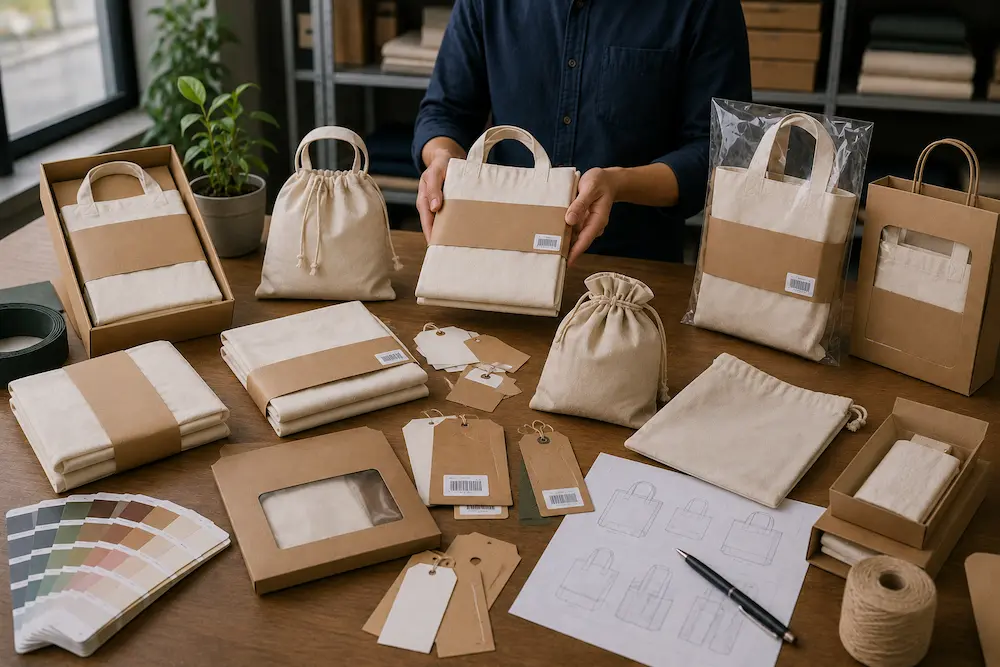
When businesses discuss custom tote bags, most conversations focus on materials, printing methods, and bag construction. However, packaging is often one of the most overlooked aspects of retail success.
A well-designed tote bag may attract customers, but packaging is frequently the first thing shoppers see.
Retail packaging affects:
- Product presentation
- Customer perception
- Shelf visibility
- Shipping protection
- Brand recognition
- Unboxing experience
For retail brands, packaging should not be treated as an afterthought. It is an extension of the product itself.
Whether selling tote bags in boutiques, department stores, supermarkets, gift shops, or online stores, choosing the right packaging can improve both product value and customer experience.
Why Retail Packaging Matters
Retail packaging performs several important functions.
First, it protects the tote bag during transportation and storage.
Second, it improves product presentation.
Third, it communicates brand identity.
Consumers often make purchasing decisions within seconds. Attractive packaging helps create positive first impressions and increases perceived value.
For products such as custom printed tote bags for impactful brand presence, packaging often becomes part of the overall branding strategy.
A professionally packaged tote bag feels more valuable than the same product presented without packaging.
Bulk Packaging: The Most Economical Option
Bulk packaging is the simplest packaging method.
Tote bags are packed directly into export cartons without individual retail packaging.
Advantages include:
- Lowest packaging cost
- Reduced material usage
- Faster packing efficiency
- Lower shipping volume
Bulk packaging works well for:
- Promotional campaigns
- Corporate giveaways
- Trade show distribution
- Large-volume retail replenishment
However, bulk packaging is generally not ideal for premium retail presentation because customers do not receive an enhanced unboxing experience.
Individual Polybag Packaging
Individual polybags remain one of the most common tote bag packaging options.
Each tote bag is packed separately inside a transparent protective bag.
Benefits include:
- Dust protection
- Moisture protection
- Easier inventory management
- Cleaner retail presentation
Individual packaging is often used for:
- Department stores
- Warehouse storage
- E-commerce fulfillment
- Export distribution
While polybags add some cost, they help maintain product appearance throughout the supply chain.
Kraft Paper Sleeves
Kraft paper sleeves have become increasingly popular among retail brands.
Instead of covering the entire tote bag, a branded paper sleeve wraps around the folded product.
Advantages include:
- Eco-friendly appearance
- Strong branding opportunities
- Lower material use than boxes
- Good shelf presentation
Many brands selling custom printed canvas tote bags for sustainable brand presence choose kraft sleeves because they reinforce sustainability messaging while maintaining an attractive retail presentation.
Belly Bands
Belly bands function similarly to paper sleeves.
A printed strip wraps around the folded tote bag and displays:
- Brand logo
- Product information
- Sustainability messaging
- Care instructions
Benefits include:
- Cost efficiency
- Simple application
- Attractive branding
- Reduced packaging waste
Belly bands are frequently used by eco-conscious brands seeking minimalist packaging solutions.
Hang Tags
Hang tags are among the most flexible retail packaging tools.
They allow brands to communicate:
- Product features
- Material information
- Sustainability claims
- Care instructions
- Brand stories
For products such as custom canvas tote bags for sustainable brand impact, hang tags provide an excellent opportunity to explain material sourcing and environmental positioning.
Well-designed hang tags often increase perceived value significantly.
Gift Box Packaging
Premium retail products frequently use gift boxes.
This option provides:
- Luxury presentation
- Product protection
- Enhanced gifting appeal
- Better customer experience
Gift box packaging works particularly well for:
- Corporate gifts
- Fashion brands
- Holiday promotions
- Premium merchandise
The main limitation is cost.
Gift boxes require:
- Additional materials
- Assembly labour
- Larger shipping volume
Businesses should evaluate whether the higher presentation value justifies the additional expense.
Drawstring Pouch Packaging
Some brands package tote bags inside reusable fabric pouches.
This approach creates a premium unboxing experience while providing customers with an additional reusable product.
Examples include:
- Cotton pouches
- Canvas pouches
- Recycled fabric pouches
Many retailers use cotton drawstring bags designed for lightweight reusable use as secondary packaging because they align well with sustainability-focused branding.
This method often increases perceived product value.
Packaging for Fashion Retail
Fashion retailers usually prioritize presentation.
Popular packaging options include:
- Branded sleeves
- Luxury hang tags
- Gift boxes
- Reusable pouches
The goal is creating a premium customer experience that aligns with the brand image.
For products such as personalised tote bags for distinct brand expression, packaging often serves as an important storytelling tool.
Packaging for Gift Shops
Gift shops focus heavily on presentation and gifting convenience.
Popular solutions include:
- Decorative sleeves
- Gift-ready boxes
- Tissue paper wrapping
- Ribbon closures
Packaging often influences impulse purchases in gift-focused retail environments.
Packaging for Supermarkets and Mass Retail
Mass retail environments require packaging that balances visibility and efficiency.
Common solutions include:
- Polybags
- Hang tags
- Simple belly bands
- Barcode labels
These methods support:
- Fast stocking
- Easy scanning
- Inventory control
- Cost efficiency
The emphasis is usually on practicality rather than luxury.
Packaging for E-Commerce
Online retailers face unique packaging challenges.
Packaging must protect products during shipping while also creating a positive unboxing experience.
Common options include:
- Polybags
- Kraft sleeves
- Mailer bags
- Tissue paper inserts
For e-commerce, packaging should balance protection and branding.
Damaged products often create negative customer reviews regardless of tote bag quality.
Sustainable Packaging Options
Sustainability continues influencing retail packaging decisions.
Popular eco-friendly options include:
- Recyclable kraft paper
- FSC-certified paper materials
- Recycled cardboard
- Compostable packaging
- Reusable fabric packaging
Many brands selling personalized canvas tote bags for distinct brand expression choose environmentally friendly packaging because customers increasingly expect consistency between the product and its packaging.
Sustainable packaging can strengthen brand credibility.
Branding Opportunities Through Packaging
Packaging provides valuable branding space.
Elements often included include:
- Logos
- Brand colours
- QR codes
- Product information
- Social media details
- Sustainability messages
Effective packaging turns every product into a brand communication tool.
Even simple packaging can improve customer recall when branding is applied consistently.
Packaging Costs and Budget Planning
Different packaging solutions vary significantly in cost.
| Packaging Type | Relative Cost |
|---|---|
| Bulk Packaging | Lowest |
| Polybag | Low |
| Belly Band | Low-Medium |
| Kraft Sleeve | Medium |
| Fabric Pouch | Medium-High |
| Gift Box | Highest |
Businesses should evaluate:
- Product price point
- Retail channel
- Brand positioning
- Customer expectations
The most expensive packaging is not always the most effective packaging.
Common Packaging Mistakes
Over-Packaging
Excessive packaging increases:
- Cost
- Shipping weight
- Waste
Ignoring Brand Identity
Packaging should support the overall product story.
Choosing Packaging Without Considering Retail Display
Some packaging looks attractive but performs poorly on shelves.
Prioritizing Cost Alone
Extremely cheap packaging may damage product perception.
Future Trends in Tote Bag Packaging
Retail packaging continues evolving.
Current trends include:
- Minimalist packaging
- Reusable packaging
- Plastic reduction
- QR code integration
- Sustainable materials
- Premium unboxing experiences
Consumers increasingly value packaging that is both attractive and environmentally responsible.
Conclusion
Retail packaging plays an important role in product presentation, protection, branding, and customer experience.
The best packaging option depends on:
- Product positioning
- Sales channel
- Budget
- Sustainability goals
- Customer expectations
Whether using simple belly bands, kraft sleeves, reusable pouches, or premium gift boxes, businesses should view packaging as part of the overall product experience rather than a separate afterthought.
Strong packaging can increase perceived value, strengthen brand identity, and improve customer satisfaction long after the purchase has been made.
How Retail Brands Should Choose Tote Bag Packaging
Packaging influences perception: Customers often see packaging before they see the tote bag itself. Well-designed packaging improves perceived value and strengthens brand recognition.
The right packaging depends on the sales channel: Fashion boutiques, supermarkets, gift stores, and e-commerce sellers all have different packaging requirements and customer expectations.
Sustainability is increasingly important: Recyclable materials, reusable pouches, and reduced packaging designs are becoming more common as brands seek environmentally responsible solutions.
The key takeaway: Effective tote bag packaging balances presentation, protection, branding, sustainability, and cost efficiency while supporting the overall retail strategy.
7. FAQ
1. What is the most economical tote bag packaging option?
Bulk packaging is typically the lowest-cost option because it eliminates individual retail packaging materials and labour.
2. Are kraft paper sleeves suitable for retail tote bags?
Yes. Kraft sleeves provide attractive branding opportunities while maintaining an eco-friendly appearance and moderate cost.
3. What packaging works best for e-commerce tote bag sales?
Polybags, kraft sleeves, and protective mailer packaging are commonly used because they balance product protection and branding.
4. Is reusable pouch packaging worth the extra cost?
For premium products and sustainability-focused brands, reusable pouches can increase perceived value and improve customer experience.
5. How can packaging support tote bag branding?
Packaging can display logos, brand stories, QR codes, sustainability messaging, and product information that reinforce brand identity.
9. References
- Retail Packaging Design Handbook
- Sustainable Packaging Best Practices Guide
- E-Commerce Packaging Research Report
- Consumer Packaging Perception Study
- Retail Merchandising Standards Guide
- Packaging Cost Optimization Handbook
- Sustainable Brand Presentation Research
- International Retail Display Guidelines
Website Content Notice:
Unless otherwise stated, all original articles published on this website are owned by Xiamen Youngpack Imp.and Exp.Co.,Ltd. and may not be copied or republished without authorization.