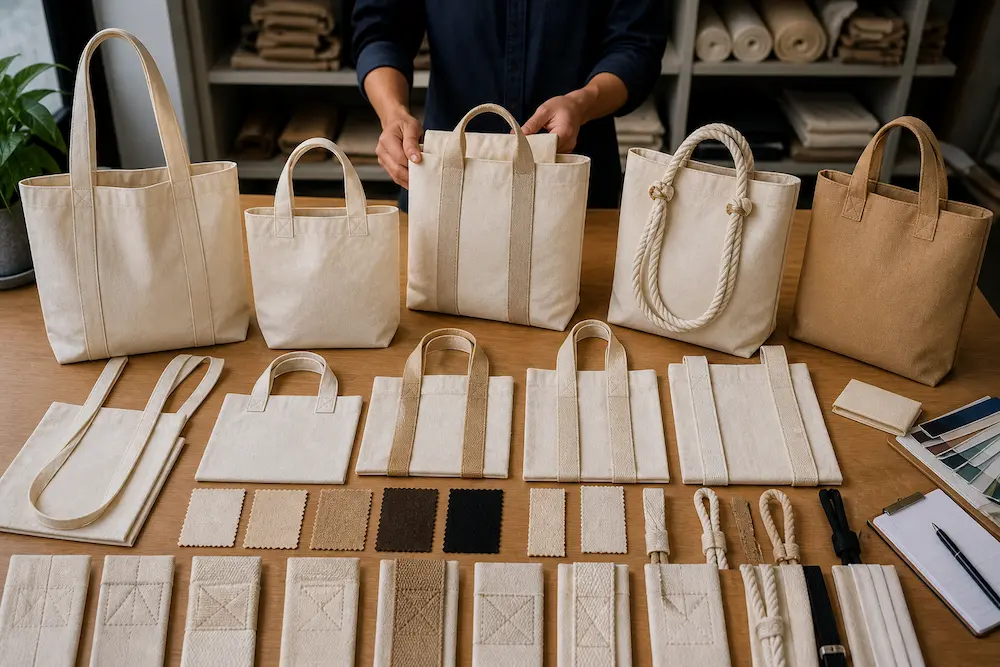
Most buyers spend a lot of time discussing tote bag fabric, printing, and size, but many underestimate how important the handle actually is. In real-world use, the handle often determines whether a tote bag feels comfortable, practical, durable, or frustrating. A strong fabric with a poorly designed handle can still create a weak user experience.
Handle selection affects more than comfort. It changes carrying style, load distribution, production cost, product appearance, stitching requirements, and even how premium the bag feels to the customer. This is why experienced tote bag buyers never treat handles as a small accessory decision.
For retailers and brand owners, the handle also plays a branding role. Long cotton webbing handles create a casual lifestyle look often used for fashion retail and bookstore totes. Short reinforced handles feel more structured and practical for grocery or trade show use. Rope handles can create a more premium appearance, while self-fabric handles usually help control cost and maintain material consistency.
Many sourcing problems actually begin at the handle level. Handles may tear before the body fabric fails. Incorrect handle positioning can make a bag uncomfortable to carry. Thin handles may dig into the hand even when the bag itself is strong enough. Some oversized tote bags also become awkward because the handle length does not match the bag dimensions or expected carrying weight.
The best tote bag handle is not simply the strongest one. It is the handle that fits the bag’s actual use case, expected load, branding position, and customer behaviour.
Why Tote Bag Handles Matter More Than Many Buyers Expect
Customers interact with the handle more than almost any other part of the tote bag. The handle affects how the bag hangs, how comfortable it feels during walking, whether it cuts into the hand under weight, and whether the bag feels stable during repeated use.
If the handle fails, the bag effectively fails, even if the fabric itself remains intact. This is why handle construction is closely tied to product quality and long-term usability.
Good handle selection also improves perceived value. A well-balanced handle makes the bag feel more professional and more suitable for repeated public use.
Short Handles: Common for Retail and Gift Tote Bags
Short handles are usually designed for hand carry rather than shoulder carry. They are common in retail packaging, exhibition bags, boutique shopping bags, wine bags, and gift-focused tote programs.
These handles often create a cleaner and more structured appearance because the bag sits higher and looks more controlled visually. Short handles also use slightly less material, which may help reduce production cost in some programs.
However, short handles are less comfortable for longer carrying periods, especially when the bag becomes heavy. That is why they are usually better suited to lighter retail carry rather than daily commuting or grocery use.
Long Shoulder Handles: The Most Common Tote Bag Option
Long shoulder handles are probably the most widely used tote bag handle style because they support convenient everyday carry. The bag can be comfortably worn on the shoulder while keeping both hands free.
This is especially important for shopping, commuting, bookstore use, trade shows, and general lifestyle carry. Products designed around repeated public use often rely heavily on shoulder-length handles because they increase overall practicality.
Many reusable and lifestyle-oriented products such as custom canvas tote bags commonly use long handles because customers are more likely to keep using the bag regularly when shoulder carry feels natural and comfortable.
The exact handle drop length also matters. Handles that are too short may not sit comfortably on the shoulder, while excessively long handles can make the bag swing awkwardly during movement.
Webbing Handles Improve Strength and Structure
Webbing handles are made from stronger woven materials such as cotton webbing, polyester webbing, or blended reinforcement tape. These handles usually provide better load-bearing performance than simple self-fabric handles.
They are commonly used for grocery totes, heavy retail bags, tool bags, premium merchandise bags, and large-capacity reusable totes where extra strength matters.
Webbing also creates visual contrast. A natural canvas bag with darker reinforced handles often looks more premium and structured than a fully self-fabric construction.
However, webbing increases material and sewing costs slightly, so buyers should confirm whether the additional strength and visual upgrade justify the price increase for the target market.
Self-Fabric Handles Create a More Unified Look
Self-fabric handles are made from the same material as the body of the tote bag. This creates a softer, cleaner, and more unified visual appearance.
Many fashion-focused, promotional, and lightweight reusable bags use self-fabric handles because they support simpler aesthetics and easier color coordination. They also fold more naturally than thicker reinforced handles.
Products focused on visual branding, such as custom logo tote bags, often use self-material handles when the goal is a clean and consistent brand presentation rather than maximum industrial strength.
But self-fabric handles need proper reinforcement at the stitching points, especially for medium and heavy-load applications.
Rope Handles Add Premium Retail Appeal
Rope handles are often associated with premium shopping bags and boutique retail packaging. Cotton rope, twisted rope, or braided rope handles create a more decorative and upscale appearance compared with flat handles.
These are common in gift packaging, luxury retail, cosmetic bags, winery packaging, and higher-end promotional merchandise.
However, rope handles are not always ideal for heavy long-term carrying because they can become uncomfortable under high load pressure if not designed properly.
| Handle Type | Best For | Main Advantage | Main Limitation |
|---|---|---|---|
| Short handles | Retail, gift bags | Structured appearance | Limited carrying comfort |
| Long shoulder handles | Daily use, shopping | Comfort and convenience | Needs correct length balance |
| Webbing handles | Heavy-duty bags | Higher strength | Slightly higher cost |
| Self-fabric handles | Fashion and promotions | Unified appearance | May need extra reinforcement |
| Rope handles | Luxury retail and gifts | Premium visual feel | Less ideal for heavy loads |
Padded Handles Improve Heavy Carry Comfort
Padded handles are more common in large-capacity or heavy-duty tote bags. Foam or soft reinforcement inside the handle reduces pressure on the hand or shoulder during longer carrying periods.
This is especially useful for grocery totes, travel totes, laptop carry bags, and oversized retail bags that may hold heavier products regularly.
Padded handles increase manufacturing complexity slightly, but they can significantly improve user comfort when the tote bag is expected to carry substantial weight repeatedly.
Handle Attachment Style Matters Too
Not all handle attachments are equal. Reinforced cross stitching, X-box stitching, bartack reinforcement, and full-wrap handle construction all affect long-term durability.
Even a strong handle material can fail if the stitching area is weak or poorly reinforced. This is why experienced buyers evaluate not only the handle itself but also how the handle connects to the tote bag body.
Higher-load reusable programs usually require stronger reinforcement structures than lightweight event giveaways.
Flat Handles vs Round Handles
Flat handles distribute pressure more evenly across the hand and shoulder, making them more comfortable for medium and heavy carry situations. Round rope-style handles often look more elegant but may create more concentrated pressure under weight.
This is one reason why practical reusable shopping totes usually prefer flat webbing or flat self-fabric handles instead of thin round rope designs.
The correct choice depends on whether appearance or carrying performance is the higher priority.
Handle Width Changes Comfort and Perceived Quality
Wider handles generally feel more comfortable because they spread weight across a larger contact area. They also tend to look more substantial and premium.
Narrow handles may reduce cost slightly and work well for lightweight promotional products, but they can feel less comfortable when the bag becomes heavy.
Handle width should always match the expected carrying load. A large grocery tote with extremely narrow handles often creates poor user experience even if the bag itself is physically strong.
Different Tote Bag Categories Need Different Handle Logic
One of the biggest sourcing mistakes is using the same handle style across completely different tote bag categories.
- Luxury gift bags often prioritize visual elegance.
- Grocery totes prioritize strength and shoulder comfort.
- Event bags prioritize low cost and lightweight portability.
- Fashion totes prioritize drape and styling.
- Travel totes prioritize load stability and longer carrying comfort.
This is also why some lightweight portable products such as cotton drawstring bags use entirely different carrying systems because the expected usage pattern differs from standard tote bags.
Branding and Handle Design Often Work Together
Handle selection also affects branding presentation. Stronger and more premium handles often increase how valuable the entire product feels, making the logo or printed design appear more intentional and higher quality.
Branded lifestyle-oriented products such as custom printed tote bags and personalised tote bags frequently rely on balanced handle design because customers are more likely to reuse the bag publicly when it feels comfortable and visually polished.
A poorly chosen handle can reduce both usability and branding effectiveness at the same time.
How Buyers Should Choose the Right Tote Bag Handle
The best approach is to start with the real carrying situation.
- Will the bag be hand-carried or shoulder-carried?
- How heavy will the contents typically be?
- Will customers use the bag occasionally or daily?
- Does the product prioritize premium appearance or freight efficiency?
- Is foldability important?
- Does the branding position require a more fashion-oriented look?
Once those answers become clear, the correct handle style usually becomes much easier to identify.
Experienced suppliers should also recommend handle structures based on real load testing and long-term production experience rather than simply copying standard templates.
Conclusion
Tote bag handle types are far more important than many buyers initially realize. The right handle improves comfort, durability, appearance, carrying performance, and overall product value. The wrong handle can weaken even a well-made tote bag.
The best handle choice is not about following trends. It is about matching handle construction to real-world use.
How Buyers Should Think About Tote Bag Handles
What tote bag handles really affect: Handles control far more than carrying convenience. They influence comfort, durability, load balance, product appearance, stitching complexity, and how premium the tote bag feels during everyday use. A well-designed handle can significantly improve both product usability and customer perception.
Why many tote bag programs fail: Some buyers focus heavily on fabric and printing while treating handles as a secondary detail. But weak stitching, uncomfortable handle width, poor shoulder length, or incorrect reinforcement often become the first real-world failure point. The handle must match both the bag weight and the expected carrying behaviour.
How businesses should compare handle options: Long shoulder handles usually work best for daily reusable carry, while short handles are often better for boutique retail and gift packaging. Webbing handles support heavier loads and stronger durability, while self-fabric handles create cleaner fashion-oriented aesthetics. Rope handles increase luxury appeal but may reduce comfort under heavier loads.
Options businesses commonly evaluate: Most buyers compare comfort against appearance, reinforcement against cost, foldability against structure, and premium presentation against freight efficiency. The right handle choice depends on whether the tote bag is intended for grocery use, retail shopping, promotional distribution, travel, or branded lifestyle merchandise.
Considerations before production approval: Before finalizing a tote bag handle design, businesses should test handle length, grip comfort, stitching reinforcement, carrying stability, and long-term load performance together. A tote bag that looks attractive in samples but feels uncomfortable in daily use often loses practical value quickly.
The broader takeaway: Strong tote bag design is not only about fabric or printing. Handle engineering is a major part of product success. That is also where Youngpack naturally fits as a B2B manufacturing and export partner for brands developing tote bag programs that require better balance between comfort, durability, branding impact, and scalable production quality.
FAQ
1. What is the most common tote bag handle type?
Long shoulder handles are the most common tote bag handle type because they allow comfortable hands-free carrying. They are widely used for shopping, commuting, bookstores, retail promotions, and everyday reusable tote bags. Their practicality makes them suitable for a wide range of daily-use applications.
2. Are webbing handles stronger than self-fabric handles?
In many cases, yes. Webbing handles are usually made from reinforced woven materials that support heavier loads and better long-term durability. Self-fabric handles can still perform well, but they often require stronger stitching reinforcement, especially on medium and heavy-duty tote bags.
3. What handle type is best for grocery tote bags?
Grocery tote bags usually work best with long reinforced handles or wide webbing handles because they need to support repeated carrying of heavier products. Wider flat handles often improve comfort during longer carrying periods compared with narrow or round handle designs.
4. Why does handle width matter on tote bags?
Handle width affects carrying comfort and perceived product quality. Wider handles distribute weight more evenly across the hand or shoulder, reducing pressure during use. Narrow handles may work for lightweight promotional bags but can become uncomfortable when the tote carries heavier items regularly.
5. Are rope handles good for reusable tote bags?
Rope handles can work well for premium retail, gift, or boutique tote bags where visual presentation is important. However, they are usually less comfortable for heavier repeated-use carrying compared with flat webbing or reinforced fabric handles. The best choice depends on whether appearance or carrying performance is the higher priority.
References
- Cotton and Canvas Bag Construction Standards — textile manufacturing reference.
- Reusable Bag Durability and Load Testing Guide — packaging industry reference.
- Retail Soft Goods Handle Reinforcement Techniques — sewing production reference.
- Textile Webbing and Carry Handle Performance Study — industrial textile reference.
- Consumer Carry Comfort and Soft Bag Ergonomics — product usability reference.
- Retail Packaging Design and Shopper Experience — merchandising reference.
- Soft Goods Manufacturing Quality Control Guide — export manufacturing reference.
- Reusable Shopping Bag Product Engineering Standards — sourcing and retail packaging reference.
Content Ownership:
The text, structure, and packaging insights shared in this article belong to Xiamen Youngpack Imp.and Exp.Co.,Ltd. Please contact us before reusing any part of this content.