Introduction
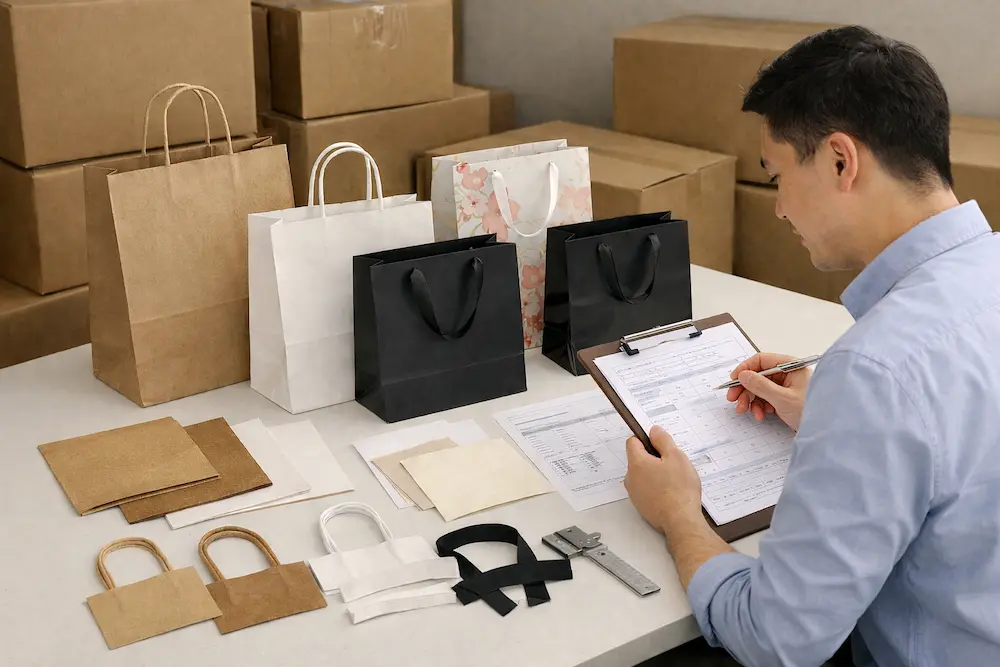
For importers, choosing a paper shopping bags manufacturer is never only about price. A quotation may look attractive, but if the factory cannot deliver the right size, the right paper, stable handle strength, consistent print quality, practical export packing, and repeatable bulk production, the order can quickly become expensive in the wrong ways. That is why a strong paper shopping bags manufacturer for importers should be judged not just by catalogue photos or quick replies, but by how clearly they answer the right technical and commercial questions.
In real sourcing, the most expensive mistake is often not paying a little more. It is asking the wrong questions too late. Importers buying paper shopping bags, custom paper shopping bags, or other handled retail bags should be clear about what they need before approving a supplier. For buyers that are also evaluating stronger visual identity in retail programs, some compare branded paper bags for strong brand recognition when assessing how a manufacturer’s structural and printing capability supports more presentation-led packaging projects.
The best factories do more than make bags. A reliable paper bag supplier should help importers understand structure, paper direction, print limits, packing logic, and repeat-order control before the first shipment leaves the factory.
1. What Bag Type Do You Recommend for My Sales Channel?
This should be your first question. A serious paper shopping bags manufacturer should not jump straight into pricing before understanding where the bag will actually be used.
A supermarket checkout bag, a bakery carry bag, a pharmacy bag, a takeaway bag, a gift bag, and a boutique retail shopping bag may all be called paper shopping bags, but they do not serve the same commercial purpose. A good paper shopping bags manufacturer for importers should ask about:
- product type
- sales channel
- customer experience expectations
- target price level
- destination market
If the supplier cannot explain why one bag structure is better than another for your use case, that is usually a warning sign. A serious supplier should sound like a packaging advisor, not just a quoting machine. This is especially important for buyers working on supermarket and daily retail programs, where some also compare paper grocery bags for sustainable carry and daily use when judging whether a manufacturer really understands volume-led retail demand, carrying performance, and everyday bag structure.
2. What Finished Size Do You Recommend, and How Do You Measure It?
Importers should never accept vague descriptions like “small,” “medium,” or “shopping size.” Ask the paper shopping bags manufacturer to confirm the finished bag size in width × gusset × height format and explain exactly how the dimensions are measured.
This matters because size affects:
- product fit
- print balance
- carrying comfort
- carton efficiency
- freight cost
- overall retail appearance
A strong paper bag supplier should also ask what product will go inside the bag. If the manufacturer is not asking about product dimensions, they are probably not thinking about real packaging performance. A bag that looks proportionate in a sample photo may still be completely wrong in real retail use.
For importers buying custom paper shopping bags, correct size is one of the earliest decisions that affects nearly everything else in the order.
3. What Paper Type and Paper Weight Are Best for This Project?
This is one of the most important questions in any paper shopping bags order. A good paper shopping bags manufacturer for importers should be able to explain the difference between brown kraft, white paper, recycled-content paper, and any specialty paper they recommend.
They should also explain paper weight in context instead of just giving a GSM number without practical meaning.
Buyers exploring a more natural-looking and sustainability-led direction often also compare brown paper bags for natural and sustainable packaging when evaluating how paper choice supports both retail use and broader packaging positioning.
A reliable manufacturer should help you understand:
- whether brown kraft or white paper fits your brand better
- whether the bag needs stronger stiffness or only everyday carry performance
- whether recycled-content stock still gives the right print effect
- whether the chosen paper fits your target cost level
Many importers choose paper based only on appearance. In practice, paper should be chosen by balancing brand image, carrying performance, print requirement, and shipping efficiency.
4. What Handle Type Is Best for the Real Carry Load?
Many importers focus on how the handle looks and forget to ask how it performs. A professional paper shopping bags manufacturer should explain whether flat handles, twisted paper handles, rope handles, or die-cut handles make the most sense for the actual product weight and customer use.
This matters because a bag can look attractive in a sample and still fail in real use if the handle attachment, reinforcement, or bag balance is wrong.
A good paper bag supplier should discuss:
- handle comfort
- expected carry load
- reinforcement needs
- suitability by retail channel
- whether the handle supports the intended brand position
For buyers working on broader retail and brand-display programs, some also compare paper shopping bags with handles for easy carry and brand display when assessing how paper shopping bags with handles should balance customer comfort, daily practicality, and stronger store presentation.
If the manufacturer only talks about handle style and never mentions carrying performance, that is usually a weak sign.
5. What Print Method Do You Recommend, and Why?
Importers should always ask how the bag will actually be printed. Flexographic, offset, and digital printing are not interchangeable in cost, production logic, or final effect.
A strong paper shopping bags manufacturer should explain:
- what print quality is realistic on brown kraft versus white paper
- whether the artwork is too detailed for the intended print method
- whether color consistency is realistic in bulk production
- whether the approved sample reflects real production quality
This question protects importers from one of the most common sourcing problems: a bag that looks good in a mockup but not in mass production. For buyers who want branding and material positioning to work together more clearly, some also compare custom kraft bags for sustainable branding and packaging when assessing how paper, print, and brand identity can be aligned more effectively.
For custom paper shopping bags, print method is not a small technical detail. It is often one of the biggest factors shaping whether the bag feels professional or disappointing.
6. What Is Your MOQ, and What Drives It?
MOQ is not just a negotiation number. It usually reflects real production setup, material purchasing, print preparation, handle preparation, and packing efficiency.
Importers should ask not only what the MOQ is, but also why it is set at that level.
This helps you judge whether the paper shopping bags manufacturer understands their own production process. It also helps you decide whether the order is still at testing stage or ready for larger repeat volume.
A serious supplier should be able to explain how MOQ changes based on:
- bag size
- print complexity
- paper type
- handle style
- finishing requirements
If the MOQ sounds random or shifts without explanation, that usually suggests weak production logic.
7. Can You Provide Samples That Reflect Real Production Quality?
Always ask this directly. A factory should be able to provide stock samples, pre-production samples, or custom samples, and they should clearly explain which one you are reviewing.
This matters because a beautifully prepared hand sample may not reflect real bulk production quality. The best manufacturers explain that difference honestly and encourage testing the bag with the real product inside.
Importers should check sample bags for:
- actual size accuracy
- paper feel and stiffness
- handle attachment
- print sharpness
- bottom structure
- carrying performance under load
A trustworthy paper bag supplier does not fear sampling. They use it to reduce misunderstanding before mass production begins.
8. How Do You Control Quality During Production?
Importers should ask what the factory checks during production, not only before shipment.
A reliable paper shopping bags manufacturer should be able to explain how they control:
- finished dimensions
- print registration
- color consistency
- handle attachment
- glue application
- bottom shape
- carton packing
If the supplier cannot describe their quality control process in practical language, they may be relying too heavily on final inspection instead of stable process control.
For importers buying paper shopping bags in repeat volume, this usually means higher risk over time.
9. What Export Packing Method Do You Use?
This question is often overlooked, but it directly affects landed cost and cargo condition.
Ask the manufacturer:
- how many bags go into each carton
- what the carton dimensions are
- what the carton gross weight will be
- whether cartons are palletized
- whether the packing is suitable for sea freight or air freight
- whether any moisture protection is used when necessary
A lower unit price can quickly become less attractive if the export packing is inefficient. A strong paper shopping bags manufacturer for importers should be able to explain export packing just as clearly as they explain the bag itself.
10. What Compliance or Documentation Support Can You Provide?
This is one of the most important questions for importers. A good supplier should understand that importing is not only about production. It is also about documentation, intended use, and destination-market requirements.
If the bags are intended for food-related applications, importers should ask what the bag is designed for, what materials are used, and what supporting information the supplier can provide about inks, adhesives, or coatings.
If the order is sustainability-led, ask what sourcing information, certification language, or packaging details the manufacturer can provide.
If the order is going into markets with stronger packaging expectations, ask whether the supplier understands that direction and whether the bag structure is moving toward more disciplined, more recyclable packaging logic.
A serious paper bag supplier may not solve compliance for you, but they should understand why these questions matter and be able to respond in a structured way.
11. What Is Your Lead Time, and What Could Delay Production?
Do not ask only for the best-case lead time. Ask what can delay it.
A strong paper shopping bags manufacturer should distinguish between:
- sample lead time
- artwork confirmation time
- production lead time
- packing readiness
- shipping-booking readiness
They should also mention common causes of delay, such as:
- paper availability
- holiday schedules
- plate preparation
- sample approval delays
- queue pressure in production
Importers who ask this early usually plan better and avoid unrealistic promises to their own customers.
12. How Do You Support Repeat Orders?
The real test of a paper shopping bags manufacturer is not whether they can make one attractive sample. It is whether they can repeat the same bag consistently.
Ask how they manage:
- approved specification records
- repeat color consistency
- repeat size control
- repeat handle attachment standards
- archived reference samples
- artwork version control
Importers do not want one lucky order. They want a repeatable packaging program. A manufacturer who thinks in repeat-order terms is always more valuable than one who only tries to win the first order.
Practical Table: Questions That Reveal a Strong Manufacturer Fast
| Question Area | What You Should Ask | What a Strong Supplier Usually Does |
|---|---|---|
| Channel fit | What bag type do you recommend for my sales channel? | Explains structure by use case |
| Product fit | What finished size do you recommend? | Asks what product goes inside |
| Material logic | What paper type and weight are best? | Explains trade-offs, not just GSM |
| Handle logic | What handle style fits the real load? | Talks about comfort and reinforcement |
| Print suitability | What print method do you recommend? | Matches artwork to realistic production |
| MOQ logic | What drives your MOQ? | Explains setup and scale clearly |
| Quality control | How do you control quality during production? | Describes process checks, not vague promises |
| Packing | What export packing method do you use? | Gives carton details and freight logic |
| Compliance support | What documents or material details can you provide? | Responds clearly and practically |
| Repeat orders | How do you keep repeat production consistent? | Uses records, samples, and control standards |
A Practical Short List of the Best Questions
If you want the fastest screening version, ask these ten:
- What bag type do you recommend for my channel and why?
- What finished size do you recommend based on my product?
- What paper type and paper weight do you suggest?
- What handle style is best for the real carry load?
- What print method do you recommend for this artwork?
- What is your MOQ and what drives it?
- Can you provide production-representative samples?
- How do you control quality during production?
- What export packing method do you use?
- What compliance or documentation support can you provide?
If a supplier answers these clearly, you are probably dealing with a more serious manufacturer.
Conclusion
The best paper shopping bags manufacturers do more than quote prices. They explain trade-offs. They help importers choose the right bag structure, the right paper, the right print logic, and the right packing plan for the intended market.
For importers, the goal is not just to find a factory that says yes. It is to find a paper shopping bags manufacturer for importers that can explain why a specification makes sense, support the right documentation logic, and repeat the same quality over time. That is what turns paper shopping bags from a simple purchase into a reliable long-term packaging program.
How Importers Should Evaluate a Paper Shopping Bags Manufacturer
What the questions really reveal: The purpose of asking detailed questions is not to make the sourcing process longer. It is to discover whether the manufacturer understands the real bag, the real product, and the real market before bulk production starts.
Why this matters for importers: A weak factory can often provide a fast quotation, but that does not mean it can provide the right structure, the right print result, or the right export packing plan. Good questions help expose gaps before they turn into costly mistakes.
How buyers should compare factories: Importers should compare manufacturers by how well they explain bag type, size logic, paper direction, handle construction, print method, MOQ, quality control, and repeat-order consistency. The clearer the explanations, the lower the sourcing risk usually becomes.
What strong manufacturers usually do: They ask about the product, the sales channel, the target market, and the expected brand tier before they recommend a specification. They also explain export packing, lead time, and production limits instead of giving vague answers.
What importers should care about most: The most valuable answers are often the ones that show practical thinking: how the bag fits the product, how the print behaves in bulk production, how the cartons ship, and how the same bag will be repeated over time.
The larger takeaway: The best paper shopping bags manufacturer is not the one that says yes to everything. It is the one that helps importers make fewer mistakes, stronger buying decisions, and more repeatable packaging programs.
FAQ
1. What are the top questions to ask a paper shopping bags manufacturer for importers?
Importers should ask about bag type, finished size, paper type, paper weight, handle style, print method, MOQ, sample quality, quality control, export packing, lead time, and repeat-order consistency. The best questions are the ones that reveal whether the manufacturer understands the real sales channel and the real product use.
2. Why should importers ask about finished bag size before asking for price?
Because finished size affects product fit, print balance, carton efficiency, carrying comfort, and final landed cost. If the size is not clear, quotations from different suppliers are often not truly comparable.
3. Why is paper type so important when sourcing paper shopping bags?
Paper type affects strength, print performance, brand image, and sustainability positioning. Brown kraft, white kraft, and recycled-content papers do not create the same result in retail use, so buyers should confirm which paper direction fits the actual project best.
4. What should importers ask about printing?
Importers should ask which print method is recommended, whether the artwork suits that method, whether the approved sample reflects real production quality, and how color consistency is controlled in bulk orders. This helps reduce the risk of receiving bags that look different from the approved design.
5. What makes a paper shopping bags manufacturer reliable for long-term importing?
A reliable manufacturer can explain trade-offs clearly, provide realistic samples, maintain size and print consistency, support export packing, and repeat the same quality over multiple orders. For importers, repeat-order stability is often more important than a very low first quotation.
References
- Basic Importing and Exporting — U.S. Customs and Border Protection — CBP
- Importing into the United States — U.S. Customs and Border Protection — CBP
- Food Packaging & Other Substances that Come in Contact with Food: Information for Consumers — U.S. Food and Drug Administration — FDA
- Understanding How FDA Regulates Substances that Come into Contact with Food — U.S. Food and Drug Administration — FDA
- Packaging waste — European Commission — Directorate-General for Environment
- Packaging & Packaging Waste Regulation — European Commission — Directorate-General for Environment
- Regulation (EU) 2025/40 on packaging and packaging waste — EUR-Lex
- What the FSC Labels Mean — Forest Stewardship Council — FSC
- What do the FSC labels mean? — FSC Canada
- Paper & Packaging — Forest Stewardship Council — FSC
Editorial Rights Notice:The editorial content on this page was prepared by Xiamen Youngpack Imp.and Exp.Co.,Ltd. for our website visitors and business partners. Please do not reuse it without written approval.