Quick Summary:Choosing takeaway paper bags requires understanding standard dimensions, width, gusset, height, paper GSM, material strength, and food packaging requirements.
The right size helps restaurants, cafés, bakeries, and takeaway brands improve carrying performance, reduce packaging waste, and create better customer experiences.
Professional size planning allows retail food businesses to build efficient packaging systems for different products and order types.
Introduction
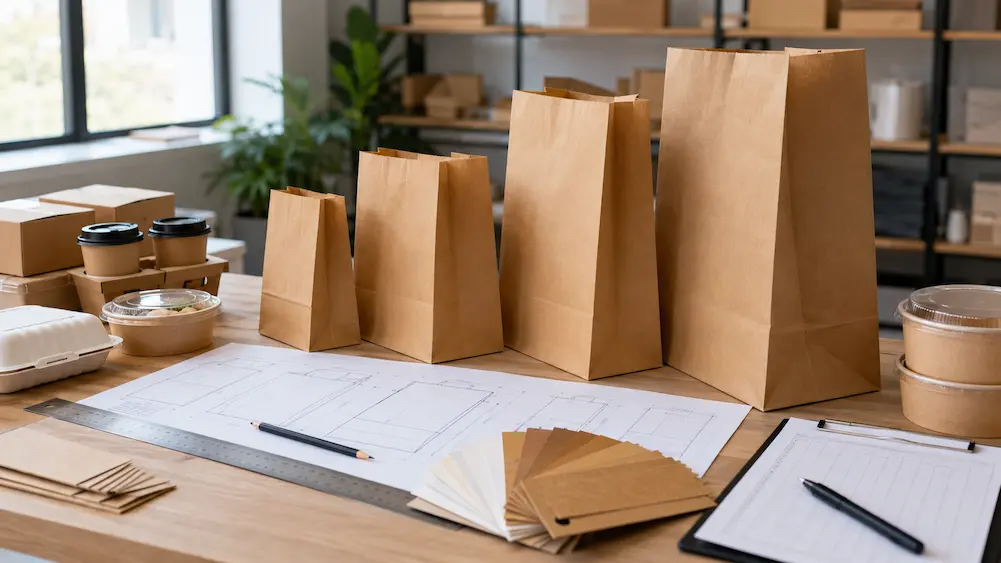
Choosing the correct takeaway paper bags size is one of the most important decisions in retail food packaging.
Many restaurants, cafés, bakeries, and takeaway brands usually ask:
“What size paper bag should we use?”
While size seems simple, professional packaging planning requires more than measuring a product.
The right takeaway bag should balance:
- Food container fit
- Carrying convenience
- Material efficiency
- Packaging cost
- Customer experience
A bag that is too small may create problems:
- Difficult packing
- Damaged products
- Poor customer experience
A bag that is too large may cause:
- Material waste
- Higher costs
- Inefficient storage
Professional buyers evaluate standard paper bag dimensions based on actual products, daily usage, and future packaging needs.
Whether developing food takeaway bags for restaurants or custom takeaway bags for retail brands, understanding size planning helps create better packaging performance.
Why Size Matters for Takeaway Paper Bags
The size of takeaway paper bags directly affects both business operations and customer satisfaction.
A good size provides:
- Enough product space
- Stable carrying structure
- Efficient storage
- Better presentation
Food packaging needs to protect products from preparation to customer use.
Product Fit and Protection
Different foods require different packaging space.
Examples:
Coffee shops may need:
- Small pastry bags
- Drink carrier bags
- Compact takeaway solutions
Restaurants may need:
- Larger meal bags
- Multiple container capacity
- Stronger structures
Choosing the correct dimensions helps reduce movement inside the bag and protects food presentation.
Customer Carrying Experience
Customers expect takeaway packaging to be:
- Easy to hold
- Comfortable to carry
- Reliable during transport
A properly sized bag improves convenience and supports a better brand impression.
Cost and Material Efficiency
Packaging size also influences production costs.
Oversized bags use more:
- Paper materials
- Storage space
- Shipping volume
Smart size planning helps reduce unnecessary waste while maintaining quality.
Understanding Takeaway Paper Bag Dimensions
Before selecting takeaway paper bag sizes, buyers need to understand how dimensions are measured.
Most paper bags use three measurements:
Width × Gusset × Height
Example:
24 × 11 × 32 cm
Each number represents a different part of the bag structure.
Width: Front Opening Size
Width refers to the front measurement of the paper bag.
It affects:
- Product placement
- Container fitting
- Visual appearance
A wider bag provides more horizontal space for food boxes and containers.
Gusset: Side and Bottom Expansion
The gusset is one of the most important measurements for takeaway packaging.
It creates extra space inside the bag.
A larger gusset supports:
- Wider food containers
- Multiple items
- Better stability
Many buyers focus only on height but forget gusset depth.
This often causes incorrect size choices.
Height: Vertical Capacity
Height determines how much vertical space the bag provides.
It affects:
- Product coverage
- Carrying comfort
- Packaging appearance
The correct height should protect products without creating unnecessary empty space.
Standard Takeaway Paper Bag Sizes
Although every business may have different requirements, many retail food brands start with common size ranges.
These standard dimensions cover most daily packaging applications.
Common Takeaway Paper Bag Size Chart
| Size (cm) | Recommended Application | Typical Users |
|---|---|---|
| 18 × 8 × 24 | Small meals, snacks, bakery items | Cafés, bakeries |
| 24 × 11 × 32 | Standard takeaway orders | Restaurants, food stores |
| 32 × 12 × 41 | Multiple food containers | Delivery brands |
| 40 × 13 × 30 | Large packaging needs | Catering, supermarkets |
| Custom Size | Special requirements | Retail brands |
Small Takeaway Paper Bags
Small sizes are suitable for:
- Snacks
- Desserts
- Single products
- Small takeaway orders
They help businesses control material use and improve daily packaging efficiency.
Medium Takeaway Paper Bags
Medium sizes are commonly used by:
- Restaurants
- Coffee shops
- Food retailers
They provide a balance between:
- Capacity
- Cost
- Convenience
Large Takeaway Paper Bags
Large sizes are designed for higher capacity needs.
They support:
- Multiple products
- Family meals
- Larger containers
The key is choosing enough capacity without unnecessary oversizing.
Matching Takeaway Paper Bag Sizes with Food Types
Different food businesses require different takeaway paper bags because products vary in size, weight, and packaging style.
Choosing a standard size without considering actual products may lead to:
- Poor space usage
- Higher packaging costs
- Lower customer satisfaction
Professional food brands usually match bag dimensions with their product categories.
Coffee Shops and Beverage Brands
Coffee shops usually require flexible packaging solutions because customers often purchase different combinations.
Common orders include:
- Coffee cups
- Pastries
- Sandwiches
- Small desserts
Recommended packaging features:
- Small to medium size
- Stable bottom gusset
- Comfortable carrying structure
Compact packaging helps improve convenience while avoiding unnecessary material use.
Bakery Packaging Size Planning
Bakeries need packaging that protects product appearance.
Common bakery products include:
- Bread
- Cakes
- Cookies
- Pastries
Important size considerations:
- Enough width
- Suitable gusset depth
- Product protection space
A wider bottom structure helps maintain food presentation.
Restaurant and Delivery Packaging
Restaurants and food delivery businesses usually require larger packaging sizes for multiple products.
Businesses handling family meals, catering orders, or heavier products often select large paper bags for high capacity carry solutions to provide enough space, better structure, and improved customer convenience.
Large takeaway packaging should consider:
- Container quantity
- Total weight
- Carrying distance
- Bag strength
Choosing the right size improves delivery performance and customer experience.
Food Type and Size Recommendation Table
| Business Type | Packaging Requirement | Recommended Size Strategy |
|---|---|---|
| Coffee Shop | Drinks and snacks | Small-medium bags |
| Bakery | Wide products | Larger gusset depth |
| Restaurant | Meal containers | Medium-large bags |
| Catering | Multiple items | High capacity bags |
| Retail Food | Mixed products | Multiple size system |
How Material and GSM Affect Takeaway Paper Bag Dimensions
The performance of takeaway paper bags is not only decided by size.
Material and paper thickness also influence:
- Strength
- Durability
- Appearance
- Customer experience
Two bags with the same dimensions may perform differently if the materials are different.
Understanding Paper GSM
GSM means grams per square meter.
It represents paper weight and thickness.
Generally:
Higher GSM provides:
- Stronger structure
- Better carrying ability
- Premium feeling
Lower GSM provides:
- Lightweight packaging
- Cost efficiency
The correct choice depends on actual food packaging needs.
Common GSM Selection Guide
| GSM Range | Common Application | Packaging Feature |
|---|---|---|
| 80–120gsm | Lightweight food packaging | Cost efficient |
| 120–170gsm | Standard takeaway bags | Balanced strength |
| 170gsm+ | Heavy-duty packaging | Stronger structure |
Choosing Suitable Materials
Material choice influences the strength and performance of takeaway packaging.
Many food brands choose kraft paper bags for sustainable and natural packaging because kraft materials provide reliable carrying strength, flexible size options, and practical performance for takeaway and retail food applications.
Kraft Takeaway Paper Bags
Kraft paper is commonly used because it provides:
- Strong fibre structure
- Natural appearance
- Practical durability
It works well for:
- Restaurants
- Bakeries
- Coffee shops
- Food delivery brands
White Paper Takeaway Bags
White paper provides:
- Clean appearance
- Better colour presentation
- Strong branding possibilities
It is suitable for brands focusing on visual design.
Handle and Structure Considerations
The structure of takeaway paper bags affects usability.
Different handle styles provide different customer experiences.
Flat Handle Paper Bags
Flat handles are commonly selected for takeaway packaging.
Benefits include:
- Easy carrying
- Efficient stacking
- Practical daily use
They are suitable for:
- Restaurants
- Cafés
- Food service businesses
Twisted Handle Paper Bags
Twisted handles provide a different appearance and stronger presentation.
Common applications:
- Retail food stores
- Premium takeaway packaging
- Gift food products
No Handle Paper Bags
Some food businesses prefer simple open-top bags.
They are often used for:
- Bakery products
- Small foods
- Counter service packaging
Handle Selection Table
| Handle Type | Feature | Suitable Application |
|---|---|---|
| Flat Handle | Practical carrying | Takeaway orders |
| Twisted Handle | Better presentation | Premium food retail |
| No Handle | Simple packaging | Bakery and snacks |
Custom Size Planning for Retail Brands
Standard dimensions work for many businesses.
However, some brands require custom takeaway bags based on their specific products.
Custom size planning helps improve:
- Packaging efficiency
- Customer experience
- Brand presentation
Build a Complete Size System
A complete packaging size system should include different options according to product requirements.
Many cafés, bakeries, and retail stores include small paper bags for compact packaging and easy carry in their packaging programs to support smaller products, single orders, and daily customer needs.
A practical packaging system may include:
- Small bags for individual products
- Medium bags for daily orders
- Large bags for multiple items
Avoid Copying Competitor Sizes
Every business has different requirements.
Before confirming dimensions, buyers should review:
- Product measurements
- Packaging method
- Customer habits
- Storage conditions
The best size is the one that matches actual use.
Choosing a Reliable Takeaway Paper Bags Supplier
Selecting the right supplier is an important part of developing successful takeaway paper bags for retail food packaging.
A professional supplier should provide more than standard sizes.
They should help businesses choose suitable:
- Dimensions
- Paper materials
- GSM options
- Bag structures
- Custom solutions
For restaurants, cafés, bakeries, supermarkets, and food delivery companies, supplier experience directly affects packaging performance.
Size Recommendation Experience
Experienced suppliers understand that different food products require different packaging dimensions.
A professional takeaway packaging supplier China partner can provide suggestions based on:
- Product size
- Food container type
- Carrying requirements
- Customer usage
This helps buyers avoid choosing unsuitable sizes.
Sample Development Support
Before confirming mass production, samples help buyers check real performance.
Sample testing includes:
- Bag dimensions
- Container fitting
- Paper thickness
- Carrying comfort
- Structure stability
Testing actual samples reduces risks before large orders.
Custom Production Ability
Retail food brands often need packaging that matches their identity.
Customization may include:
- Special dimensions
- Logo printing
- Material selection
- Handle styles
Reliable manufacturers help brands create custom takeaway bags that support both practical use and brand presentation.
Quality Control Ability
Stable quality control ensures every batch performs consistently.
Inspection areas include:
- Material quality
- Size accuracy
- Folding structure
- Handle strength
- Final packaging
Quality management protects customer experience and brand reputation.
Takeaway Paper Bags Supplier Checklist
| Supplier Ability | Why It Matters |
|---|---|
| Size Knowledge | Provides accurate recommendations |
| Material Experience | Improves packaging performance |
| Custom Ability | Supports brand requirements |
| Sample Service | Reduces order mistakes |
| Quality Control | Maintains consistency |
Common Size Mistakes When Choosing Takeaway Paper Bags
Even experienced food businesses can choose incorrect packaging sizes.
Avoiding common mistakes helps reduce waste and improve efficiency.
Mistake 1: Only Considering Bag Height
Many buyers focus mainly on height.
However, capacity depends on:
- Width
- Gusset depth
- Overall structure
A tall bag with a small gusset may still not fit wide food containers.
Professional buyers always check complete dimensions.
Mistake 2: Ignoring Food Container Measurements
Food containers should be measured before selecting bags.
Important points include:
- Container length
- Width
- Stacking height
The bag should provide enough space without excessive movement.
Mistake 3: Choosing Oversized Bags
Large bags may seem safer.
However, oversized packaging creates:
- Higher material costs
- Storage problems
- Poor presentation
The correct size improves both efficiency and appearance.
Mistake 4: Selecting the Wrong GSM
Size alone does not determine strength.
A large bag with unsuitable paper thickness may fail during use.
Buyers should match:
- Bag dimensions
- Product weight
- Paper GSM
for better performance.
Mistake 5: Not Planning Future Packaging Needs
Growing brands should consider future requirements.
A complete packaging strategy includes:
- Different sizes
- Repeat order planning
- Seasonal needs
This helps maintain stable supply.
Future Trends in Takeaway Paper Bag Sizes
Food packaging continues changing as customer expectations and business needs develop.
Future takeaway paper bags will focus more on:
- Optimized dimensions
- Better material usage
- Improved convenience
- Sustainable packaging strategies
Trend 1: Optimized Size Systems
More businesses are moving away from using one general size.
Instead, brands create complete packaging systems:
- Small sizes for individual orders
- Medium sizes for daily sales
- Large sizes for multiple products
This improves packaging efficiency.
Trend 2: Reducing Material Waste
Better dimension planning helps reduce unnecessary material use.
Future packaging development will focus on:
- Correct sizing
- Efficient structures
- Practical designs
Reducing waste benefits both businesses and customers.
Trend 3: Better Delivery Performance
Food delivery continues growing.
Future takeaway packaging will require:
- Stronger structures
- Better stability
- More convenient carrying
Size and structure design will become more important.
Trend 4: More Customized Packaging Solutions
Brands increasingly need packaging that reflects their identity.
Future development will include:
- Custom dimensions
- Custom printing
- Brand-focused designs
Packaging will continue becoming part of the customer experience.
Takeaway Paper Bag Size Selection Checklist
| Selection Factor | Buyer Question |
|---|---|
| Product Size | Does the food fit properly? |
| Gusset Depth | Is there enough inside space? |
| Paper GSM | Can it support the weight? |
| Handle Style | Is carrying convenient? |
| Storage | Is inventory efficient? |
| Branding | Does packaging support identity? |
Building a Complete Retail Food Packaging Size Strategy
Successful packaging planning is not about choosing one universal size.
Different products require different solutions.
Retail food businesses should evaluate:
- Daily product types
- Customer purchasing habits
- Delivery methods
- Brand goals
A balanced size system improves:
- Packaging efficiency
- Customer satisfaction
- Cost control
How Takeaway Paper Bags Size Planning Improves Retail Packaging Performance
Correct dimensions improve packaging efficiency: Understanding width, gusset, and height helps businesses choose takeaway paper bags that match real food products.
Material and GSM influence performance: Proper paper selection improves carrying strength, customer experience, and overall packaging reliability.
A complete size system supports business growth: Combining small, medium, and large takeaway paper bags helps restaurants and retailers handle different customer needs.
Supplier experience creates better solutions: Working with professional manufacturers helps buyers optimize sizes, materials, structures, and customization options.
The larger takeaway: Takeaway paper bags are not only food containers. Smart size planning connects packaging efficiency, product protection, customer convenience, and long-term brand development.
Conclusion
Choosing the right takeaway paper bags requires understanding more than simple measurements.
Professional retail food packaging planning considers:
- Width
- Gusset
- Height
- Material
- GSM
- Structure
- Customer experience
Restaurants, cafés, bakeries, supermarkets, and takeaway brands should select sizes based on real product needs.
Small bags improve efficiency for individual items.
Large bags support bigger orders and delivery requirements.
The best takeaway packaging balances:
- Practical carrying
- Material efficiency
- Brand presentation
- Long-term supply planning
By working with experienced suppliers and selecting suitable dimensions, businesses can create takeaway paper bags that improve daily operations and provide a better customer experience.
FAQ
What are the common sizes for takeaway paper bags?
Common takeaway paper bag sizes include small options around 18×8×24 cm, standard sizes around 24×11×32 cm, and larger options such as 32×12×41 cm depending on food requirements.
How are takeaway paper bag dimensions measured?
Takeaway paper bags are usually measured by width × gusset × height. Width shows the front size, gusset provides expansion space, and height determines vertical capacity.
What size takeaway paper bag is best for restaurants?
Restaurants usually choose medium to large takeaway paper bags because they need space for meal containers, multiple items, and stable carrying performance.
Does paper GSM affect takeaway bag strength?
Yes. Higher GSM generally provides stronger structure and better carrying performance, especially for larger takeaway bags or heavier food products.
Can takeaway paper bags be customized?
Yes. Takeaway paper bags can be customized with different sizes, materials, handles, colours, and printed branding designs.
How should businesses choose a takeaway paper bag supplier?
Businesses should choose suppliers with size planning experience, material knowledge, customization ability, sample support, quality control, and reliable production capacity.
References
- Paper Packaging Dimension and Structure Design Guidelines
Reference for paper bag size measurement, gusset design, capacity planning, and structural performance. - Food Service Packaging Material Selection Standards
Reference for kraft paper materials, GSM selection, carrying strength, and food packaging applications. - Retail Food Packaging Optimization Research Reports
Reference for packaging efficiency, customer experience, storage planning, and waste reduction strategies. - Takeaway and Delivery Packaging Development Studies
Reference for restaurant packaging requirements, delivery performance, and consumer convenience. - Global Packaging Supplier Quality Management Guidelines
Reference for supplier evaluation, production control, customization capability, and quality inspection.
Original Content Notice:This article was created by Xiamen Youngpack Imp.and Exp.Co.,Ltd. for informational purposes. Please do not copy, republish, or distribute it without prior written permission.