Quick Summary:Choosing the right takeaway paper bags size helps food brands improve packaging efficiency, carrying performance, customer convenience, and overall brand presentation.
Different food applications require different dimensions, materials, and structures. A reliable takeaway paper bags manufacturer helps businesses select suitable packaging solutions based on product type, usage requirements, and long-term purchasing plans.
Understanding standard sizes helps brand owners reduce unnecessary costs while creating practical and professional takeaway packaging.
Introduction
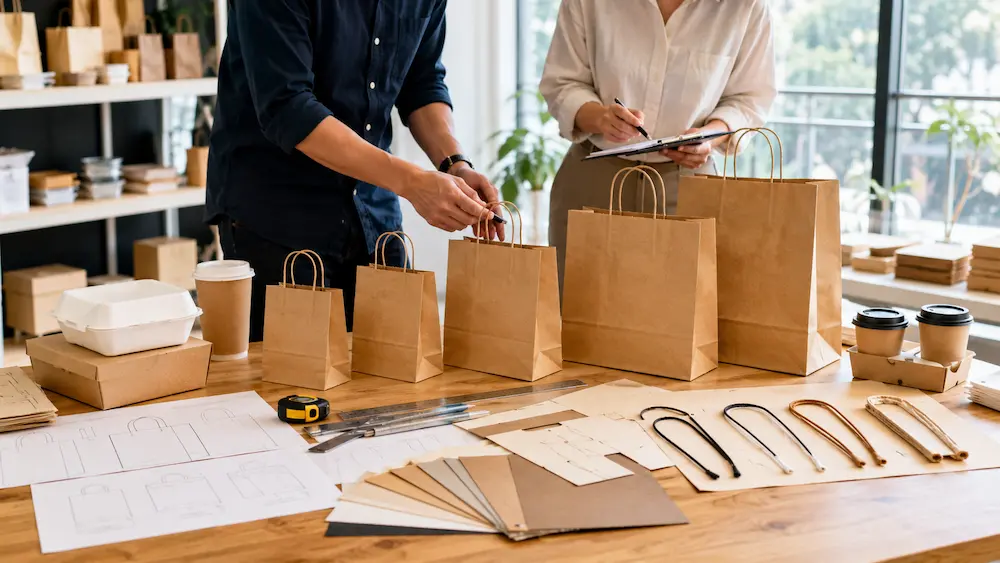
Choosing the correct size for takeaway paper bags is one of the most important decisions when developing food packaging solutions.
Many brand owners focus first on printing design, colours, or logo placement, but the dimensions of takeaway paper bags directly influence customer experience, product protection, storage efficiency, and operational costs.
A bag that is too small may create inconvenience for customers.
A bag that is too large may waste materials, increase costs, and reduce packaging efficiency.
For restaurants, cafés, bakeries, supermarkets, food delivery companies, and takeaway businesses, choosing the right takeaway paper bags requires balancing:
- Food container size
- Carrying weight
- Material strength
- Storage space
- Branding requirements
- Customer convenience
Modern takeaway paper bags are more than simple carrying solutions.
They represent food quality, brand image, and customer service standards.
A professional takeaway paper bags manufacturer should help businesses select suitable dimensions based on real product usage instead of only providing standard sizes.
Why Takeaway Paper Bag Size Matters
The size of takeaway paper bags affects almost every part of daily food operations.
Correct dimensions can improve:
- Packing speed
- Staff efficiency
- Customer convenience
- Product arrangement
- Transportation experience
For example, takeaway meals with multiple containers usually require wider bottom structures to keep products stable.
Bakery products may require different bag dimensions to prevent damage.
Coffee shops may focus more on lightweight takeaway packaging that is easy for customers to carry.
Choosing the right size helps businesses reduce waste while improving packaging performance.
A reliable takeaway paper bags supplier considers both product protection and customer experience when recommending specifications.
Common Standard Sizes for Takeaway Paper Bags
Although custom sizes are available, many food businesses start with common takeaway paper bag dimensions because they provide practical solutions for everyday use.
Below are typical size references:
| Bag Size | Approx Dimensions (W × D × H) | Common Applications |
|---|---|---|
| Small Takeaway Bag | 18 × 10 × 22 cm | Snacks, bakery items, small meals |
| Medium Takeaway Bag | 22 × 12 × 28 cm | Lunch boxes, cafés, daily takeaway |
| Large Takeaway Bag | 28 × 15 × 32 cm | Multiple containers, restaurant orders |
| Extra Large Bag | 32 × 20 × 35 cm | Family meals, catering, bulk food orders |
Actual sizes can be adjusted depending on container dimensions, food weight, and brand requirements.
A custom takeaway paper bags manufacturer can help buyers optimise dimensions to improve usability and reduce unnecessary material consumption.
Choosing the Right Material for Different Bag Sizes
Material selection becomes more important as bag size increases.
Larger takeaway paper bags usually need stronger paper materials because they carry heavier products.
Common materials include:
- Brown kraft paper
- White kraft paper
- Recycled paper
- Coated paper
Different materials create different results in strength, appearance, printing performance, and customer perception.
Many restaurants and food service brands choose kraft paper bags for sustainable and natural packaging because kraft materials provide a simple appearance, reliable carrying performance, and practical daily food packaging solutions.
When selecting materials, brand owners should consider:
- Food weight
- Carrying distance
- Printing requirements
- Customer expectations
- Sustainability goals
A professional takeaway paper bags supplier recommends materials based on application instead of only price.
How Bag Structure Affects Performance
Takeaway paper bags are not only defined by width and height.
The structure also influences how the packaging performs.
Important structural factors include:
Bottom Width
A wider bottom allows food containers to sit more securely.
This is especially important for:
- Meal boxes
- Bakery packaging
- Restaurant takeaway orders
Paper Thickness
Paper thickness affects:
- Strength
- Durability
- Customer experience
- Cost
Higher GSM paper provides stronger performance but may increase material costs.
Handle Design
Handles improve carrying convenience.
Common options include:
- Twisted paper handles
- Flat paper handles
- Die-cut handles
The best choice depends on product weight, appearance goals, and customer use.
Custom Printing and Branding Considerations
Takeaway packaging has become an important branding opportunity.
Customers often carry takeaway paper bags outside restaurants, offices, shopping areas, and public spaces.
This creates additional brand exposure.
Custom printing allows businesses to display:
- Logos
- Brand colours
- Promotional messages
- Visual identity
For companies that want stronger market recognition, packaging solutions such as paper bags with logo for clear brand recognition help create a consistent and professional brand image.
A reliable takeaway paper bags manufacturer should consider:
- Printing position
- Bag size
- Paper material
- Colour consistency
- Production requirements
Good packaging design combines visual appeal with practical functionality.
Choosing Different Food Packaging Solutions
Different food businesses require different packaging structures.
A bakery, café, restaurant, supermarket, and food delivery brand may not always use the same type of packaging.
While takeaway paper bags are one of the most common solutions for daily food service, some products may require alternative packaging formats depending on storage requirements, product type, and customer expectations.
For example, businesses may also consider food pouch packaging for flexible storage and product protection when they need packaging solutions designed for product freshness, convenient storage, or different food presentation requirements.
Choosing the right packaging format helps brands improve:
- Product protection
- Customer convenience
- Shelf presentation
- Transportation efficiency
- Overall brand experience
A professional takeaway paper bags manufacturer should understand different food packaging applications and recommend solutions based on practical usage.
How Food Type Influences Takeaway Paper Bag Dimensions
Different food categories require different takeaway paper bag sizes.
A standard size does not fit every product.
For example:
Bakery and Dessert Products
Bakeries often need takeaway paper bags that protect product shape and appearance.
Important considerations include:
- Bag width
- Internal space
- Paper strength
- Easy carrying
Lightweight bakery products may use smaller bags, while cakes or multiple-item orders require larger structures.
Restaurant Takeaway Meals
Restaurants usually require stronger takeaway paper bags because meals often include:
- Multiple containers
- Drinks
- Side dishes
- Heavier food items
A wider base design can help improve stability and reduce movement during carrying.
Coffee Shops and Beverage Brands
Coffee shops usually focus on:
- Convenient carrying
- Fast packing
- Simple branding
- Customer experience
Medium-sized takeaway paper bags are often suitable for daily beverage and snack combinations.
MOQ and Bulk Ordering Considerations
When sourcing custom takeaway paper bags, MOQ and order quantity are important factors for brand owners.
Custom packaging production usually requires preparation before manufacturing begins.
This includes:
- Material preparation
- Printing setup
- Machine adjustment
- Production scheduling
- Quality inspection
For wholesale takeaway paper bags orders, larger quantities often improve production efficiency and reduce unit costs.
However, ordering more is not always the best decision.
Brand owners should consider:
- Monthly usage volume
- Storage space
- Seasonal demand
- Packaging updates
- Marketing activities
A reliable takeaway paper bags supplier helps buyers find the right balance between MOQ, cost efficiency, and inventory management.
How to Choose a Reliable Takeaway Paper Bags Manufacturer
Selecting the right manufacturer affects packaging quality, consistency, and long-term supply stability.
A professional takeaway paper bags manufacturer should provide more than production.
They should support buyers with:
- Size recommendations
- Material selection
- Printing suggestions
- Quality control
- Production planning
- Repeat-order management
Before choosing a supplier, brand owners should ask:
- Which bag size fits our food containers?
- What material thickness do you recommend?
- How do you test carrying strength?
- How do you maintain printing consistency?
- Can future repeat orders remain stable?
Experienced suppliers help businesses avoid unnecessary costs and create better packaging solutions.
Common Mistakes When Choosing Takeaway Paper Bag Sizes
Choosing takeaway paper bag dimensions may seem simple, but several common mistakes can affect performance.
Selecting Bags That Are Too Large
Oversized bags may increase:
- Material cost
- Storage requirements
- Shipping volume
- Packaging waste
The best size should provide enough space without unnecessary excess.
Ignoring Bottom Width
Many buyers focus only on height and width.
However, bottom depth is especially important for food containers.
A suitable bottom structure improves stability and customer experience.
Choosing Appearance Before Function
Attractive packaging is important, but food packaging must work well during actual use.
A successful takeaway paper bag should balance:
- Appearance
- Strength
- Convenience
- Cost efficiency
Not Planning Future Orders
Growing food brands should consider future packaging requirements.
Stable sizes and specifications help maintain:
- Brand consistency
- Easier inventory control
- Faster repeat production
How Brand Owners Should Choose Takeaway Paper Bag Sizes
Size selection affects performance: Takeaway paper bags should be selected according to food container size, product weight, carrying requirements, and customer experience.
Materials influence durability: Kraft paper, recycled paper, and other paper options provide different strength levels, printing results, and packaging appearances.
Customisation supports branding: Proper bag dimensions combined with logo printing and consistent design help food businesses improve recognition and customer connection.
Supplier experience matters: A professional takeaway paper bags manufacturer provides guidance on size planning, material selection, production efficiency, and repeat-order consistency.
The larger takeaway: The best takeaway paper bags are not only the right size. They create a balance between functionality, cost control, sustainability, and brand value.
Conclusion
Choosing the right takeaway paper bags size is an important part of creating successful food packaging solutions.
For brand owners, dimensions affect much more than appearance.
The correct size influences product protection, customer convenience, packaging efficiency, storage planning, and overall brand experience.
A reliable takeaway paper bags manufacturer helps businesses evaluate materials, structures, printing requirements, and order planning to create practical packaging solutions.
The best takeaway paper bags are not always the largest or most expensive options.
They are the bags that match real product needs, support efficient operations, and strengthen customer perception.
With proper size planning, takeaway paper bags become more than food carriers.
They become an important part of professional food service branding.
FAQ
What are the most common sizes for takeaway paper bags?
Common takeaway paper bag sizes include small bags for snacks and bakery products, medium bags for lunch boxes and cafés, and larger bags for restaurant meals or multiple food containers. The best size depends on product dimensions and carrying requirements.
How do I choose the right size for custom takeaway paper bags?
Brand owners should consider food container size, product weight, carrying distance, customer experience, storage space, and branding needs before choosing takeaway paper bag dimensions.
What materials are commonly used for takeaway paper bags?
Common materials include brown kraft paper, white kraft paper, recycled paper, and coated paper. Material choice depends on strength requirements, printing needs, sustainability goals, and brand positioning.
Can takeaway paper bags be customised with logos?
Yes. Custom takeaway paper bags can include logo printing, brand colours, and customised designs to improve brand recognition and create a professional customer experience.
Does bag size affect takeaway paper bag pricing?
Yes. Larger sizes usually require more materials, which can increase costs. Paper thickness, printing requirements, handles, and order quantity also influence final pricing.
How can a takeaway paper bags manufacturer help choose dimensions?
An experienced manufacturer can recommend suitable sizes based on food type, packaging application, carrying requirements, materials, and long-term ordering plans.
References
- Packaging and Packaging Waste Regulation (PPWR)
European Commission
Reference for sustainable packaging development, packaging reduction strategies, and recyclable packaging requirements. - Food Packaging & Other Substances that Come in Contact with Food
U.S. Food and Drug Administration (FDA)
Reference for food-contact packaging materials and packaging safety considerations. - Forest Stewardship Council (FSC) Paper Packaging Standards
Forest Stewardship Council
Reference for responsible paper sourcing and sustainable paper-based packaging. - Australian Packaging Covenant Organisation Sustainable Packaging Guidelines
APCO
Reference for sustainable packaging design and packaging lifecycle principles. - Global Food Service Packaging Market Reports
Reference for takeaway packaging trends, food delivery growth, and changing packaging requirements.
Source Credit Requirement:If you would like to quote part of this article, please clearly credit Xiamen Youngpack Imp.and Exp.Co.,Ltd. as the original source. Full-text reproduction is not permitted.