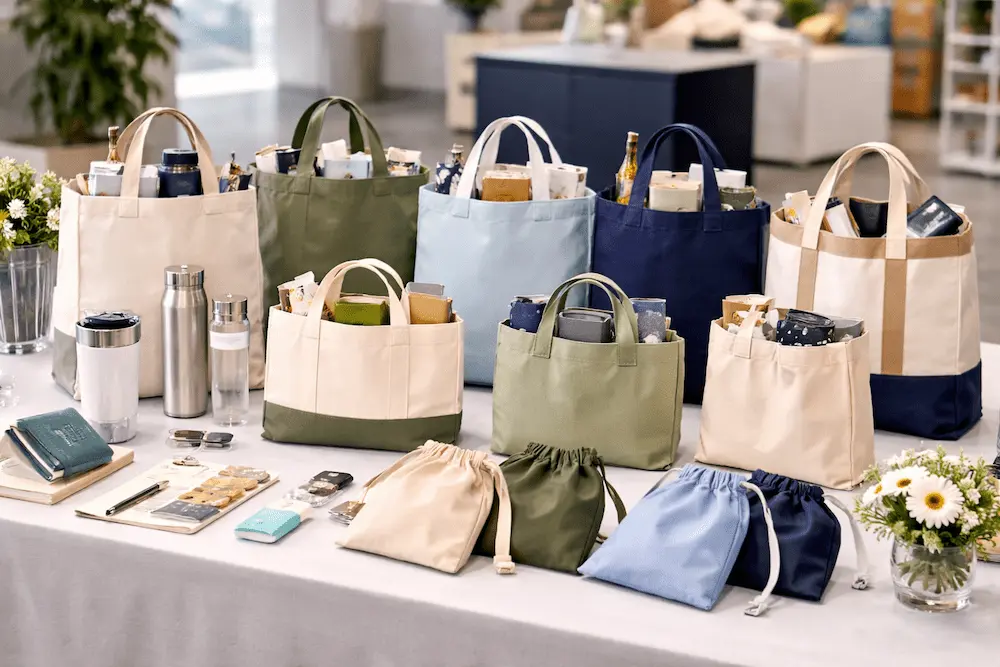
Small tote bags for promotions are often underestimated because they look simple and inexpensive. In reality, they can be one of the most efficient promotional formats when the size is right, the use case is clear, and the branding is handled properly. A small tote bag uses less material, costs less to ship, and often feels easier for people to keep and reuse than an oversized promotional bag that becomes awkward in daily life.
That does not mean every small tote bag works. If the bag is too small for the intended contents, too thin for repeated use, or poorly proportioned for the audience, the promotion loses value quickly. The best small tote bag is not just a reduced-size version of a larger tote. It is a bag designed around a specific kind of carry behavior, whether that means events, trade counters, bookstore purchases, cosmetics, gift-with-purchase promotions, or lightweight daily-use branding.
For many brands, the biggest advantage of small tote bags is that they sit in a useful middle ground. They are more reusable than paper giveaways, more visible than small boxed promo items, and often more acceptable in daily use than larger, louder promotional bags. That is why buyers should not judge them only by size. They should judge them by how well the size fits the promotional goal.
Why Small Tote Bags Work Well for Promotions
Promotional bags work best when people actually use them. Small tote bags often perform well because they feel manageable. They are easier to carry, easier to store, and easier to reuse for light shopping, books, lunch, cosmetics, event materials, or daily personal items. In many cases, that makes them more effective than larger promotional bags that look generous at first but are less practical in real life.
Another reason they work is cost efficiency. Smaller bags use less fabric, take less carton space, and usually cost less to print and transport than larger tote bag formats. That makes them attractive for campaigns that need broad distribution but still want a reusable product instead of a throwaway handout.
Small totes also leave room for stronger targeting. A bag for a beauty promotion should not be the same size as a grocery bag. A bookstore loyalty gift should not be designed like a trade show tote. The smaller format allows the buyer to design around actual product or audience behavior instead of assuming one large generic bag will suit every promotion.
What “Small” Should Mean in Tote Bag Design
There is no single universal size that defines a small tote bag. In commercial buying, “small” usually means a bag sized for lightweight carrying rather than large-volume shopping. That can include compact vertical bags, smaller square bags, or mini tote formats used for gift programs, event kits, small retail purchases, or curated promotional sets.
The key is that the bag should still feel complete and useful. A badly proportioned small tote can look cramped or impractical. A well-designed one feels intentional and product-specific. Buyers should focus on the expected contents first, then work backward to the right bag dimensions. Small tote bag sizing works best when it is content-led rather than visually guessed.
This is also where some buyers begin comparing small totes against more customized brand-led formats such as custom made tote bags when the promotion is not only about distribution but about creating a more curated and tailored brand impression.
Best Sizes for Small Promotional Tote Bags
The best small tote bag size depends on what the promotion is trying to carry. Light event handouts, cosmetics, brochures, books, accessories, and retail add-on purchases all require different dimensions. In general, small tote bags work best when they feel large enough to be useful but compact enough to remain easy to carry daily.
Very small totes are often used for product launches, curated gifts, or brand activations where the bag is carrying a limited set of premium items. Mid-small totes tend to work better for bookstores, cafés, beauty counters, trade events, and light retail. If the promotion includes multiple heavier items, the buyer may need to move slightly up in size or improve the structure rather than forcing the promotion into an undersized bag.
| Small Tote Style | Typical Use | Main Advantage | Main Limitation |
|---|---|---|---|
| Mini tote | Gift sets, cosmetics, boutique promotions | Feels curated and premium | Limited carrying capacity |
| Compact vertical tote | Books, brochures, event materials | Easy to carry and visually tidy | Less suitable for bulky contents |
| Small square tote | Retail gifts, café merchandise, beauty promotions | Balanced look and everyday reuse | Can feel cramped if poorly proportioned |
| Small gusseted tote | Product launches, light retail carry | More usable internal volume | Higher material use than flat mini formats |
Best Materials for Small Promotional Totes
Material still matters, even when the bag is small. In fact, small bags often need even better material judgment because the audience usually reads them more as product-like items than as simple carrying tools. A flimsy small tote can look cheaper than a flimsy large tote because the proportions make the weakness more obvious.
Light cotton works well for soft promotional use, especially where the bag is intended for brochures, light retail items, or casual event materials. Standard cotton often gives a better balance between cost and reuse value. Heavier cotton-canvas structures are useful when the bag is meant to carry denser items, last longer, or feel more premium as a branded object.
For buyers who want a stronger small-format bag that still feels durable and gift-worthy, cotton canvas tote bags are often the better comparison point because they offer better body feel, stronger service life, and more confidence when the bag is intended to remain in use beyond the original promotion.
Best Use Cases for Small Tote Bags in Promotions
Small tote bags are most effective when the contents are naturally light and the brand wants a reusable product that feels easy to keep. One of the best use cases is retail gift-with-purchase programs. Here the bag can hold a small branded item set while also functioning as part of the customer’s takeaway experience.
Another strong use case is bookstore and cultural promotions. A compact tote bag is often more appropriate for a single book, a small catalogue, or an event booklet than a large open shopping bag. Beauty and wellness promotions also work well with small totes, especially when the bag contains samples, skincare items, or a compact branded kit.
Events and trade programs can also benefit from small totes when the goal is not to carry a large literature load but to provide something more useful and reusable than a brochure folder. A small tote can feel more lifestyle-oriented and less disposable if the design is handled well.
Some campaigns also compare small tote bags against related drawstring formats. In promotions where the contents are light and the brand wants a more casual, sporty, or youth-oriented feel, drawstring bags with logo can be a useful alternative reference, especially if the buyer is deciding between tote-style everyday carry and a simpler promotional sack format.
How Branding Should Work on Small Bags
Small bags do not need large branding. In fact, oversized logos often make small totes feel less refined and more disposable. The smaller surface usually benefits from cleaner typography, more focused logo placement, and stronger layout discipline.
Because the print area is more limited, every design decision matters more. A simple one-color print can work extremely well if the placement is balanced and the bag material supports the branding properly. Fine details or overly crowded layouts often perform poorly in small promotional bags because they reduce clarity and make the product look busy.
Buyers should treat the smaller size as an opportunity for clearer design, not as a limitation. A small bag with well-controlled branding often feels more memorable than a larger bag with too much visual noise.
Cost Structure and Ordering Logic
Small tote bags usually offer strong cost advantages because they use less fabric, less print area, and less carton space. That makes them attractive for promotions where the budget needs to stay efficient while still delivering a reusable branded product.
But lower cost does not mean zero planning. Small bags still need to match the contents, the distribution method, and the event or retail context. A bag that is too small may force awkward packing or reduce perceived value. A bag that is slightly better sized may cost a little more but produce much better results in usability and brand perception.
Order logic also changes with campaign scale. Small runs are useful for boutique promotions, curated launches, or limited-edition programs. Larger runs make more sense for recurring promotions, student campaigns, community outreach, broad retail distribution, or multi-location event programs. When the distribution format is wide and repeated, buyers often compare the logic with custom drawstring bags bulk programs as well, especially if they are building a broader merchandise mix rather than a single tote-only promotion.
| Program Type | Best Quantity Logic | Main Cost Advantage | Main Risk |
|---|---|---|---|
| Small curated promotion | Low-volume custom run | Better control of audience fit | Higher unit cost |
| Retail seasonal gift | Mid-volume repeat run | Balanced cost and flexibility | Bag may be undersized for varied contents |
| Large campaign or event distribution | Bulk standardized order | Lower unit cost and stronger consistency | Needs stable specification and forecast |
When Drawstring Bags May Compete with Small Totes
Not every promotion that looks suitable for a small tote bag should automatically use one. Some programs work better with drawstring formats, especially if the product is light, the audience is younger, or the promotion has a more active or modern tone. Small tote bags usually feel more retail-like and everyday-carry friendly. Drawstring bags often feel more event-driven, sporty, or casual.
For example, some fashion-forward or youth-focused campaigns compare tote bags against black drawstring bags because the visual mood is different. The drawstring option may feel sharper and more modern in some contexts, while the tote bag may feel more natural and reusable in others. The choice depends on brand language as much as on carrying function.
How to Choose the Right Supplier for Small Promotional Bags
The right supplier should understand that small bags are not simply reduced-size totes. The product still needs proportion, practical handle placement, suitable material, and branding that fits the scale properly. A weak supplier may treat the order as just a smaller version of a larger stock bag. A stronger one will understand why the size changes the use case and the design logic.
Buyers should compare suppliers by material clarity, sewing quality, print capability, sample discipline, MOQ reasoning, and whether the supplier can explain the most suitable small-bag structure for the intended campaign. Good suppliers reduce risk by helping the buyer avoid the wrong size or weak material before production begins.
This is where Youngpack-style manufacturing logic matters. The better partner is usually the one that connects product use, bag size, material, and print into one practical recommendation instead of simply quoting the smallest tote bag possible.
Common Mistakes in Small Tote Bag Promotions
The first mistake is choosing a bag that is too small for the real contents. The second is assuming small automatically means cheap enough to ignore quality. The third is overcrowding the print area. The fourth is ignoring handle comfort because the bag looks light in the sample stage. The fifth is failing to compare tote bags with adjacent formats that may suit the campaign better.
Another mistake is treating every small promotion the same. A beauty counter giveaway, a bookstore event, a university campaign, and a boutique product launch may all use small bags, but not the same one. Better promotional results come from matching the bag to the distribution logic rather than reusing a generic size across all campaigns.
Conclusion
The best small tote bags for promotions are the ones that feel easy to keep, easy to carry, and useful enough to stay in circulation after the original campaign ends. That requires the right size, the right material, clean branding, and a realistic understanding of what the bag needs to hold.
Small bags are not weaker versions of larger totes. When designed properly, they can be one of the smartest promotional formats available because they reduce cost while improving portability and reuse. That is where their real value begins.
How Buyers Should Think About Small Promotional Tote Bags
What these bags really are: Small promotional tote bags are not just reduced-size shopping bags. They are compact branded products designed to carry a specific set of items while still feeling useful enough to keep. Their value comes from matching size, branding, and use case more precisely than larger generic bags often do.
Why small formats work: Compact bags often feel more intentional in boutique promotions, events, gift-with-purchase programs, and curated product packs. They reduce material and storage cost while still giving the brand a practical surface that can continue moving after the campaign ends. That balance is what makes them commercially effective when chosen well.
How buyers should compare options: The strongest comparison method is to evaluate contents, bag size, material, print simplicity, and expected reuse together. A small tote for cosmetics should not be sourced the same way as a small tote for seminars or a compact bookstore bag, even if the dimensions seem similar at first glance.
Options buyers usually weigh: Businesses often compare mini totes against compact everyday totes, lighter cotton against stronger cotton-canvas structures, and open-top tote formats against drawstring bags for lighter promotional distribution. The right option depends on whether the project is more retail-like, more event-led, or more merchandising-focused.
Considerations before bulk approval: Before moving into a larger order, buyers should verify that the bag really fits its intended contents, that the handles and seams are suitable for the load, and that the branding remains clear on the smaller surface. They should also confirm whether the supplier can keep the same standard in repeat production, because proportion and print errors are more visible on compact bags.
The broader takeaway: The best small tote bag program is built around usefulness, not just reduced size. Buyers who define the campaign purpose clearly usually get better cost control, better reuse, and better brand results than those who simply order the smallest bag that looks affordable. That is also where Youngpack fits naturally as a B2B manufacturing and export partner for compact promotional bag programs that need customization, balanced cost, and stable repeat quality.
FAQ
1. What size is best for small tote bags used in promotions?
The best size depends on what the bag needs to carry. A small tote bag for cosmetics, event gifts, or boutique purchases can stay more compact, while a small bag for books, brochures, or product samples may need a little more height or gusset depth. The strongest approach is to size the bag around the real contents rather than selecting a small format only because it looks neat or affordable.
2. Are small tote bags better than large tote bags for giveaways?
In many cases, yes. Small tote bags are often easier to carry, easier to store, and more likely to be reused in daily life than oversized giveaway bags. They also cost less in material and shipping. However, they are only better when the contents match the size. If the promotion involves bulky or heavier items, a slightly larger or better-structured bag may still be the smarter option.
3. What materials work best for small promotional tote bags?
Light cotton and standard cotton work well for many small promotional bag programs because they keep the bag soft, practical, and cost-efficient. Heavier cotton-canvas construction is better when the bag needs to feel more premium or support denser contents. The right material depends on whether the bag is mainly for light event use, retail gifting, or longer-term everyday carry after the promotion ends.
4. Should brands use tote bags or drawstring bags for small promotions?
That depends on the audience and the campaign tone. Tote bags usually feel more retail-friendly, more everyday-use oriented, and more natural for bookstore, beauty, café, or lifestyle promotions. Drawstring bags often feel more casual, sporty, or event-driven. If the contents are light and the promotion is youth-oriented or active in style, drawstring bags may work better. If the brand wants a softer, more reusable lifestyle feel, a small tote is often the better choice.
5. What should buyers check before ordering small tote bags in bulk?
Buyers should check bag dimensions, material feel, handle comfort, stitching quality, print clarity, and whether the size actually fits the intended contents. They should also verify that the supplier understands the difference between a small bag meant for everyday reuse and one meant only for simple distribution. A sample should be tested with the real promotional contents before approving bulk production.
References
- Preferred Fiber and Materials Market Report — Textile Exchange — Textile Exchange.
- Green Guides for the Use of Environmental Marketing Claims — Federal Trade Commission — FTC.
- Textiles and the Environment — European Environment Agency — EEA.
- Sustainable Packaging Guidelines — Australian Packaging Covenant Organisation — APCO.
- Fashion on Climate — Global Fashion Agenda and McKinsey & Company.
- Responsible Sourcing and Product Communication in Textile Supply Chains — industry trade reference.
- Retail Packaging and Reusable Bag Sourcing Best Practices — professional sourcing reference.
- Guide to Reusable Bags and Long-Term Use Value — industry best-practice sourcing reference.
Original Content Notice:
This article was created by Xiamen Youngpack Imp.and Exp.Co.,Ltd. for informational purposes. Please do not copy, republish, or distribute it without prior written permission.