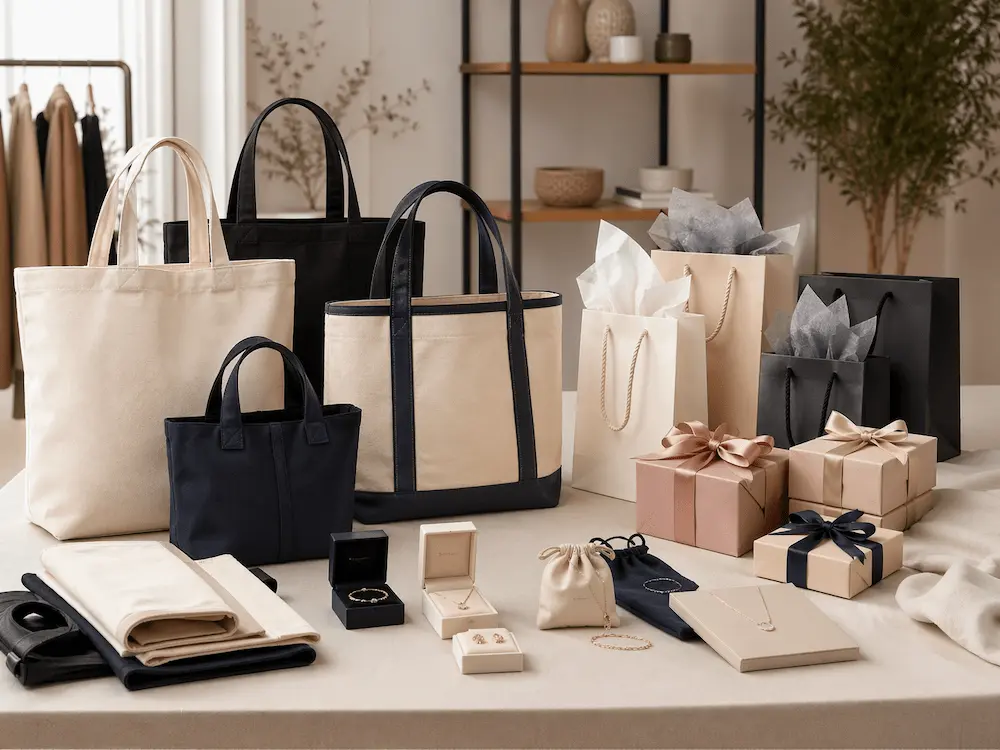
The choice between promotional tote bags vs gift bags looks simple until the brand has to decide what the bag is really supposed to do. If the bag’s role ends when the gift is handed over, gift bags often make perfect sense. If the bag is expected to keep moving through offices, shops, cafés, travel, or daily life after the event, a tote bag usually offers much more value.
This is why the comparison should not be treated as only a packaging question. It is a branding question, a cost question, and a product-life question. A gift bag is usually about presentation at the moment of giving. A promotional tote bag is often about what happens after that moment. The best option depends on what the business is trying to achieve after the recipient walks away.
That difference matters because many campaigns confuse a beautiful handoff with a useful brand asset. The two are not always the same thing.
What Promotional Tote Bags Really Do
Promotional tote bags are designed to keep working after distribution. They are not only a container for products or gifts. They are a reusable carry item that can continue displaying the brand in public once the original event or purchase is over. That is why they are common in exhibitions, conferences, onboarding kits, seasonal campaigns, supermarkets, bookstores, museums, retail promotions, and broad merchandise programs.
A good promotional tote bag turns one distribution moment into many future brand impressions. It moves through public life. It may carry books, lunch, shopping, office items, or travel essentials. If the bag is genuinely useful, the customer or recipient keeps using it, and the brand continues to travel with it.
That is one reason buyers often compare options such as custom logo tote bags when they want visual consistency and repeated public brand exposure rather than one-time presentation.
What Gift Bags Really Do
Gift bags are usually built around presentation first. Their role is to make the gift feel thoughtful, polished, and complete at the moment of handover. This is especially important in premium gifting, jewelry, cosmetics, curated retail, seasonal programs, event welcome gifts, and special-occasion packaging where the recipient’s first impression matters strongly.
A gift bag usually works best when the items inside are carefully selected and the packaging is part of the emotional experience. In these cases, the bag does not need to become a long-term carry product. It needs to elevate the gift, support the reveal, and make the package feel more finished.
This is why category-specific products such as jewelry gift bags make sense in gifting environments that depend on elegance, small-format presentation, and immediate perceived value rather than long-term everyday use.
Why the Best Option Depends on What Happens Next
The simplest way to decide is to ask one practical question: does the packaging need to live beyond the first interaction? If the answer is yes, promotional tote bags usually offer more value. If the answer is no, gift bags often work better.
This is the core difference. A gift bag usually creates a stronger first impression. A tote bag usually creates a stronger second, third, and tenth impression. One is stronger at the handover. The other is stronger afterward.
Brands that understand this usually make better packaging choices. Brands that do not often overspend on gift presentation when they actually want long-term visibility, or choose totes when what they really need is a polished premium reveal.
Presentation: Gift Bags Usually Win at the Moment of Giving
Gift bags usually create a neater, more intentional gifting impression. They often look more curated and more immediately appropriate for premium, seasonal, or emotionally sensitive gifting. This is especially true when the products inside are small, delicate, premium, or meant to feel personal.
Gift bags work well because they frame the gift. The recipient can tell immediately that the package was assembled with intention. That matters in gifting. Whether it is a client appreciation item, premium retail purchase, small luxury item, or curated event gift, presentation has real commercial value.
Tote bags can still function as gift packaging, but they usually feel less “gift-first” unless the brand deliberately makes the tote itself part of the gift. That distinction is important. A tote bag is strongest when it is not only carrying the gift but also acting as a usable item worth keeping afterward.
Long-Term Brand Visibility: Promotional Tote Bags Usually Win
This is where tote bags usually move far ahead. A tote bag can keep the brand in public for months or even years if the recipient actually uses it. That kind of repeated visibility is difficult for most gift bags to match because gift bags usually stay in the home, are repurposed briefly, or are discarded after the gifting moment passes.
If the brand wants awareness, logo repetition, or customer life beyond the initial event, the tote bag usually offers more total value. A visible textile bag in daily use is effectively mobile media. It keeps carrying the message long after the original distribution cost has already been paid.
For visibility-driven programs, products such as tote bags printed often outperform more elegant but shorter-life packaging because the message survives in public for much longer.
| Comparison Area | Promotional Tote Bags | Gift Bags |
|---|---|---|
| Main strength | Long-term reuse and brand visibility | Immediate gifting presentation |
| Best use pattern | Public everyday carry after handover | One-time gifting or curated packaging moment |
| Customer perception | Useful, reusable, more product-like | Elegant, polished, more occasion-led |
| Brand life after event | Usually longer | Usually shorter |
| Best environment | Events, promotions, retail merchandising, corporate kits | Premium gifting, jewelry, curated retail, small luxury packaging |
Cost Logic: What Are You Paying For?
Cost should not be judged only by unit price. Promotional tote bags often cost more upfront because they use more material and are meant to perform as products. But they may create better value over time if the bag stays in use. Gift bags often cost less in total packaging terms for smaller products and more curated gift sets, especially when the bag does not need to support long-term carry function.
So the real cost question is not which one is cheaper. It is which one is cheaper for the intended outcome. If the business only needs a polished packaging moment, tote bags may be unnecessary. If the business wants repeated public visibility after distribution, gift bags may be too short-lived to create the desired return.
This is why larger-scale programs often compare against products like customized tote bags bulk when the campaign depends on volume, reuse, and brand reach rather than premium handover alone.
How the Product Inside Changes the Answer
The contents matter. Small delicate products such as jewelry, cosmetics, candles, accessories, luxury samples, and curated gifts usually fit gift bags better because the packaging can feel proportionate and intentional. Large or mixed product sets, event packs, brochures, apparel, books, and general merchandise often fit tote bags better because they create more useful carry value afterward.
The wrong pairing creates the wrong experience. A jewelry piece in a big giveaway tote often feels careless. A large welcome kit in a tiny premium gift bag feels impractical. The packaging should fit the product, not only the marketing concept.
This is one reason why tote and gift bags should never be compared without first defining what the recipient is physically receiving.
Brand Tone and Product Personality
Promotional tote bags usually communicate openness, utility, movement, and repeat-use value. They align well with modern brand language around reusability, lifestyle integration, broad awareness, and long-term visibility. They often feel more democratic and public.
Gift bags usually communicate refinement, care, special occasion, and curation. They align better with premium retail, event gifting, jewelry, cosmetics, boutique experiences, and high-perceived-value moments where the customer should feel they are receiving something intentionally presented.
So the choice also depends on how the brand wants to sound. Does the brand want to feel useful and visible, or elegant and curated? In many cases, that emotional tone decides the packaging direction before cost does.
When Tote Bags Make More Sense Than Gift Bags
Promotional tote bags usually make more sense in trade shows, exhibitions, onboarding kits, retail merchandise, loyalty programs, tourism gifting, bookstore promotions, museum shops, supermarket reuse programs, and corporate gifts where the bag is expected to become part of daily use after the gift is opened.
They also make sense when the tote itself is part of the gift. In those cases, the brand is not only wrapping value. It is adding value. That is especially effective when the tote bag has enough quality and practicality that recipients genuinely want to keep it.
For brands that want a more natural and story-led product, custom cotton tote bags often become the stronger choice because the bag itself helps communicate brand character while remaining useful after the event.
When Gift Bags Make More Sense Than Tote Bags
Gift bags usually make more sense when the emphasis is on presentation, delicacy, premium impression, or smaller-format gifting. They are especially strong in jewelry, cosmetics, premium samples, candles, accessories, gift boxes, and retail purchases where the customer expects a more polished packaging experience than a reusable carry product.
They are also stronger when the product inside is already the full value and the packaging only needs to frame it attractively. In these cases, a tote bag can feel like the wrong scale or the wrong emotional tone.
Gift bags win when the gift moment is the main event and the bag’s life afterward matters much less.
Can One Brand Use Both? Usually Yes
In many retail and promotional systems, the right answer is not one or the other. It is both, used in different channels. A brand might use elegant gift bags for premium products and smaller seasonal gifting, while also using tote bags for larger campaigns, welcome kits, or reusable retail merchandising.
This works especially well when the brand understands that the two formats serve different jobs. The gift bag handles presentation. The tote handles continuity. Used correctly, they do not compete. They complement each other.
The mistake is forcing one packaging type into every use case because it simplifies procurement. That may help operations, but it often weakens the customer experience.
How to Choose the Right Supplier
The right supplier should be able to explain not only how the bag is made, but why the format fits the intended use. They should ask what the bag will carry, how the recipient will receive it, whether the packaging is meant to be kept, and how important long-term public use is to the brand.
A strong supplier should also be able to say when a tote is overbuilt for the job or when a gift bag is too short-lived for the campaign. That kind of judgment matters more than a low quote alone.
This is where Youngpack-style sourcing logic becomes useful. The stronger manufacturing partner usually adds value by aligning packaging type with brand goal instead of selling one format as the default answer to every request.
Conclusion
The answer to promotional tote bags vs gift bags depends on what the brand wants the packaging to do after the handover. Gift bags usually win on immediate elegance, curated presentation, and smaller premium gifting. Promotional tote bags usually win on reuse, visibility, and longer public brand life.
The stronger option is the one that matches the commercial purpose honestly. If the moment matters most, choose the gift bag. If the life after the moment matters more, choose the tote bag.
How Buyers Should Think About Promotional Tote Bags vs Gift Bags
What this comparison really measures: Promotional tote bags and gift bags are not just two packaging styles. They represent two different brand priorities. Gift bags usually prioritize presentation, gifting elegance, and immediate customer impression. Promotional tote bags usually prioritize reuse, visibility, and continued product life after the handover.
Why many brands choose the wrong one: The most common mistake is choosing by appearance alone. A beautiful gift bag may look perfect at the moment of giving but provide almost no ongoing visibility afterward. A tote bag may provide excellent long-term exposure but feel too casual if the gift needs to look refined and curated. The right answer depends on what the packaging must do after the first interaction.
How buyers should compare the two properly: The strongest comparison method is to evaluate gift size, brand tone, expected reuse, event setting, and public visibility together. A jewelry brand, a corporate gifting program, a trade show campaign, and a bookstore merchandise launch may all need branded bags, but they should not all use the same packaging logic.
Options businesses usually weigh: Most buyers compare immediate elegance against long-term exposure, curated presentation against reusable product value, and one-time impression against many future impressions. The better choice becomes obvious once the brand decides whether the bag is mainly framing the gift or becoming part of the gift itself.
Considerations before bulk approval: Before placing the order, businesses should test the actual product inside the actual bag, judge the scale and emotional fit, and decide whether the recipient is likely to keep the packaging in circulation. They should also compare total campaign value, not only unit price, because the stronger long-term product can sometimes justify a higher upfront cost much more easily.
The broader takeaway: The strongest packaging decision comes from knowing whether the brand wants a memorable handoff or a memorable afterlife. That is also where Youngpack naturally fits as a B2B manufacturing and export partner for brands comparing tote bags and gift bags while building more effective promotional and gifting programs.
FAQ
1. Are promotional tote bags better than gift bags for branding?
In many cases, yes, especially when the brand wants visibility after the original handover. Promotional tote bags are usually better for long-term branding because they can stay in public use and keep showing the logo or message over time. Gift bags are usually better for first impression and premium presentation, but their visible life is often much shorter. The better branding choice depends on whether the business values repeated exposure or one strong gifting moment.
2. When should a business use gift bags instead of tote bags?
A business should usually use gift bags when the packaging is meant to create elegance, support a curated gift presentation, or fit smaller premium items such as jewelry, cosmetics, or accessories. Gift bags work especially well when the experience of receiving the product matters more than the bag’s long-term use afterward. They are ideal for premium gifting, boutique retail, and occasion-led presentation.
3. Why do promotional tote bags often create more long-term value?
Promotional tote bags often create more long-term value because recipients can continue using them after the event, purchase, or gift moment. That means the bag may keep carrying the brand into public spaces for weeks or months, rather than ending its job immediately after the handover. Their value is strongest when the tote is useful enough that people genuinely want to keep using it.
4. Can a tote bag also work as a gift bag?
Yes, but only when the tote itself is part of the gift. If the bag is useful, good-looking, and appropriate for the product inside, it can work very well as gift packaging plus reusable merchandise. This is especially effective in onboarding kits, premium event gifts, bookstore merchandise, and lifestyle branding. However, for small delicate items or highly curated luxury presentation, a traditional gift bag may still feel more appropriate.
5. What should buyers check before choosing tote bags or gift bags in bulk?
Buyers should check what the package needs to carry, how the recipient is expected to use or dispose of it afterward, whether the brand wants presentation or reuse to lead the strategy, and how important public visibility is after the first handover. They should also test the actual scale, look, and feel of the bag with the intended products inside. The right choice becomes much clearer once the brand defines what should happen after the package leaves the event or store.
References
- Preferred Fiber and Materials Market Report — Textile Exchange — Textile Exchange.
- Textiles and the Environment — European Environment Agency — EEA.
- Green Guides for the Use of Environmental Marketing Claims — Federal Trade Commission — FTC.
- Sustainable Packaging Guidelines — Australian Packaging Covenant Organisation — APCO.
- Fashion on Climate — Global Fashion Agenda and McKinsey & Company.
- Responsible Sourcing and Product Communication in Textile Supply Chains — industry trade reference.
- Retail Packaging and Reusable Bag Sourcing Best Practices — professional sourcing reference.
- Guide to Reusable Bags and Long-Term Use Value — industry best-practice sourcing reference
Content Ownership:
The text, structure, and packaging insights shared in this article belong to Xiamen Youngpack Imp.and Exp.Co.,Ltd. Please contact us before reusing any part of this content.