The comparison between laminated vs non laminated tote bags matters more than many buyers expect. On the surface, lamination sounds like a small finishing detail. In reality, it changes how the bag looks, how it feels, how it handles moisture, how it prints, how customers perceive the product, and how suitable it is for different retail or promotional environments.
This is why buyers should not choose lamination only because it sounds more “premium” or reject it only because it sounds less natural. The right decision depends on the bag’s job. Some tote bags need a cleaner, more protected surface because they are exposed to spills, damp conditions, or heavy retail use. Others benefit more from a natural textile feel, breathable structure, and a softer visual identity. The smarter answer is always connected to the use case, not to the finishing term by itself.
In practical sourcing, lamination is not only a visual choice. It is a product-strategy decision.
What Lamination Actually Means on Tote Bags
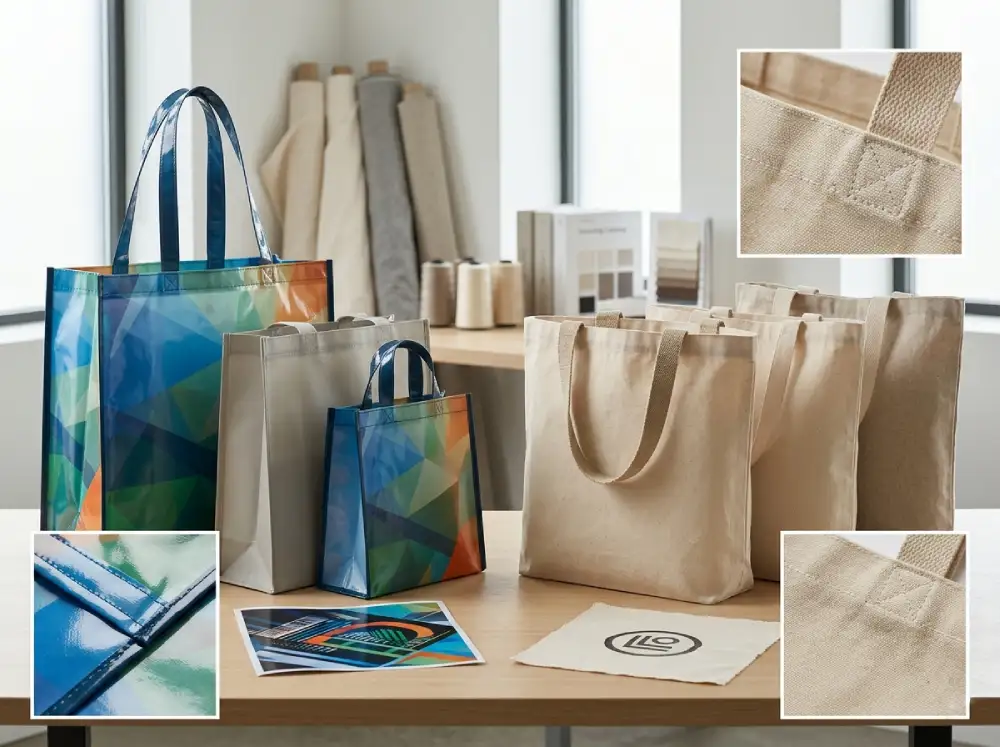
Lamination usually refers to adding a thin protective coating or film layer to the bag surface. Depending on the bag type and material, this can create a smoother finish, a slight gloss or matte effect, added resistance to dirt or moisture, and a stronger barrier between the fabric or base material and the outside environment.
In some tote bag categories, lamination is more common on non woven or synthetic materials, but buyers may also encounter coated or treated surfaces on bags that visually resemble textile products. The key issue is not the exact coating chemistry in every case. The key issue is what the coating does to the finished product. It usually changes feel, print effect, and surface protection.
A laminated tote bag therefore behaves differently from a standard untreated fabric bag, even if the size and basic shape are similar. That is why the choice should never be made casually.
What Non Laminated Tote Bags Usually Offer
Non laminated tote bags usually feel more natural, softer, and more textile-like. Without a protective surface layer, the material remains more open, breathable, and tactile. This often makes non laminated bags more suitable for brands that want a softer visual identity, more natural hand feel, or a stronger sustainability-led product perception.
Non laminated bags also tend to align better with casual everyday-use positioning. They can feel less synthetic, less shiny, and more product-like in markets where customers value authenticity, simplicity, or textile realism over more polished surface protection.
This is why many everyday-use programs gravitate toward options such as custom cotton tote bags or other untreated textile formats when the goal is natural-looking daily use rather than a more sealed and glossy product appearance.
Appearance: Laminated Usually Looks Cleaner, Non Laminated Usually Looks More Natural
Appearance is often the first difference people notice. Laminated tote bags usually look smoother, more finished, and sometimes slightly more vivid in printed color. The surface can feel more polished and more commercially “clean,” especially in supermarket, retail, or event settings where the bag needs to look sharp under repeated handling.
Non laminated tote bags usually look softer and more natural. They often feel more suitable for brands that want the bag to look like a true textile product rather than a coated promotional item. This difference matters because visual tone influences how the customer interprets the brand. A bag that looks highly finished may feel more functional or more retail-ready. A bag that looks untreated may feel more organic or lifestyle-oriented.
The better look depends on what the brand wants the customer to feel. Cleaner is not always better. Natural is not always better. The right surface tone must match the market position.
Moisture Resistance and Surface Protection
This is one of the clearest functional differences. Laminated tote bags usually perform better when the bag may face damp surfaces, light moisture exposure, or product leakage risk. The coated surface helps resist stains, splashes, and some everyday dirt more effectively than untreated materials. This can be useful in grocery retail, food markets, beach-related use, travel settings, and certain promotional environments where the bag must stay presentable under more demanding conditions.
Non laminated bags usually absorb moisture more easily and may show marks sooner, depending on the base material. That does not make them poor-quality products. It simply means they are better suited to environments where the bag’s surface does not need that extra barrier.
If the use case involves everyday lifestyle carry in relatively dry and light conditions, surface protection may matter less than material comfort and visual character.
| Comparison Area | Laminated Tote Bags | Non Laminated Tote Bags |
|---|---|---|
| Surface feel | Smoother, more sealed | Softer, more textile-like |
| Moisture resistance | Usually stronger | Usually lower |
| Natural look | Usually less natural | Usually stronger |
| Print sharpness perception | Can appear cleaner or more vivid | Often softer and more fabric-integrated |
| Breathability | Usually lower | Usually higher |
| Brand tone | Practical, polished, protected | Natural, simple, tactile |
Printing and Branding Differences
Lamination can affect how branding appears. A laminated surface often gives printing a cleaner and more controlled visual base. In some cases, colors may appear slightly sharper or more polished because the surface is more uniform. This can be useful in event bags, promotional retail, supermarket programs, or any project where a more vivid and clean look matters.
Non laminated bags often create a more integrated, fabric-like print result. The branding feels more part of the textile rather than part of a coated product shell. This usually works better for brands that want the bag to feel more natural, more organic, or more understated.
That is why buyers comparing stronger natural-looking branding often explore options such as custom printed cotton tote bags. The product does not need a coated surface if the visual goal is warmth, texture, and everyday authenticity rather than polished brightness.
Durability: Not the Same as Strength
Buyers often confuse lamination with total bag strength. They are not the same thing. Lamination may improve surface durability, dirt resistance, and finish retention, but it does not automatically mean the whole bag is structurally stronger. Handle stitching, gusset design, fabric weight, and seam quality still matter more for load-bearing performance.
A laminated bag may stay cleaner and look fresher for longer, but it can still fail if the base construction is weak. A non laminated bag may look more worn over time but remain structurally strong if the fabric and sewing are good. The right decision therefore requires separating surface durability from carry durability.
This is one reason serious buyers should never judge a bag only by whether it is coated. They should still evaluate the actual product build.
Breathability and Product Use
Non laminated tote bags are usually better when breathability matters. This can be relevant in lighter shopping use, casual daily carry, produce-oriented food retail, gift packaging, and textile bag programs where the bag should feel like a flexible everyday product rather than a sealed carrier.
Laminated bags are less breathable because the coating acts as a barrier. That can be useful when protection is needed, but it may feel less appropriate in categories where the bag should remain soft and fabric-like. In some retail environments, that tactile difference influences whether the customer continues using the bag after the original purchase moment.
So the better surface is not only about protection. It is also about whether the product should feel open and reusable or more finished and defended.
Environmental and Recycling Perception
This is one of the most sensitive parts of the comparison. Non laminated bags usually have a stronger natural or “more eco-friendly” perception because they feel more straightforward and textile-like. Laminated bags can create doubt in customers’ minds because the surface coating makes the product seem less simple and less obviously recyclable, even if the real sustainability outcome depends on more than first impression.
Buyers should be careful here. Surface perception does matter in the market, but real environmental value still depends on how long the bag stays in use and what the base material actually is. A laminated bag that remains in repeated use for a long time may still be a commercially and environmentally better product than an untreated bag that is discarded quickly. At the same time, if the brand is building a strongly natural or sustainable image, lamination may weaken that story if it makes the product feel less authentic.
The strongest environmental position still comes from product honesty. The bag should look and behave in a way that matches the claim being made for it.
Where Laminated Tote Bags Usually Make More Sense
Laminated tote bags usually make more sense when the bag needs surface protection, cleaner visual presentation, stronger resistance to moisture or dirt, or a more polished finish in active retail use. This often includes supermarkets, food retail, outdoor events, travel-related promotions, beach or leisure products, and certain mass promotional campaigns where the bag must stay presentable under repeated handling.
They also make sense when the design needs a brighter, cleaner look and when the brand is less concerned with tactile naturalness than with function and surface durability.
If the bag is being treated primarily as a practical carrier that should stay visually neat, lamination can be very useful.
Where Non Laminated Tote Bags Usually Make More Sense
Non laminated tote bags usually make more sense in bookstores, cafés, museums, premium gifting, organic retail, sustainability-led promotions, boutique shopping, and daily-use reusable bag programs where tactile quality and natural appearance matter more than splash resistance.
They are also a stronger fit when the bag is expected to feel like real textile merchandise rather than a coated utility bag. This is especially important when the brand wants the customer to keep the bag in daily circulation because it feels pleasant and authentic to carry.
For businesses that also want product-family consistency, adjacent textile items such as custom canvas drawstring bags or drawstring backpacks may reinforce the same uncoated, more natural bag language across multiple categories.
High-Volume Buying: Which One Makes More Sense?
At high volume, laminated bags can be attractive when the campaign depends on practical performance, visual cleanliness, and cost-effective promotional durability. They often work well in large distribution where surface protection matters and where the buyer values product consistency under handling.
Non laminated bags make more sense at scale when the program depends on authenticity, sustainability tone, or everyday carry comfort. They may also feel more suitable for mass reuse programs where the business wants the customer to keep the bag because it feels like a normal textile product rather than a campaign carrier.
For large campaigns with stronger textile identity, buyers often compare against programs such as custom canvas bags bulk because once the bag is expected to behave like real merchandise, coating decisions become part of a wider product philosophy rather than an isolated finishing detail.
| Program Type | Usually Better Fit | Main Reason |
|---|---|---|
| Supermarket or practical food retail | Laminated | Better surface protection and visual cleanliness |
| Sustainable lifestyle branding | Non laminated | Stronger natural perception and tactile quality |
| Mass event promotion | Depends on function | Protection vs brand tone must be balanced |
| Boutique and gift retail | Non laminated | Better product feel and more authentic textile identity |
How to Choose the Right Supplier
The right supplier should be able to explain not only whether a bag can be laminated, but why it should or should not be. They should be able to discuss surface finish, print effect, moisture resistance, visual tone, and how the bag is expected to perform after distribution or sale.
Buyers should ask practical questions. Will the coating make the bag feel too synthetic for this market? Will it improve wipe-clean behavior enough to justify the change? Does the customer care more about a polished look or a natural one? Can the supplier maintain consistent lamination quality without affecting the bag’s appearance negatively?
A supplier that treats lamination as a yes-or-no add-on is usually not thinking deeply enough. The better supplier is the one that connects finishing choice to actual product role. That is where Youngpack-style sourcing logic becomes valuable.
Conclusion
The difference between laminated vs non laminated tote bags is not just about finish. It is about product direction. Laminated bags usually offer a cleaner, more protected, and more polished surface. Non laminated bags usually offer a softer, more natural, and more breathable textile experience.
Neither is better in every case. The better choice is the one that matches the customer routine, the retail environment, and the brand’s real visual language. Once buyers start from that point, the lamination decision usually becomes much clearer.
How Buyers Should Think About Laminated vs Non Laminated Tote Bags
What this comparison really measures: Laminated and non laminated tote bags are not simply two finishes. They represent two different product directions. Laminated bags usually prioritise surface protection, cleaner appearance, and a more sealed feel. Non laminated bags usually prioritise natural texture, tactile authenticity, and a more fabric-led customer experience.
Why buyers often get this wrong: Many buyers choose lamination because it sounds more durable, or reject it because it seems less sustainable. Both shortcuts are incomplete. Lamination may improve surface behavior without improving true bag strength. Non laminated construction may feel more honest and natural without being automatically the better practical option in wet or high-contact retail environments. The real answer depends on the bag’s job.
How buyers should compare them properly: The strongest comparison method is to evaluate bag environment, expected handling, print style, brand tone, and likely reuse together. A supermarket reusable bag, a boutique gift tote, a travel promotion, and an eco-conscious lifestyle bag may all be tote bags, but they should not all use the same surface logic.
Options businesses usually weigh: Buyers often compare polished wipe-clean performance against softer tactile quality, bright clean print against more integrated textile branding, and practical handling protection against natural brand storytelling. The better option depends on whether the customer should experience the bag as a protected utility product or as a more authentic textile item.
Considerations before bulk approval: Before placing the order, businesses should test the bag by hand, not only by visual mockup. They should check how the surface feels, how the bag responds to moisture or marks, whether the print still fits the brand tone, and whether the bag is likely to stay in use long enough to justify the finishing choice. These details matter more than the coating label itself.
The broader takeaway: The best tote bag finish is the one that fits the real retail, promotional, and customer routine honestly. That is also where Youngpack naturally fits as a B2B manufacturing and export partner for brands comparing laminated and non laminated bag programs while needing practical guidance on product positioning, customization, and repeat-use value.
FAQ
1. What is the main difference between laminated and non laminated tote bags?
The main difference is the surface finish. Laminated tote bags have a protective coated layer that usually makes the surface smoother, more moisture-resistant, and more visually polished. Non laminated tote bags do not have that protective layer, so they usually feel softer, more natural, and more textile-like. The better option depends on whether the bag needs protection and cleaner appearance or a more breathable and authentic fabric feel.
2. Are laminated tote bags stronger than non laminated bags?
Not automatically. Lamination can improve surface protection and help the bag resist dirt or light moisture, but it does not necessarily make the entire bag structurally stronger. Overall strength still depends on fabric weight, stitching, handle construction, and bag design. A laminated bag may look cleaner for longer, but a non laminated bag can still be stronger if the underlying textile construction is better.
3. Which is better for sustainable branding, laminated or non laminated tote bags?
In many cases, non laminated tote bags are better for sustainable branding because they look and feel more natural, which aligns better with eco-conscious product positioning. However, the real sustainability value still depends on how long the bag stays in use. A laminated bag that is reused many times may still create strong practical value. Buyers should balance customer perception with real product use rather than relying on appearance alone.
4. When should a business choose laminated tote bags?
A business should usually choose laminated tote bags when the bag needs better resistance to dirt, light moisture, or repeated handling, or when the brand wants a cleaner and more polished finish. This often applies in supermarkets, food-related retail, travel programs, outdoor events, and practical promotional use where a wipe-clean surface and stronger visual neatness are useful.
5. What should buyers check before choosing laminated or non laminated tote bags in bulk?
Buyers should check the retail or promotional environment, whether the bag will face moisture or heavy handling, how important natural texture is to the brand, how the print looks on each surface, and whether the customer is likely to keep using the bag after the first use. They should also test the actual sample by touch, not only by photos, because lamination changes the bag’s feel as much as its appearance.
References
- Preferred Fiber and Materials Market Report — Textile Exchange — Textile Exchange.
- Textiles and the Environment — European Environment Agency — EEA.
- Green Guides for the Use of Environmental Marketing Claims — Federal Trade Commission — FTC.
- Sustainable Packaging Guidelines — Australian Packaging Covenant Organisation — APCO.
- Fashion on Climate — Global Fashion Agenda and McKinsey & Company.
- Responsible Sourcing and Product Communication in Textile Supply Chains — industry trade reference.
- Retail Packaging and Reusable Bag Sourcing Best Practices — professional sourcing reference.
- Guide to Reusable Bags and Long-Term Use Value — industry best-practice sourcing refe
Publication Rights Notice:
This content is published exclusively by Xiamen Youngpack Imp.and Exp.Co.,Ltd. for our official website and related business communication. Redistribution without permission is not allowed.