Introduction
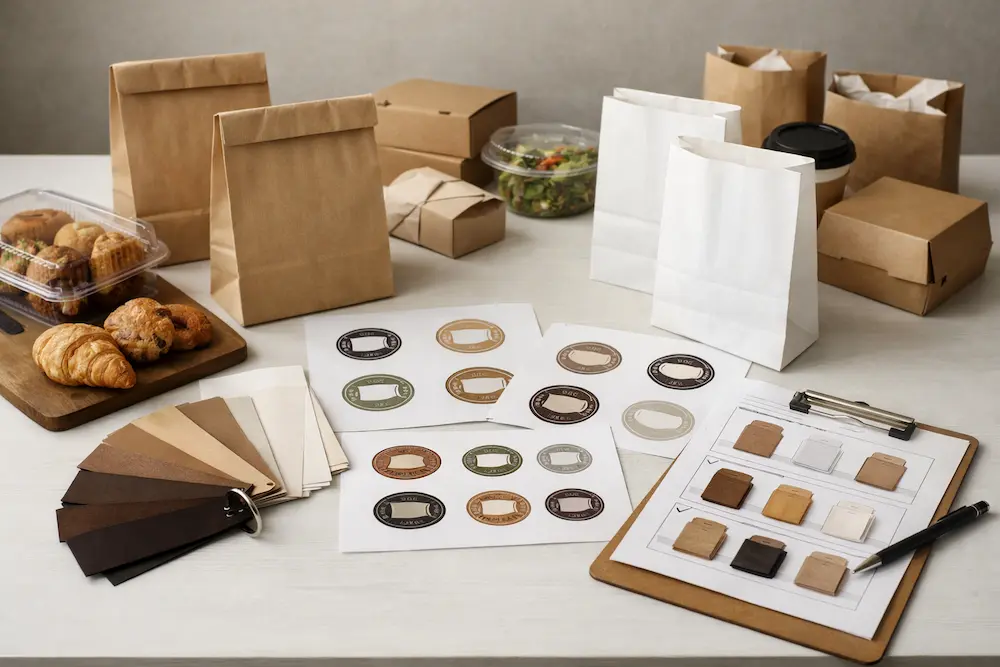
For importers, learning how to print logos on food paper bags is not just a design task. It is a packaging decision that affects visual impact, paper choice, print quality, food-use suitability, production cost, and long-term repeatability. A logo may look excellent on a screen, but if it is printed on the wrong paper, placed in the wrong position, or produced with the wrong method, the final food paper bags can look weak, inconsistent, or commercially unsuitable.
That is why importers should not approach food paper bags the same way they approach ordinary printed packaging. The bag still has to work first as a food-use package. It has to suit the real food product, the packing process, the retail environment, and the handling conditions in daily use. Only after that should the logo strategy be finalized.
For brands that want stronger visibility in food packaging, some buyers also compare custom printed paper bags for strong brand recognition when assessing how a bag can support both practical use and clearer retail branding. In other words, the real goal is not simply to add a logo to paper. The real goal is to print logos on food paper bags in a way that is visually clear, operationally practical, and repeatable in bulk production.
Start with the Food Use, Not the Logo
The first mistake many buyers make is approving the artwork before defining the actual food use. A bread bag, pastry bag, sandwich bag, snack bag, bakery carry bag, and outer bag for boxed takeaway do not all need the same paper, the same print coverage, or the same packaging logic.
A simple rule works well. First decide whether the bag is:
- in direct food contact
- in indirect contact only
- mainly an outer carry bag for packed food
Once that is clear, it becomes much easier to decide where the logo should go, how large it should be, and how conservative or bold the printing approach needs to be. For buyers working on more practical food-use programs, some also compare custom food bags for fresh and secure packaging when evaluating how food paper bags, logo placement, and packaging security should work together in real commercial use.
For importers, this is one of the most important parts of learning how to print logos on food paper bags properly. If the intended use is unclear, even a beautiful logo can end up on the wrong bag structure.
Keep Printing Disciplined and Commercially Sensible
When importers want to print logos on food paper bags, the strongest approach is usually disciplined printing rather than excessive printing. A logo should improve recognition, not overwhelm the bag. In food packaging, a cleaner and more controlled logo treatment often looks more professional than a heavily printed layout.
This is especially true in bakery, deli, takeaway, and snack packaging. If the bag becomes too heavily printed, the result can feel crowded, less trustworthy, and harder to reproduce consistently in volume. For many importers, a simple front logo, a neat side logo, or a restrained one- or two-colour layout often works better than trying to turn food paper bags into full advertising panels.
Where visual identity matters more strongly, some buyers also compare paper bags with logo for clear brand recognition when assessing how logo size, position, and paper surface should work together in a more functional but still brand-led packaging program.
Match the Paper to the Logo and the Food Application
Not all food paper bags print the same way. Brown kraft, white paper, recycled-content papers, and other food-use paper structures all create different results in logo visibility, print contrast, and overall brand feel.
Brown kraft usually supports a more natural and practical appearance. It often works well for bakeries, takeaway shops, coffee brands, and casual food retail. White paper usually supports stronger contrast and a cleaner printed logo. It often works better when the brand wants a more polished or higher-visibility result.
For importers, the best paper is rarely just the one that looks best in a digital mockup. It is the one that supports:
- the real food application
- the desired logo clarity
- the right market position
- the right bulk production result
If the brand wants a more refined, presentation-led logo treatment, some buyers also compare custom paper bags with logo for distinct brand presentation when thinking about how paper surface, print quality, and logo treatment should work together on branded packaging.
In practice, the smartest way to print logos on food paper bags is to choose a paper stock that supports both packaging performance and brand visibility at the same time.
Choose a Logo Style That Works on Real Food Paper Bags
A logo that looks strong in a design file does not always work on a real bag. This is one of the most important lessons for importers ordering food paper bags in bulk.
Fine lines, very light colours, very small text, and overly detailed layouts can all become weaker once printed on kraft or textured food-use paper. That is why the strongest logo designs for food paper bags are usually:
- clear
- readable
- proportional
- easy to recognize quickly
- compatible with the chosen paper surface
For many importers, the best-performing logo on food paper bags is not the most decorative version. It is the version that still looks clear when the bag is folded, opened, filled, stacked, and carried in real use.
For brand-focused retail food packaging, that is often the difference between a bag that merely carries food and a bag that also builds recognition.
Choose the Print Method by Production Reality, Not by Mockup Appearance
A digital mockup can make almost any logo look sharp. Real bulk production is less forgiving. That is why importers should always ask which print method the supplier recommends and why.
The right print method depends on:
- artwork complexity
- order volume
- paper surface
- colour expectations
- cost target
- production stability
For food paper bags, simpler logos and cleaner layouts usually perform better in large runs than fine-detail artwork or heavy ink coverage. This does not mean detailed artwork is impossible. It means production reality matters. A logo that is too dependent on thin detail or subtle colour shifts may lose impact once it is printed on real paper in real volume.
For importers, one of the best practices in printing logos on food paper bags is to confirm that the print method, the logo style, and the paper choice all work together as one system.
Keep the Logo in the Right Place
Logo placement matters just as much as logo design. If the logo is too low, it may distort when the bag is filled. If it is too close to folds or gussets, it may lose visibility. If it is too high or too large, the bag can feel visually unbalanced.
For most food paper bags, the strongest commercial approach is to place the logo where it remains readable when the bag is:
- flat on the table
- opened for packing
- loaded with food
- carried by the customer
Importers should not judge placement only from a flat artwork view. They should look at how the logo behaves once the bag is opened and used. In real packaging, that is where good branding either holds up or disappears.
Sample on the Final Paper, Not Just on a Screen
A logo should never be approved only from a digital file. Importers should review a physical sample on the final paper stock, with the final print method, at the final bag size.
This is the only reliable way to check whether:
- the logo is too small
- the colour is too weak
- the design is too dense
- the paper surface changes the final result
- the logo still looks balanced once the bag is filled
The best sample test is practical. Put the real food product or the real food pack inside. Open the bag. Carry it. Then look again at the logo. A design that seems well balanced on an empty bag may feel crowded, weak, or distorted once the bag is in real use.
For importers reviewing broader food-packaging options, some also compare food pouch packaging for flexible storage and product protection when thinking about how logo printing, product protection, and packaging format should be matched to the actual food application rather than treated as separate decisions.
Ask the Supplier the Right Printing Questions
A strong supplier should be able to answer a few practical questions clearly:
- What print method is recommended for this logo?
- Will the logo print differently on brown kraft and white paper?
- Is the artwork too detailed for the chosen method?
- Does the approved sample reflect real production quality?
- Which part of the bag carries the logo best in use?
- Will the print still look consistent in bulk production?
For importers, this is where weak factories and strong factories separate quickly. A weak supplier talks only about price and artwork. A stronger one explains how paper, print, structure, and food use work together.
That matters because food paper bags are not only branding tools. They are working packaging items. The supplier needs to understand both sides.
Think About Bulk Consistency, Not Just First-Sample Beauty
One of the most common sourcing mistakes is approving a beautiful sample and forgetting to ask how repeatable it will be. Importers buying food paper bags in volume should always think about consistency:
- Will the colour stay stable?
- Will the logo remain aligned?
- Will the paper stay the same?
- Will the print still look good across the full production run?
In real sourcing, the best logo result is not the sample that looks most impressive once. It is the logo result that still looks correct across repeat bulk orders.
That is why the best strategy for printing logos on food paper bags is not to push the design to its visual limit. It is to create a logo treatment that is clear, brand-appropriate, and realistic to control in production.
Conclusion
For importers, the best way to print logos on food paper bags is to begin with real food use, choose the right paper, use a production-sensible logo style, and test the design on the final bag before approving bulk production.
The strongest food paper bags are not the most heavily printed ones. They are the ones where packaging function, logo clarity, and brand presentation work together naturally. When that happens, the bag does more than carry food. It supports recognition, builds consistency, and becomes a practical brand asset in daily commercial use.
How Importers Should Think About Logo Printing on Food Paper Bags
What the printing decision really means: Printing a logo on a food paper bag is not only a branding choice. It is a packaging decision that affects paper selection, print clarity, food-use suitability, and how well the bag works in real commercial use.
Why this matters for importers: A logo that looks good in a mockup can still perform badly on the final paper or in the final food-use setting. Good logo printing decisions reduce rework, improve brand consistency, and make bulk production easier to control.
How buyers should compare options: Importers should compare food paper bags by intended use, paper surface, logo position, print method, and whether the supplier can explain how the print system fits the final application rather than only the artwork file.
What usually works best in practice: Clear exterior logo placement, realistic print coverage, and paper that matches both the food application and the brand tier usually perform better than heavily printed layouts. Brown kraft often suits practical food retail, while white paper often supports cleaner contrast and a more polished logo effect.
What importers should watch most carefully: Intended use, sample realism, repeat print consistency, and how the logo behaves once the bag is filled and carried are usually more important than how impressive the artwork looks on a flat screen.
The larger takeaway: The best food paper bag logo is not the most aggressively printed one. It is the one that stays clear, appropriate, and repeatable on the right bag for the right food use.
FAQ
1. How should importers print logos on food paper bags?
Importers should start with the actual food use first, then decide the paper type, logo position, print method, and sample approval process. The strongest approach is usually to keep the logo clear and commercially disciplined rather than overprinting the whole bag. FDA’s framework makes intended use and the full packaging structure important for food-related packaging decisions.
2. Can logos be printed on all food paper bags in the same way?
No. Bread bags, pastry bags, snack bags, sandwich bags, and outer carry bags for packaged food do not all require the same paper, the same print coverage, or the same packaging logic. The right way to print logos on food paper bags depends on whether the bag is in direct food contact, indirect contact, or mainly used as an outer carry bag.
3. Which paper is better for logo printing on food paper bags?
That depends on the brand position and the food application. Brown kraft usually gives a more natural and practical look, while white paper usually gives stronger contrast and a cleaner logo result. FSC also states that its labels stand for sustainable sourcing, so paper choice can affect both visual effect and sourcing claims.
4. Why should importers sample the final food paper bag before bulk production?
Because a logo that looks strong on screen may look weaker on the final paper or once the bag is filled and carried. Importers should review a physical sample on the final paper stock, with the final print method, at the final size, before approving production. That is the most reliable way to judge logo clarity, paper behaviour, and real-use balance. This is a practical production recommendation supported by FDA’s emphasis on the full packaging structure and intended use.
5. What should importers ask a supplier before printing logos on food paper bags?
They should ask what print method is recommended, whether the logo is printed only on the exterior, what paper and any coatings are used, what part of the bag is expected to contact food, and whether the approved sample reflects real production quality. FDA explains that packaging components such as adhesives and colorants can be relevant to food-contact review, so vague answers are not good enough.
References
- Food Packaging & Other Substances that Come in Contact with Food: Information for Consumers — U.S. Food and Drug Administration — FDA.
- About the FCS Review Program — U.S. Food and Drug Administration — FDA.
- Regulatory Status of Components of a Food Contact Material — U.S. Food and Drug Administration — FDA.
- Food Chemical Safety — U.S. Food and Drug Administration — FDA.
- Packaging waste — European Commission — Directorate-General for Environment.
- Packaging & Packaging Waste Regulation — European Commission — Directorate-General for Environment.
- Commission guidance / timing materials for Regulation (EU) 2025/40 — European Commission.
- What the FSC Labels Mean — Forest Stewardship Council — FSC.
- Paper & Packaging — Forest Stewardship Council — FSC.
- What do the FSC labels mean? — FSC US.
Professional Content Notice:This article is part of the original packaging content developed by Xiamen Youngpack Imp.and Exp.Co.,Ltd. Please respect the originality of the work when sharing or referencing it.