Quick Summary:Correct measurement is essential when sourcing takeaway paper bags from China. Accurate size confirmation helps improve product fitting, customer experience, production accuracy, and cost efficiency.
Professional buyers should understand Width × Gusset × Height measurements, product compatibility, sample testing, and specification preparation before starting mass production.
A clear measurement process helps restaurants, food brands, and wholesale buyers develop more reliable takeaway packaging solutions.
Introduction
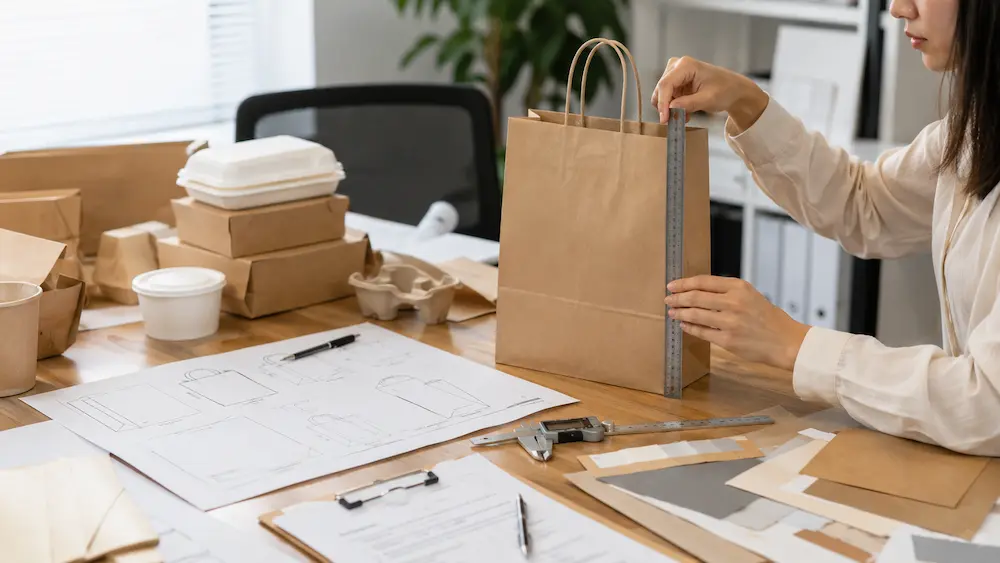
When sourcing takeaway paper bags from China, many buyers start their inquiry with a simple description:
“We need a medium size takeaway bag.”
However, “medium size” does not mean the same thing for every restaurant, café, bakery, or packaging supplier.
A medium bag in one country may be considered small or large in another market.
For professional China sourcing, accurate measurements are much more useful than general size descriptions.
Correct dimensions help manufacturers understand:
- Actual product requirements
- Paper usage calculation
- Production specifications
- Packing arrangements
- Cost estimation
Takeaway paper bags are used for many different applications, including:
- Restaurant meals
- Bakery products
- Coffee shops
- Food delivery
- Retail food packaging
Each application requires different space and structure.
A takeaway bag for a sandwich shop may not work well for a restaurant using larger food containers.
Professional buyers should confirm measurements before production instead of choosing sizes only based on appearance.
A reliable takeaway paper bags manufacturer in China usually requires clear specifications to provide accurate suggestions and quotations.
Understanding how to measure packaging correctly helps buyers reduce mistakes, improve communication, and build more efficient sourcing projects.
Why Accurate Measurement Matters for Takeaway Paper Bags
Size selection affects much more than whether products can fit inside the bag.
A small measurement mistake can influence:
- Customer experience
- Material cost
- Production efficiency
- Shipping volume
- Brand presentation
Avoid Product Fitting Problems
The first purpose of a takeaway paper bag is carrying products safely.
If the bag is too small:
- Food containers may not fit
- Products may become damaged
- Staff packing becomes difficult
If the bag is too large:
- Products move too much inside
- Materials may be wasted
- Packaging cost increases
The correct size creates a balance between protection and efficiency.
Improve Customer Experience
Customers notice packaging performance during daily use.
Good size planning provides:
- Comfortable carrying
- Easy product placement
- Better presentation
A well-designed takeaway paper bag supports the entire purchasing experience.
Support Accurate Production and Pricing
Manufacturers calculate costs based on exact specifications.
Important factors include:
- Paper consumption
- Cutting size
- Production process
- Packing volume
Accurate dimensions help suppliers prepare realistic quotations.
Understanding W × D × H Measurement Standard
One of the most important steps in takeaway paper bags sourcing is understanding the measurement format.
Most manufacturers use:
Width × Depth × Height
Each measurement represents a different part of the bag structure.
Width: Front Panel Measurement
Width refers to the front side of the paper bag.
It affects:
- Product placement
- Logo position
- Visual appearance
When measuring width, buyers should consider the widest product that needs to fit inside.
For example:
A food container should have enough space without forcing the bag shape to change.
Depth / Gusset: Expansion Space
Depth, also called gusset, refers to the side expansion area.
This measurement is extremely important for takeaway packaging.
The gusset determines how much space the bag provides when opened.
It affects:
- Food box fitting
- Standing stability
- Carrying capacity
Many measurement mistakes happen because buyers only check width and forget depth.
Height: Vertical Measurement
Height measures from the bottom to the top of the bag.
It influences:
- Product coverage
- Carrying comfort
- Overall appearance
For handle bags, buyers should also consider usable internal height.
The handle area may affect practical space.
Takeaway Bag Measurement Guide
| Measurement | Meaning | Buyer Check |
|---|---|---|
| Width | Front panel size | Match product width |
| Gusset / Depth | Side expansion space | Check container depth |
| Height | Vertical size | Confirm product height |
| Usable Space | Practical inside area | Test real applications |
Measuring Products Before Choosing Bag Size
Professional buyers usually measure the product first, then select packaging.
Choosing a bag first may create unnecessary problems.
Important products to measure include:
- Food containers
- Meal boxes
- Drink holders
- Bakery packaging
- Retail food items
Buyers should measure the actual food container before deciding the final takeaway paper bags dimensions because different food products require different space, structure, and carrying performance.
For restaurants and food brands developing complete packaging systems, custom food bags for fresh and secure packaging help support different product applications when size, structure, and customer experience are considered together.
Common Takeaway Paper Bags Size Planning Examples
Different food businesses require different packaging dimensions.
There is no single takeaway paper bag size that works for every application.
Professional buyers usually select dimensions based on:
- Product type
- Customer usage
- Packing method
- Transportation requirements
Understanding real application scenarios helps buyers communicate more accurately with manufacturers during China sourcing.
Coffee Shops and Beverage Brands
Coffee shops often require takeaway paper bags for:
- Coffee cups
- Drink holders
- Small bakery items
- Snacks
Important size considerations include:
- Bottom stability
- Enough gusset space
- Easy carrying experience
A bag used for beverages should provide enough support to keep products balanced during transportation.
For coffee chains, consistent sizing is also important because packaging is used repeatedly every day.
Standard dimensions help improve:
- Staff packing efficiency
- Customer convenience
- Inventory management
Bakeries and Dessert Stores
Bakery packaging usually focuses on product presentation and protection.
Common products include:
- Bread
- Cakes
- Pastries
- Gift bakery items
When measuring takeaway paper bags for bakeries, buyers should consider:
- Product shape
- Box dimensions
- Space requirements
Some bakery products need additional room to prevent damage.
Choosing only based on external appearance may create fitting problems.
Restaurants and Meal Delivery Businesses
Restaurants usually need larger takeaway paper bags because food orders often include multiple items.
Size planning should consider:
- Main meal containers
- Side dishes
- Cutlery
- Additional packaging
A suitable bag structure improves delivery performance and customer satisfaction.
For restaurant chains, accurate specifications also help maintain consistency across different locations.
Packaging Format Planning for Different Food Products
Different food packaging formats require different size planning methods because product shape, storage requirements, and transportation conditions influence packaging decisions.
Besides takeaway paper bags, many businesses also consider food pouch packaging for flexible storage and product protection when developing wider food packaging solutions for multiple product categories.
A complete packaging system allows brands to choose suitable structures based on different products instead of forcing one packaging format for everything.
Common Size Selection Mistakes Buyers Should Avoid
Even experienced buyers may make mistakes when confirming takeaway paper bags dimensions.
These mistakes can influence production results and increase unnecessary costs.
Mistake 1: Only Measuring Product Width
Width is important, but it does not represent total capacity.
Many buyers check only the front size and ignore the gusset.
A food container may fit by width but fail because the bag cannot expand enough.
Always confirm:
- Width
- Depth
- Height
before finalising specifications.
Mistake 2: Ignoring Real Usable Space
External bag size and usable internal space are different.
Factors that affect usable space include:
- Folding structure
- Bottom design
- Handle area
Professional buyers usually test actual products inside samples before confirming mass production.
Mistake 3: Choosing Oversized Bags
Some buyers select larger bags to avoid fitting problems.
However, oversized packaging may create:
- Higher material costs
- Increased shipping volume
- Poor product presentation
The best size is not always the biggest size.
It should match the real application.
Mistake 4: Forgetting Future Product Changes
Brands may expand product lines after the first order.
Before confirming dimensions, buyers should consider:
- Future menu changes
- Additional products
- New packaging requirements
Flexible planning can reduce frequent redesign costs.
How Takeaway Paper Bags Size Influences Production Cost
Bag dimensions directly affect manufacturing costs.
A small size adjustment may influence:
- Paper consumption
- Cutting efficiency
- Packing volume
- Shipping cost
Understanding these factors helps buyers make smarter sourcing decisions.
Paper Usage Calculation
Larger bags require more material.
Increasing:
- Width
- Gusset
- Height
will increase total paper consumption.
Professional manufacturers can help buyers optimise dimensions without reducing usability.
Production Efficiency
Standard or efficient sizes may support smoother production.
Highly unusual dimensions may require:
- Additional adjustments
- Special planning
- Longer preparation time
When possible, buyers should balance custom requirements with production efficiency.
Shipping and Storage Efficiency
Packaging size affects logistics.
Larger finished bags may require:
- More cartons
- More warehouse space
- Higher transportation volume
For international buyers, shipping efficiency is an important part of total cost planning.
Creating a Professional Specification Sheet for Suppliers
Clear documentation improves communication between buyers and manufacturers.
A professional takeaway paper bags specification sheet should include more than basic dimensions.
Important information includes:
- Bag width
- Gusset depth
- Height
- Paper requirements
- Handle style
- Printing area
- Packing method
- Quantity requirements
Specification Sheet Example
| Specification Item | Example Information |
|---|---|
| Size Format | Width × Gusset × Height |
| Application | Food takeaway packaging |
| Product Fit | Container size reference |
| Printing Area | Logo position requirements |
| Packing Method | Export carton requirements |
Long-Term Packaging Specification Strategy
Growing brands usually create standard packaging specifications for future orders to maintain consistent quality and improve sourcing efficiency.
Many companies expand into custom kraft bags for sustainable branding and packaging as part of their long-term packaging strategy, combining practical structures with natural presentation and brand communication.
Standardising specifications helps brands achieve:
- Faster reorder process
- Better quality consistency
- Easier supplier communication