Quick Summary:Correct measurement of takeaway paper bags helps food service brands select accurate sizes, improve packaging performance, and avoid costly ordering mistakes.
Professional buyers should evaluate width, gusset, height, container dimensions, material strength, carrying requirements, and customer experience before confirming specifications.
A structured measurement process creates better packaging consistency for restaurants, cafés, bakeries, takeaway companies, and food retailers.
Introduction
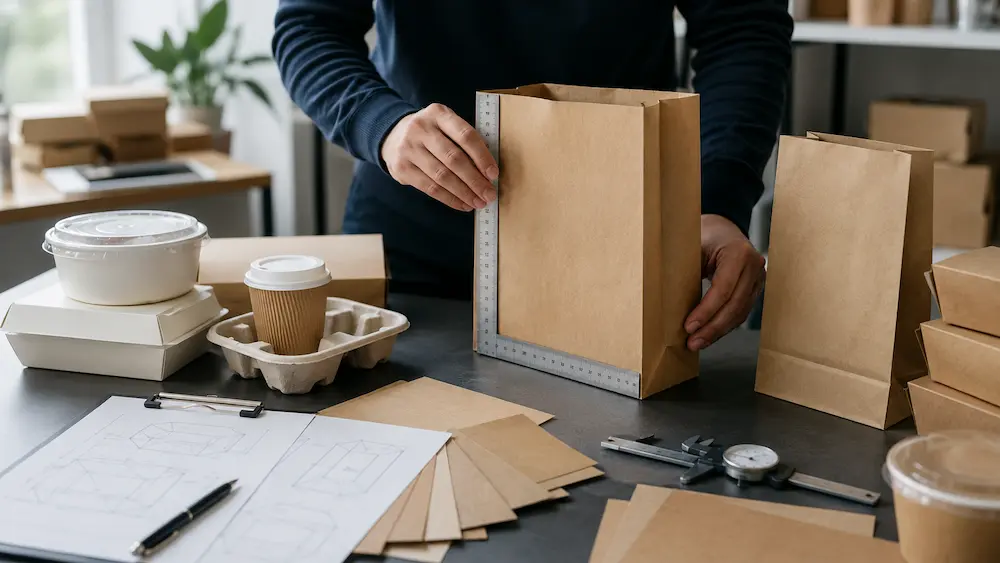
For restaurants, cafés, bakeries, and takeaway businesses, takeaway paper bags need to do more than look attractive.
They must properly fit food products, support carrying needs, and provide a convenient customer experience.
However, one of the most common purchasing problems happens before production even begins:
incorrect size measurement.
Many buyers describe requirements like:
“We need a medium takeaway bag.”
But manufacturers usually require accurate specifications:
Width × Gusset × Height
Without correct measurements, businesses may receive packaging that is:
- Too small for food containers
- Too large and wasteful
- Difficult for customers to carry
- Inefficient for daily operations
Understanding how to measure takeaway paper bags size correctly helps food service brands create better packaging solutions and avoid unnecessary production problems.
Understand Paper Bag Dimension Structure
The first step in measuring takeaway packaging is understanding how paper bag dimensions work.
Unlike boxes, paper bags usually follow a specific measurement order:
Width × Gusset × Height
Each measurement controls a different part of the bag structure.
What Is Paper Bag Width?
Width refers to the front opening measurement of the bag.
It determines how much horizontal space is available for products.
Width affects:
- Food container placement
- Product arrangement
- Customer convenience
If the width is too narrow, containers may not fit properly.
What Is Paper Bag Gusset?
The gusset is the side depth of the paper bag.
This is one of the most important measurements for food takeaway bags.
The gusset controls:
- Bottom space
- Internal capacity
- How the bag expands
A larger gusset allows wider food boxes to sit more securely.
What Is Paper Bag Height?
Height measures the vertical length of the bag.
It affects:
- Product coverage
- Carrying comfort
- Packaging appearance
The height should allow enough space above the product without creating unnecessary material waste.
Paper Bag Measurement Structure
| Measurement | Meaning | Importance |
|---|---|---|
| Width | Front bag size | Controls product fitting |
| Gusset | Side depth | Creates internal space |
| Height | Vertical length | Covers and protects items |
Measure Based on Food Containers First
One of the biggest mistakes when choosing custom takeaway paper bags is selecting the bag before measuring the products.
Professional packaging development starts with the actual items placed inside.
Measure Your Food Packaging Items
Before choosing bag dimensions, measure:
- Food boxes
- Meal containers
- Drink holders
- Bakery boxes
- Accessories
The goal is simple:
Your packaging should match your products.
Allow Enough Extra Space
A bag should not fit too tightly.
Extra space helps:
- Easier product placement
- Better customer handling
- Improved appearance
However, too much space creates unnecessary material usage.
Match Bags with Daily Food Applications
Food packaging size should always start from the actual products placed inside the bag.
Cafés, bakeries, and takeaway brands often select paper lunch bags for convenient and fresh meal carry because properly measured bag dimensions help improve food organization, carrying comfort, and customer experience.
Example Food Container Measurement Planning
| Food Type | Measurement Focus |
|---|---|
| Coffee & Snacks | Compact size and easy carrying |
| Meal Boxes | Wider bottom structure |
| Bakery Products | Presentation space |
| Multiple Items | Larger internal capacity |
Consider Carrying Capacity When Measuring
Correct dimensions alone do not guarantee good packaging performance.
A bag may have enough space but still fail if the structure cannot support the weight.
Important Strength Factors
Carrying ability depends on:
- Paper thickness
- Material quality
- Bottom structure
- Handle design
Food brands should evaluate the complete structure.
Paper GSM and Strength
Higher carrying requirements usually need stronger paper materials.
Restaurants carrying heavier meals may require:
- Higher GSM paper
- Reinforced structures
- Stronger handles
Handle and Structure Matching
Handle design and bag structure should match the expected carrying weight.
Many retailers and food businesses use paper shopping bags with handles for easy carry and brand display because suitable handle structures, correct dimensions, and reliable materials improve both functionality and brand presentation.
Size and Strength Balance Table
| Requirement | Packaging Consideration |
|---|---|
| Lightweight Food | Standard paper structure |
| Heavy Meals | Stronger material |
| Multiple Products | Wider gusset |
| Longer Carrying Time | Reliable handle design |
Avoid Common Measurement Mistakes When Ordering Takeaway Paper Bags
Even experienced food service buyers can make mistakes when confirming takeaway paper bags size.
Most sizing problems happen because buyers focus only on one measurement instead of the complete packaging structure.
A professional measurement process should consider:
- Product dimensions
- Bag width
- Side gusset
- Height
- Material strength
- Customer usage
Avoiding these mistakes helps restaurants and food brands create more reliable packaging solutions.
Mistake 1: Only Measuring Bag Height
Many buyers first notice the height of a paper bag.
However, height alone cannot determine whether products fit correctly.
For example:
A tall but narrow bag may not hold a wide meal container.
A shorter bag with a larger gusset may provide better food placement.
Professional paper bag measurement guide processes always review all dimensions together.
Mistake 2: Ignoring Gusset Size
The gusset is one of the most important parts of takeaway packaging.
A correct gusset helps:
- Keep containers flat
- Improve stability
- Increase usable space
- Create better carrying performance
Without enough gusset depth, food boxes may tilt or become difficult to place inside.
Mistake 3: Choosing Oversized Bags
Some buyers choose larger bags because they believe bigger means safer.
However, oversized packaging may create:
- Higher material usage
- Less attractive presentation
- Unstable product movement
- Increased storage requirements
The best takeaway paper bags should match actual product needs.
Mistake 4: Copying Competitor Sizes Without Testing
Different food businesses have different packaging requirements.
A competitor’s bag size may not match your:
- Food containers
- Customer orders
- Branding needs
- Operational process
Testing is always better than copying.
Plan Custom Takeaway Paper Bag Sizes for Different Food Brands
Different food service businesses require different packaging structures.
A professional size plan improves:
- Customer convenience
- Product protection
- Packaging appearance
Coffee Shop Bag Measurement
Coffee shops usually package:
- Small snacks
- Pastries
- Accessories
- Light takeaway items
Common priorities include:
- Compact dimensions
- Easy carrying
- Efficient storage
The bag should support quick daily service.
Restaurant Takeaway Bag Measurement
Restaurants often require larger and stronger bags.
Important considerations:
- Meal box width
- Multiple container placement
- Carrying strength
- Bottom stability
The gusset measurement is especially important.
Bakery Packaging Measurement
Bakery brands usually focus on presentation.
They should consider:
- Product shape
- Display appearance
- Protection needs
The right size keeps products organized and visually attractive.
Create a Specification Sheet Before Ordering
After confirming measurements, buyers should prepare complete specifications.
Clear information helps suppliers produce accurate custom takeaway paper bags.
Information Suppliers Need
A professional specification sheet includes:
- Width × Gusset × Height
- Paper material
- Paper thickness
- Handle type
- Printing requirements
- Quantity
- Packing requirements
Improve Production Accuracy
Accurate specifications help suppliers maintain consistent production for repeat orders.
Many growing restaurants and food distributors choose paper bags wholesale for large scale packaging supply because standardized dimensions, material specifications, and repeat ordering systems help maintain stable packaging quality across multiple locations.
Packaging Specification Example
| Specification Item | Example Information |
|---|---|
| Size | Width × Gusset × Height |
| Material | Kraft paper / White paper |
| Thickness | Based on carrying needs |
| Handle | Flat / Twisted / Custom |
| Quantity | Production requirement |
| Application | Food service use |
Test Samples Before Mass Production
Before confirming bulk orders, food brands should test actual samples.
Measurements on paper and real usage may feel different.
Product Fit Testing
Place real products inside the sample bag.
Check:
- Does everything fit naturally?
- Is there enough space?
- Is the bag easy to pack?
This helps confirm practical performance.
Carrying Test
A takeaway bag must perform during customer use.
Test:
- Weight capacity
- Handle comfort
- Bottom support
- Stability while moving
Packaging should protect the customer experience.
Appearance Review
Besides function, brands should review:
- Shape after loading
- Presentation style
- Customer impression
A correctly sized bag should look professional after products are placed inside.
Work with Manufacturers for Accurate Size Development
Experienced suppliers can help food brands improve packaging dimensions.
A professional food packaging supplier China partner should understand both production and real application needs.
Manufacturer Support Includes:
- Size optimization
- Material suggestions
- Structure improvement
- Production advice
This helps buyers avoid unnecessary trial and error.
Reduce Material Waste Through Better Design
Accurate sizing can reduce:
- Extra material use
- Storage problems
- Inefficient packaging
Better measurement supports both cost control and packaging performance.
Final Takeaway Paper Bags Measurement Checklist
| Step | Check Point |
|---|---|
| Measure Products | Confirm container size |
| Check Width | Ensure correct opening |
| Review Gusset | Match food box depth |
| Confirm Height | Provide proper coverage |
| Test Material | Verify carrying strength |
| Approve Sample | Confirm real performance |