Most tote bag sourcing mistakes do not start in production. They start much earlier, when a buyer chooses the wrong supplier for the wrong reasons. A factory can quote quickly, promise anything, and still be a poor long-term partner. A trader can sound professional, show nice photos, and still have weak control over the real production line. That is why the question is not only “Who can make tote bags?” The real question is “Who can make the right tote bags reliably, repeatedly, and without creating avoidable risk?”
This matters because tote bags look simple from the outside. In reality, a good tote bag program depends on fabric choice, print control, handle strength, dimension consistency, lead time discipline, carton planning, export readiness, and communication quality. If the supplier is weak in any of those areas, the bag may still arrive, but the project becomes harder, slower, and more expensive than it should have been.
Reliable sourcing begins when buyers stop shopping only for prices and start evaluating supplier behavior.
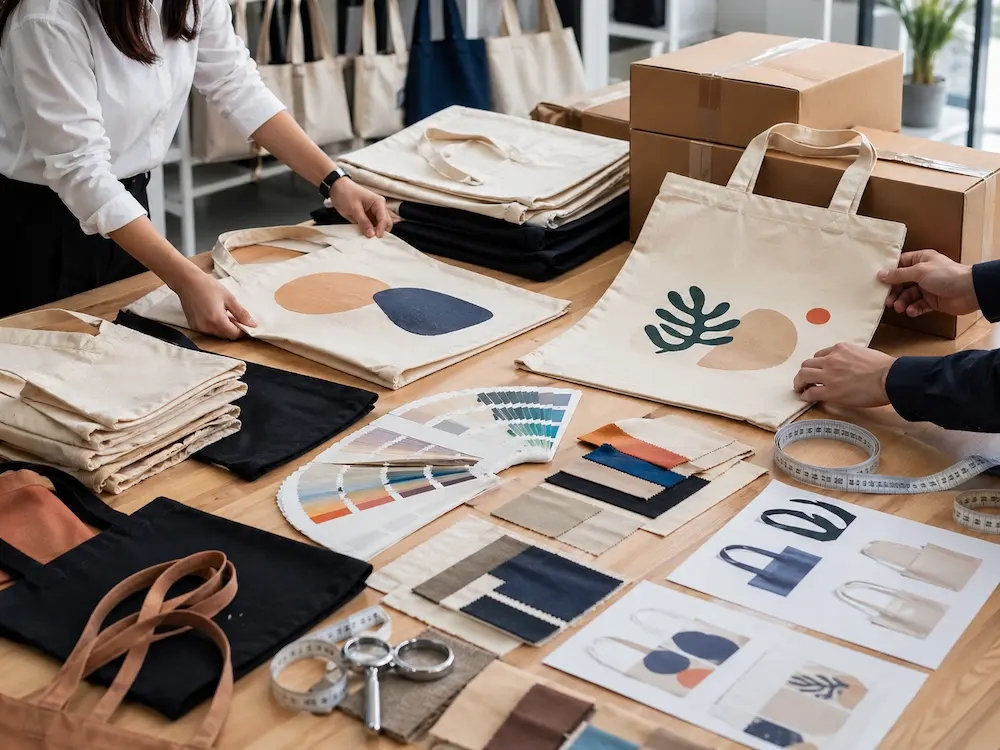
Start by Defining What “Reliable” Actually Means
Many buyers say they want a reliable tote bag supplier, but they have not defined what reliability means for their own project. For some businesses, reliability means repeat quality on a simple high-volume cotton tote. For others, it means the ability to handle custom canvas bags, more complex print methods, or retail-grade finishing without constant supervision. A trade-show buyer, a bookstore brand, and a supermarket packaging program do not need exactly the same supplier strengths.
This matters because not all “good” suppliers are good at the same things. One factory may be excellent at standard promotional totes but weak at premium custom retail bags. Another may be strong in product development but less flexible on urgent event timelines. The smarter approach is to define the bag program first and then judge suppliers against that exact need.
If the product direction is already clear, it becomes much easier to identify whether a supplier fits the real job or only looks good in a quotation email.
Do Not Choose by Price Alone
This is the oldest sourcing mistake in the book. A low quote can be useful, but by itself it proves very little. If the supplier has underquoted the fabric, ignored proper reinforcement, used optimistic lead times, or built the price around a weaker printing route than you assumed, the “cheap” quote is not actually cheap. It is only incomplete.
Reliable suppliers usually quote with more structure. They ask what the bag will carry, what material you want, what print method is required, what the target quantity is, and whether the order is a one-time campaign or part of a repeat program. Weak suppliers often skip those questions because their goal is to stay in the conversation with a low first number.
The better buying habit is simple: compare specifications first, then compare prices. If the spec is not clearly aligned, the quote is not really comparable.
Check Whether the Supplier Understands Tote Bags or Just Sells Them
A reliable supplier should understand product logic, not just product names. When you ask about a tote bag, they should be able to explain the difference between cotton and canvas, light-use and heavy-use construction, gusset and non-gusset formats, print routes, handle reinforcement, MOQ logic, and why one design makes more sense than another for your use case.
This is one reason buyers should look carefully at how a supplier presents their product range. A supplier who can explain the purpose behind cotton tote programs versus more durable cotton canvas tote bags is usually operating at a more useful level than one who simply says “yes, we can make all kinds.”
Reliable suppliers diagnose before they promise.
Look for Signs of Real Manufacturing Control
Not every supplier who sells tote bags controls tote bag production well. Some are factories. Some are trading companies. Some are hybrid operators. None of those models is automatically bad, but the important question is whether the company has real control over the critical parts of production.
That means you should ask about sampling, material sourcing, print setup, cutting, sewing, inspection, and export packing. If the answers are vague, generic, or overly polished without technical detail, that is usually a warning sign. A reliable supplier should be comfortable talking about how the bag is actually made, not only how the website describes it.
This is also why buyers should look beyond catalogue language and see whether the supplier behaves like a real production partner or only like a quoting intermediary.
| Supplier Signal | Usually a Good Sign | Usually a Warning Sign |
|---|---|---|
| Quoting behavior | Asks detailed product questions | Rushes to a low price without real spec review |
| Product knowledge | Explains material, print, and use-case fit | Answers everything with vague “custom is okay” language |
| Sampling process | Clear prototype and approval logic | No real sampling discipline or inconsistent details |
| Lead time | Realistic and structured | Unusually fast without explaining how |
| Quality control | Can explain inspection points clearly | Talks about quality only in generic slogans |
Ask Better Questions Early
The easiest way to find a reliable supplier is to ask questions that weak suppliers struggle to answer. Ask what fabric weight they recommend for your use case. Ask how the handles are reinforced. Ask what print method they suggest for your artwork and why. Ask what MOQ applies if you simplify the bag. Ask how they control print placement and stitching consistency. Ask what the real lead time is after artwork approval, not just “in general.”
Reliable suppliers do not panic when asked practical questions. They usually become more useful. Weak suppliers often go vague, overpromise, or answer with whatever they think you want to hear.
That early Q&A stage is one of the best supplier filters buyers have.
Samples Reveal More Than Supplier Presentations
A sample is still one of the strongest truth tests in tote bag sourcing. It tells you more than a brochure, a website, or a nice factory introduction. A real sample reveals whether the fabric feels right, whether the print sits correctly, whether the stitching is clean, whether the handle length is comfortable, and whether the bag feels like it was built with use in mind.
Reliable suppliers usually have a structured sampling process because they understand that tote bag decisions need physical confirmation. This is especially important when the project goes beyond simple event totes and moves into more brand-led products such as custom made tote bags or more visible retail items.
A supplier that avoids proper sampling is usually a supplier trying to skip the stage where weaknesses become visible.
Review the Supplier’s Product Focus and Case Range
A reliable tote bag supplier should show evidence of handling projects that look commercially similar to yours. If your business needs broad-volume promotional totes, the supplier should show comfort with larger-scale repeat programs. If your business needs branded canvas retail bags, they should show evidence of understanding more structured and premium-feeling products.
This is one area where your supplier’s public-facing content can still be useful. A company that presents strong content around custom canvas bags with logo, everyday-use cotton totes, and scalable bulk programs is often signaling that they understand multiple commercial bag roles rather than only one narrow factory output.
That said, product pages alone do not prove reliability. They only help you see whether the supplier is speaking your category language competently.
Lead Time Honesty Is a Major Reliability Test
Reliable suppliers do not promise impossible timelines just to win the order. They explain production timing in a way that matches the actual process: material confirmation, sample approval, print setup, cutting, sewing, inspection, and export packing. That usually sounds less exciting than a “very fast” promise, but it is much more useful.
When a supplier offers an unusually short lead time, buyers should ask how that lead time is achieved. Are they using stock materials? Is the print simple? Is the quantity modest? Or are they simply hoping production will go well later? Honest lead times are a core part of reliability because missed timing damages more than just logistics. It damages the whole campaign or retail plan.
In real sourcing, a realistic supplier is often safer than an optimistic one.
Communication Quality Predicts Production Quality More Than People Admit
Communication is not a soft issue in export sourcing. It is a production-control issue. If a supplier answers slowly, inconsistently, or vaguely before the order, they usually become even harder to manage once production starts. If they confirm details clearly, point out risks, and summarize changes accurately, that often predicts stronger order handling later.
Reliable suppliers usually reduce confusion. They restate the bag specification clearly, confirm artwork logic, explain quantity breaks, and flag possible problems early. Weak suppliers often create invisible misunderstandings that only appear once the goods are already made.
That is why buyers should evaluate email quality and quotation clarity as seriously as they evaluate price.
Check Whether the Supplier Understands Bulk Programs
Some suppliers can make a good sample but are much weaker when the order moves into real scale. This is why buyers should ask not only “Can you make this bag?” but also “Can you make this bag consistently at volume?” A reliable bulk supplier should understand repeat-order planning, carton efficiency, stable fabric sourcing, and how to keep print and stitching consistent across a larger run.
That becomes especially important for programs similar to cotton tote bags bulk, where the project success depends not only on one prototype but on the supplier’s ability to repeat the same result without variation becoming a hidden problem.
A supplier that is reliable at 200 pieces is not automatically reliable at 20,000.
Do Not Ignore Export Experience
A tote bag supplier can make decent bags and still be difficult in international business if they are weak on export packing, shipping coordination, documentation, or carton discipline. This matters a lot for buyers outside the factory’s domestic market. A reliable export supplier should understand how goods need to be packed for sea or air, how to mark cartons properly, and how to avoid unnecessary shipment friction.
This is one reason working with a supplier that already behaves like an international partner matters. A business-facing site such as Youngpack can be useful not because the homepage itself proves reliability, but because it helps buyers evaluate whether the company presents itself like a real export-capable packaging and bag supplier rather than only a local seller.
Export discipline is part of product reliability. The order is not complete when the bags are made. It is complete when they are packed, documented, and shipped properly.
Watch for Red Flags Early
There are some warning signs buyers should not ignore. Unrealistic low prices without specification clarity. Extremely fast lead time with no production explanation. Inconsistent answers from different sales contacts. Weak sample follow-up. Vague material descriptions. No clear answer on MOQ logic. Reluctance to explain quality control. Poorly presented sample photos that avoid details.
None of these signs alone proves the supplier is bad, but several together usually tell the story. The earlier buyers notice them, the cheaper it is to walk away.
Reliable suppliers usually feel calmer, clearer, and more technically grounded even when they are not the cheapest option.
| Question to Ask | What a Reliable Supplier Usually Does |
|---|---|
| What fabric do you recommend for this use? | Gives a reasoned answer tied to load and market use |
| What print method fits this artwork? | Explains method choice, not just “all are okay” |
| What is the MOQ and why? | Links MOQ to material, printing, or setup |
| How do you inspect the order? | Describes real checkpoints clearly |
| What is the lead time after approval? | Gives realistic staged timing, not vague promises |
How to Make the Supplier More Reliable from Your Side
Reliability is not only the supplier’s job. Buyers also make suppliers easier or harder to manage. If you send vague requirements, changing artwork, unclear bag purpose, and rushed approvals, even a decent supplier can struggle. The more clearly you brief the project, the easier it is to identify which supplier is actually reliable and which one is only reacting quickly.
A good supplier still needs a good brief. Size, material direction, quantity, print method expectations, use case, and destination market should all be defined as early as possible. When both sides are clear, reliability becomes much easier to evaluate and much easier to maintain.
Conclusion
Finding reliable tote bag suppliers is not mainly about who says yes the fastest or who quotes the lowest. It is about who understands the product, communicates clearly, samples properly, manages production honestly, and can repeat the right result over time.
The strongest supplier is usually the one who helps you prevent problems before they happen, not the one who only sounds confident after the problems already exist. Buyers who choose suppliers that way usually build much better tote bag programs.
How Buyers Should Think About Reliable Tote Bag Suppliers
What supplier reliability really means: A reliable tote bag supplier is not simply a company that replies quickly or offers a low quote. Reliability usually means product understanding, stable execution, realistic timing, clear communication, and repeat quality. A supplier becomes genuinely valuable when they reduce sourcing risk rather than only compete on the first visible price.
Why many buyers choose the wrong supplier: The most common mistake is selecting by price or presentation alone. A polished website or a fast quote can look impressive, but it does not prove strong production control. Many sourcing problems begin when buyers confuse easy communication with competent manufacturing, or low cost with fully specified value.
How buyers should evaluate suppliers properly: The strongest way to evaluate a tote bag supplier is to test how they think. Ask about fabric, print methods, load use, MOQ logic, sampling, inspection, and export packing. A strong supplier should answer those questions clearly and commercially. A weak supplier usually responds with generic reassurance or avoids technical detail.
Options businesses usually weigh: Most buyers compare low-cost broad-volume suppliers against more product-focused partners, standard promotional bag specialists against stronger custom retail bag suppliers, and faster quoting against better production discipline. The better answer depends on whether the project needs simple repeat supply or more tailored product development with stronger brand value.
Considerations before starting the order: Before moving ahead, businesses should test a sample, confirm material and print logic, review MOQ and timing honestly, and make sure the supplier understands the intended market use. They should also check whether the supplier can handle export details properly. A supplier that cannot explain the order clearly before production is rarely easier to manage after production starts.
The broader takeaway: The strongest sourcing decision is usually not about who says yes the fastest. It is about who helps the buyer get the right tote bag with fewer problems and better long-term repeat confidence. That is also where Youngpack naturally fits as a B2B manufacturing and export partner for businesses that need clearer tote bag product guidance, stronger communication, and more dependable supply execution.
FAQ
1. What makes a tote bag supplier reliable?
A reliable tote bag supplier usually combines product knowledge, consistent communication, realistic lead times, stable quality control, and export experience. They should be able to explain material choices, printing methods, MOQ logic, and how the bag will be produced and inspected. Reliability is not only about whether they can make bags. It is about whether they can make the right bag repeatedly without creating avoidable problems.
2. Should buyers choose tote bag suppliers based on the lowest price?
Usually no. The lowest price is only useful if the specification behind it is clear and complete. Many weak quotes look attractive because they leave out important details such as stronger fabric, reinforcement, correct print methods, or realistic lead times. A reliable supplier often gives a more structured quote and asks more product questions first. That usually creates better value than a lower but less honest number.
3. How can buyers check if a tote bag supplier really understands the product?
Buyers should ask practical questions about material, load use, print method, MOQ, handle reinforcement, and inspection. A strong supplier should answer with reasoning tied to the actual bag application, not only with generic sales language. The quality of their answers often reveals whether they truly understand tote bag production or are only repeating what sounds reassuring.
4. Why are samples so important when choosing a supplier?
Samples reveal the real bag. They show fabric feel, print quality, handle comfort, stitching standard, and whether the product still makes commercial sense in physical form. A supplier may look strong in emails or on a website, but a poor sample usually exposes weak product control quickly. Sampling is one of the best ways to judge whether the supplier can translate a specification into a finished product reliably.
5. What should buyers ask before starting a bulk tote bag order?
Buyers should confirm material type, GSM or fabric weight, bag size, handle details, gusset, print method, MOQ, lead time after approval, inspection process, and carton packing details. They should also ask what changes if the order quantity rises or falls. A reliable supplier should be able to explain all of this clearly before production begins, not only after problems appear.
References
- Preferred Fiber and Materials Market Report — Textile Exchange — Textile Exchange.
- Retail Packaging and Reusable Bag Sourcing Best Practices — professional sourcing reference.
- Responsible Sourcing and Product Communication in Textile Supply Chains — industry trade reference.
- Guide to Reusable Bags and Long-Term Use Value — industry best-practice sourcing reference.
- Sustainable Packaging Guidelines — Australian Packaging Covenant Organisation — APCO.
- Textiles and the Environment — European Environment Agency — EEA.
- Fashion on Climate — Global Fashion Agenda and McKinsey & Company.
- Green Guides for the Use of Environmental Marketing Claims — Federal Trade Commission — FTC.
Source Credit Requirement:
If you would like to quote part of this article, please clearly credit Xiamen Youngpack Imp.and Exp.Co.,Ltd. as the original source. Full-text reproduction is not permitted.