Most custom tote bags fail for a very simple reason: they are designed like packaging, not like products. A business puts a logo on a standard bag, approves a color, and assumes that is enough. It usually is not. A tote bag that sells well needs to do more than look branded. It needs to feel right, solve a real carry need, fit the customer’s lifestyle, and communicate value fast enough that people want to buy it, keep it, or continue using it in public.
This matters whether the tote bag is sold directly in retail, used as premium merchandise, bundled in a campaign, or positioned as a gift-with-purchase product. The design choices determine whether the tote becomes a forgettable extra or a real brand asset. The strongest custom bags are not the ones with the busiest graphics. They are the ones with the clearest product logic.
If the goal is to design custom tote bags that sell, the starting point is not decoration. It is market fit.
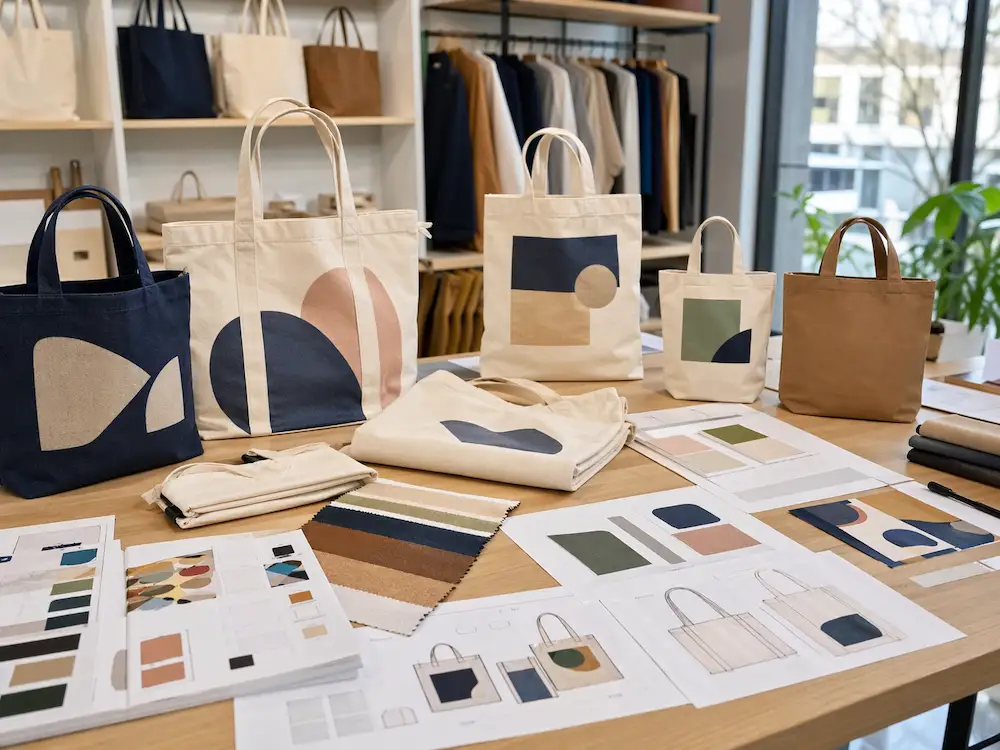
Start with the Buyer, Not the Artwork
The most common mistake in custom tote bag design is starting with the logo instead of the customer. Before choosing material, print, or layout, the business needs to know who is supposed to want this bag and why. Is the tote for bookstore buyers, café customers, museum visitors, supermarket shoppers, premium lifestyle retail, event merchandise, or eco-conscious gifting? Each of those buyers expects something different.
A tote bag designed for mass promotional reach usually does not sell well as retail merchandise. A tote designed for a premium museum shop may be too refined or too expensive for a broad event giveaway. The bag has to match the customer’s taste, budget, and likely use pattern. If it does not, the product may still look attractive in a mockup and perform badly in the market.
This is why the best-selling bag designs usually begin with use case and audience positioning rather than graphic style alone.
Make the Tote Bag Useful First
Usefulness is what makes people keep a tote bag. If the tote is awkward in size, uncomfortable to carry, too flimsy, or too bulky for normal life, it will not sell well or stay in use long enough to create repeat brand value. A custom bag should feel like something people would choose to carry even without the branding.
That means size matters, gusset matters, handle length matters, and material matters. A tote designed only to look branded in a product photo often fails once the customer actually tries to use it. A tote designed around daily reality usually performs better both commercially and visually.
For brands that want a broader visible-use product rather than a one-time handout, custom tote bags need to be designed as practical objects first and brand media second. That is the difference between a bag that gets used and a bag that gets stored away.
Choose a Material That Supports the Price Position
Material is one of the fastest ways a customer judges whether a tote bag feels worth buying. Cotton usually feels soft and natural. Canvas usually feels more structured and premium. The material should match the price level and the intended product image. A premium tote designed for retail sale should not feel like a cheap event giveaway. A mass campaign tote should not be overbuilt so heavily that the price becomes commercially unrealistic.
If the tote is supposed to sell as an actual product, material choice is one of the most important commercial decisions in the entire design process. Customers notice it immediately, even if they do not know the technical details.
For soft, everyday, story-led branding, products like custom cotton tote bags often work well because they feel approachable and easy to adopt into daily routines. For a stronger premium retail presence, more structured canvas often wins.
Design for Real-Life Visibility, Not Only Digital Mockups
Many tote bag designs look good on a flat digital proof and weak in real life. That is because a tote bag is not a poster. It folds, moves, wrinkles, hangs, swings, and gets partially covered by the user’s arm or clothing. A design that depends on tiny details, overly fine linework, or overly subtle contrast often loses strength once the bag is actually carried.
The best-selling tote bag graphics are usually clearer than beginners expect. They use strong placement, balanced spacing, and artwork that stays recognizable at normal public viewing distance. That does not mean every tote should look loud. It means the design should survive the physical reality of being a bag, not a flat concept image.
This is one reason so many commercially strong programs rely on products like custom logo tote bags. The goal is not decoration overload. The goal is memorable and durable recognition.
| Design Decision | What Usually Sells Better | What Usually Fails |
|---|---|---|
| Material | Fabric that matches price and use case | Cheap feel on a premium concept |
| Artwork | Clear, balanced, readable branding | Overcrowded or overly delicate layouts |
| Bag size | Useful for daily carry | Too small or awkwardly oversized |
| Product role | Bag designed as a usable product | Bag treated only as printed packaging |
Keep the Design Simple Enough to Be Strong
One of the harsh truths in tote bag design is that too many ideas usually make the product worse. Businesses often try to include a logo, a slogan, a website, a tagline, a campaign line, decorative art, and maybe even social media handles. The result is usually a bag that feels cluttered, less premium, and less memorable.
What sells better is usually restraint. One strong front graphic. A clear logo system. Good negative space. Balanced placement. Enough design presence to feel intentional without making the bag visually noisy. Simplicity helps the bag feel more confident, and confidence usually sells better than clutter.
This is particularly important in retail and gift-oriented programs where the bag needs to feel like something worth being seen with, not just something the brand insisted on printing everything onto.
Match the Print Method to the Design
A great tote design can be damaged by the wrong print method. Simple bold logos often work best with screen printing. More detailed illustrations or multi-color art may need digital printing. Smaller premium marks may be better with embroidery. The print method should support the artwork rather than forcing the artwork into a weaker result.
Beginners often choose print method by price alone, which is usually a mistake. If the design is detailed and the printing method cannot reproduce it cleanly, the product loses value immediately. At the same time, using a highly flexible print route on a simple, high-volume logo bag can waste money unnecessarily.
For strong market-facing designs, products such as custom printed tote bags usually perform best when the artwork and the production method are designed together from the start.
Design for a Specific Selling Context
A tote bag sold in a museum shop should not be designed the same way as a tote bag sold at a beach store or given away at a wellness event. The selling environment changes what customers expect. In a curated retail setting, the bag may need to feel more refined, more fashionable, or more collectible. In a promotional environment, the bag may need to communicate faster and more broadly.
This matters because many custom tote bags fail by trying to appeal to everyone. A tote bag that is “fine for anyone” is often compelling for no one. Better product design usually comes from committing to a specific buyer mood and specific retail context.
That is why some of the strongest visible-use products come from more defined canvas-led programs such as custom canvas tote bags, where the bag is intentionally positioned as a more durable and branded retail item rather than a generic tote.
Give the Bag a Reason to Be Bought, Not Just Given
If the business expects customers to buy the tote bag, not just accept it, the product needs a reason to exist beyond branding. That reason can be one of several things: useful size, premium fabric, attractive shape, fashionable print, limited-edition art, eco-conscious positioning, or a clear connection to the brand’s identity or story. But the reason must be real.
Customers do not usually buy tote bags because a brand wants visibility. They buy them because the bag looks useful, attractive, or worth associating with. The business can benefit from the branding afterward, but that is not usually the customer’s first motivation.
The stronger the tote feels as an object, the easier it becomes to sell.
Think About the Back of the Bag Too
Many custom tote bags focus too heavily on the front print and ignore the overall product balance. The back, side profile, handle style, gusset, stitching, and even label placement all contribute to whether the bag feels designed or merely printed. A bag with a good front graphic and poor overall proportion still feels weaker than it should.
That is why product-level decisions matter. If the front print is excellent but the bag feels generic everywhere else, the product loses part of its selling power. Buyers notice when a tote feels intentionally developed rather than simply logo-applied.
This is one reason why stronger retail-facing designs often use more tailored construction logic instead of relying only on print.
| Retail Goal | Better Design Direction | Why It Sells Better |
|---|---|---|
| Premium lifestyle tote | Canvas, clean layout, balanced handles | Feels like a real product |
| Natural eco-conscious bag | Cotton, minimal artwork, soft everyday shape | Looks easy to keep using |
| Event or campaign bag | Simple logo, useful medium size, clear message | Strong visibility without clutter |
| Giftable branded tote | Refined print, better fabric, tighter product styling | Feels worth receiving and keeping |
Do Not Design Only for the Brand Team
Another honest problem in custom bag development is that internal teams often design for themselves rather than for customers. They add internal campaign language, design elements that look good in presentations, or branding rules that matter more internally than they do in the real world. The result can be a product that satisfies stakeholders and underperforms in the market.
A tote bag that sells needs external logic. It has to make sense to someone who is not sitting in the approval meeting. That means the design should be judged by usefulness, attractiveness, and public carry appeal, not only by how accurately it reflects internal brand guidelines.
Internal approval matters, but customer behavior matters more.
Test the Tote Like a Product, Not a Mockup
Before approving a production run, businesses should test the tote physically. Put real items inside it. Carry it. Look at the print from normal distance. Fold it. Check whether the handles feel comfortable. Ask whether the bag still looks worth buying once it is no longer flat and perfect on a screen.
This product test catches many expensive mistakes. A tote bag can be theoretically good and commercially weak. The only reliable way to know the difference is to judge it in use, not just in design review.
Strong-selling bags usually survive that test. Weak ones often do not.
How to Choose the Right Supplier for a Sellable Design
The right supplier should do more than accept an artwork file. They should be able to tell you whether the material matches the concept, whether the print method supports the design, whether the bag size fits the intended use, and whether the final product is likely to feel right in the target market.
A weak supplier simply quotes. A good supplier improves the product. That difference matters because many tote bag design problems are not graphic problems. They are product-specification problems.
This is where Youngpack-style product logic adds real value. A stronger manufacturing partner helps the brand design a bag that is actually sellable, not just technically printable.
Conclusion
Designing custom tote bags that sell is really about building a product customers want to keep using. The best-selling bags combine practical utility, clear visual identity, material fit, and a strong match between design and real buyer behavior. They are not overloaded with brand messaging, and they are not designed only for mockups or internal approvals.
The bags that sell best are usually the ones that feel right in the hand, look right in public, and make immediate sense in the customer’s life. That is the standard worth designing toward.
How Businesses Should Think About Designing Custom Tote Bags That Sell
What this process really involves: Designing a custom tote bag that sells is not only a graphic design exercise. It is a product strategy decision. The bag must feel useful, look appropriate for the target buyer, and carry the brand in a way that people are willing to keep using publicly. Sellable tote bags are built around customer behavior, not only brand preference.
Why many custom tote bags underperform: The most common problem is that businesses design for internal approval instead of real buyer use. They focus too much on logo placement, campaign lines, or mockup appearance and not enough on size, comfort, material feel, and everyday carry logic. That usually creates a bag that looks branded but does not feel compelling enough to buy or keep.
How stronger tote bag design decisions are made: The strongest process starts with the target customer, the retail or promotional context, and the use case after purchase. From there, material, size, print style, and layout can be chosen to support the product role. A tote bag for bookstore resale should not be designed the same way as an event giveaway or a premium customer gift, even if all three carry the same logo.
Options businesses usually weigh: Most buyers compare soft everyday cotton concepts against stronger canvas retail concepts, bold visible branding against more restrained premium layouts, and broad audience appeal against more niche product personality. The better design direction becomes clear once the business decides whether the bag should mainly be useful, giftable, collectible, or highly visible in daily public use.
Considerations before launching: Before production, businesses should test the real sample with actual use. They should check carrying comfort, print balance, visual strength in motion, and whether the bag still feels worth buying once it is filled and handled. They should also ask whether the design would still make sense to a customer with no internal knowledge of the campaign. That is often the most honest test of whether the tote can actually sell.
The broader takeaway: The best-selling custom tote bags are usually the ones that make sense as products before they make sense as branding. That is also where Youngpack naturally fits as a B2B manufacturing and export partner for brands developing custom tote bag programs that need stronger product logic, clearer visual identity, and better real-market usability.
FAQ
1. What makes a custom tote bag sell well?
A custom tote bag usually sells well when it combines practical usefulness with a clear visual identity. Customers are more likely to buy or keep using a tote bag that feels comfortable, has the right size, looks attractive in public, and matches the lifestyle or retail context it is designed for. Good artwork helps, but usefulness, material feel, and overall product quality usually matter just as much as the logo or print.
2. Should a selling tote bag design be simple or detailed?
In most cases, simpler designs sell better because they look cleaner, feel more premium, and remain readable when the bag is carried in real life. Tote bags move, fold, and wrinkle, so overly detailed artwork often loses strength once the product is in use. A strong logo, a balanced layout, and enough empty space usually create a better commercial result than a crowded design with too many messages competing for attention.
3. What material is best for custom tote bags that need to sell?
The best material depends on the product position. Cotton often works well for softer, everyday, natural-feeling totes. Canvas often works better for retail, premium, and long-term reusable products because it feels stronger and more substantial. The material should match the selling price and the expected customer use. A bag that feels too cheap for the concept or too heavy for the purpose usually becomes harder to sell.
4. Why do some branded tote bags fail even when the logo looks good?
Many branded tote bags fail because they are designed like marketing surfaces instead of useful products. A bag may have a strong logo and still fail if the size is awkward, the handles are uncomfortable, the material feels weak, or the design does not fit the target customer’s taste. Good branding is important, but it cannot compensate for a tote bag that does not feel right in real use.
5. What should businesses test before launching a custom tote bag design?
Businesses should test the real sample in use, not just the artwork proof. They should check size, handle comfort, carrying behavior, print readability, material feel, and whether the bag still looks appealing once filled and carried. It is also important to test the bag against the actual retail or promotional context it is meant for. The strongest custom tote bag designs usually look good on screen and still feel commercially strong in the hand.
References
- Preferred Fiber and Materials Market Report — Textile Exchange — Textile Exchange.
- Textiles and the Environment — European Environment Agency — EEA.
- Green Guides for the Use of Environmental Marketing Claims — Federal Trade Commission — FTC.
- Retail Packaging and Reusable Bag Sourcing Best Practices — professional sourcing reference.
- Responsible Sourcing and Product Communication in Textile Supply Chains — industry trade reference.
- Guide to Reusable Bags and Long-Term Use Value — industry best-practice sourcing reference.
- Fashion on Climate — Global Fashion Agenda and McKinsey & Company.
- Sustainable Packaging Guidelines — Australian Packaging Covenant Organisation — APCO.
Original Knowledge Statement:
This article is based on the packaging industry experience and product knowledge of Xiamen Youngpack Imp.and Exp.Co.,Ltd. All rights reserved.