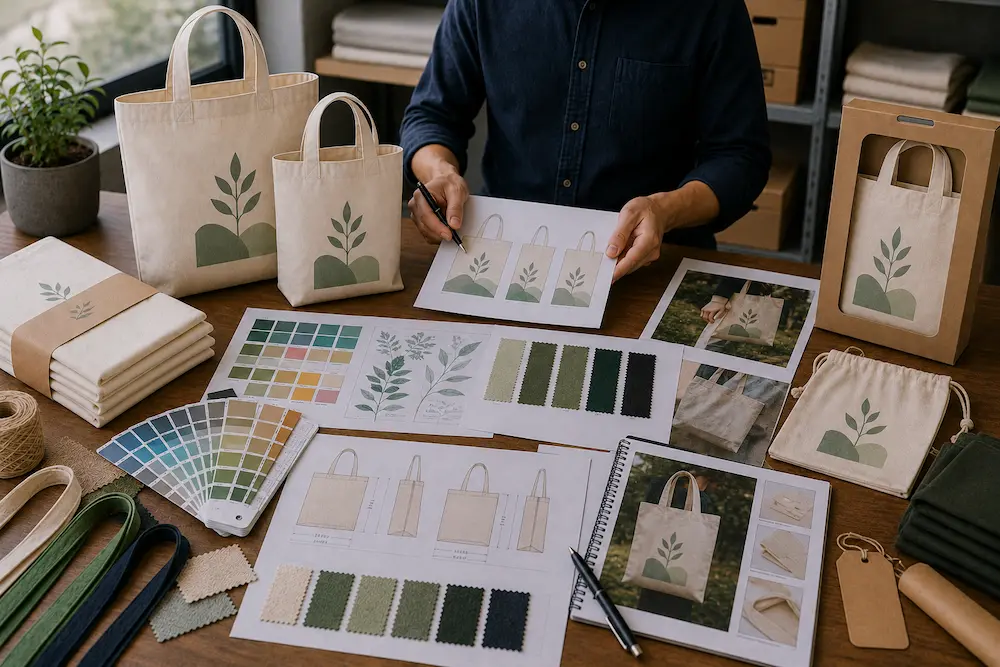
Customize tote bags have become one of the most effective tools for brand promotion, retail merchandising, corporate gifting, and sustainable packaging.
However, many buyers begin the sourcing process without understanding how custom tote bags are actually developed. Customizing a tote bag involves much more than simply placing a logo on fabric. Material selection, dimensions, printing methods, handle construction, packaging, and production planning all influence the final product.
Customizing tote bag involves much more than simply placing a logo on fabric. Material selection, dimensions, printing methods, handle construction, packaging, and production planning all influence the final product.
This guide explains the complete process to Customize tote bags step by step, helping businesses make better sourcing decisions, reduce production mistakes, and achieve stronger long-term branding results.
Step 1: Define Your Business Goals
Before selecting materials or printing methods, determine the primary purpose of the Customizing tote bag
Common objectives include:
- Retail merchandise
- Promotional giveaways
- Event marketing
- Corporate gifts
- Sustainable packaging
- Product resale
Different goals require different specifications. A tote bag designed for a trade show giveaway will typically prioritize low cost, lightweight construction, and efficient distribution, while a retail merchandise tote may focus more on durability, premium appearance, and long-term customer use. Businesses that Customize Tote Bags should define their objectives clearly at the beginning of the project to ensure that materials, dimensions, printing methods, and construction details align with the intended purpose and target audience.
For example, a trade show giveaway may prioritize affordability, while a retail product may require premium construction and presentation. Many brands investing in custom made tote bags for tailored brand expression begin by defining exactly how customers will use the bag after purchase.
Business Objective Comparison:
| Application | Primary Focus | Typical Specification |
|---|---|---|
| Promotional Event | Low Cost | Lightweight cotton |
| Retail Merchandise | Premium Quality | Heavy canvas |
| Corporate Gift | Brand Image | Enhanced printing |
| Shopping Bag | Durability | Reinforced handles |
Step 2: Select the Right Tote Bag Material
Material selection is one of the most important customization decisions when businesses customize tote bags. The fabric influences not only appearance, but also durability, printing performance, carrying strength, customer perception, and overall project cost. Choosing the right material at the beginning of the development process helps avoid production issues and ensures the finished bag aligns with its intended purpose.
Cotton Advantages:
- Natural and environmentally friendly appearance
- Cost-effective for a wide range of promotional and retail applications
- Excellent printability for logos, graphics, and brand messaging
- Soft texture that is comfortable for everyday use
- Lightweight and easy to fold, store, and distribute
- Available in different fabric weights to suit various budgets and durability requirements
Cotton remains one of the most popular materials for customize tote bags because it balances affordability, branding flexibility, and practicality. It is commonly used for promotional giveaways, retail packaging, bookstore bags, event merchandise, and reusable shopping bags. Businesses looking for a versatile material with strong branding potential often choose cotton as a reliable starting point for tote bag customization projects.
Many businesses choose custom cotton tote bags for natural brand storytelling because cotton offers a strong balance between affordability and branding potential.
Canvas Canvas provides:
- Greater durability
- Better structure
- Premium appearance
Canvas is commonly used for retail and lifestyle brands.
Recycled Materials:
Recycled materials are suitable for sustainability-focused projects that aim to reduce resource consumption and support circular economy initiatives. These materials can help businesses strengthen environmental messaging while meeting growing consumer demand for more responsible packaging and promotional products. Recycled fabric options are increasingly used by retailers, nonprofits, and environmentally conscious brands.
RPET Materials:
RPET materials are made from recycled plastic bottles and are frequently used in eco-conscious campaigns. The recycling process transforms post-consumer plastic waste into usable textile fibers, helping reduce landfill waste and plastic pollution. RPET tote bags are popular for promotional events, corporate sustainability programs, trade shows, and reusable shopping applications where environmental positioning is an important part of the brand message.
Material Comparison Table:
| Material | Durability | Print Quality | Cost Level |
|---|---|---|---|
| Cotton | Medium | Excellent | Low-Medium |
| Canvas | High | Excellent | Medium |
| Organic Cotton | Medium | Excellent | High |
| RPET | Medium | Good | Medium |
Step 3: Choose the Tote Bag Size
Size should match intended use. Typical categories include:
| Size Type | Common Use |
|---|---|
| Small | Gifts and cosmetics |
| Medium | Daily shopping |
| Large | Grocery and retail |
| Oversized | Travel and heavy carrying |
Choosing an unnecessarily large bag often increases material and shipping costs.
Step 4: Select Handle Style and Construction
Handle design affects both comfort and durability when businesses Customize Tote Bags. While many buyers focus primarily on fabric and printing, handle construction has a major influence on how customers actually use and experience the bag. The right handle design can improve carrying comfort, increase product lifespan, and enhance the overall perceived quality of the finished tote
Options include:
- Short Handles – Ideal for hand-carry applications, often used for retail packaging, gift bags, and premium shopping totes.
- Long Shoulder Straps – Designed for comfortable shoulder carrying, making them popular for everyday shopping, commuting, and promotional use.
- Webbing Handles – Offer added strength and durability, making them suitable for heavier loads and long-term reuse.
- Rope Handles – Create a more premium and stylish appearance, commonly used for fashion retail, boutique packaging, and luxury promotional products.
When companies Customize Tote Bags, handle length, width, material, and reinforcement stitching should be evaluated alongside the bag dimensions and intended carrying weight to ensure both comfort and long-term durability.
Handle reinforcement is especially important for reusable shopping bags. Projects involving customized tote bags bulk for large-scale brand distribution often prioritize strong handle construction because bags are expected to remain in use for extended periods.
Handle Option Comparison:
| Handle Type | Comfort | Load Capacity | Typical Use |
|---|---|---|---|
| Short Handle | Medium | Medium | Retail Carry |
| Long Shoulder Strap | High | High | Daily Use |
| Cotton Webbing | High | High | Premium Bags |
| Rope Handle | Medium | Medium | Fashion Retail |
Step 5: Create Your Logo and Artwork
Artwork preparation plays a major role in the final appearance.
Professional artwork should include:
- Vector files
- Clear logo positioning
- Pantone colour references
- Print size specifications
Well-prepared artwork improves production efficiency and reduces revision cycles. For projects involving custom canvas bags with logo for distinct brand visibility, logo placement often becomes one of the most important branding decisions.
Step 6: Choose the Printing Method
The correct printing technology depends on artwork complexity, budget, and quantity.
Screen Printing
Best for:
- Large orders
- Simple logos
- Cost efficiency
Digital Printing
Best for:
- Full-colour artwork
- Small runs
- Photographic designs
Heat Transfer Printing
Best for:
- Complex artwork
- Vibrant colours
Embroidery
Best for:
- Premium branding
- Corporate gifts
Printing Method Comparison:
| Printing Method | Best For | Cost Level | Colour Capability |
|---|---|---|---|
| Screen Printing | Bulk Orders | Low | Limited Colours |
| Digital Printing | Detailed Artwork | Medium | Full Colour |
| Heat Transfer | Small Orders | Medium | Full Colour |
| Embroidery | Premium Branding | High | Thread Colours |
Many brands producing custom printed canvas tote bags for sustainable brand presence select screen printing because it balances durability and cost efficiency.
Step 7: Decide on Additional Features
Additional features can improve functionality.
Popular options include:
- Zippers
- Internal pockets
- Bottle holders
- Magnetic closures
- Gussets
- Reinforced bottoms
Each feature increases both functionality and production cost. Additional pockets, zipper closures, reinforced handles, gussets, custom labels, and premium packaging can all enhance the user experience, but they also add material and labor expenses. When businesses Customize Tote Bags, it is important to evaluate whether each feature delivers real value to the end user rather than adding unnecessary complexity. The most successful Customize Tote Bags projects focus on features that genuinely improve usability, durability, and brand presentation while maintaining a balanced cost structure.
Step 8: Request a Sample
Samples allow buyers to verify:
- Materials
- Printing quality
- Dimensions
- Construction
- Packaging
Typical sample lead times:
| Sample Type | Lead Time |
|---|---|
| Stock Sample | 1–3 Days |
| Custom Sample | 3–7 Days |
| Complex Sample | 7–10 Days |
Sample approval significantly reduces production risk.
Step 9: Approve Mass Production
After sample approval, mass production begins.
Typical production stages include:
- Material preparation
- Printing preparation
- Cutting
- Sewing
- Finishing
- Packaging
Most custom tote bag orders require approximately:15–30 days depending on complexity and quantity.
Step 10: Quality Inspection and Delivery
Before shipment, quality inspections verify:
- Dimensions
- Printing consistency
- Stitching quality
- Packaging accuracy
Shipping options usually include:
Express Courier:3–7 days
Air Freight:5–12 days
Sea Freight:20–45 days
Buyers often combine orders with products such as custom canvas drawstring bags for eco-friendly branding to improve freight efficiency.
Common Customization Mistakes
Choosing Materials Based Only on Price
The lowest-cost material may not match customer expectations.
Overcomplicating Artwork
Complex designs often increase costs without significantly improving branding.
Ignoring Practical Use
The bag should fit real-world usage requirements.
Skipping Sample Approval
Production without samples increases risk.
Waiting Too Long to Order
Last-minute projects often create higher production and shipping costs.
Conclusion
Customizing tote bags is a structured process that begins with defining business objectives and ends with quality-controlled delivery.
The most successful projects follow a clear workflow:
- Define goals
- Select materials
- Choose size
- Design handles
- Prepare artwork
- Select printing methods
- Add features
- Approve samples
- Produce
- Inspect and ship
Understanding each stage helps businesses create Customize Tote Bags that deliver stronger branding, better functionality, and greater long-term value. From material selection and size planning to printing, handle construction, packaging, and quality control, every decision contributes to the performance of the finished product. A well-planned approach to Customize Tote Bags not only improves product quality and customer satisfaction but also helps maximize brand visibility, encourage long-term reuse, and achieve better return on investment.
How Businesses Should Approach Tote Bag Customization
Customization begins with purpose: The most successful tote bags are designed around actual business objectives rather than visual preferences alone.
Material and printing decisions matter: Fabric selection, handle construction, and decoration methods directly affect cost, durability, and brand perception.
Samples reduce risk: Reviewing a physical sample before mass production helps prevent costly mistakes and ensures expectations are met.
The key takeaway: Effective Customizing tote bag combines strategic planning, strong branding, practical design, and professional manufacturing execution.
FAQ
1. What is the first step in customizing tote bags?
The first step is defining the intended use of the tote bag, such as retail sales, promotional events, or corporate gifting.
2. Which material is best for customize tote bags?
Cotton and canvas are the most common choices because they offer excellent printability and durability.
3. What printing method is most cost-effective?
Screen printing is usually the most economical option for large-volume orders.
4. How long does customize tote bags production take?
Most custom orders require 15–30 days after sample approval, depending on quantity and complexity.
5. Is a pre-production sample necessary?
Yes. Samples help verify materials, printing quality, dimensions, and construction before mass production begins.
References
- Textile Product Development Handbook
- Promotional Product Manufacturing Guide
- Screen Printing Industry Standards
- Digital Textile Decoration Manual
- Retail Merchandise Design Guide
- International Sourcing Best Practices
- Sustainable Packaging and Branding Research
- Quality Control for Textile Products Handbook
Content Use Policy:
You are welcome to reference this article with proper attribution, but copying, republishing, or modifying the full content without permission is not permitted.