Introduction
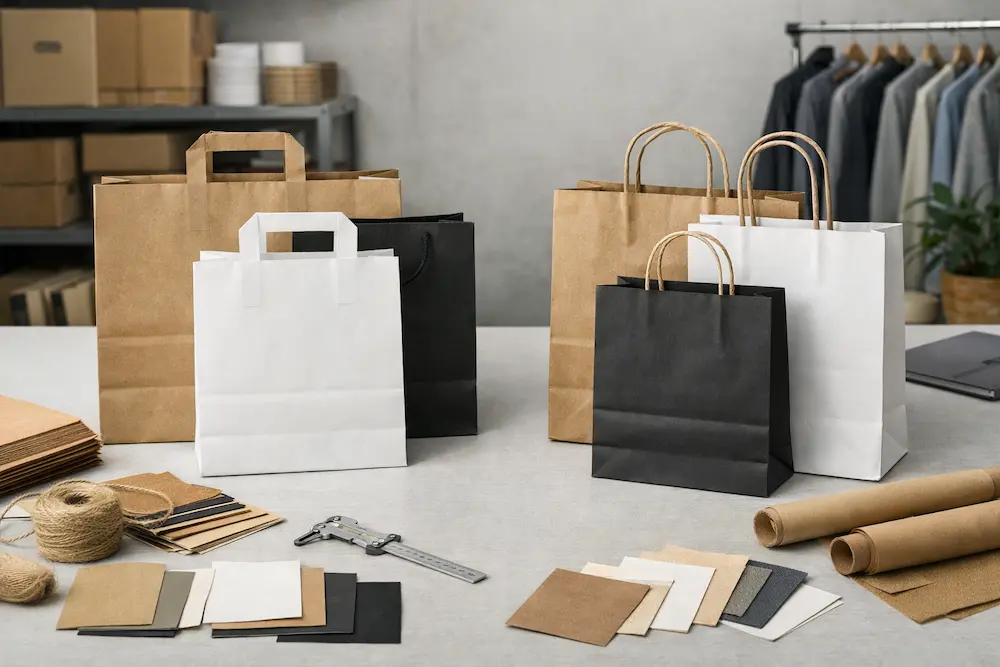
For importers, choosing between flat handle paper bags and twisted handle paper bags is not a small design decision. It affects landed cost, carrying comfort, print presentation, packing efficiency, and whether the bag actually fits the end market. A supermarket, a bakery chain, a takeaway brand, and a boutique retailer may all ask for paper bags, but they usually do not need the same handle structure.
The right choice depends on what the bag carries, how the customer uses it, what price level the market accepts, and how consistent the supplier is in bulk production. That is why importers should not begin with appearance alone. They should begin with function, channel, and purchasing logic.
What Flat Handle and Twisted Handle Paper Bags Really Mean
A flat handle paper bag uses a flat paper strip handle attached inside the bag near the top opening. It is usually associated with grocery, takeaway, bakery, pharmacy, and daily retail packaging. A twisted handle paper bag uses a twisted paper cord handle and is often associated with shopping, gifting, fashion, cosmetics, and stronger retail presentation.
For importers, the important point is not only how the handle looks. The handle changes the bag’s commercial role. Flat handle bags are usually chosen when practicality, volume efficiency, and price control matter most. Twisted handle bags are usually chosen when the customer experience, perceived value, and a more polished retail image matter more. In more general sourcing discussions, many buyers also compare paper bags with handles for easy carry and brand display when they want a broader reference point for how handled paper bags can combine convenience with everyday brand visibility.
Start with the End Use, Not the Handle Style
The easiest mistake importers make is choosing the handle style first and the application second. That usually leads to the wrong bag at the wrong cost level.
If the bag is meant for supermarket checkout, bakery takeaway, fresh food, or daily retail programs, flat handle paper bags are often the better fit. They are functional, familiar, efficient to produce, and usually more cost-conscious. If the bag is meant for boutique shopping, branded gifting, cosmetics, or premium retail, twisted handle paper bags often make more sense because they look more finished and usually feel more premium in the customer’s hand.
A useful rule is simple: if the bag’s main job is practical carry, start with flat handle. If the bag’s main job is branded shopping presentation, start with twisted handle. This is why buyers working on boutique retail, apparel, gifting, or premium shopping programs often also compare paper shopping bags with handles for easy carry and brand display when deciding whether the bag should lean more toward customer comfort, visual polish, and retail-style presentation.
Carrying Comfort and Daily Use
From a user perspective, twisted handle paper bags often feel more comfortable because the handle has a rounder grip. That can matter when the customer carries the bag for longer distances or when the purchase is part of a more deliberate shopping experience.
By contrast, flat handle paper bags are usually perfectly suitable for short-distance carry, quick service, grocery use, and lighter daily purchases. They may feel less refined, but in many everyday retail and foodservice environments, that is not a weakness. It is simply the right commercial choice.
Importers should therefore ask a practical question: will the end user carry this bag for five minutes, or will the brand expect the bag to remain visible as part of the shopping experience? That question often decides the handle type more reliably than appearance alone.
Cost, MOQ, and Budget Fit
In most cases, flat handle paper bags are more economical than twisted handle paper bags. The handle material is simpler, the converting logic is usually more straightforward, and the bag is often positioned for higher-volume daily use. For importers working on chain retail, foodservice, or supermarket supply, that can make flat handle bags a better match for the business model.
Twisted handle paper bags usually cost more because they are more presentation-led and are often paired with cleaner printing, stronger retail aesthetics, or more premium product positioning. That does not mean they are overpriced. It means they serve a different market role.
Importers should also think about MOQ logic. A supplier may be more flexible on standard high-volume flat handle formats because they fit everyday production more easily. Twisted handle bags, especially branded ones, may involve stronger customization expectations and more careful production planning. In real sourcing terms, the better question is not “Which is cheaper?” but “Which gives the right value at the right market level?”
Branding, Print Effect, and Market Position
If the bag is an extension of the brand, twisted handle paper bags often have an advantage. They usually look more finished in fashion, cosmetics, gifting, and premium retail environments. Even before printing, the handle itself raises the perceived quality of the bag. Where visual identity is a stronger priority, some importers also compare paper bags with logo for clear brand recognition when assessing how handle choice, print area, and overall bag proportion should work together in a more brand-led packaging program.
That said, flat handle paper bags should not be underestimated. They can still carry strong branding very effectively, especially for bakery chains, supermarket private labels, coffee shops, takeaway brands, and practical retail programs. In many markets, a well-designed flat handle bag with clean printing looks more professional than a decorative twisted handle bag that does not fit the channel.
Importers should therefore match the print strategy to the bag role. If the brand is everyday, efficient, and high-volume, flat handle may look more credible. If the brand is premium, refined, and retail-focused, twisted handle usually aligns better.
Grocery, Takeaway, and Foodservice Buyers Usually Lean Flat Handle
In grocery, takeaway, bakery, and foodservice packaging, flat handle paper bags are often the more natural choice. They are widely accepted in practical carry environments, align well with daily-use expectations, and usually fit a stronger cost-per-use logic. Importers evaluating this more functional direction sometimes also compare brown paper bags with handles for natural and reliable carry when they want a kraft-based handle bag that feels straightforward, dependable, and well matched to everyday retail or takeaway use.
This does not mean twisted handle paper bags are wrong for food-related use. They can work well for gourmet retail, confectionery, wine-and-food gifting, and premium specialty stores. But for fast-moving service environments, flat handle bags usually fit better operationally.
From a sourcing perspective, foodservice buyers should think in terms of speed, volume, and cost discipline first. Premium appearance only becomes the leading factor when the market actually rewards it.
Retail, Fashion, and Gift Buyers Usually Lean Twisted Handle
In boutique retail, premium fashion, cosmetics, gifting, and higher-end branded shopping, twisted handle paper bags often make more sense. The round paper handle feels more finished, the bag usually looks more polished, and the structure aligns better with customer expectations in premium retail.
That matters because retail packaging is not only a carry tool. It is part of how the customer reads the brand. If the purchase is meant to feel elevated, thoughtful, or giftable, the handle contributes to that impression more than many importers initially assume.
For those markets, the bag is not just about transporting the product. It is also about signaling quality before the customer even opens it.
Freight, Storage, and Packing Efficiency
Importers should also compare the two styles from a logistics point of view. Both types ship flat, but flat handle paper bags are often used in higher-volume, simpler packing programs where carton efficiency matters a great deal. If the business is driven by volume and repeat replenishment, that operational simplicity can matter more than small visual upgrades.
Twisted handle paper bags are still efficient to ship compared with rigid packaging, but they are often part of a more design-led packaging program. In those cases, the importer may care less about pushing every possible carton-saving advantage and more about maintaining visual quality and handle consistency.
For serious importers, the right question is not “Which bag is cheaper per piece?” It is “Which bag makes more sense once unit cost, freight, storage, and market position are considered together?”
Quality Control Considerations for Importers
When choosing between flat handle paper bags and twisted handle paper bags, quality control should focus on the handle system, not just the paper body.
For flat handle bags, importers should watch:
- handle adhesion consistency
- top fold strength
- bag opening shape
- carrying balance under real load
For twisted handle bags, importers should watch:
- rope twist consistency
- handle insertion accuracy
- reinforcement strength
- symmetry and visual finish
A bag that looks acceptable in a sample can still fail in mass production if handle attachment is inconsistent. This is one reason importer decisions should always include sample testing with real products, not just visual approval.
A Practical Comparison Table for Importers
| Comparison Area | Flat Handle Paper Bags | Twisted Handle Paper Bags | Better For |
|---|---|---|---|
| Cost control | Usually more economical | Usually higher cost | Grocery, takeaway, high-volume retail |
| Carry feel | Practical, less refined | More comfortable and polished | Boutique, premium retail, gifting |
| Visual impression | Functional, straightforward | More finished, premium | Fashion, cosmetics, branded shopping |
| Bulk efficiency | Often better for volume programs | Still efficient but more presentation-led | High-volume operational supply |
| Brand image | Works well for practical brands | Works better for elevated brand positioning | Depends on retail tier |
How Importers Should Decide More Quickly
If the buyer is supplying:
- supermarkets, bakeries, takeaway chains, grocery stores, or pharmacies → start with flat handle paper bags
- boutiques, apparel, cosmetics, gift stores, luxury retail, or premium campaigns → start with twisted handle paper bags
Then ask four final questions:
- What is the real carry load?
- What is the real price ceiling in the end market?
- Does the bag need to feel premium or simply work reliably?
- Will the customer notice the handle as part of the brand experience?
These four questions usually solve most handle-style decisions much faster than debating appearance alone.
Conclusion
For importers, the choice between flat handle paper bags and twisted handle paper bags should be made through function first, appearance second. Flat handle bags usually win in grocery, takeaway, bakery, and high-volume retail because they are practical, efficient, and cost-conscious. Twisted handle bags usually win in boutique, fashion, gifting, and premium shopping because they feel more polished and support stronger brand perception.
The best decision is not the one that looks nicest in isolation. It is the one that fits the real product, the real customer journey, the real freight logic, and the real price level of the market. That is how importers choose the right handle style with fewer mistakes and better long-term packaging results.
How Importers Should Think About Flat Handle vs Twisted Handle Paper Bags
What the choice really means: Choosing a handle type is not just a style decision. It is a sourcing decision that affects cost, customer comfort, market fit, and how the bag supports the brand in everyday use.
Why the decision matters: The wrong handle type can create avoidable cost, weak visual positioning, or a bag experience that does not match the channel. The right handle type improves both commercial logic and end-user experience.
How importers should compare options: Buyers should compare the two styles by end use, product load, customer carrying distance, price ceiling, print expectations, and whether the bag is mainly practical packaging or part of the retail presentation.
What usually makes sense in practice: Flat handle paper bags often work best in grocery, bakery, takeaway, and volume-driven retail. Twisted handle paper bags usually fit premium retail, gifting, apparel, and cosmetics better because they feel more polished and support stronger perceived value.
What importers should check most carefully: Handle attachment quality, bag balance under load, carton efficiency, sample consistency, and whether the chosen handle style still makes commercial sense once landed cost and repeat ordering are considered together.
The larger takeaway: The best handled paper bag is not the one that looks best in isolation. It is the one that fits the actual product, the actual retail channel, and the actual sourcing logic of the importer’s business.
FAQ
1. How should importers choose between flat handle paper bags and twisted handle paper bags?
Importers should start with the real end use. Flat handle paper bags usually suit grocery, takeaway, bakery, and high-volume retail programs, while twisted handle paper bags usually fit boutique, gifting, fashion, and premium shopping applications.
2. Are flat handle paper bags cheaper than twisted handle paper bags?
In most cases, yes. Flat handle paper bags are usually more economical because the handle structure is simpler and they are often designed for higher-volume practical use. Twisted handle paper bags usually cost more because they are more presentation-led.
3. Which handle type is better for grocery and takeaway packaging?
Flat handle paper bags are usually the better choice for grocery, takeaway, bakery, and fast-moving foodservice programs because they are practical, cost-conscious, and well suited to daily-use carry.
4. Which handle type is better for premium retail and gifting?
Twisted handle paper bags are usually better for premium retail, fashion, cosmetics, and gifting because they feel more polished, look more finished, and support a stronger premium brand impression.
5. What should importers check before placing a bulk order for handled paper bags?
Importers should confirm the bag size, paper type, handle style, bottom structure, print method, MOQ, sample quality, export packing plan, and whether the handle construction is stable enough for the real product load and market use.
References
- Basic Importing and Exporting — U.S. Customs and Border Protection — CBP
- Tips for New Importers and Exporters — U.S. Customs and Border Protection — CBP
- Packaging waste — European Commission — Directorate-General for Environment
- Packaging and Packaging Waste Regulation — European Commission — Directorate-General for Environment
- Guidance document on Packaging and Packaging Waste Regulation (PPWR) — European Commission
- Paper & Packaging — Forest Stewardship Council — FSC
- What the FSC Labels Mean — Forest Stewardship Council — FSC
- Paper, Print & Packaging — FSC business resources
Editorial Rights Notice:The editorial content on this page was prepared by Xiamen Youngpack Imp.and Exp.Co.,Ltd. for our website visitors and business partners. Please do not reuse it without written approval.