Quick Summary:MOQ plays an important role in custom retail paper bags production. It affects material preparation, printing setup, production efficiency, unit pricing, and inventory management.
Understanding MOQ helps retail buyers create smarter purchasing strategies, reduce unnecessary costs, and maintain stable packaging quality.
A balanced MOQ plan supports customization flexibility, long-term supply stability, and better retail packaging performance.
Introduction
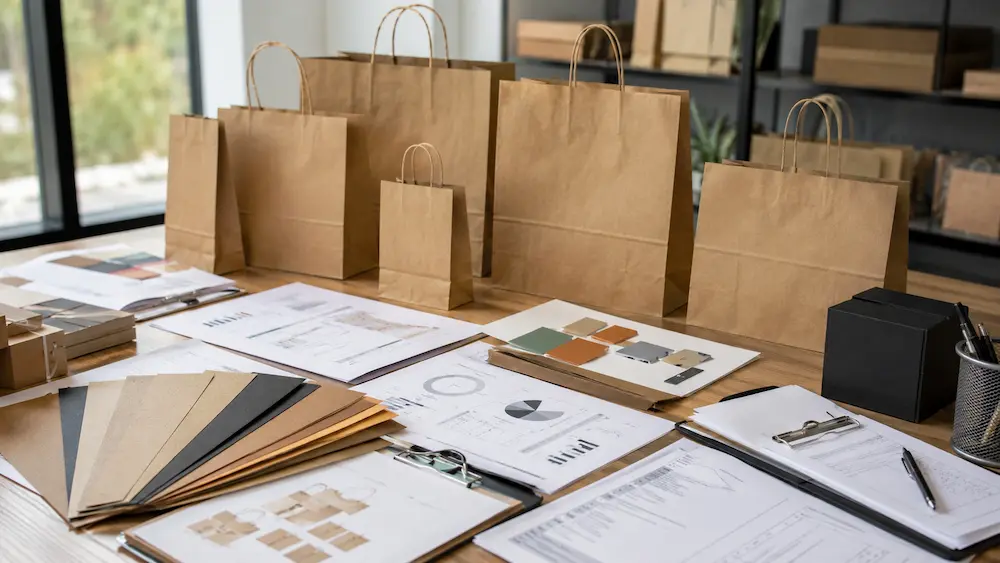
When businesses start ordering retail paper bags, one common question is:
“Can I order only a very small quantity of custom bags?”
This question is understandable, especially for:
- New brands
- Small retailers
- Startups
- Seasonal campaigns
However, custom packaging production works differently from purchasing ready-made products.
MOQ (Minimum Order Quantity) exists because manufacturers need to prepare:
- Materials
- Printing processes
- Production equipment
- Quality control procedures
For professional retail packaging buyers, MOQ is not only a number requirement.
It directly affects:
- Product cost
- Custom flexibility
- Production stability
- Supply planning
Understanding MOQ helps businesses make better purchasing decisions and avoid unexpected costs.
Whether ordering custom printed paper bags, kraft bags, or different retail packaging styles, proper MOQ planning creates a more efficient packaging strategy.
What MOQ Means for Retail Paper Bags
MOQ means Minimum Order Quantity.
It refers to the smallest production quantity a manufacturer can efficiently produce for a custom order.
For retail paper bags, MOQ depends on several factors:
- Material type
- Bag size
- Printing requirements
- Handle structure
- Production process
Why MOQ Is Different for Custom Orders
Custom retail paper bags are not the same as stock packaging.
Stock products are already produced.
Custom orders require individual preparation.
Examples include:
- Cutting specific sizes
- Preparing selected materials
- Matching brand colours
- Printing custom designs
Because each project has unique requirements, manufacturers need a reasonable production quantity to maintain efficiency.
How MOQ Supports Production Stability
MOQ helps factories organize:
- Machine setup
- Material usage
- Labour arrangement
- Inspection processes
A suitable MOQ allows manufacturers to produce consistent packaging quality.
Why Custom Paper Bags Require MOQ
Many buyers think MOQ is only a supplier rule.
Actually, MOQ comes from the complete manufacturing process.
Every custom packaging project requires preparation before mass production begins.
Material Preparation and MOQ
Material preparation is one of the main reasons custom packaging production requires MOQ.
Factories need to prepare:
- Correct paper type
- Suitable GSM
- Required colours
- Special materials
Different materials have different purchasing and production requirements.
Material preparation is one of the main reasons custom packaging production requires MOQ.
Many retail brands choose kraft paper bags for sustainable and natural packaging because kraft materials provide practical strength, flexible customization options, and reliable performance for different retail applications.
Printing Setup Requirements
Custom printing requires preparation before production.
The process may include:
- Artwork checking
- Colour matching
- Printing adjustment
- Test production
Whether printing a simple logo or full artwork, setup time is required.
Production Efficiency
Manufacturing equipment works most efficiently with suitable quantities.
Very small production runs may increase:
- Setup cost per bag
- Production adjustment time
- Material waste
MOQ helps balance customization and cost efficiency.
MOQ Influence Factors Table
| Production Factor | Why It Affects MOQ |
|---|---|
| Material Selection | Requires preparation and purchasing |
| Custom Size | Needs machine adjustment |
| Printing Design | Requires setup process |
| Handle Style | Affects production steps |
| Finishing Details | Adds processing requirements |
How MOQ Influences Retail Paper Bags Pricing
MOQ has a direct relationship with packaging cost.
Many buyers notice:
Small quantity = higher unit price
Larger quantity = better unit efficiency
The reason is simple:
Fixed production costs need to be shared across all bags.
Setup Cost Distribution
Every custom order includes preparation work:
- Machine adjustment
- Printing setup
- Material preparation
- Production testing
For small orders, these costs are divided among fewer bags.
For larger orders, each bag carries a smaller portion of setup cost.
Material Purchasing Efficiency
Material purchasing also affects pricing.
Larger production quantities usually improve:
- Material planning
- Production flow
- Cost control
However, ordering the highest quantity is not always the best choice.
Professional buyers should balance:
- Usage speed
- Storage ability
- Future packaging changes
Quantity and Cost Relationship
| Order Situation | Result |
|---|---|
| Very Low Quantity | Higher unit cost |
| Suitable MOQ | Balanced cost and flexibility |
| Larger Production | Better efficiency |
| Excess Inventory | Higher storage pressure |
Youngpack MOQ Recommendation for Custom Retail Paper Bags
Choosing the right MOQ strategy is important for balancing customization flexibility and production efficiency.
For customized retail paper bags, different suppliers may provide different MOQ requirements depending on:
- Material availability
- Printing complexity
- Production process
- Order specifications
For Youngpack custom packaging projects:
MOQ: 500 pcs per size/style
This quantity is designed to support both growing brands and established businesses.
It provides a practical balance between:
- Flexible customization
- Reasonable production cost
- Stable manufacturing quality
- Inventory control
Why 500 pcs MOQ Works for Many Retail Businesses
A 500 pcs starting quantity helps many businesses test custom packaging without creating unnecessary inventory pressure.
It is suitable for:
- New retail brands
- Coffee shops
- Restaurants
- Boutique stores
- Event packaging
- Seasonal campaigns
Businesses can develop professional custom packaging while keeping purchasing plans manageable.
MOQ Planning for Growing Brands
As businesses grow, packaging demand usually increases.
A brand may begin with:
- One standard size
- Simple logo printing
- Basic material selection
Later, packaging programs may expand into:
- Multiple sizes
- Different colours
- Premium designs
- Seasonal packaging
A flexible MOQ strategy helps support this development.
How Buyers Should Plan Custom Paper Bag Orders
Professional retail buyers do not choose order quantities randomly.
They calculate packaging needs based on real business conditions.
Important factors include:
- Monthly usage
- Product categories
- Sales channels
- Storage capacity
- Future promotions
Calculate Monthly Packaging Demand
Before placing custom orders, buyers should estimate:
Daily bag usage × business days = monthly requirement
For example:
A store using 30 bags daily may need approximately:
900 bags per month
Understanding usage helps buyers avoid:
- Ordering too little
- Excess emergency purchases
- Overstock problems
Consider Different Product Sizes
Different product categories require different bag dimensions and order planning strategies.
Businesses handling heavier products or larger items often prepare large paper bags for high capacity carry solutions as part of their custom order planning to ensure better strength, usability, and customer convenience.
A complete packaging system may include:
- Small bags
- Medium bags
- Large bags
This improves flexibility for different customer purchases.
Plan Seasonal Packaging Needs
Retail demand often changes throughout the year.
Important seasons may include:
- Holidays
- Promotional campaigns
- New product launches
Buyers should prepare packaging plans early to avoid urgent production requirements.
MOQ and Custom Printing Requirements
Printing is one of the biggest factors influencing MOQ planning.
Custom printed paper bags require preparation before production begins.
The more complex the design, the more important production planning becomes.
Simple Logo Printing
Simple logo printing is commonly selected by:
- Small businesses
- Restaurants
- Startups
Advantages include:
- Easier production
- Flexible branding
- Practical cost control
Full Custom Artwork Printing
Full artwork designs require more attention.
Production considerations include:
- Colour accuracy
- Printing position
- Material compatibility
- Repeat consistency
Brands should confirm samples before mass production.
Premium Printing Effects
Some retail brands require special finishing.
Examples include:
- Foil stamping
- Embossing
- Debossing
- Special textures
These processes may require more preparation and careful MOQ planning.
Printing Complexity Comparison
| Printing Type | Planning Requirement | Typical Use |
|---|---|---|
| Logo Printing | Basic preparation | Daily retail |
| Multi Colour Printing | Colour control | Brand packaging |
| Full Artwork | Detailed approval | Promotions |
| Premium Finish | Extra processing | Luxury packaging |
Inventory Management Tips for Retail Paper Bags
Good MOQ planning is connected with inventory management.
The goal is not simply buying more bags.
The goal is having the right packaging available at the right time.
Avoid Excess Inventory
Ordering too many bags may create problems:
- Storage pressure
- Outdated designs
- Increased warehouse costs
Buyers should consider realistic usage instead of only chasing lower unit prices.
Keep Core Sizes Available
Many businesses create standard packaging systems.
Common strategy:
- Main size for daily products
- Larger size for special items
- Smaller size for accessories
Creating a balanced packaging inventory helps businesses avoid unnecessary storage pressure.
Retailers often combine standard packaging sizes with small paper bags for compact packaging and easy carry to manage daily packaging needs, improve inventory flexibility, and reduce material waste.
Maintain Repeat Order Records
Professional suppliers usually keep production records.
These include:
- Material specifications
- Printing colours
- Bag dimensions
- Handle details
Accurate records help future orders remain consistent.
Inventory Planning Table
| Business Type | MOQ Strategy |
|---|---|
| New Brand | Start with essential sizes |
| Restaurant | Plan based on daily usage |
| Retail Store | Combine multiple sizes |
| Chain Business | Forecast long-term demand |
Choosing Flexible Suppliers for Custom Retail Paper Bags
A reliable supplier plays an important role in MOQ planning.
For customized retail paper bags, buyers should not only ask:
“What is your lowest MOQ?”
A better question is:
“Can this supplier support my packaging needs as my business grows?”
A professional packaging partner helps businesses manage:
- Custom requirements
- Production efficiency
- Quality consistency
- Future development
Flexible MOQ Support
Different businesses have different purchasing stages.
A new brand may need:
- Lower starting quantities
- Basic customization
- Testing opportunities
A growing company may require:
- Larger production runs
- Multiple packaging sizes
- Repeat order management
A flexible supplier provides suitable solutions based on real business needs.
Sample Development Ability
Before confirming custom orders, samples are valuable.
Sample testing allows buyers to check:
- Paper material
- Bag size
- Printing quality
- Handle strength
- Overall appearance
This reduces risks before larger production.
Repeat Order Management
Long-term retail packaging requires consistency.
Reliable manufacturers maintain:
- Production records
- Material information
- Printing references
- Quality standards
This helps future orders remain consistent even months later.
Technical Support and Recommendations
Experienced suppliers provide guidance about:
- Suitable paper materials
- Cost-efficient structures
- Printing choices
- Quantity planning
Professional support helps buyers avoid unnecessary costs.
Common MOQ Mistakes When Ordering Retail Paper Bags
MOQ planning can influence the success of a custom packaging project.
Avoiding common mistakes helps buyers create better purchasing strategies.
Mistake 1: Only Looking for the Lowest MOQ
A lower MOQ may seem attractive.
However, extremely small production quantities can create:
- Higher unit costs
- Limited customization
- Lower production efficiency
The goal should not always be the smallest order.
The goal should be the most suitable quantity.
Mistake 2: Ignoring Long-Term Usage
Some buyers only consider the first order.
However, packaging is usually a repeated requirement.
Businesses should estimate:
- Monthly usage
- Seasonal changes
- Growth plans
A better forecast improves purchasing decisions.
Mistake 3: Choosing the Wrong Size Combination
Ordering only one size may limit packaging flexibility.
Different products may require:
- Small packaging
- Standard shopping sizes
- Larger carrying solutions
A planned size system improves customer experience.
Mistake 4: Forgetting Storage Requirements
Large orders may reduce unit costs.
However, buyers should consider:
- Warehouse space
- Storage conditions
- Design update schedules
The best quantity balances price and inventory management.
Mistake 5: Skipping Production Samples
Samples help confirm details before mass production.
Important checks include:
- Material feeling
- Printing accuracy
- Structure quality
- Final appearance
Testing helps prevent expensive production mistakes.
Future MOQ Trends for Retail Packaging
Retail packaging production continues changing as businesses require more flexible solutions.
Future MOQ strategies will focus on:
- Smarter production planning
- Better customization
- Sustainable material use
- Efficient inventory control
Trend 1: Flexible Custom Production
More brands need packaging that adapts to changing markets.
Manufacturers will continue improving:
- Production efficiency
- Custom order systems
- Small batch flexibility
This helps businesses develop packaging more easily.
Trend 2: Sustainable MOQ Planning
Sustainability is not only about materials.
It also includes smarter ordering.
Better MOQ planning helps reduce:
- Excess inventory
- Material waste
- Unnecessary production
Efficient purchasing supports responsible packaging strategies.
Trend 3: Digital Production Records
Future supplier relationships will rely more on accurate data.
Digital records help manage:
- Previous specifications
- Colour standards
- Material choices
This improves repeat order accuracy.
Trend 4: Long-Term Packaging Programs
Retail businesses are moving from single purchases toward packaging systems.
Future buyers will focus on:
- Supplier partnerships
- Forecast planning
- Consistent quality
Packaging sourcing will become a long-term strategy.
MOQ Planning Checklist for Retail Buyers
| Planning Factor | Buyer Question |
|---|---|
| Quantity | Does MOQ match real demand? |
| Material | Is the paper suitable? |
| Printing | Is customization planned correctly? |
| Sizes | Are different products covered? |
| Inventory | Is storage considered? |
| Supplier | Can repeat orders stay consistent? |
Building a Smarter Retail Packaging Order Strategy
Successful custom packaging does not come from ordering the largest quantity.
It comes from ordering the right quantity.
Retail buyers should consider:
- Current business needs
- Future growth
- Customer expectations
- Brand development
A smart MOQ strategy supports:
- Better cost control
- Reliable inventory
- Stable packaging quality
How Smart MOQ Planning Improves Retail Paper Bags Purchasing
MOQ is part of professional packaging planning: Understanding minimum order quantity helps businesses balance customization needs, production efficiency, and purchasing costs.
Custom orders require preparation: Material selection, printing setup, machine adjustment, and quality checking all influence MOQ requirements.
The right quantity creates better value: Professional buyers choose order quantities based on actual usage, storage ability, and future business development.
Supplier cooperation improves consistency: Working with experienced manufacturers helps maintain stable materials, printing quality, and repeat order accuracy.
The larger takeaway: MOQ planning for retail paper bags is not simply about ordering more or less. It is a strategic decision that connects cost control, customization flexibility, and long-term packaging success.
Conclusion
Understanding how MOQ affects custom orders for retail paper bags helps businesses make better purchasing decisions.
MOQ is not only a production requirement.
It influences:
- Material preparation
- Printing setup
- Unit pricing
- Quality consistency
- Inventory management
For customized packaging projects, a reasonable MOQ helps balance flexibility and manufacturing efficiency.
Retail brands, restaurants, supermarkets, and e-commerce businesses should choose quantities based on real usage instead of only focusing on the lowest possible order amount.
By planning materials, sizes, printing requirements, and supplier relationships carefully, businesses can create custom retail paper bags that support daily operations, improve customer experience, and grow with their brand.
FAQ
What does MOQ mean for retail paper bags?
MOQ means Minimum Order Quantity. It refers to the smallest quantity a manufacturer can efficiently produce for a custom retail paper bag order.
Why do custom paper bags require MOQ?
Custom paper bags require MOQ because manufacturers need to prepare materials, adjust machines, set up printing processes, and maintain production efficiency.
What is Youngpack’s MOQ for custom retail paper bags?
For Youngpack custom paper bag projects, the MOQ is generally 500 pcs per size/style, depending on specifications and customization requirements.
Does a higher MOQ reduce paper bag costs?
Usually, larger production quantities can reduce unit costs because setup and preparation expenses are shared across more bags.
Should small businesses choose the lowest MOQ possible?
Not always. Small businesses should choose a quantity that balances cost, inventory space, and future packaging needs.
How can buyers plan better custom paper bag orders?
Buyers should estimate monthly usage, choose suitable sizes, confirm materials, prepare artwork early, and work with reliable suppliers for long-term consistency.
References
- Custom Packaging Manufacturing and Production Planning Guidelines
Reference for MOQ calculation, production preparation, material planning, and manufacturing efficiency. - Paper Packaging Material and GSM Selection Standards
Reference for kraft paper properties, strength requirements, material selection, and packaging performance. - Retail Packaging Procurement and Inventory Management Research
Reference for order quantity planning, stock control, purchasing strategy, and supply chain optimization. - Custom Printing Production Process Studies
Reference for artwork preparation, printing setup, colour management, and production consistency. - Global Packaging Supplier Management Reports
Reference for supplier selection, repeat order systems, quality control, and long-term cooperation.
Copyright Notice:All content on this page is the property of Xiamen Youngpack Imp.and Exp.Co.,Ltd. and is protected by copyright. Unauthorized use or reproduction is not permitted.