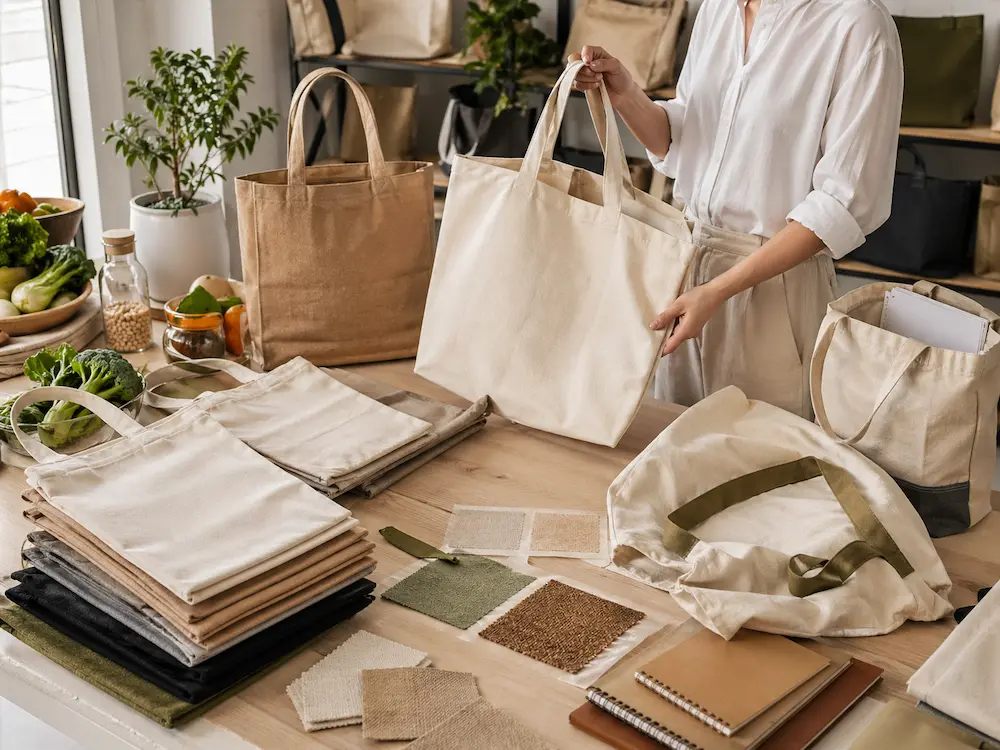
The phrase eco friendly tote bags is everywhere, but it is often used too loosely. Many products look environmentally responsible in marketing and perform poorly in real life. A bag that sounds sustainable but gets used once and forgotten is not creating much practical value. A bag that feels useful, durable, and worth carrying for months or years often creates a much stronger real-world result, even if the marketing language around it is more modest.
That is why buyers should be careful. The right eco-friendly tote bag is not simply the one with the most natural-looking fabric or the most fashionable environmental wording. It is the one that aligns material choice, product durability, customer behavior, and honest brand communication. If any of those break down, the sustainability story becomes weaker very quickly.
For brands, retailers, wholesalers, and importers, the practical question is not “Does this bag look eco-friendly?” It is “Will this bag deliver reusable value in the real world?”
What “Eco Friendly” Actually Means in Tote Bags
In tote bags, “eco friendly” usually refers to a combination of material origin, reusability, lower reliance on disposable packaging, and the product’s overall potential to stay in circulation longer. That can include cotton, canvas, recycled fibres, or other lower-impact material directions, but the label itself is not enough.
A reusable tote bag only becomes environmentally stronger when people keep using it. If the bag is weak, uncomfortable, badly sized, or unattractive enough that it stays in a drawer after one event, the product has not really fulfilled the promise implied by the label. So eco-friendly value is always partly material-based and partly behavior-based.
This is why a softer everyday-use product such as a cotton tote can sometimes create stronger long-term practical value than a more aggressively marketed “green” product that customers do not actually want to carry.
Reusability Is More Important Than Many Buyers Admit
This is the most important part of the conversation. A bag that gets reused often usually creates more meaningful sustainability value than one that only sounds good on a spec sheet. Reusability depends on product fit: the bag must feel useful, comfortable, appropriately sized, and durable enough to survive normal routines such as shopping, books, groceries, office carry, or daily errands.
If the bag does not fit into the user’s life easily, the environmental story becomes weak. That is why businesses should design or source eco-friendly totes as real products, not as symbolic packaging. Real daily use is what turns a reusable bag from a nice idea into a meaningful product choice.
This is also why stronger repeat-use products such as cotton canvas tote bags often matter so much in sustainability-led retail and promotional programs. The bag needs to survive long enough for its reusable logic to mean something.
Material Choice: Natural Does Not Automatically Mean Better
Material still matters, of course. Cotton and canvas are common in eco-friendly tote programs because they support a natural look, comfortable feel, and strong everyday-use positioning. But “natural” alone does not make a product stronger environmentally. If the bag is too heavy for the use case, too expensive to scale, or not reused enough to justify the material footprint, the commercial and environmental logic both weaken.
This is where buyers need to think more clearly. A lighter cotton bag may work well for everyday public branding and general reusable carry. A stronger canvas bag may be better for supermarket, bookstore, or heavier retail use. The better material is the one that matches the carrying reality and encourages actual reuse.
For example, products such as custom canvas bags with logo often perform strongly when the brand wants the bag to act like long-term visible merchandise rather than short-life promotional packaging.
| Eco-Friendly Factor | What Usually Strengthens It | What Usually Weakens It |
|---|---|---|
| Material | Suitable fabric for repeated daily use | Material chosen only for image, not function |
| Reusability | Comfort, practicality, and durability | Bag used once and forgotten |
| Brand claim | Clear and honest communication | Vague or exaggerated green language |
| Commercial fit | Bag matches customer routine | Bag feels awkward or unnecessary |
| Long-term value | Bag stays in circulation visibly | Short product life despite eco positioning |
Cotton vs Canvas in Eco-Friendly Tote Programs
Cotton usually works well when the brand wants a softer, more approachable, more everyday-feeling product. It is often strong in cafés, bookstores, museums, schools, wellness brands, and general retail promotions where the bag should feel easy to keep nearby and simple to use.
Canvas usually works better when the bag needs more structure, more perceived value, and stronger support for repeated shopping or heavier contents. This makes canvas more attractive for supermarket programs, grocery reuse, premium merchandise, and retail bags that should behave more like lasting products than promotional extras.
Neither material is automatically the better environmental choice. The better choice depends on whether the user is likely to keep carrying it. If the bag is too soft for the job, it may fail early. If it is too heavy or too expensive for the job, it may be unnecessary. Real use still decides the result.
Brand Claims Need to Be Honest
This is where many eco-friendly tote programs become weak. Brands often overstate what the bag is doing environmentally. Terms like “sustainable,” “green,” and “eco friendly” are easy to use and much harder to justify if the product strategy is vague. A tote bag should not be marketed as environmentally superior if the real evidence behind that claim is weak.
Honest communication is usually more effective than exaggerated messaging. If the bag is reusable, say so. If it uses cotton or canvas, say so. If it is designed to reduce single-use packaging in repeated retail or daily carry situations, explain that clearly. Strong brands do not need to oversell what the product is. They need to describe what it actually does.
This is one reason why more tailored product directions such as custom made tote bags can matter. When the product itself is better matched to the brand and the customer routine, the sustainability story becomes easier to communicate honestly.
Why Durability Is a Sustainability Issue
Durability is not just a quality issue. It is a sustainability issue. If the bag tears, sags badly, or looks worn too fast, the customer is less likely to keep using it. That shortens product life and weakens the environmental claim immediately. A bag that survives real use longer has a better chance of justifying its place in the market.
This is why stronger construction, sensible material weight, and reinforced handles are not only premium features. They are practical environmental features too when the goal is repeated use. A tote bag should be built to survive the routine it is being marketed for.
That is particularly important in larger rollout programs or visible reuse campaigns, where product weakness turns into brand weakness very quickly.
Eco-Friendly Does Not Mean One Size Fits All
Different business uses need different bag strategies. A bookstore tote, a grocery tote, a museum shop product, and a trade-show giveaway may all use eco-friendly positioning, but they should not all use the same bag logic. A light cotton event bag can make sense in one context. A stronger canvas shopping bag may be much smarter in another.
Businesses often damage both cost efficiency and sustainability value by trying to force one bag specification across all channels. A more practical approach is to match the bag to the use environment. That usually creates better reuse and stronger product honesty.
This is why some businesses compare totes with adjacent reusable formats such as canvas drawstring bags when portability or youth-oriented movement use matters more than a classic open-top tote structure.
What Buyers Should Ask Suppliers
Buyers should ask more than “Is this eco-friendly?” They should ask what the material actually is, how heavy it is, what the bag is built to carry, how the handles are reinforced, what the MOQ is, and whether the bag is meant for light distribution or real long-term use. If the supplier cannot explain those things clearly, the eco story may be weaker than the brochure suggests.
They should also ask how the bag fits the intended audience. A product that works well for daily grocery reuse is not the same as one designed for event kits or bookstore gifting. A reliable supplier should be able to connect material and construction to use-case logic, not only to sustainability language.
That kind of clarity matters much more than generic green claims.
| Buyer Question | Why It Matters |
|---|---|
| What material is this bag made from? | Clarifies whether the eco claim is specific or vague |
| What is the bag designed to carry? | Tests whether reuse expectations are realistic |
| How durable is the construction? | Reveals likely product life |
| What is the MOQ and cost logic? | Shows whether the program is commercially workable |
| Is this more suitable for events or daily use? | Helps match product to real customer behavior |
Bulk Buying and Eco-Friendly Positioning
In larger buying programs, the commercial side matters just as much as the environmental side. If the bag is too expensive, too overbuilt, or too difficult to repeat at scale, the program may not survive long enough to matter. Eco-friendly value is much easier to build when the product is also commercially stable and easy to reorder sensibly.
This is why larger volume programs often move toward practical product directions such as customized tote bags bulk once the brand has identified a bag model that customers actually use. Repeatability matters. A sustainability-led tote program is much stronger when it is not reinvented poorly with every order.
In other words, eco-friendly sourcing still needs business discipline.
How to Spot Weak Eco-Friendly Marketing
Weak eco-friendly marketing usually sounds broad and feels vague. It talks heavily about being green, natural, or sustainable without explaining the actual material, the use-case logic, or how the bag is meant to replace shorter-life alternatives. It may also rely too much on appearance. A bag can look earthy and still be a weak product.
Stronger eco-friendly positioning usually sounds simpler and more specific. It explains material, reuse purpose, and customer benefit clearly. It does not ask the buyer to believe more than the product can realistically support.
That is usually the safer route for long-term brand trust as well.
How to Choose the Right Eco-Friendly Tote Bag
The best way to choose is to start with the real routine. What will the customer carry? How often will they use the bag? Is the brand aiming for supermarket reuse, retail gifting, bookstore carry, or public brand visibility? Does the bag need to be soft and casual, or more structured and long-life? Once those questions are answered, the right material and product level usually become much clearer.
A lighter cotton tote may be right for one program. A stronger canvas tote may be better for another. The strongest eco-friendly choice is usually not ideological. It is functional, durable, and matched to human behavior.
Conclusion
Eco friendly tote bags are only as strong as the product logic behind them. Material matters, but reusability matters more than many buyers admit. A bag that people keep carrying because it feels useful, durable, and appropriate usually creates more real environmental value than one that only looks sustainable in marketing.
The best eco-friendly tote bag is not the one making the biggest claim. It is the one doing the job honestly for the longest useful life.
How Buyers Should Think About Eco Friendly Tote Bags
What eco-friendly really means here: Eco-friendly tote bags are not only a material choice. They are a product-use decision. The bag needs to be made from a sensible material, yes, but it also needs to be reused often enough for that choice to matter. A strong eco-friendly tote is usually the one that people keep carrying because it fits everyday life naturally.
Why many buyers get this wrong: The most common mistake is confusing green marketing language with real product value. A bag can look natural, sound sustainable, and still create weak results if it is uncomfortable, short-lived, or not suited to the customer’s routine. Environmental claims become much stronger when the product itself is genuinely useful and durable enough to stay visible in repeated daily use.
How buyers should compare eco-friendly options properly: The strongest comparison method is to evaluate material, construction, carrying use, and customer behavior together. A bookstore tote, a supermarket reusable, a gift tote, and an event giveaway may all sit under eco-friendly positioning, but they should not all use the same product logic. The better bag is the one that fits the real life it is entering.
Options businesses usually weigh: Most buyers compare softer cotton everyday-use bags against stronger canvas reusables, lighter broad-distribution models against more durable retail products, and sustainability messaging against practical product honesty. The better answer depends on whether the bag needs to support light public reuse or heavier long-term carry and shopping use.
Considerations before bulk approval: Before placing the order, businesses should test the bag’s feel, strength, handle comfort, and likely repeat-use value. They should also check whether the sustainability message still sounds honest once the actual product is in hand. That is often the fastest way to separate genuinely useful eco-friendly tote bags from products that rely too heavily on vague environmental language.
The broader takeaway: The best eco-friendly tote bag is the one that combines realistic material choice, repeatable usefulness, and honest market positioning. That is also where Youngpack naturally fits as a B2B manufacturing and export partner for brands building tote bag programs that need both stronger product logic and more credible sustainable value.
FAQ
1. What makes a tote bag truly eco friendly?
A tote bag becomes more truly eco friendly when it combines sensible material choice with real long-term reuse. The material matters, but the most important factor is whether the bag stays in everyday use long enough to replace shorter-life alternatives. A bag that looks natural but is used once and forgotten does not create strong practical sustainability value. A bag that customers keep carrying for months or years usually creates a much stronger real-world result.
2. Are cotton tote bags always better than other tote bag materials?
Not always. Cotton tote bags are often strong for everyday use because they feel soft, natural, and easy to carry, but they are not automatically the best choice in every situation. If the bag needs to carry heavier groceries, books, or repeated retail loads, a stronger canvas construction may be more sensible. The better eco-friendly material is the one that fits the real customer routine and stays in use longer.
3. Why does durability matter in eco-friendly tote bags?
Durability matters because a reusable bag only creates real value if people continue using it. If the handles fail, the seams weaken quickly, or the bag looks worn too soon, the customer is much less likely to keep it in circulation. That shortens product life and weakens the sustainability story immediately. A stronger bag often creates a better environmental result because it survives longer and remains useful in everyday life.
4. How can buyers avoid weak eco-friendly marketing claims?
Buyers should ask specific questions instead of accepting general terms such as green, sustainable, or eco friendly at face value. They should ask what material the bag uses, what the product is designed to carry, how durable the construction is, and whether the bag is meant for light events or repeated daily use. Strong eco-friendly products are usually described clearly and honestly. Weak ones often depend on vague language and natural-looking presentation without enough practical detail.
5. What should businesses check before ordering eco-friendly tote bags in bulk?
Businesses should check the material type, fabric feel, durability level, handle reinforcement, intended use case, MOQ, and whether the bag fits the actual customer routine. They should also test whether the product feels useful enough that people will want to carry it repeatedly. The strongest eco-friendly bag program is usually the one that balances sustainability claims with practical business logic and real long-term reusable value.
References
- Preferred Fiber and Materials Market Report — Textile Exchange — Textile Exchange.
- Textiles and the Environment — European Environment Agency — EEA.
- Green Guides for the Use of Environmental Marketing Claims — Federal Trade Commission — FTC.
- Sustainable Packaging Guidelines — Australian Packaging Covenant Organisation — APCO.
- Fashion on Climate — Global Fashion Agenda and McKinsey & Company.
- Retail Packaging and Reusable Bag Sourcing Best Practices — professional sourcing reference.
- Responsible Sourcing and Product Communication in Textile Supply Chains — industry trade reference.
- Guide to Reusable Bags and Long-Term Use Value — industry best-practice sourcing reference.
Intellectual Property Notice:
All original written content published here remains the intellectual property of Xiamen Youngpack Imp.and Exp.Co.,Ltd. Any unauthorized reuse is strictly prohibited.