Custom tote bags with logo are reusable branding tools widely used in retail and promotions. Choosing the right material, GSM, and printing method—such as screen printing or digital printing—is essential for achieving cost efficiency and long-term brand visibility.
Introduction
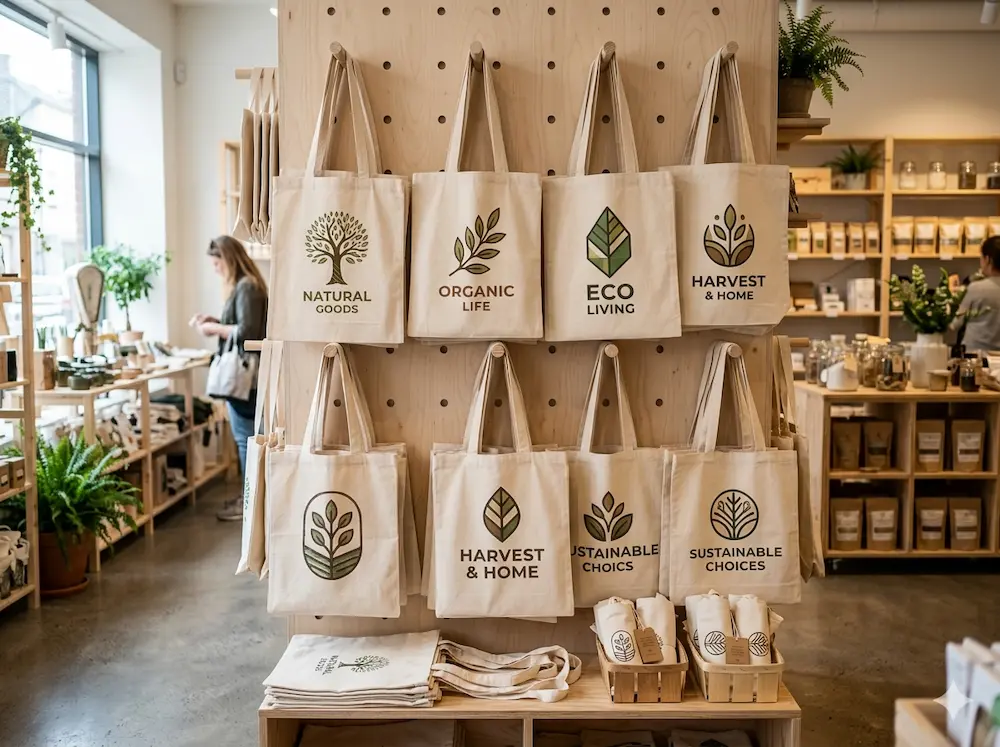
In today’s competitive retail and branding landscape, custom tote bags with logo haveevolved from simple packaging into powerful marketing tools. Businesses across supermarkets, fashion retail, cafés, and corporate sectors are increasingly shifting toward reusable bags not only to meet sustainability expectations but also to strengthen brand visibility.
Unlike disposable packaging, tote bags act as long-term advertising assets, repeatedly exposing your brand to new audiences. However, choosing the right tote bag is not as simple as selecting a design and placing an order. Buyers must carefully evaluate material quality, printing methods, cost structure, and supplier reliability—especially when ordering in bulk.This guide provides a complete, practical breakdown of how to select the right custom cotton tote bags, optimize printing quality, and make informed wholesale purchasing decisions.
What Are Custom Tote Bags with Logo and Why Businesses Use Them
Definition and Core Features
Custom tote bags are reusable fabric bags—typically made from cotton, canvas, or recycled fibers—designed to carry goods while displaying a brand’s logo or artwork. Unlike traditional packaging, these bags are intended for repeated use.
Key features include:
- Durable fabric construction
- Reinforced handles for load-bearing
- Large printable surface area
- Customizable size, color, and design
Branding vs Functional Packaging
The primary difference between tote bags and traditional packaging lies in their dual function:
| Function Type | Traditional Packaging | Tote Bags |
|---|---|---|
| Usage Duration | Single-use | Multi-use |
| Branding Exposure | Short-term | Long-term |
| Customer Perception | Disposable | Sustainable & premium |
Key Industries Using Tote Bags
- Retail chains and supermarkets
- Fashion and apparel brands
- Trade shows and promotional campaigns
- Corporate gifting programs
- Eco-conscious product brands
Materials, Structure, and Technical Specifications
Cotton vs Canvas vs Recycled Cotton
Although often used interchangeably, cotton and canvas differ in density and durability:
- Cotton: softer, lightweight, cost-effective
- Canvas: thicker weave, higher durability
- Recycled cotton: eco-focused, slightly lower strength
GSM and Thickness Explained
GSM (grams per square meter) is the most critical parameter when evaluating tote bag quality.
| Material Type | GSM Range | Thickness | Load Capacity | Typical Use |
|---|---|---|---|---|
| Lightweight cotton | 120–140 gsm | Thin | 3–5 kg | Promotions |
| Medium cotton | 150–200 gsm | Medium | 5–8 kg | Retail |
| Heavy canvas | 220–300 gsm | Thick | 8–12 kg | Supermarkets |
Handle Types and Stitching Strength
Handle design directly impacts durability:
- Self-fabric handles (same material as bag)
- Cotton webbing handles (stronger)
- Reinforced cross-stitching (recommended for >8kg loads)
Printing Compatibility by Material
- Smooth cotton: ideal for digital printing
- Canvas: best for screen printing
- Recycled fibers: may affect color sharpness
Tote Bag Printing Methods Explained
Screen Printing
The most widely used method for printed tote bags wholesale.
Pros:
- Cost-effective for bulk
- Strong color durability
- Ideal for simple logos
Cons:
- Not suitable for complex gradients
Digital Printing
Best for high-detail artwork.
Pros:
- Full-color capability
- No setup cost
Cons:
- Higher cost per unit
- Less durable than screen printing
Heat Transfer Printing
Used for complex or photo-style designs.
Pros:
- High visual quality
- Suitable for small batches
Cons:
- May peel over time
- Higher production cost
Printing Method Comparison
| Method | MOQ Suitability | Cost Level | Durability | Best Use |
|---|---|---|---|---|
| Screen printing | High volume | Low | High | Logos |
| Digital printing | Low volume | Medium | Medium | Artwork |
| Heat transfer | Small batch | High | Medium | Complex design |
Comparison Analysis for Buyers
Cotton vs Canvas Tote Bags
| Factor | Cotton | Canvas |
|---|---|---|
| Cost | Lower | Higher |
| Durability | Medium | High |
| Branding Quality | Good | Excellent |
| Use Case | Promotions | Retail |
Tote Bags vs Plastic Bags
| Factor | Tote Bags | Plastic Bags |
|---|---|---|
| Environmental Impact | Low (reusable) | High |
| Branding Value | High | Low |
| Cost per use | Lower (long-term) | Higher |
Custom vs Stock Tote Bags
| Factor | Custom Bags | Stock Bags |
|---|---|---|
| Branding | Strong | None |
| MOQ | Higher | Low |
| Cost | Higher upfront | Lower upfront |
Real Business Use Cases Across Markets
Retail and Supermarkets
Large retailers increasingly replace plastic bags with reusable custom tote bags with logo, enhancing brand perception while complying with sustainability policies.
Promotional Events and Trade Shows
Tote bags serve as mobile advertising tools, often filled with promotional materials.
Eco-Brand Marketing
Brands focused on sustainability use tote bags to reinforce eco positioning.
Corporate Gifting
High-quality canvas bags are used as premium merchandise.
Cost Structure, MOQ, and Bulk Ordering Strategy
What Drives Tote Bag Cost
- Material type and GSM
- Printing method
- Number of colors
- Order quantity
- Bag size and structure
MOQ Logic Explained
Factories typically require:
- 500–1000 pcs for standard orders
- Lower MOQ for digital printing
Bulk Pricing Strategy
| Order Volume | Cost Efficiency | Recommendation |
|---|---|---|
| 500 pcs | Low | Testing |
| 1000–3000 pcs | Medium | Standard |
| 5000+ pcs | High | Best value |
Regulations, Sustainability, and Compliance
Across Europe, North America, and Australia, regulations increasingly favor reusable packaging solutions.
Key considerations:
- Reusability standards
- Fiber sourcing (e.g., FSC-related practices)
- Environmental claims compliance
- Import labeling requirements
Businesses must ensure claims such as “eco-friendly” are supported by material specifications.
Industry Trends in Custom Tote Bags
Key trends shaping the market:
- Rapid growth in reusable packaging adoption
- Increased demand for eco friendly tote bags wholesale
- Rise of short-run customization
- Greater emphasis on brand storytelling
How to Choose a Reliable Tote Bag Manufacturer
Selecting the right supplier is critical.
Key evaluation criteria:
- Material consistency
- Printing expertise
- Production capacity
- Export experience
- Lead time reliability
A professional supplier such as Youngpack—backed by the manufacturing capabilities of Xiamen Youngpack Imp. and Exp. Co., Ltd.—can support businesses with scalable production, customization flexibility, and international shipping experience.
Conclusion
Choosing the right custom tote bags with logo requires balancing branding goals, material performance, printing quality, and cost efficiency.
For most businesses:
- Medium GSM cotton works for promotions
- Heavy canvas suits retail and supermarkets
- Screen printing remains the most cost-effective bulk solution
By aligning material selection with branding strategy and working with a reliable manufacturer, businesses can turn tote bags into long-term marketing assets rather than simple packaging.
How to Evaluate and Choose the Right Custom Tote Bags Strategy
What defines an effective tote bag solution?
A well-designed tote bag combines material strength, printing clarity, and branding consistency. It must align with both functional usage and marketing objectives.
Why do businesses shift toward reusable tote bags?
Beyond environmental benefits, reusable bags create repeated brand exposure, making them significantly more valuable than single-use packaging.
How should buyers approach material and printing decisions?
Material selection should match load requirements and brand positioning, while printing methods must balance cost, detail, and durability.
Options available for customization
Businesses can choose from cotton, canvas, or recycled materials, combined with screen, digital, or transfer printing. Each combination offers different cost and performance outcomes.
Key considerations for bulk purchasing
Buyers must evaluate MOQ, supplier reliability, production lead time, and long-term supply consistency. These factors directly impact operational efficiency and brand execution.
For companies seeking scalable and reliable packaging solutions, experienced manufacturers such as Youngpack provide the expertise needed to support custom tote bag production and global supply requirements.
7. FAQ
1. What is the best material for custom tote bags with logo?
Cotton and canvas are the most commonly used materials. Cotton is cost-effective and suitable for promotional use, while canvas offers higher durability and a more premium feel for retail applications.
2. What GSM is ideal for tote bags?
A range of 150–200 gsm is ideal for most use cases. Lighter bags are suitable for promotions, while heavier bags above 220 gsm are better for retail and heavy-duty use.
3. Which printing method is best for tote bags?
Screen printing is the best option for bulk orders due to its cost efficiency and durability. Digital printing is preferred for detailed artwork and smaller quantities.
4. What is the typical MOQ for custom tote bags?
Most manufacturers require a minimum order quantity of 500 to 1000 pieces, depending on the printing method and customization level.
5. Are cotton tote bags environmentally friendly?
Yes, especially when reused multiple times. Their environmental benefit depends on durability, reuse frequency, and material sourcing.
Original Content Notice:
This article was created by Xiamen Youngpack Imp.and Exp.Co.,Ltd. for informational purposes. Please do not copy, republish, or distribute it without prior written permission.