Introduction
Custom Printed Tote Bags look simple from the outside, but the buying decisions behind them are not simple at all. The same basic tote bag can be cheap, forgettable, and short-lived, or it can become a durable brand asset that stays in public use for months or even years. The difference usually comes down to three things: the right material, the right printing method, and the right cost structure.
That is why buyers should not treat printed tote bags as a one-line quoting exercise. A supplier that only asks for size, quantity, and logo file is usually not asking enough. Print method affects artwork quality, durability, lead time, and setup cost. Fabric affects both print behavior and the perceived value of the finished bag. Order volume affects whether the project should be handled as a small campaign, a premium retail bag, or a larger-scale promotional program. These factors directly shape the final performance of Custom Printed Tote Bags in real market use.
For retailers, distributors, importers, and brand owners, the real question is not only how to print a tote bag. It is how to choose the best printing route for the bag’s actual purpose. A giveaway bag for an exhibition needs a different production logic from a premium lifestyle tote sold in a store. A soft natural cotton bag creates a different impression from a structured canvas bag. A large bulk order has a different cost model from a limited promotional run. Strong sourcing decisions help turn Custom Printed Tote Bags into practical, visible, and long-lasting brand tools.
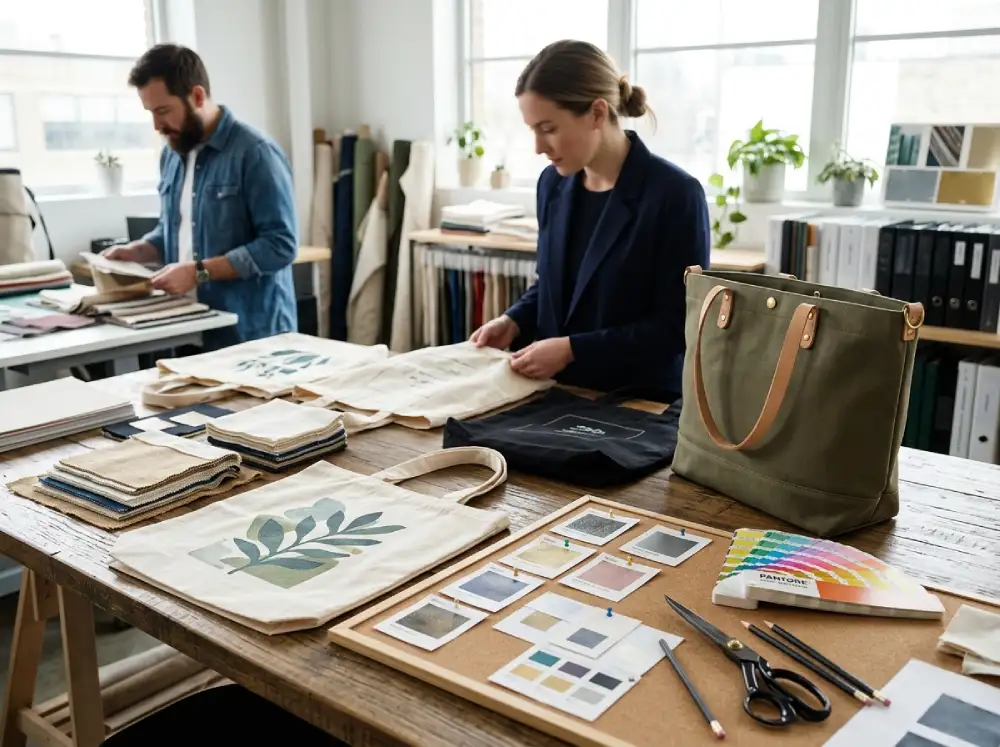
What Custom Printed Tote Bags Really Mean in Commercial Buying
Custom printed tote bags are reusable bags that carry brand graphics, logos, campaign artwork, or product messaging through methods such as screen printing, heat transfer, digital printing, or embroidery. In commercial buying, they are used for retail packaging, exhibitions, conferences, bookstore carry bags, supermarkets, branded merchandise, seasonal promotions, loyalty gifts, and corporate campaigns.
The word “custom” matters because it changes the entire sourcing model. Stock bags are chosen mainly by size and color. Custom bags are chosen by artwork behavior, bag structure, visual finish, intended use, and repeat-order consistency. Once the tote bag becomes part of a brand’s outward identity, the printing decision is no longer just decorative. It becomes part of the product itself.
This is especially true when the bag is expected to do more than carry items once. Many companies now use branded tote bags as long-life visual media. A well-made bag with the right print style can create quiet but repeated brand exposure in supermarkets, offices, campuses, cafés, bookstores, and public transport. That long-term exposure is why some businesses compare not only tote printing, but also adjacent options such as promotional canvas tote bags when the project sits between marketing distribution and retail-style brand visibility.
How Fabric Choice Changes Printing Results
Before comparing printing methods, buyers need to understand that fabric choice changes everything. Printing is never independent from the bag material. Cotton, canvas, recycled blends, and specialty textile constructions all respond differently to ink, heat, texture, and detail.
Lighter cotton fabrics usually suit simpler one-color or two-color print programs where the goal is broad distribution and cost efficiency. Heavier canvas tends to hold shape better, gives a more premium feel, and often supports cleaner brand presentation. Recycled blends may be attractive for sustainability-led projects, but they can introduce variation in texture and ink appearance depending on the fiber mix. Natural unbleached fabrics often create a softer, more organic print result than bright white bases.
That difference matters because print quality is judged emotionally as well as technically. A crisp black logo on white cotton sends one message. A muted earthy print on natural canvas sends another. This is why many lifestyle and premium brands increasingly use custom printed canvas bags when they want the finished product to feel more natural, more durable, and more aligned with understated brand presentation.
| Fabric Type | Typical Visual Effect | Best Print Use | Main Strength | Main Limitation |
|---|---|---|---|---|
| Light cotton | Soft, casual, simple | Basic logo prints, event bags | Lower material cost | Less structure and lower perceived value |
| Standard cotton | Balanced everyday look | Promotional and retail-use printing | Good price-to-use balance | Less premium than heavy canvas |
| Canvas | Durable, structured, premium | Retail-ready and brand-led printing | Better shape and stronger carry feel | Higher material and freight cost |
| Recycled cotton blend | Textured, sustainability-led | Responsible branding programs | Supports sustainability narrative | Possible variation in print appearance |
Main Printing Methods for Tote Bags
The best printing method depends on artwork style, quantity, fabric, brand position, and cost tolerance. The most common methods for tote bags are screen printing, heat transfer, digital printing, and embroidery. Each serves a different commercial purpose.
Screen Printing
Screen printing is still the most common method for tote bags because it is efficient, durable, and commercially practical for many wholesale orders. It works especially well for simple logos, bold graphics, and designs with limited color counts. It is often the strongest choice for standard promotional runs, retail distribution, bookstore bags, and mid- to high-volume projects where consistency matters.
The main weakness of screen printing is that it becomes less economical when artwork is highly detailed, highly photographic, or full-color in a complex way. Each color usually requires setup, so very detailed multi-color work can become slower and more expensive.
Heat Transfer Printing
Heat transfer printing is useful when the artwork contains more detail than a basic screen print can handle economically, or when order size is smaller and setup flexibility matters. It can be a practical choice for smaller custom jobs, test runs, or designs with more graphic complexity. However, the look and feel can vary depending on the film, process, and fabric. Buyers should test wash and wear expectations carefully if the bag is expected to stay in long-term use.
Digital Printing
Digital printing is often selected when artwork includes gradients, photographic elements, or more complex color variation. It is useful for short runs, campaign sampling, design testing, and certain brand-led applications. The commercial value depends heavily on the supplier’s actual print capability and the base fabric. On some natural materials, digital output may look softer or less uniform than expected.
Embroidery
Embroidery is not the most common method for large-scale printed tote bag programs, but it can work well for premium retail, merchandise, or limited-edition brand projects. It creates a stronger tactile effect and a more upscale feel, though it changes both cost and production speed. It is generally better for simpler marks or logos than for large graphic coverage.
Printing Method Comparison for Buyers
Most sourcing mistakes happen when buyers choose a print method based only on appearance, without thinking about order scale, fabric behavior, and campaign purpose. A nice-looking sample can still be the wrong commercial decision.
| Method | Best For | Cost Logic | Visual Result | Commercial Note |
|---|---|---|---|---|
| Screen printing | Simple logos, bold graphics, larger runs | Strong value at medium and high volume | Clean, solid, practical | Best all-round choice for many wholesale orders |
| Heat transfer | Small runs, more detailed art | Flexible at lower quantities | Can be sharp and graphic-led | Test durability if long-life use matters |
| Digital printing | Photographic or complex color art | Useful for short runs and design-rich projects | Detailed and visually rich | Result depends heavily on fabric and equipment |
| Embroidery | Premium retail and merchandise | Higher cost per piece | Textured, upscale | Best for simpler logos rather than large graphics |
For many brands, especially those planning recurring visibility programs, the most practical route is still a well-controlled screen print on a suitable cotton or canvas base. That is why buyers comparing retail bags and event bags often cross-check with related options such as printed cotton tote bags to see whether a softer cotton format is enough or whether the project needs a heavier canvas structure for stronger long-term use.
How Artwork Style Affects Cost and Production
Artwork is one of the biggest hidden cost drivers in custom tote bag projects. Buyers often focus on bag size and quantity, but the artwork itself may be the main reason two quotes look very different.
A single-color logo is usually more efficient to print than a multi-color illustration. A bold centered print is usually easier to control than an all-over or edge-close design. Fine lines, gradients, halftones, and large-area solid coverage all affect setup, speed, rejection risk, and print method choice. Even the position of the design can matter. Printing too close to seams, gussets, or handle attachment areas can increase production difficulty.
That is why buyers should not ask only, “Can you print this?” They should ask, “What is the most commercially sensible way to print this design on this bag at this volume?” Strong suppliers answer the second question. Weak suppliers only say yes and send a quote.
Real Cost Breakdown in Custom Printed Tote Bag Orders
The final price of a printed tote bag is usually shaped by six core cost layers: fabric, bag size and structure, printing method, artwork complexity, order quantity, and packing or freight efficiency.
Fabric cost is the starting point. Heavier canvas costs more than lighter cotton, and recycled or specialty materials may also change price depending on sourcing. Bag dimensions matter because larger bags consume more fabric and carton space. Construction details such as gussets, inner pockets, zippers, labels, or longer handles also increase labor time. Printing method changes both setup and production cost. Artwork complexity affects how easy or difficult the print is to execute consistently. Order volume affects how fixed setup costs are spread across the run.
For large promotional rollouts, buyers often look at custom canvas bags bulk because high-volume marketing projects follow a different cost logic from short-run custom orders. Once the specification is stable, larger volume usually improves unit economics. But that only works if the bag, print, and artwork are already defined clearly enough to avoid quality drift across the run.
| Cost Driver | How It Changes Price | Buyer Tip |
|---|---|---|
| Fabric type and weight | Heavier or specialty fabrics increase cost | Match material to real use, not assumption |
| Bag size | Larger bags use more fabric and carton space | Avoid oversized bags unless truly needed |
| Construction features | Gussets, pockets, zips, labels add labor | Add details only when they improve value |
| Printing method | Different setup and run costs by method | Choose by artwork and volume, not trend |
| Artwork complexity | More colors and detail increase setup and QC time | Simpler art often improves both cost and clarity |
| Order quantity | Larger runs usually reduce unit cost | Plan volume around real forecast and storage |
MOQ, Sampling, and Why Small Orders Cost More
MOQ exists because tote bag production is not only about sewing fabric together. There are setup costs in artwork preparation, screens or print preparation, fabric cutting, sewing workflow, quality checks, and carton planning. That is why a small custom run can look disproportionately expensive compared with a larger order.
Sampling is also part of that logic. Buyers should use the sample stage to verify more than just appearance. The sample should confirm print sharpness, handle comfort, fabric feel, stitching, bag proportions, and whether the artwork behaves properly on the chosen material. If the bag is meant for retail resale or repeated public use, the sample should be judged like a product, not just like a giveaway.
Small orders can still make sense for testing or campaign pilots. But buyers should understand that the per-unit price of a small run rarely reflects the long-term cost structure of a stable repeat program.
When Printing Should Be Treated as Marketing, Not Just Decoration
Some tote bag programs are mainly functional. Others are clearly marketing-led. In promotional programs, the printing itself becomes part of the campaign strategy because the bag is meant to carry a message long after the event or purchase moment has ended.
This is where the design and the print method must work together. A bag that is technically printed but visually weak does not do much for brand recall. A bag that is durable, attractive, and clearly branded can continue functioning as moving media in public spaces. That is why some buyers compare not only standard tote bag printing, but also adjacent branded formats such as custom canvas drawstring bags when the campaign includes multiple reusable textile products and the brand wants more than one carry format in the same visual system.
How to Choose the Right Supplier for Printed Tote Bags
The best supplier is not the one that says yes to everything. It is the one that can explain why a certain printing route, fabric, and order structure makes sense for your project. Buyers should look for suppliers that can discuss fabric behavior, print method limits, artwork adaptation, MOQ logic, and repeat-order control in practical terms.
A good supplier should be able to do five things clearly. First, explain which print method suits the artwork and fabric. Second, recommend the right fabric weight for the actual use case. Third, identify unnecessary cost drivers before production begins. Fourth, manage sample approval in a structured way. Fifth, maintain the same standard across repeat orders.
Communication quality matters more than many buyers think. A supplier that only sends a price table without production reasoning is usually not a strong long-term partner. A supplier that can connect material, print, packing, and reorder logic into one recommendation is far more useful, especially for larger branded programs.
That is where a manufacturer such as Youngpack should be judged: not only by quotation speed, but by whether the team can connect product construction, printing execution, and export-ready supply logic into one stable custom tote bag program.
Common Buyer Mistakes to Avoid
The first common mistake is choosing print method by trend instead of by artwork and volume. The second is approving a print sample without checking how the fabric affects the result. The third is underestimating artwork complexity. The fourth is focusing only on unit price and ignoring packing, freight, and reject risk. The fifth is assuming every tote bag project should use the same construction and the same print logic.
Another common mistake is trying to force a premium visual concept onto a low-cost construction. If the bag is meant to carry a premium message, the fabric, stitching, and print all need to support that message. Otherwise the visual idea and the physical product will work against each other.
Conclusion
The real value of custom printed tote bags does not come from printing alone. It comes from matching the right print method to the right fabric, artwork, order volume, and brand purpose. That is what separates a disposable promo bag from a reusable product that keeps carrying the brand in daily life.
For buyers, the best decision is rarely the cheapest print method or the most complex artwork. It is the combination that delivers clear branding, stable production, sensible cost, and real long-term use. Once those four points are aligned, tote bag printing becomes much easier to source and much more valuable commercially.
For serious B2B buyers, the goal should not be to simply decorate a bag. It should be to build a repeatable branded bag program that can be produced consistently, shipped efficiently, and used with confidence. That is the standard a supplier like Youngpack should be expected to meet.
How Buyers Should Think About Tote Bag Printing Decisions
What custom printing really changes: Printing turns a basic tote bag into a branded product, but only when the print method, fabric, and artwork are aligned properly. A good printed bag should not only look attractive in a sample. It should also perform well in real distribution, retail use, and repeat orders.
Why printing method matters commercially: The print choice affects more than visual style. It changes setup cost, production speed, artwork limitations, and how consistently the supplier can reproduce the same result at scale. Buyers who treat printing as a technical and commercial decision usually avoid more problems than those who treat it as decoration.
How to compare options properly: The strongest comparison method is to evaluate artwork style, bag material, quantity, and intended use together. Screen printing, transfer, digital methods, and embroidery each solve different problems. The right answer depends on whether the bag is meant for promotions, retail merchandise, premium presentation, or high-volume marketing distribution.
Options buyers typically compare: Most brands weigh lighter cotton versus structured canvas, simple logo printing versus more detailed graphics, and short-run flexibility versus bulk production efficiency. They may also compare adjacent reusable textile formats when building a broader campaign or retail packaging system.
Considerations before approving production: Before placing the order, buyers should verify sample quality, artwork placement, stitching, fabric feel, print durability, MOQ logic, and freight efficiency. They should also decide whether the project is mainly functional, mainly promotional, or intended to behave like a premium retail product, because each direction changes what the right specification looks like.
The broader commercial takeaway: The best printed tote bag program is not the one with the most complicated artwork or the cheapest unit price. It is the one that delivers the right visual result, on the right bag, at the right scale, with repeatable production logic behind it. That is also where Youngpack fits naturally as a B2B manufacturing and export partner focused on practical customization, quality stability, and brand-ready textile bag supply.
FAQ
1. What is the best printing method for custom printed tote bags?
The best printing method depends on the artwork, fabric, order size, and commercial purpose. Screen printing is often the most practical option for simple logos and medium- to high-volume orders because it offers a good balance of cost, consistency, and durability. Heat transfer and digital printing can work better for smaller runs or more detailed graphics, while embroidery is usually better for premium merchandise-style bags. The best choice is the one that matches the design and use case rather than the one that simply looks most advanced.
2. Why do custom printed tote bag prices vary so much between suppliers?
Prices vary because the tote bag itself may not be the only cost driver. Fabric type, bag size, gusset depth, handle style, print method, color count, artwork complexity, finishing details, MOQ, and packing efficiency all affect the final quote. Some suppliers also quote based on lower material standards or looser production tolerances, which can make a price look attractive at first but create quality problems later. Buyers should compare specifications, not just totals.
3. Are canvas tote bags better for printing than cotton tote bags?
Not always, but canvas tote bags are often better when the project needs a more structured, durable, and premium-looking result. Cotton tote bags can work very well for lighter promotional and everyday-use programs, especially when the artwork is simple and the bag is meant for broad distribution. Canvas usually performs better when the goal is stronger shape retention, longer use life, and a higher perceived value. The better option depends on the project’s branding and performance needs.
4. How does order quantity affect custom tote bag printing cost?
Order quantity affects cost because setup expenses such as artwork preparation, print setup, cutting, sewing workflow, and quality checks are spread across the full run. Small orders usually carry higher unit prices because those fixed costs are divided across fewer bags. Larger orders usually improve unit economics once the specification is stable and repeatable. That is why brands often start with samples or pilot volumes before moving into larger production runs.
5. What should buyers check before approving a printed tote bag sample?
Buyers should check the fabric feel, bag size, stitching quality, handle comfort, print sharpness, artwork placement, color behavior, and whether the printed result matches the intended commercial use. They should also check how the design looks on the actual material, because a print can behave very differently on natural cotton, canvas, or recycled blends. A sample should be judged as a real product test, not just as a visual preview.
References
- Green Guides for the Use of Environmental Marketing Claims — Federal Trade Commission — FTC.
- Preferred Fiber and Materials Market Report — Textile Exchange — Textile Exchange.
- Textiles and the Environment — European Environment Agency — EEA.
- Sustainable Packaging Guidelines — Australian Packaging Covenant Organisation — APCO.
- Fashion on Climate — Global Fashion Agenda and McKinsey & Company.
- Responsible Sourcing and Product Communication in Textile Supply Chains — industry trade reference.
- Retail Packaging and Reusable Bag Sourcing Best Practices — professional sourcing and merchandising reference.
- Guide to Reusable Bags and Long-Term Use Value — industry best-practice sourcing reference.
Source Credit Requirement:
If you would like to quote part of this article, please clearly credit Xiamen Youngpack Imp.and Exp.Co.,Ltd. as the original source. Full-text reproduction is not permitted.