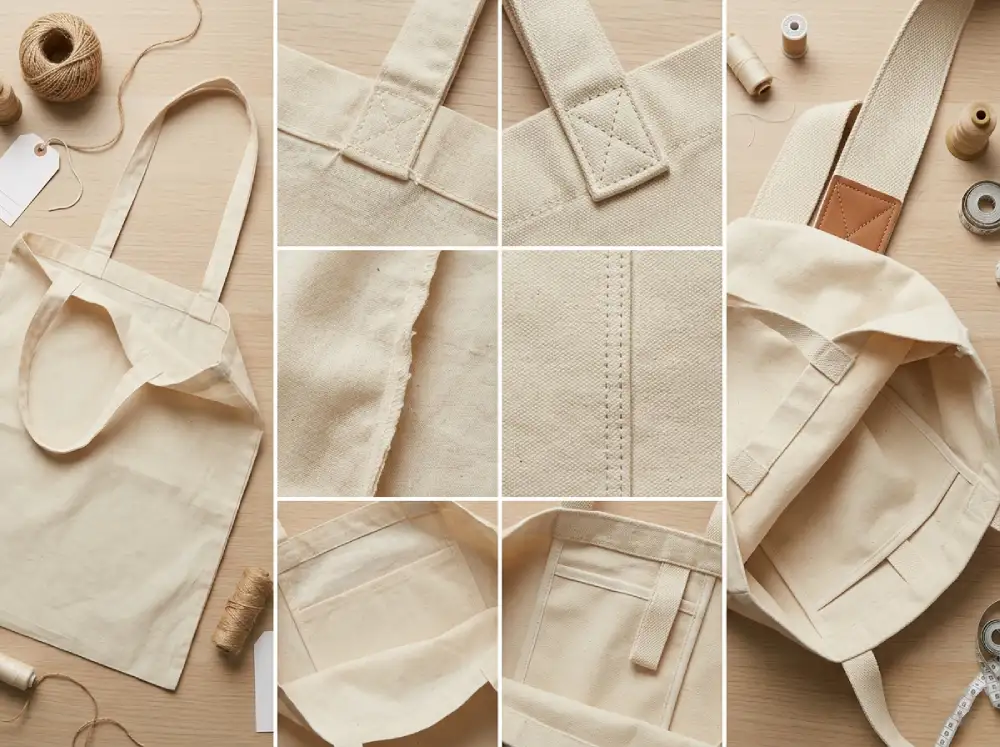
The debate around cheap vs premium tote bags usually starts with price and should not end there. In real sourcing, the cheaper bag and the premium bag are often solving different business problems. One is usually designed to reduce immediate cost and support broad distribution. The other is usually designed to improve durability, perceived value, and long-term brand carry. The mistake is assuming they are interchangeable just because both are technically tote bags.
This matters because buyers often compare quotes before they compare purpose. A low-cost tote bag may be exactly the right decision for a short campaign, a mass event, or a simple retail handout. A premium tote bag may be the better decision when the bag is meant to act like branded merchandise, a customer gift, or a reusable product that stays in public use. Without defining the bag’s job clearly, “cheap” and “premium” become vague labels instead of useful sourcing categories.
The better question is not which one is better in general. It is what you really get at each price level, and whether that difference actually matters for the bag’s commercial role.
What “Cheap” and “Premium” Usually Mean in Tote Bags
Cheap tote bags usually mean lighter materials, simpler construction, less finishing detail, and lower per-unit cost. That does not automatically mean bad quality. It usually means the product has been designed for a more limited use case. A cheap tote can still work very well if the bag only needs to carry brochures, event items, lightweight merchandise, or campaign giveaways for a shorter product life.
Premium tote bags usually mean stronger fabric, better stitching, more reliable handles, cleaner finishing, and often a more controlled print result. Again, that does not automatically mean luxury. It usually means the bag has been designed to stay in use longer, carry heavier items more comfortably, or represent the brand more visibly in public over time.
In many cases, the difference is not about whether one bag is “good” and the other is “bad.” It is about whether the product standard matches the commercial goal. A cheap tote used in the wrong context can damage perception. A premium tote used where it is unnecessary can waste budget.
Material: The First Place the Difference Becomes Obvious
Material is often the clearest difference between lower-cost and premium tote bags. Cheap bags are more likely to use lighter cotton, thinner fabric, or simpler structures with less body. Premium bags often use stronger cotton, thicker canvas, or better-finished textile constructions that feel more substantial in hand.
The bag does not need to be extremely heavy to feel premium, but it usually needs enough structure that the customer notices the difference immediately. This is why a cheaper promotional cotton tote and a stronger canvas merchandise bag may both look acceptable in photos, yet feel completely different in real use.
For brands that want a more organic and elevated visual result, products like custom printed canvas bags often sit closer to the premium side because the bag itself is expected to behave like a visible product, not just a temporary carrier.
| Product Area | Cheap Tote Bags | Premium Tote Bags |
|---|---|---|
| Fabric feel | Lighter, softer, thinner | Heavier, more structured, more substantial |
| Bag body | More collapsible and casual | Better shape retention |
| Handle feel | Simpler straps, less reinforcement | Stronger handles, more comfort under load |
| Visual perception | More giveaway-like | More merchandise-like |
| Reuse potential | Depends heavily on use case | Usually stronger over time |
Construction: Where Cheap Bags Often Start to Show Limits
Construction is usually where the real gap between cheap and premium becomes visible after the first few uses. A cheap tote bag may still look fine when new, but under repeated carry it can show weaker handle attachment, lower seam consistency, thinner top hems, or more obvious shape distortion. This is especially true if the bag is asked to carry more than it was designed for.
Premium tote bags usually include stronger stitching, more reliable seam finishing, and better reinforcement at high-stress points such as handle joins. That does not guarantee perfection, but it does reduce the chance that the bag will fail quickly or feel unreliable once used with books, groceries, retail items, or daily essentials.
This is one reason buyers planning stronger visibility-focused products often move toward options such as promotional canvas tote bags. The better construction supports the branding goal because the product is more likely to survive long enough to keep carrying the message.
Printing: Why Cheap and Premium Bags Don’t Carry Artwork the Same Way
Printing quality is influenced by both print method and base material. Cheap bags often use simpler construction and lower material weight, which can still work well for basic logos, simple one-color prints, and broad campaign use. The problem begins when buyers try to push complicated artwork, fine detail, or a premium visual outcome onto a bag that was never meant to support that level of finish.
Premium bags usually create a better platform for print because the fabric feels more stable and the product itself looks more intentional. This does not mean the print is always technically sharper. It means the full bag-and-print combination feels more cohesive and more product-like.
For lighter branded outreach, lower-cost products such as printed cotton tote bags can still work very well when the design is simple and the campaign values reach over luxury. The mistake is expecting a low-cost product to carry premium design language without compromise.
Use Case: Cheap and Premium Bags Solve Different Problems
Cheap tote bags are often strongest in exhibitions, community programs, short-term retail promotions, educational campaigns, nonprofit events, and broad handout distribution. In those use cases, the goal is often to keep cost under control while still delivering practical utility and visible branding. If the bag survives moderate use and the campaign reaches enough people, it can be a successful product even if it is not premium.
Premium tote bags are more appropriate in bookstores, corporate gift programs, premium retail, customer loyalty gifts, museum shops, fashion collaborations, and reusable bag programs where the brand wants the bag to feel like a product customers actually choose to keep. In those contexts, the tote bag needs to create more than just short-term visibility. It needs to create repeated voluntary use.
The key point is that cheap and premium are not two quality tiers for the same job. They are often two different solutions for two different jobs.
Freight, Storage, and the Hidden Economics
Cheap bags often win on shipping efficiency. Lighter fabric means better carton density, lower freight weight, and usually lower landed cost per piece. For very large campaigns or international event programs, this matters a lot. The price difference does not stop at manufacturing. It continues into storage, shipping, and warehouse handling.
Premium bags usually cost more to ship and store because they are heavier and bulkier. This is one reason some buyers hesitate to move up the value chain even when the premium product would create better brand results. The additional cost is real. It is simply justified in different ways.
In high-volume marketing distribution, some buyers compare the economics directly through programs like custom canvas bags bulk. This is useful because it shows whether a more premium product still makes sense once the order size becomes large enough for freight and warehousing to matter heavily.
| Commercial Factor | Cheap Tote Bags | Premium Tote Bags |
|---|---|---|
| Unit price | Lower | Higher |
| Freight cost | Usually lower per bag | Usually higher per bag |
| Storage efficiency | Better for bulk packing | Lower due to thickness and structure |
| Campaign reach per budget | Usually wider | Usually narrower |
| Long-term product value | More limited | Usually stronger |
Brand Perception: Where Premium Often Pulls Ahead
This is one of the biggest reasons buyers move up from cheap to premium tote bags. A premium tote usually makes the brand feel more considered, more stable, and more aligned with long-term value. Even before the customer uses the bag, they often feel the difference in material and handle quality immediately.
That initial impression matters, especially in retail and gifting. A premium tote can elevate the perceived value of the whole customer experience. A cheap bag can still work, but it usually does not create the same emotional response unless the brand deliberately wants a more simple, practical, or mass-accessible image.
For stronger brand-led programs, this is where textile extensions such as custom canvas drawstring bags may also enter the conversation. Once a brand decides it wants reusable products with more perceived value, the tote bag often becomes part of a larger premium textile system rather than a one-off giveaway.
When Cheap Tote Bags Are the Smarter Choice
Cheap tote bags are the smarter choice when the bag’s purpose is broad distribution, fast reach, basic utility, and controlled budget. They work well when the bag only needs to perform for a moderate time window or when the branding value comes more from volume than from long product life.
They are also smarter when the contents are light, the audience is large, and the campaign does not depend on the tote feeling like a special product. A low-cost bag can be highly effective when the buyer has clear expectations and does not try to turn it into something it is not.
The real problem with cheap bags is not that they exist. It is that buyers sometimes ask cheap bags to behave like premium products, and that is where disappointment begins.
When Premium Tote Bags Are the Smarter Choice
Premium tote bags are the smarter choice when the bag needs to justify itself through repeated use, better customer experience, stronger public visibility, or a more product-like identity. This is common in retail, premium gifting, bookstore merch, customer loyalty items, and lifestyle branding.
Premium also makes more sense when the bag is part of what the customer is really receiving. In those cases, the tote is not just packaging. It is part of the perceived value of the transaction. That changes the economics because the bag is helping shape customer memory, not only carrying products.
The extra cost is easiest to justify when the bag becomes part of the brand’s long-term physical presence rather than a short-lived distribution tool.
How to Choose the Right Supplier for Either Tier
The right supplier should be able to explain where cost has been reduced and where value has been added. Buyers should not accept vague language such as “good quality” or “premium quality” without detail. They should ask about material weight, handle construction, print method, fold method, stitching standard, and how the bag is expected to perform in real use.
A stronger supplier should also be able to say when premium is unnecessary. This is often more valuable than being upsold into a heavier bag that does not actually create better campaign results. The best supplier is not the one that always recommends the most expensive option. It is the one that understands the real role of the bag.
That is where Youngpack-style product logic matters. A better manufacturing partner helps the buyer understand what they are really paying for, and whether that difference will still matter once the bag leaves the factory.
Conclusion
The difference between cheap vs premium tote bags is not only about price. It is about what the bag is expected to do after it is made. Cheap tote bags usually win on immediate cost, freight efficiency, and large-scale reach. Premium tote bags usually win on material feel, customer perception, durability, and long-term brand life.
So what do you really get? With cheap bags, you usually get reach, utility, and efficiency. With premium bags, you usually get stronger product value, better public reuse, and more lasting brand carry. The right answer depends entirely on whether the bag is a short-term delivery tool or a long-term brand asset.
How Buyers Should Think About Cheap vs Premium Tote Bags
What this comparison really means: Cheap and premium tote bags are not just two pricing levels. They usually represent two different commercial strategies. Cheap bags are often designed for broader reach and lower immediate cost. Premium bags are usually designed for stronger product feel, longer life, and higher visible brand value.
Why price alone causes bad decisions: Many buyers compare quotes before defining what the bag really needs to do. That creates the wrong comparison. A low-cost tote can be an excellent product when the job is light distribution or event use. A premium tote can be the smarter answer when the bag is expected to feel like merchandise, a gift, or a long-term reusable brand asset.
How buyers should compare the two properly: The strongest comparison method is to evaluate material, handle construction, print quality, freight efficiency, expected reuse, and brand perception together. A promotional event bag should not be sourced by the same logic as a customer gift tote or a bookstore resale bag, even if all three are technically tote bags.
Options businesses usually weigh: Most buyers compare lower-cost reach against longer-term value, lighter cotton promotional bags against heavier canvas products, and simple printed giveaway formats against more product-like reusable bags. The right answer depends on whether the business wants the bag to disappear quickly after use or stay visible for months in public carry.
Considerations before scaling up: Before placing a large order, businesses should test sample feel, stitching, handle comfort, print behavior, and whether the supplier can maintain the same standard in bulk production. They should also decide whether the added cost of a better bag will still matter after the bag reaches the user. In many cases, that question matters more than the ex-factory price difference.
The broader takeaway: The best tote bag is not automatically the cheapest or the most premium. It is the one that fits the real business objective honestly. That is also where Youngpack naturally fits as a B2B manufacturing and export partner for brands comparing tote bag quality levels and needing practical guidance on cost, durability, and long-term brand value.
FAQ
1. Are cheap tote bags always poor quality?
No. Cheap tote bags are not automatically poor quality. They are often designed for lighter use, simpler branding, and broader campaign distribution. A low-cost tote can work very well if the bag only needs to carry lightweight items and support short- to medium-term promotional use. Problems usually appear when buyers expect a cheap tote to behave like a premium reusable product under heavier or longer-term use conditions.
2. What makes a premium tote bag more expensive?
A premium tote bag is usually more expensive because it uses stronger or heavier material, better handle construction, more reliable stitching, cleaner finishing, and often better print presentation. It may also cost more to pack and ship because the bag is bulkier and heavier. In many cases, the price difference reflects a real difference in how the bag feels, performs, and how long it is likely to stay in use.
3. Is a premium tote bag always the better branding choice?
Not always. A premium tote bag is usually the better branding choice when the brand wants stronger perceived value, longer reuse, and a product that stays in public circulation. But if the goal is broad reach at a controlled budget, a cheaper tote bag can still be very effective. The right branding choice depends on whether the campaign values product longevity or distribution scale more strongly.
4. How should buyers decide between cheap and premium tote bags?
Buyers should start with the real purpose of the bag. If the bag is mainly for events, broad handouts, or light one-time distribution, a cheap tote may be completely appropriate. If the bag is part of retail, gifting, merchandise, or long-term customer use, premium often makes more sense. The decision should be based on use case, expected reuse, customer perception, and total landed value rather than on unit price alone.
5. What should businesses check before ordering cheap or premium tote bags in bulk?
Businesses should check fabric weight, handle construction, stitching quality, print method, sample feel, folded packing method, freight impact, and whether the supplier can maintain consistent quality across the full order. They should also test the sample in realistic use. A tote bag should be judged by what it needs to do in real life, not only by how it looks in a quotation or sample photo.
References
- Preferred Fiber and Materials Market Report — Textile Exchange — Textile Exchange.
- Textiles and the Environment — European Environment Agency — EEA.
- Green Guides for the Use of Environmental Marketing Claims — Federal Trade Commission — FTC.
- Sustainable Packaging Guidelines — Australian Packaging Covenant Organisation — APCO.
- Fashion on Climate — Global Fashion Agenda and McKinsey & Company.
- Responsible Sourcing and Product Communication in Textile Supply Chains — industry trade reference.
- Retail Packaging and Reusable Bag Sourcing Best Practices — professional sourcing reference.
- Guide to Reusable Bags and Long-Term Use Value — industry best-practice sourcing reference.
Content Ownership:
The text, structure, and packaging insights shared in this article belong to Xiamen Youngpack Imp.and Exp.Co.,Ltd. Please contact us before reusing any part of this content