Introduction
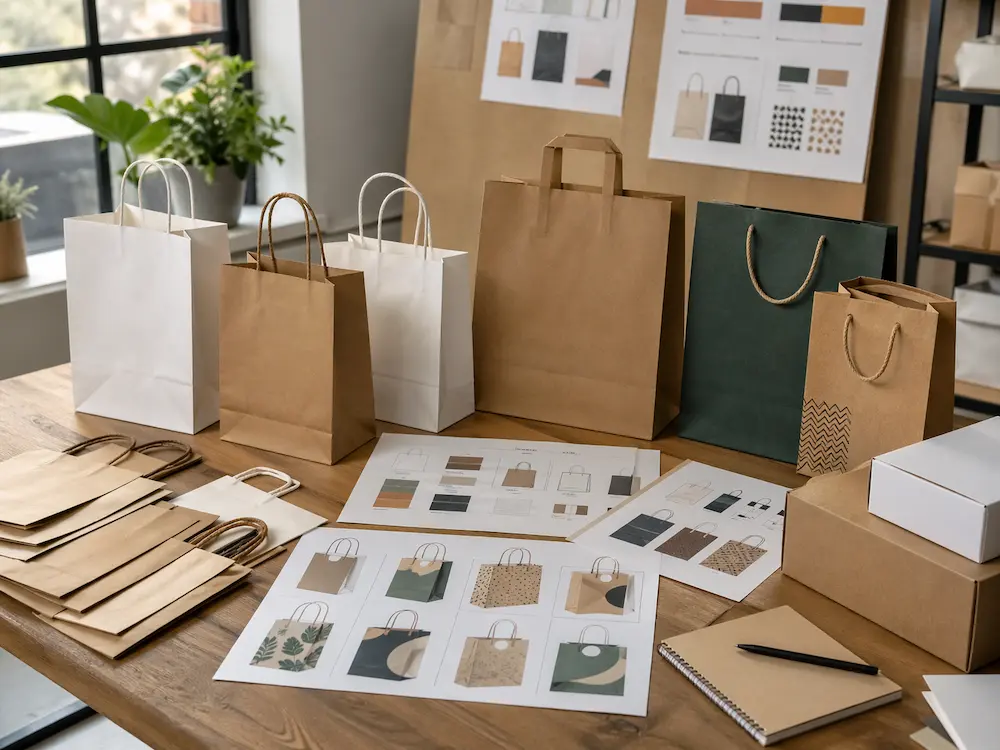
For brand owners, paper bags with handles are not just packaging. They are part of the product experience, part of the retail presentation, and often part of how customers judge the quality of the brand itself. A well-designed paper bag with handles can make a purchase feel more thoughtful, more premium, and more reliable. A poor one can make even a good product feel ordinary.
That is why a serious buyer’s guide to paper bags with handles for brand owners should not begin with price alone or colour alone. It should begin with function, brand fit, and real commercial use. The best paper bags with handles for brand owners are the ones that carry the product safely, match the retail environment, support the right print result, and still make sense when ordered at scale.
For many businesses, the decision is not simply whether to use paper bags with handles, but which kind of paper bags with handles make the most sense. Some brands need a clean and versatile retail bag. Others need a more natural-looking kraft format. Others need bulk paper bags with handles that can support high-volume distribution without losing consistency. That is why many buyers compare options such as paper bags with handles for easy carry and brand display, brown paper bags with handles for natural and reliable carry, and bulk paper bags with handles for efficient carry and distribution when deciding how their bag programme should work in real business terms.
Why paper bags with handles matter for brand owners
A good paper bag with handles does several jobs at once. It carries the product, supports the brand image, gives the customer a better take-away experience, and often becomes one of the last branded items the customer sees after purchase.
For brand owners, that matters because paper bags with handles influence:
- product presentation
- perceived brand quality
- customer convenience
- carrying comfort
- print visibility
- repeat purchasing experience
- retail consistency
This is especially important in fashion, beauty, gifting, food, pharmacy, lifestyle retail, and event packaging. In all of these categories, the bag is not just a transport item. It is part of the full brand interaction.
Start with the real use case, not the sample photo
One of the most common mistakes brand owners make is choosing paper bags with handles based only on appearance. A bag may look beautiful in a static sample or catalog photo, but if it is the wrong size, wrong paper weight, wrong handle type, or wrong structure, it will perform badly in daily use.
A stronger buying process begins with a few practical questions:
- What exactly will the bag carry?
- How heavy is the packed product?
- Will customers carry it briefly or for a longer time?
- Does the bag need to feel premium, natural, practical, or service-led?
- Will it be used in boutique retail, takeaway service, daily shopping, or large-volume distribution?
- Is visual branding more important, or is fast packing more important?
For paper bags with handles for brand owners, these questions matter more than general style preference. The right bag is usually the one that solves the real business need, not the one that simply looks the most decorative.
Types of paper bags with handles brand owners usually consider
Not all paper bags with handles serve the same purpose. For brand owners, the most useful way to compare them is by retail role and commercial use.
Standard retail paper bags with handles
These are often the most flexible choice. They can work across boutiques, apparel shops, gift stores, cosmetics, bookstores, and lifestyle retail. They usually offer a good balance between visual presentation and practical carry.
This is why many buyers start by reviewing paper bags with handles for easy carry and brand display when planning a general brand bag programme. This type of bag often gives the widest commercial range because it supports both function and visible branding.
Brown paper bags with handles
These usually work well when the brand wants a more natural, grounded, or everyday premium look. Brown paper bags with handles are often used in grocery, bakery, takeaway, organic retail, casual fashion, and more sustainability-led brand settings.
For many brands, brown paper bags with handles for natural and reliable carry are useful because they combine a familiar kraft-based appearance with practical retail function. They can feel simple without looking cheap, and natural without losing commercial usefulness.
Bulk paper bags with handles
These are especially relevant for brands that need paper bags with handles at larger scale. When buying in volume, consistency becomes just as important as appearance. A bag that looks good in one sample but becomes inconsistent across bulk supply is not a strong choice.
That is why buyers with broader supply needs often compare bulk paper bags with handles for efficient carry and distribution when reviewing how handle construction, bag structure, and print consistency perform at higher order volumes.
Material choice: what brand owners should pay attention to
Material is one of the most important parts of any buyer’s guide to paper bags with handles for brand owners. The paper affects not only appearance, but also stiffness, carrying strength, print quality, and how premium the bag feels in the hand.
Brown kraft paper
Brown kraft usually suits brands that want a natural, straightforward, or more authentic paper look. It works especially well for wellness, grocery, takeaway, bakery, eco-positioned retail, and understated premium branding.
White kraft paper
White kraft usually supports cleaner print contrast, sharper logo edges, and a more polished presentation. It is often stronger for beauty, gifting, fashion, jewellery, and premium retail where visual clarity matters more.
Recycled-content paper
This can be useful when the brand wants paper bags with handles with a more specific recycled-content position. But the bag still needs to perform. The material story should not weaken the structure or print result.
For brand owners, the best material is not simply the one that sounds most responsible. It is the one that supports the real load, the real print needs, and the real customer experience.
Handle choice changes both comfort and brand message
Handles are not just functional additions. They directly shape how the bag feels and what it communicates.
Common handle types include:
- twisted paper handles
- flat paper handles
- cotton rope handles
- ribbon handles
- woven handles
- die-cut handles
Twisted paper handles often suit standard retail paper bags with handles because they feel familiar and balanced. Flat paper handles often work well in takeaway and faster service environments. Rope and ribbon handles usually push the bag into a more premium or gifting-led position.
For brand owners, the key question is not just “Which handle looks nicer?” It is “Which handle suits the product, price point, and customer experience best?”
A premium bag with poor handles loses credibility quickly. A simpler bag with the right handle may feel better judged and more useful.
Size and proportion matter more than people expect
A paper bag can be technically large enough and still feel badly sized. This is one of the most common specification problems in paper bags with handles for brand owners.
Most bags are measured as:
Width × Gusset × Height
Each of these affects performance:
- Width affects front presentation and product fit
- Gusset affects loading ease and side depth
- Height affects proportion and loaded appearance
The best way to choose size is to test against the real packed product. A fragrance box, apparel fold, bakery order, takeaway meal, and gift set all need different bag proportions even if their retail price is similar.
For brand owners, good size decisions improve:
- product fit
- brand presentation
- carry comfort
- top-opening usability
- print balance
- customer satisfaction
Printing and design: do not design the bag like a flat poster
One of the easiest mistakes in branded packaging is treating paper bags with handles like flat print panels. Real bags are folded, opened, filled, carried, and seen from different angles. The design should reflect that.
The strongest print results usually come from:
- better spacing
- clear logo scale
- strong placement hierarchy
- paper-aware colour choice
- restrained use of graphic elements
A crowded design often feels less premium than a controlled one. Even highly branded paper bags with handles usually look better when the structure, logo position, and negative space are working together.
Quick comparison table for brand owners
| Decision Area | What to Check | Why It Matters |
|---|---|---|
| Bag type | Standard retail, brown kraft, bulk-use format | Determines the role the bag will play in your packaging system |
| Paper material | Brown kraft, white kraft, recycled-content paper | Affects appearance, strength, and print result |
| Handle type | Twisted, flat, rope, ribbon, woven | Changes comfort, carry style, and brand tone |
| Size | Width, gusset, height, loaded fit | Affects both function and visual proportion |
| Paper weight | Real load, shape retention, feel | Prevents bags that look good but feel weak |
| Printing | Logo scale, contrast, bag structure | Determines whether the bag feels clean or crowded |
| Use environment | Boutique retail, takeaway, grocery, bulk distribution | Helps match the bag to real daily conditions |
| Volume | Small batch or bulk paper bags with handles | Affects consistency, costing, and long-term supply logic |
Bulk ordering: when scale changes the decision
For smaller runs, brand owners sometimes focus mainly on appearance. But once the order becomes a true volume programme, the decision changes. Bulk paper bags with handles require more discipline because one wrong specification gets multiplied across large quantities.
At scale, brand owners should pay closer attention to:
- repeat-order consistency
- paper weight stability
- handle attachment quality
- carton efficiency
- print repeatability
- loading performance in real use
- whether the bag structure still makes sense at high volume
This is where bulk buying becomes a real packaging strategy decision, not just a purchasing action. For many brands, bulk paper bags with handles are successful only when the structure is practical enough to repeat well, not just attractive in a sample phase.
Common mistakes brand owners should avoid
The most common mistakes in buying paper bags with handles include:
- choosing by appearance instead of use case
- selecting paper without checking real carrying load
- choosing handles based only on style
- approving size without testing the packed product
- overdesigning the print layout
- underestimating how different the bag looks when filled
- treating bulk orders the same way as small custom runs
These mistakes usually lead to bags that are acceptable in theory but weak in real use.
Best practice for brand owners before ordering
Before placing an order for paper bags with handles for brand owners, it is smart to confirm:
- the actual packed product dimensions
- expected carrying weight
- intended retail or service environment
- preferred paper colour and material
- handle type and comfort
- print layout on the real bag structure
- whether the bag needs premium presentation or simple service function
- whether the order is a small run or a bulk packaging programme
These questions reduce avoidable mistakes and make the final bag much more commercially useful.
Conclusion
A strong buyer’s guide to paper bags with handles for brand owners begins with one principle: the best bag is the one that fits the product, the customer experience, and the brand position at the same time.
The right paper bags with handles are not always the most decorative, the thickest, or the cheapest. They are the bags that carry well, look right in the store, support the logo clearly, and make sense in real business use. For many brand owners, better bag buying comes from better judgement: better material choice, better size choice, better handle choice, and better alignment between packaging and brand message.
When that happens, paper bags with handles for brand owners stop being just a packaging supply item. They become part of how the brand is seen, carried, and remembered.
How Brand Owners Should Buy Paper Bags with Handles
What the bag decision really means: Choosing paper bags with handles is not only about picking a nice shape or print style. It is a brand decision that affects carrying comfort, retail presentation, packaging efficiency, and how believable the bag feels in the customer’s hand.
Why this matters for brand owners: A badly chosen bag can weaken product value, slow down packing, look awkward once loaded, or make sustainability language harder to support. A better bag supports both commercial use and brand perception.
How owners should compare options: Brand owners should compare paper bags with handles by real load, real product size, paper type, handle style, print behaviour, bulk consistency, and whether the bag supports the right sourcing and marketing message.
What usually works best in practice: Standard retail paper bags with handles often suit general brand programmes, brown kraft styles often suit more natural or everyday premium brands, and bulk paper bags with handles work best when the structure is simple enough to stay consistent at scale.
What buyers should watch most carefully: Weak handle comfort, oversized bag proportions, vague environmental wording, and artwork approved only in flat form are usually bigger risks than keeping the design simpler and better judged.
The larger takeaway: The best paper bag with handles is usually the one where paper, handle, size, print, and intended use all support the same business decision.
FAQ
1. How should brand owners choose the right paper bags with handles?
Brand owners should start with the real use case: product size, carrying weight, customer carry time, retail environment, and the level of brand presentation the bag needs to support. In practice, the best paper bags with handles are usually the ones where paper type, size, handle style, print layout, and carrying performance all match the actual business model. This is consistent with FSC’s paper-and-packaging guidance and with the broader EU direction toward more disciplined packaging design.
2. What paper type is usually best for paper bags with handles?
There is no single best paper for every brand. Brown kraft usually suits more natural, everyday, or understated branding, while white kraft often suits cleaner logo contrast and more polished retail presentation. FSC says paper and packaging are major forest-based products and that ensuring they are sustainably sourced is important, which is why many brands compare paper appearance and sourcing logic together.
3. Do paper bags with handles need sustainability claims to be specific?
Yes. The FTC says marketers should not make broad, unqualified environmental benefit claims like “green” or “eco-friendly,” and should qualify claims clearly, prominently, and specifically. For brand owners, that means claims about recycled content, responsible sourcing, or recyclability should be made carefully and with support, rather than using vague environmental wording.
4. Are paper bags with handles generally recyclable?
Paper is often recyclable, and EPA says most community or office recycling programs accept paper and paper products. But recyclability still depends on local collection rules and whether the bag stays clean and dry enough for the recycling stream. For brands, that means recycling language should be aligned with real disposal conditions, not assumed automatically.
5. What should food-related brands check before buying paper bags with handles?
If the bag is used around food, brand owners should review the full structure, not just the outer paper. FDA says food packaging and its components matter in food-contact review, and notes that food contact substances are commonly found in coatings, paper, adhesives, and colorants. For food-related bags, intended use should be checked before marketing language or appearance.
References
These references support the sourcing, environmental-claims, recyclability, food-contact, and EU packaging-policy points used in the article.
- Environmental Claims: Summary of the Green Guides — Federal Trade Commission. The FTC says marketers should not make broad, unqualified claims like “green” or “eco-friendly.”
- Guides for the Use of Environmental Marketing Claims — Federal Trade Commission. The Green Guides explain how environmental marketing claims can become deceptive if they are not properly qualified.
- What the FSC Labels Mean — Forest Stewardship Council. FSC says its labels stand for sustainable sourcing.
- Paper & Packaging — Forest Stewardship Council. FSC says paper and packaging are among the most widely used forest-based products and that ensuring they are sustainably sourced is crucial.
- Paper, Print & Packaging — FSC US. FSC US says FSC-certified paper and packaging can help demonstrate commitment to responsible forestry.
- Packaging waste — European Commission. The Commission says PPWR 2025/40 entered into force on 11 February 2025 and will generally apply from 12 August 2026.
- Packaging and Packaging Waste Regulation — European Commission. The Commission describes PPWR as designed to improve packaging design and protect people and the planet.
- 2026 PPWR guidance materials — European Commission. The Commission’s 2026 materials repeat the PPWR timing and implementation context.
- How Do I Recycle Common Recyclables — U.S. EPA. EPA says most community or office recycling programs accept paper and paper products.
- Frequent Questions on Recycling — U.S. EPA. EPA notes that local recycling acceptance can vary and items should be checked with the local provider.
Intellectual Property Notice:All original written content published here remains the intellectual property of Xiamen Youngpack Imp.and Exp.Co.,Ltd. Any unauthorized reuse is strictly prohibited.