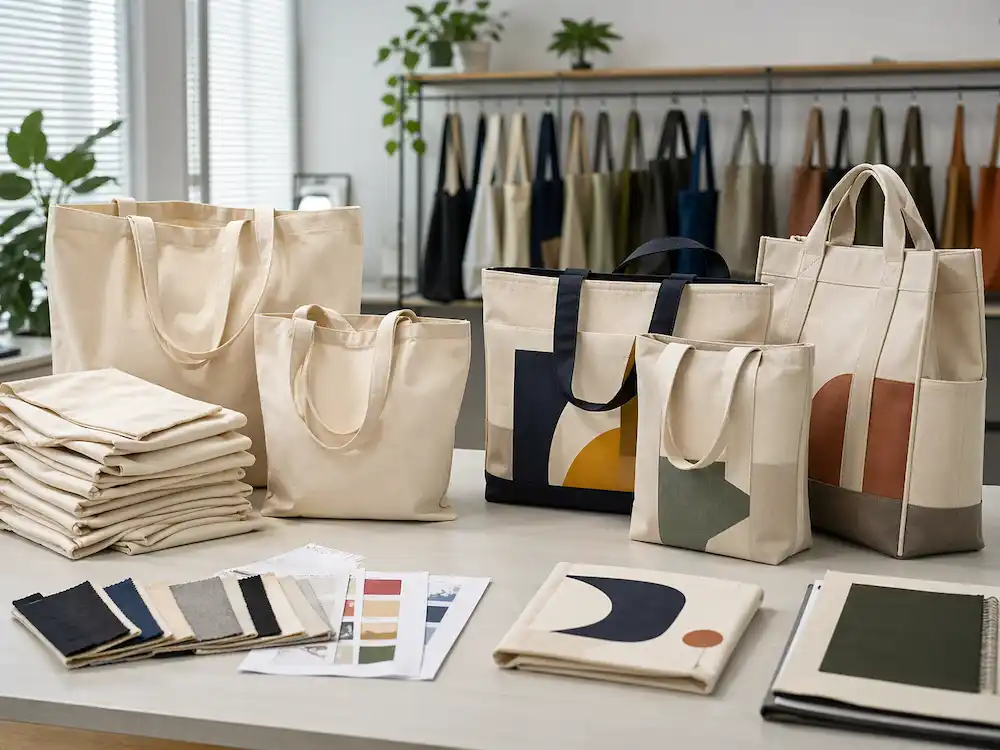
The comparison between bulk tote bags vs custom tote bags matters because buyers often focus too narrowly on unit price. That is a mistake. In real sourcing, the cheaper bag and the more customized bag are rarely solving the same business problem. One is usually designed for reach, speed, and cost efficiency. The other is usually designed for brand expression, better visual control, and more distinctive market presence.
This means the decision is not really “cheap versus expensive.” It is “distribution efficiency versus brand value.” A bulk tote bag can be exactly right when the business wants to move quickly, cover broad volume, or support a straightforward campaign. A custom tote bag can be exactly right when the bag itself needs to help shape brand perception and stand out beyond a basic giveaway product.
The strongest buyers stop asking only what the bag costs. They ask what the bag is expected to do after it reaches the user.
What Bulk Tote Bags Really Mean
Bulk tote bags usually mean more standardized products ordered in larger volume with limited changes to the base construction. That does not necessarily mean no branding at all. It usually means the bag is built from a more stable and repeatable specification so the buyer can control cost, speed, and large-scale distribution more effectively.
Bulk programs are especially common in trade shows, schools, supermarkets, nonprofit campaigns, broad retail promotions, events, community distributions, and general brand-awareness programs where the bag needs to be useful, visible, and affordable across a large quantity.
For example, buyers often compare programs such as cotton tote bags bulk when the objective is straightforward scale, repeatable sourcing, and low-friction distribution rather than a highly tailored product concept.
What Custom Tote Bags Really Mean
Custom tote bags usually involve more control over the product itself. That can include size, gusset, fabric choice, handle construction, print placement, colors, pockets, labels, closures, packaging, and other design features. In other words, the brand is not only placing artwork on a bag. It is shaping the bag as a branded product.
This kind of customization is more valuable when the tote bag is expected to feel distinct, more premium, or more aligned with a longer-term brand identity. It is common in lifestyle retail, bookstores, premium gifting, curated merchandise, museum shops, employee kits, launch campaigns, and any use case where the bag should feel like part of the brand, not just a carrier.
This is why products like custom tote bags often sit at the center of stronger brand-building strategies rather than simple distribution logic.
The Core Difference: Product Supply vs Product Expression
The clearest way to understand the difference is this: bulk tote bags are usually about efficient supply, while custom tote bags are usually about controlled expression. A bulk bag solves quantity problems. A custom bag solves brand differentiation problems.
Both can support branding. Both can be successful. The issue is whether the business needs the bag to act like inventory or like communication. If the bag’s main purpose is to reach many people quickly, bulk often makes more sense. If the bag’s main purpose is to shape perception and carry a clearer brand identity, custom becomes far more valuable.
That distinction matters because many companies overspend on customization when the campaign only needs practical reach, or underinvest in product design when the bag was actually meant to reinforce a premium or memorable brand image.
Cost: Where Bulk Tote Bags Usually Win
If the question is immediate unit cost, bulk tote bags usually win. Standardized specifications, larger volumes, and simpler development reduce setup complexity and keep production more efficient. Freight, warehouse handling, and reorder planning are also often easier when the product is based on a stable structure.
This is why bulk sourcing remains so commercially attractive in many industries. A simple bag that is “good enough” can be a highly effective tool when the objective is to put a functional branded item into many hands at the lowest reasonable cost.
In high-volume marketing programs, some buyers compare against models like custom canvas bags bulk because even larger programs still need to decide whether the extra material and structure are commercially justified at scale.
Value: Where Custom Tote Bags Usually Pull Ahead
Custom tote bags usually cost more, but they often create more value when the brand actually needs product distinction. A customized bag can look more thoughtful, feel more substantial, and stay in use longer because the user experiences it as a product rather than just a giveaway.
This matters because long-term visible use often creates more branding value than simple first-distribution volume. A well-designed custom tote can keep working long after the event or sale. If the bag is attractive enough to keep using, the higher initial investment becomes easier to justify.
For stronger design-led programs, options like personalized canvas tote bags can create more value than a simple standard bag because the brand message is not only printed on the product. It is embedded in the product choice itself.
| Comparison Area | Bulk Tote Bags | Custom Tote Bags |
|---|---|---|
| Main advantage | Lower unit cost and easier scale | Higher brand control and product distinction |
| Best use pattern | Large campaigns and broad distribution | Brand-led programs and tailored positioning |
| Development complexity | Lower | Higher |
| Repeat-order stability | Usually stronger | Depends on material and spec control |
| Perceived uniqueness | More limited | Usually stronger |
| Brand value over time | Depends on volume and use rate | Usually stronger if the bag stays in use |
Lead Time and Operational Simplicity
Bulk tote bags usually have the advantage in operational simplicity. If the product is based on a known structure with fewer changes, sampling is faster, approvals are easier, and production planning is usually more predictable. That matters a lot for event deadlines, seasonal campaigns, and recurring inventory.
Custom tote bags usually require more coordination. Size, materials, printing, labels, and design details all create more approval steps. This is not a problem when the product needs that level of control, but it does mean the buyer should plan earlier and communicate more clearly.
The mistake is assuming custom is only a price difference. In reality, it is also a timing and management difference. Brands that choose custom should do so because the value is real enough to justify the extra coordination.
Brand Identity: Where Custom Changes the Outcome
Brand identity is where custom tote bags often justify themselves most clearly. A standard bulk bag can carry a logo. A custom tote bag can carry a point of view. The bag shape, fabric, print placement, handle style, and overall finish can all reinforce the brand rather than simply displaying it.
This is especially important in retail environments where the bag may be sold, reused publicly, or associated with a premium customer experience. If the bag feels generic, the brand can lose part of the opportunity. If the bag feels specific and intentional, the product becomes more memorable.
For stronger sustainable retail identity, products like custom printed canvas tote bags often create more long-term value because the design and the material work together as a brand statement rather than a generic supply item.
When Bulk Tote Bags Are the Better Business Decision
Bulk tote bags are usually the better decision when the campaign depends on quantity, speed, and controlled cost. They make the most sense in trade shows, conferences, school programs, community campaigns, supermarket distributions, nonprofit outreach, awareness marketing, and event-driven programs where the bag is part of a larger volume strategy.
They are also stronger when the design does not need to carry complex product identity. If a simple useful bag is enough to support the campaign, bulk is often the smarter route.
This is especially true when the buyer already knows the bag format works and simply needs the next order to arrive on time and at the right economics.
When Custom Tote Bags Are the Better Business Decision
Custom tote bags are usually the better decision when the bag must help shape brand perception, feel more premium, or stand out from standard promotional items. They are especially useful in bookstores, lifestyle retail, curated events, employee gifting, launch campaigns, fashion-adjacent projects, museum shops, and premium branded merchandise.
They also make more sense when the bag is expected to remain in use and function as long-term visible brand media. In those cases, better design often creates better retention. A more distinctive bag is more likely to be used again.
So custom becomes commercially rational when the bag’s life after distribution matters enough to justify the added investment.
How MOQ Changes the Equation
Minimum order quantity often shapes the real decision. Bulk bags usually become more attractive as volume rises because the development cost is low and the distribution logic is straightforward. Custom bags can still work at meaningful quantities, but the buyer needs enough volume or enough value per unit to justify the added setup and management.
This means customization often makes the most sense either in higher-value smaller programs or in stable repeat programs where the bag will be reordered enough times for the development effort to pay off. One-off uncertain custom projects are usually harder to justify than repeatable custom lines with clear product identity.
How Buyers Should Decide
The strongest decision usually begins with four questions. First, is this bag mainly for reach or for distinction? Second, how important is long-term public reuse to the business case? Third, does the brand need the bag to feel unique or simply reliable? Fourth, is the organization ready to manage the extra coordination that customization often requires?
If the answers point toward scale, speed, and broad utility, bulk usually wins. If the answers point toward stronger identity, product feel, and longer brand life, custom usually wins.
The best choice is rarely emotional. It is usually operationally obvious once the role of the bag is defined honestly.
How to Choose the Right Supplier
The right supplier should not only give two prices and wait. They should explain what changes between the bulk version and the custom version, where the added cost comes from, how the lead time changes, and whether the custom features will actually matter in use.
Buyers should ask about MOQ, material options, sample rounds, repeat-order consistency, print method, packaging, and freight impact. The strongest supplier is the one that helps prevent unnecessary customization just as much as they help execute useful customization.
This is where Youngpack-style sourcing logic matters. A good manufacturing partner adds value by helping the buyer understand whether they are paying for real business value or simply paying for more variables.
Conclusion
The answer to bulk tote bags vs custom tote bags is not simply cheaper versus better. Bulk bags usually win when the goal is efficient distribution, stable supply, and practical cost control. Custom bags usually win when the goal is stronger identity, better perceived value, and a product that stays in public use longer with more brand meaning.
The better option is the one that fits the real role of the bag. Buyers who define that role clearly usually stop wasting money on the wrong type of value.
How Buyers Should Think About Bulk Tote Bags vs Custom Tote Bags
What this comparison really measures: Bulk and custom tote bags are not just two sourcing prices. They represent two different commercial goals. Bulk bags usually prioritize efficient supply, broad reach, and lower unit cost. Custom bags usually prioritize stronger brand expression, more product control, and higher long-term perceived value.
Why many buyers make the wrong choice: The most common mistake is comparing only ex-factory cost. That misses the real decision. A bulk tote can be exactly right when the campaign needs speed, reliability, and volume. A custom tote can be exactly right when the bag needs to feel like branded merchandise rather than a standard giveaway. Problems usually appear when businesses pay for custom details that the audience will never notice, or underinvest when the bag was meant to carry a stronger brand message.
How buyers should compare the two properly: The strongest comparison method is to evaluate quantity, expected reuse, campaign purpose, brand role, and repeat-order needs together. A trade show giveaway, a bookstore bag, a museum shop product, and a supermarket distribution program may all use tote bags, but they should not all follow the same sourcing logic.
Options businesses usually weigh: Most buyers compare lower-cost broad distribution against higher-value branded distinction, faster standardized production against more managed development, and reliable repeat supply against stronger public product identity. The better answer depends on whether the bag needs to reach more people or mean more to the people who receive it.
Considerations before placing the order: Before choosing, businesses should check MOQ, sample quality, material options, freight impact, artwork needs, and whether the bag will still matter after the first use. They should also ask whether the extra customization affects real customer behavior or only internal preference. That question often reveals whether the added investment is strategic or unnecessary.
The broader takeaway: The strongest tote bag program comes from matching the sourcing route to the real business goal. That is also where Youngpack naturally fits as a B2B manufacturing and export partner for buyers comparing bulk and custom tote bag programs while needing practical guidance on cost, customization, and long-term brand value.
FAQ
1. Are custom tote bags always better than bulk tote bags?
No. Custom tote bags are only better when the added design control and stronger brand expression create real value for the project. If the campaign mainly depends on broad reach, simple usefulness, and lower cost at scale, bulk tote bags are often the smarter business choice. The better option depends on whether the bag needs to stand out or simply work efficiently across a large quantity.
2. Why are bulk tote bags usually cheaper?
Bulk tote bags are usually cheaper because they rely on more standardized specifications, simpler development, and easier production planning. There are fewer design variables to manage, which reduces setup complexity and often improves manufacturing efficiency. This makes bulk totes especially effective for large promotional programs where the bag does not need a highly tailored structure or product identity.
3. When should a brand choose custom tote bags?
A brand should usually choose custom tote bags when the bag needs to feel more distinctive, support a premium or retail-facing identity, or remain in public use as a more memorable branded product. This is especially useful in bookstores, lifestyle retail, corporate gifting, museum merchandise, and curated campaign programs where the bag itself becomes part of the product experience rather than just a simple carrier.
4. Do custom tote bags create better branding value?
In many cases, yes. Custom tote bags often create better branding value because the product can reflect the brand more deeply through size, shape, material, handle style, print placement, and overall finish. When the bag is distinctive enough to keep using, it can create stronger long-term public visibility than a more generic bulk product. However, that value only matters if the bag is truly intended to carry that brand role.
5. What should buyers check before choosing bulk or custom tote bags?
Buyers should check the campaign purpose, quantity, budget logic, expected reuse, timeline, and whether the bag needs to feel unique or simply dependable. They should also compare sample quality, material options, MOQ, freight efficiency, and repeat-order consistency. The right choice usually becomes clear once the buyer defines whether the bag is primarily solving a distribution problem or a brand-expression problem.
References
- Preferred Fiber and Materials Market Report — Textile Exchange — Textile Exchange.
- Textiles and the Environment — European Environment Agency — EEA.
- Green Guides for the Use of Environmental Marketing Claims — Federal Trade Commission — FTC.
- Sustainable Packaging Guidelines — Australian Packaging Covenant Organisation — APCO.
- Fashion on Climate — Global Fashion Agenda and McKinsey & Company.
- Responsible Sourcing and Product Communication in Textile Supply Chains — industry trade reference.
- Retail Packaging and Reusable Bag Sourcing Best Practices — professional sourcing reference.
- Guide to Reusable Bags and Long-Term Use Value — industry best-practice sourcing reference.
Original Knowledge Statement:
This article is based on the packaging industry experience and product knowledge of Xiamen Youngpack Imp.and Exp.Co.,Ltd. All rights reserved.