Fabric weight is one of the most important and most misunderstood parts of Tote Bag sourcing. Many buyers focus heavily on bag size, logo printing, or material type while paying too little attention to the actual fabric weight. But fabric weight changes almost everything: durability, feel, carrying strength, print performance, foldability, cost, and even how customers perceive the product.
That is why the question is not simply “What fabric weight is best?” The real question is “Best for what?” A lightweight event giveaway and a heavy-duty grocery tote should not use the same fabric logic. One prioritizes distribution efficiency and low cost. The other prioritizes repeated use and stronger product life. Different use scenarios require different construction strategies for a successful Tote Bag product.
The smartest buyers match fabric weight to the real carrying situation instead of choosing randomly or copying another product specification without context. A well-balanced Tote Bag should align fabric weight with retail positioning, customer expectations, and long-term usage goals.
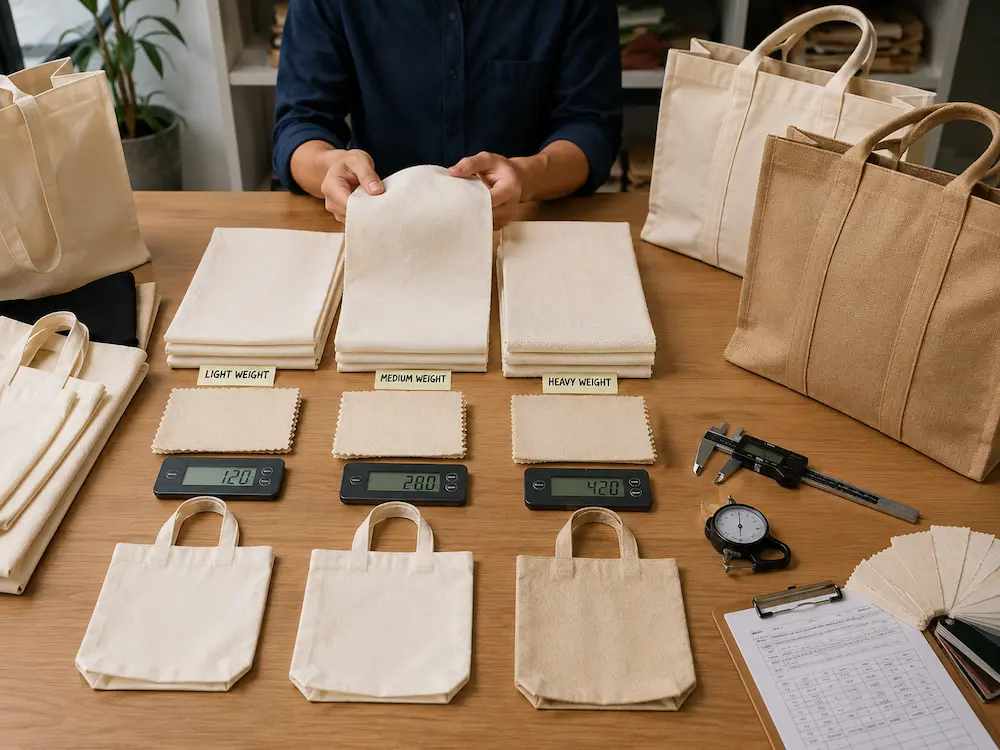
What Fabric Weight Actually Means
Fabric weight in tote bags is usually measured in GSM, which stands for grams per square meter. Higher GSM fabrics are generally thicker, denser, and more durable. Lower GSM fabrics are lighter, softer, and easier to fold and distribute.
However, heavier is not automatically better. A fabric that is unnecessarily heavy may increase cost, shipping weight, stiffness, and production expense without improving the actual user experience enough to justify it. At the same time, fabric that is too light may feel weak, cheap, or unsuitable for repeated use.
The correct weight depends on balancing durability, carrying purpose, cost control, and customer expectations.
Common Tote Bag Fabric Weight Ranges
| Fabric Weight | Typical Use | General Characteristics |
|---|---|---|
| 80–120 GSM | Events, giveaways, lightweight promotions | Soft, foldable, low-cost, lighter carry capacity |
| 120–180 GSM | Daily shopping, bookstores, retail | Balanced durability and flexibility |
| 180–280 GSM | Heavy retail, grocery, premium reusable bags | Stronger structure and longer product life |
| 280+ GSM | Heavy-duty or luxury-style tote bags | Very durable, thicker feel, higher cost and freight weight |
These ranges are not strict rules, but they provide useful sourcing logic. Most successful tote bag programs sit somewhere between light enough for comfortable use and strong enough for realistic repeated carry.
Lightweight Tote Bags: Best for Promotions and Distribution
Lighter fabrics usually work best for high-volume promotional distribution, event giveaways, trade shows, conference kits, and low-cost brand exposure campaigns. These bags are easier to fold, cheaper to ship, and more economical at large quantities.
This is why many promotional sourcing programs lean toward lighter constructions in products such as custom canvas bags bulk when the primary goal is broad brand reach rather than heavy-duty carrying performance.
However, buyers should still avoid going too thin. Extremely lightweight bags may feel disposable, wrinkle excessively, or lose shape quickly. If the bag looks weak immediately, the customer may stop using it early, reducing both branding value and reusable value.
Medium Weight Fabrics Often Offer the Best Balance
For most retail and everyday-use tote bags, medium-weight fabric is usually the safest and most commercially effective range. It provides enough structure for repeated use while remaining flexible, comfortable, and reasonably cost-efficient.
This is why many daily-use reusable tote programs settle in the middle GSM range. Products such as custom cotton tote bags often perform best when the fabric is strong enough for books, groceries, or casual shopping without becoming overly stiff or expensive.
Medium-weight bags also tend to print well across multiple printing methods, making them versatile for branded retail and promotional applications.
Heavyweight Fabrics Create Stronger Perceived Value
Heavier fabrics create a more premium feel. The bag usually feels sturdier in the hand, stands more upright, and supports heavier loads more confidently. This makes heavier GSM ranges attractive for supermarkets, bookstores, luxury retail, premium merchandise, and long-life reusable programs.
Products using stronger materials often pair well with more visible branding approaches such as custom printed cotton tote bags because the bag itself behaves more like a lasting product than temporary packaging.
But heavyweight fabric is not automatically smarter. If the customer only needs light carry or occasional use, very heavy fabric may feel unnecessary and increase costs without meaningful practical benefit.
Fabric Weight Directly Affects Printing Results
Many buyers forget that printing quality and fabric weight are connected. Lighter fabrics may wrinkle more during printing or allow ink movement that slightly affects crispness. Heavier fabrics usually provide a more stable printing surface, especially for large logos or detailed graphics.
At the same time, very thick textured canvas can sometimes affect fine-detail printing differently than smoother medium-weight cotton. The ideal balance depends on the artwork complexity and the print method being used.
This is especially important for logo-heavy promotional products and reusable retail merchandise where visual consistency matters.
Shipping and Freight Efficiency Matter More Than Many Buyers Expect
Heavier fabrics increase freight weight very quickly in bulk production. A small difference in GSM may not sound important at sample stage, but it becomes highly significant across thousands or tens of thousands of bags.
That means buyers should never choose heavier fabric simply because it “sounds premium.” They should calculate whether the added weight creates meaningful real-world value. In some programs, the additional cost and freight burden are justified. In others, they are not.
This is one reason why portable promotional formats such as drawstring backpacks and lighter reusable bags remain popular for event distribution and mass campaigns where shipping efficiency matters heavily.
| Fabric Weight Decision | Usually Better with Lighter GSM | Usually Better with Heavier GSM |
|---|---|---|
| Freight efficiency | ✓ | |
| Foldability | ✓ | |
| Heavy grocery carry | ✓ | |
| Premium feel | ✓ | |
| Large-scale giveaway pricing | ✓ | |
| Long-term repeated use | ✓ |
Different Use Cases Need Different Fabric Logic
One of the biggest sourcing mistakes is trying to use the same fabric weight for every market and distribution channel. Different use cases require different priorities.
- Event giveaways usually prioritize low cost, portability, and broad reach.
- Bookstores and museums often prefer balanced durability with comfortable daily carry.
- Grocery programs usually require stronger structures and reinforced handles.
- Fashion retail may focus more on feel, drape, and premium presentation.
- Youth promotions may prioritize lightweight portability and foldability.
This is why some businesses also compare totes against lighter promotional alternatives such as drawstring bags with logo when portability and mass distribution efficiency matter more than heavy carrying capacity.
Fabric Weight and Sustainability Are Connected
Heavier fabric is often associated with sustainability because it usually lasts longer. But sustainability is not simply about using more material. The bag still needs to match the customer’s routine.
A lightweight bag that gets used constantly may create stronger practical value than an overly heavy premium tote that customers rarely carry. The real sustainability question is whether the bag stays in repeated circulation long enough to justify its production.
That means the best fabric weight is often the one that encourages real repeated use rather than the one that simply sounds stronger in a specification sheet.
How Buyers Should Choose the Right Fabric Weight
The smartest approach is to begin with the real use environment.
- Will the bag carry groceries or just brochures?
- Will customers reuse it weekly or only occasionally?
- Is freight efficiency critical?
- Does the bag need a premium retail feel?
- Will the bag be folded and packed frequently?
- Does the print design require a smoother, more stable surface?
Once those answers become clear, the correct GSM range usually becomes much easier to identify.
Good suppliers should also help guide this decision based on real manufacturing and export experience instead of simply quoting the cheapest or heaviest option automatically.
Common Mistakes Buyers Make
One common mistake is choosing fabric that is too light simply to reduce cost. The bag may fail quickly, reducing brand value and repeat use. Another common mistake is overbuilding the bag with unnecessarily heavy fabric that increases cost and freight without creating enough practical advantage.
Some buyers also copy another bag’s GSM without understanding why that weight was chosen in the first place. A fabric weight that works perfectly for grocery retail may be completely wrong for event distribution.
The best sourcing decisions come from use-case logic, not imitation.
Conclusion
The best fabric weight for tote bags depends entirely on how the bag is expected to function in real life. Lightweight fabrics support large-scale promotional distribution and portability. Medium-weight fabrics often create the best balance for daily retail and reusable use. Heavyweight fabrics provide stronger durability and premium perception for grocery, bookstore, and long-term carry programs.
The smartest buyers do not ask for the heaviest fabric. They ask for the most appropriate fabric.
How Buyers Should Think About Tote Bag Fabric Weight
What fabric weight really controls: Fabric weight affects far more than durability. It changes the bag’s structure, softness, print performance, freight cost, foldability, and perceived product quality. Choosing the right GSM is really about matching material performance to real customer behaviour and business goals.
Why many sourcing decisions fail: Some buyers choose very light fabric only to reduce cost, while others choose extremely heavy fabric simply because it sounds more premium. Both approaches can fail if they ignore actual use conditions. The strongest tote bag programs usually balance durability, comfort, shipping efficiency, and repeated-use practicality together.
How businesses should compare GSM properly: Lightweight fabrics generally work best for mass distribution and event campaigns. Medium-weight fabrics usually offer the safest balance for daily retail and reusable use. Heavyweight fabrics are often better for grocery, bookstore, and premium retail programs where the bag must support heavier carrying loads and longer product life.
Options businesses commonly evaluate: Most buyers compare lighter promotional tote bags against stronger reusable retail bags, foldable portable formats against structured premium bags, and lower freight efficiency against higher durability. The correct choice depends on whether the goal is broad distribution, long-term reuse, or premium brand presentation.
Considerations before approving production: Before confirming fabric weight, businesses should test carrying feel, print clarity, foldability, stitching performance, and shipment efficiency together. The best GSM is usually not the heaviest specification. It is the weight that delivers the most practical value for the intended use case.
The broader takeaway: Strong tote bag sourcing is rarely about choosing the thickest fabric. It is about choosing the most commercially intelligent fabric weight for the real market situation. That is also where Youngpack naturally fits as a B2B manufacturing and export partner for brands building tote bag programs that require better balance between durability, usability, and scalable production efficiency.
FAQ
1. What is the best GSM for tote bags?
There is no single best GSM for all tote bags. Lightweight ranges around 80–120 GSM are common for events and promotional giveaways, medium ranges around 120–180 GSM work well for everyday retail and reusable shopping, and heavier fabrics above 180 GSM are often better for grocery, bookstore, or premium-use bags. The best GSM depends on how the bag will actually be used.
2. Are heavier tote bag fabrics always better?
No. Heavier fabrics usually improve durability and structure, but they also increase cost, freight weight, and stiffness. A fabric that is too heavy for the intended use may reduce portability and commercial efficiency without creating enough additional value. The better fabric weight is the one that matches the carrying purpose and customer expectations realistically.
3. Why does fabric weight affect tote bag printing quality?
Fabric weight affects how stable the printing surface is during production. Medium and heavier fabrics often support cleaner logo printing because they wrinkle less and hold shape more consistently. Extremely lightweight materials may shift or crease more during printing, while very textured heavy canvas can sometimes affect fine-detail artwork differently. The ideal weight depends partly on the print design and printing method.
4. How does fabric weight impact shipping costs?
Heavier fabrics increase the total shipment weight significantly in bulk orders. Even a small GSM increase can add noticeable freight cost when thousands of bags are involved. This is why many large promotional campaigns prefer lighter fabrics that improve packing efficiency and reduce shipping expense while still maintaining acceptable product quality.
5. What fabric weight is best for reusable grocery tote bags?
Reusable grocery tote bags usually perform best with medium-heavy to heavy fabric weights because they need to support repeated carrying of heavier items. Stronger canvas or cotton constructions with reinforced handles are common choices for supermarket and grocery programs where durability and longer product life are important.
References
- Preferred Fiber and Materials Market Report — Textile Exchange — Textile Exchange.
- Textiles and the Environment — European Environment Agency — EEA.
- Cotton Fabric Construction and GSM Standards — textile manufacturing reference.
- Retail Packaging and Reusable Bag Sourcing Best Practices — professional sourcing reference.
- Guide to Reusable Bag Durability and Fabric Selection — industry sourcing reference.
- Canvas and Cotton Fabric Performance in Retail Applications — textile industry trade reference.
- Freight Efficiency in Soft Goods Manufacturing — export packaging reference.
- Reusable Shopping Bag Material Performance Study — packaging and retail sourcing reference.
Brand Content Protection:
This article reflects the packaging knowledge and business experience of Xiamen Youngpack Imp.and Exp.Co.,Ltd. Unauthorized copying, scraping, or commercial use is not allowed.