Quick Summary:Before ordering paper bags with handles, food service brands should evaluate customer usage scenarios, packaging strength, supplier reliability, and long-term ordering plans.
A successful purchasing decision balances carrying performance, restaurant efficiency, brand presentation, cost control, and production consistency.
Professional planning helps restaurants, cafés, bakeries, and takeaway brands reduce packaging risks while improving customer experience.
Introduction
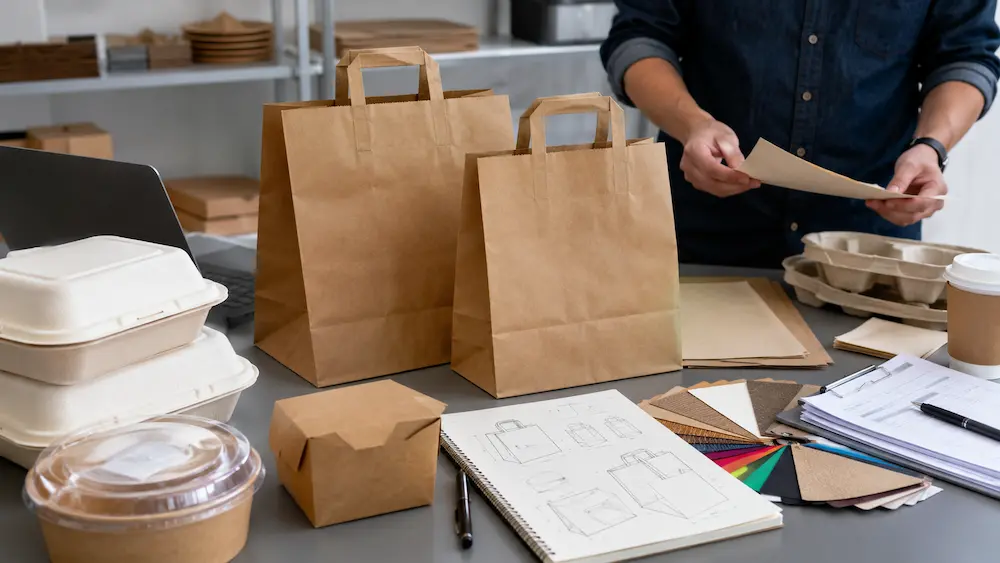
Ordering paper bags with handles may seem like a simple purchasing task.
Many food service businesses start by asking:
“How much does each bag cost?”
However, experienced packaging buyers usually ask a more important question:
“Will this packaging still perform well after thousands of customers use it every day?”
For restaurants, cafés, bakeries, takeaway brands, and food chains, packaging is part of daily operations.
A paper bag failure can create problems such as:
- Customer complaints
- Damaged food presentation
- Slow service efficiency
- Reduced brand trust
The lowest-cost option is not always the most cost-effective choice.
Professional food packaging purchasing requires understanding:
- Real customer behaviour
- Product carrying conditions
- Restaurant workflow
- Brand requirements
- Supplier reliability
Choosing suitable food service paper bags helps businesses create a better experience from the moment customers receive their orders.
This guide explains the key factors food brands should consider before ordering paper bags with handles in bulk.
Start with Customer Journey, Not Only Bag Specifications
Many buyers begin packaging development by checking:
- Bag size
- Paper thickness
- Unit price
These details are important.
However, successful food packaging should start with understanding the customer journey.
How Customers Actually Use Packaging
Think about what happens after customers receive food.
A typical journey may include:
Customer picks up order
↓
Walks outside
↓
Carries products for several minutes
↓
Uses transportation
↓
Arrives home or office
During this process, packaging must maintain:
- Carrying comfort
- Structure stability
- Product protection
- Professional appearance
A bag that looks good during production may still fail during real customer use.
Customer Experience Creates Brand Value
Food packaging continues representing your brand after customers leave.
Handle design affects how customers feel when carrying products.
Many restaurants, cafés, and takeaway brands choose paper bags with handles for easy carry and brand display because practical handle structures improve customer convenience while helping businesses maintain professional packaging presentation.
A good packaging experience creates:
- Stronger customer trust
- Better brand memory
- Higher perceived quality
For food brands, packaging is not only a container.
It is part of the service experience.
Calculate Real Packaging Load Requirements
Before ordering custom paper bags with handles, food businesses should understand actual carrying requirements.
Different food products create different packaging challenges.
A coffee shop order is different from a restaurant family meal.
A bakery product is different from a delivery package.
Evaluate Real Product Weight
Important questions:
How many items does one customer usually buy?
Are products lightweight or heavy?
Does the bag carry drinks?
Are containers stacked?
These details affect:
- Material choice
- Handle strength
- Bag structure
Food Packaging Load Comparison
| Food Order Type | Packaging Challenge | Key Requirement |
|---|---|---|
| Coffee Set | Drinks and small food | Balance and comfort |
| Bakery Order | Different product shapes | Space flexibility |
| Restaurant Meal | Multiple containers | Strong structure |
| Family Order | Higher total weight | Better support |
| Catering Service | Large quantity | Maximum durability |
Avoid Choosing Based Only on Paper Thickness
Many buyers believe:
“Thicker paper means better bags.”
This is not always correct.
Performance depends on:
- Paper quality
- Handle connection
- Bottom structure
- Production process
A properly designed bag can provide better performance without unnecessary material waste.
Think About Restaurant Storage and Workflow
Food service packaging must work inside real business environments.
A beautiful bag that slows operations may not be the best choice.
Storage Space Planning
Restaurants and cafés often have limited storage areas.
Before ordering, consider:
- How many bags can be stored?
- How often will you reorder?
- How much space does packaging require?
Poor storage planning can create:
- Inventory problems
- Workplace inconvenience
- Higher management costs
Packing Speed During Busy Hours
During peak service times, employees need packaging that is:
- Easy to open
- Fast to prepare
- Simple to use
Packaging efficiency directly affects customer waiting time.
Match Handle Style with Operations
Different handle structures support different needs.
Flat handle designs often support:
- High-volume takeaway
- Fast service
- Compact storage
Twisted handle designs often support:
- Premium presentation
- Customer experience
- Brand-focused packaging
The best choice depends on your operation model.
Match Packaging Design with Food Brand Positioning
Before ordering paper bags with handles, food service brands should consider how packaging supports their market position.
A bag is not only used for carrying food.
It also communicates:
- Brand personality
- Service quality
- Customer expectations
- Business values
Different food businesses require different packaging strategies.
Fast Casual Restaurants
Fast casual restaurants usually focus on:
- High order volume
- Operational efficiency
- Consistent quality
Packaging requirements include:
- Easy handling
- Reliable structure
- Cost efficiency
The goal is to create practical packaging that supports daily customer flow.
Premium Bakeries and Specialty Food Brands
Premium food businesses often require packaging that creates a stronger emotional connection.
Customers buying specialty products usually expect:
- Better presentation
- More refined details
- Higher quality feeling
Packaging becomes part of the product value.
Organic and Natural Food Brands
Natural food businesses often focus on:
- Material appearance
- Sustainability message
- Simple design style
Kraft materials and clean branding usually match this positioning.
Turning Packaging into Brand Communication
Packaging design should match customer expectations and brand positioning.
Many food retailers also use paper shopping bags with handles for easy carry and brand display because customized materials, printing designs, and comfortable handles help strengthen customer experience beyond the first purchase.
Effective packaging design considers:
- Logo visibility
- Material feeling
- Colour consistency
- Customer interaction
A thoughtful design can transform everyday packaging into a brand communication tool.
Understand Hidden Costs Before Ordering Paper Bags with Handles
When comparing suppliers, many buyers focus only on unit price.
However, the cheapest option may create higher costs later.
A professional purchasing decision should consider total packaging value.
Quality Problems Create Additional Costs
Poor quality packaging may lead to:
- Broken handles
- Damaged food products
- Customer complaints
- Replacement costs
These problems are often more expensive than choosing better packaging from the beginning.
Production Consistency Matters
Food brands usually reorder packaging many times.
Consistency is important for:
- Brand colours
- Material feeling
- Bag structure
- Customer experience
Changing quality between orders can weaken brand trust.
Real Packaging Cost Evaluation
| Cost Factor | Possible Impact |
|---|---|
| Paper Quality | Strength and durability |
| Handle Structure | Customer carrying experience |
| Printing Accuracy | Brand consistency |
| Supplier Stability | Long-term reliability |
| Quality Control | Lower packaging risk |
Plan Repeat Orders Instead of One-Time Purchases
Food service packaging is usually a continuous requirement.
Restaurants, cafés, and food chains should think beyond the first order.
A long-term purchasing strategy improves:
- Inventory management
- Cost control
- Packaging consistency
Estimate Real Monthly Usage
Before ordering bulk paper bags with handles, calculate:
- Average daily customers
- Monthly packaging consumption
- Seasonal changes
- Business growth plans
Accurate forecasting prevents:
- Shortages
- Excess inventory
- Emergency purchasing
MOQ and Bulk Order Planning
Growing food businesses should consider long-term packaging demand instead of only focusing on one order.
Many restaurant chains and food service companies choose paper bags bulk for high volume packaging programs to improve purchasing efficiency, maintain consistent packaging quality, and support stable daily operations.
For customized food packaging projects, buyers should confirm:
- Minimum order quantity
- Production schedule
- Shipping arrangement
- Repeat order process
A practical starting MOQ for many custom paper bag projects is around:
500 pcs per size/style
This allows brands to test packaging while keeping purchasing flexible.
Build Packaging Inventory Strategy
A good inventory plan considers:
- Current sales volume
- Future expansion
- Promotion seasons
- New store openings
Food brands with multiple locations especially need stable packaging supply.
Verify Supplier Production Control Before Ordering
Choosing a supplier is not only about finding a manufacturer.
The right paper packaging supplier China partner should help control risks throughout the whole process.
Material Management Ability
A professional supplier should manage:
- Paper selection
- Material consistency
- GSM control
- Production standards
Stable materials create predictable packaging results.
Sample Approval Process
Before mass production, buyers should request samples to check:
- Actual size
- Handle comfort
- Material texture
- Printing results
Sample testing helps confirm the final product before investment.
Production Inspection System
Quality control should include:
- Raw material checking
- Printing inspection
- Handle testing
- Final packaging review
Strong inspection systems reduce problems during large orders.
Supplier Evaluation Checklist
| Supplier Ability | Why It Matters |
|---|---|
| Material Control | Maintains stable quality |
| Custom Support | Matches brand needs |
| Sample Service | Reduces mistakes |
| Production Capacity | Supports growth |
| Quality Inspection | Controls risks |
Create a Pre-Production Approval Checklist
Before confirming large orders of paper bags with handles, food service brands should complete a structured approval process.
This step helps prevent common problems before production starts.
A professional approval process protects:
- Packaging quality
- Brand consistency
- Delivery planning
- Long-term purchasing efficiency
For restaurants, cafés, bakeries, and takeaway businesses, small packaging details can influence thousands of customer experiences.
Confirm Real Size Samples
Digital specifications are useful, but physical samples provide better understanding.
Food brands should test:
- Product fitting
- Container placement
- Bag opening width
- Carrying comfort
A real sample shows whether the packaging works in daily service conditions.
Test Actual Customer Usage
A good test should copy real situations.
Examples:
Coffee shops:
- Add cups and bakery products
- Carry for several minutes
- Check handle comfort
Restaurants:
- Place full meal containers
- Test bottom support
- Review balance
Delivery brands:
- Check movement stability
- Confirm carrying performance
Testing helps buyers identify issues before customers experience them.
Approve Artwork and Printing Details
For printed paper bags with handles, artwork confirmation is important.
Before production, check:
- Logo size
- Printing position
- Colour expectations
- Overall appearance
A clear approval process reduces misunderstanding between buyers and manufacturers.
Pre-Order Approval Checklist
| Check Point | Buyer Confirmation |
|---|---|
| Physical Sample | Size and structure approved |
| Weight Test | Carrying performance checked |
| Handle Test | Comfort and strength confirmed |
| Artwork Review | Printing details approved |
| Material Standard | Paper quality confirmed |
| Production Plan | Quantity and schedule arranged |
Common Mistakes When Ordering Paper Bags with Handles
Even experienced food businesses can make packaging purchasing mistakes.
Avoiding these issues helps improve performance and reduce unnecessary costs.
Mistake 1: Only Choosing the Lowest Price
Price is important, but it should not be the only decision factor.
Very low-cost packaging may create risks:
- Weak materials
- Poor printing
- Unstable quality
- Short product life
Professional buyers focus on total value instead of only unit cost.
Mistake 2: Not Testing Real Food Weight
A bag may look strong when empty.
However, real food orders create different pressure.
Buyers should test:
- Maximum product weight
- Carrying distance
- Handle comfort
Real testing provides better information than assumptions.
Mistake 3: Ignoring Customer Carrying Habits
Customers use packaging differently.
Some customers:
- Walk long distances
- Carry multiple bags
- Use transportation
Packaging should support realistic customer behaviour.
Mistake 4: Changing Suppliers Too Often
Switching suppliers frequently may create:
- Colour differences
- Material changes
- Quality inconsistency
A stable supplier relationship helps maintain packaging standards.
Mistake 5: Forgetting Future Business Growth
Packaging needs may increase as brands expand.
Before ordering, consider:
- New locations
- Larger order volumes
- New product categories
Flexible planning supports future growth.
Future Trends in Food Service Packaging Purchasing
Food service packaging decisions are becoming more professional.
Future purchasing strategies will focus on:
- Data-based decisions
- Better supplier cooperation
- Sustainable development
- Customer experience improvement
Trend 1: More Data-Based Packaging Decisions
Businesses will rely more on actual usage information.
Important data includes:
- Monthly packaging consumption
- Customer behaviour
- Product weight
- Repeat order needs
Better data creates smarter purchasing decisions.
Trend 2: Sustainable Packaging Planning
More food brands are considering:
- Responsible materials
- Efficient designs
- Long-term environmental goals
Sustainable choices must also support real performance.
Trend 3: Stronger Supplier Partnerships
Future packaging purchasing will move beyond simple transactions.
Brands will value suppliers who provide:
- Material advice
- Development support
- Quality management
- Stable production
A reliable partnership improves long-term results.
Trend 4: Brand Experience Packaging
Packaging will continue becoming part of customer experience.
Future paper bags with handles will focus more on:
- Convenient use
- Better appearance
- Brand communication
- Customer satisfaction
Final Ordering Checklist for Food Service Brands
| Question | Purpose |
|---|---|
| Does the bag match real food products? | Avoid size mistakes |
| Has carrying performance been tested? | Reduce quality risks |
| Does design match the brand? | Improve recognition |
| Is supplier quality stable? | Support repeat orders |
| Is MOQ suitable? | Manage purchasing plans |
| Can production support growth? | Prepare future expansion |
Building a Smarter Food Packaging Purchasing Strategy
Ordering paper bags with handles should not be treated as a simple supply purchase.
For food service brands, packaging influences:
- Daily operations
- Customer satisfaction
- Product presentation
- Brand reputation
A smart purchasing strategy connects:
- Customer needs
- Packaging performance
- Supplier capability
- Long-term business planning
This approach helps restaurants and food companies build stronger packaging systems.
How Smart Paper Bags with Handles Ordering Supports Food Service Growth
Successful ordering starts with real usage: Food service brands should evaluate customer behaviour, product weight, carrying conditions, and daily operations before selecting packaging.
Quality decisions reduce hidden costs: Reliable paper bags with handles help prevent product damage, customer complaints, and inconsistent packaging experiences.
Long-term planning improves purchasing efficiency: Bulk order strategies, stable materials, and repeat production management help brands maintain consistent packaging quality.
Supplier capability affects final results: Experienced manufacturers support sample testing, customization, production control, and reliable supply management.
The larger takeaway: Paper bags with handles are more than food carriers. A smart ordering strategy connects customer satisfaction, restaurant efficiency, brand image, and sustainable business growth.
Conclusion
Before ordering paper bags with handles, food service brands should look beyond price and basic specifications.
Successful packaging decisions require understanding:
- Real customer usage
- Product requirements
- Carrying conditions
- Brand positioning
- Supplier reliability
The right packaging solution helps restaurants, cafés, bakeries, and takeaway brands improve both operation efficiency and customer experience.
By testing samples, planning repeat orders, and working with experienced suppliers, businesses can reduce purchasing risks and create packaging that supports long-term growth.
FAQ
What should food brands check before ordering paper bags with handles?
Food brands should check product size, carrying requirements, customer usage, handle strength, printing needs, supplier reliability, and long-term order planning before purchasing.
How do restaurants choose the right paper bags with handles?
Restaurants should choose bags based on food weight, packaging size, customer convenience, storage conditions, and daily operation requirements.
Why should buyers test samples before bulk orders?
Sample testing helps confirm size, material quality, handle performance, printing results, and real customer usage before mass production.
What MOQ is suitable for custom paper bags with handles?
MOQ depends on supplier requirements and customization details. Many custom paper bag projects start from around 500 pcs per size or style.
Can paper bags with handles improve food brand experience?
Yes. Well-designed paper bags with handles improve customer convenience, packaging presentation, and brand recognition.
How should businesses choose a reliable paper bag supplier?
Businesses should evaluate material knowledge, customization ability, sample support, quality inspection systems, production stability, and long-term service capability.
References
- Food Service Packaging Procurement and Quality Guidelines
Reference for packaging purchasing decisions, customer usage analysis, supplier evaluation, and risk management. - Paper Bag Strength and Structural Performance Standards
Reference for handle testing, material performance, carrying ability, and packaging durability evaluation. - Restaurant and Takeaway Packaging Development Research Reports
Reference for food service packaging trends, operational efficiency, and customer experience improvements. - Custom Paper Packaging Manufacturing Quality Control Guidelines
Reference for production inspection, printing accuracy, material consistency, and sample approval processes. - Global Packaging Supplier Selection Standards
Reference for supplier capability assessment, manufacturing reliability, quality systems, and long-term sourcing strategies.
Source Credit Requirement:If you would like to quote part of this article, please clearly credit Xiamen Youngpack Imp.and Exp.Co.,Ltd. as the original source. Full-text reproduction is not permitted.