Reducing tote bag production costs is a priority for many businesses, especially those purchasing promotional products, retail merchandise, reusable shopping bags, or branded marketing materials in large volumes.
However, many buyers make the mistake of focusing only on the lowest unit price.
In reality, the most effective cost-reduction strategies involve improving specifications, optimizing production efficiency, and making smarter sourcing decisions.
The goal is not simply to buy cheaper tote bags.
The goal is to achieve the best balance between quality, branding effectiveness, durability, and overall cost.
This guide explains how businesses can reduce tote bag production costs without sacrificing product performance.
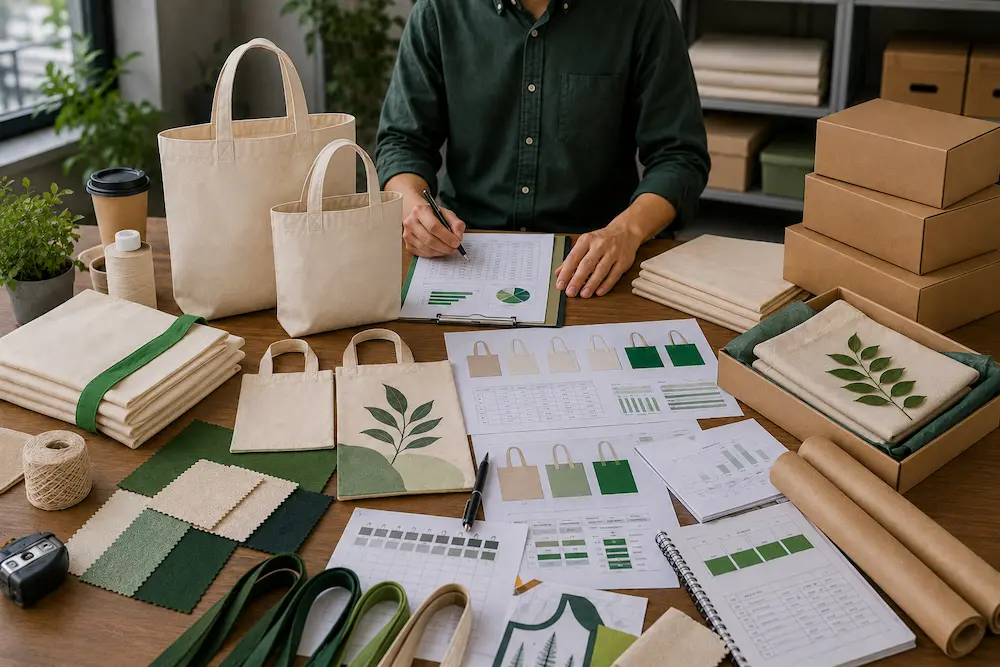
Understand Where Tote Bag Costs Come From
Before reducing costs, buyers should understand how tote bag pricing is structured.
Most projects include several cost components:
| Cost Component | Cost Impact |
|---|---|
| Fabric | High |
| Printing | Medium-High |
| Sewing | Medium |
| Packaging | Low-Medium |
| Shipping | Medium-High |
Many buyers negotiate only the factory price while ignoring opportunities to optimize the other categories.
Understanding the complete cost structure often reveals larger savings opportunities.
Optimize Fabric Selection
Fabric is usually the largest production cost.
Small adjustments in material specifications can create significant savings.
Common factors include:
- Fabric type
- Fabric weight
- Fabric thickness
- Fabric width utilization
- Material sourcing
For example, switching from 12 oz canvas to 10 oz canvas may reduce material costs while still providing adequate durability for many applications.
Similarly, standard cotton fabrics often cost less than organic cotton or specialty recycled materials.
Many brands sourcing custom cotton tote bags for natural brand storytelling find that selecting the appropriate fabric weight rather than the heaviest available option can reduce costs without affecting customer satisfaction.
The key is matching fabric performance to actual usage requirements.
Reduce Printing Costs
Printing is another major cost driver.
The complexity of artwork directly affects production expenses.
Several factors influence printing costs:
- Number of colours
- Print size
- Print location
- Printing method
- Artwork complexity
Reduce Colour Count
For screen printing, each colour requires a separate screen.
A one-colour logo typically costs less than a four-colour design.
Simplifying artwork can create substantial savings on large orders.
Choose the Right Printing Method
Not every design requires full-colour digital printing.
Simple logos often work well with screen printing, which becomes highly economical for large production runs.
Many tote bags printed for brand visibility and promotion use simple one-colour branding because the marketing impact remains strong while production costs stay low.
Optimize Print Size
Larger artwork increases:
- Ink consumption
- Production time
- Inspection requirements
Sometimes reducing print dimensions slightly can lower costs without reducing visibility.
Increase Order Quantity
One of the easiest ways to reduce unit cost is increasing production volume.
Most tote bag manufacturing includes fixed costs such as:
- Setup
- Sampling
- Artwork preparation
- Machine preparation
When quantities increase, these fixed costs are distributed across more units.
Example:
| Quantity | Relative Unit Cost |
|---|---|
| 100 pcs | Highest |
| 500 pcs | Medium |
| 1,000 pcs | Lower |
| 5,000 pcs | Much Lower |
| 10,000 pcs+ | Lowest |
Businesses that consolidate multiple campaigns into a single order often achieve better pricing than those placing many small orders.
Standardize Tote Bag Dimensions
Custom dimensions often increase production complexity.
Factories generally operate more efficiently when producing standardized sizes.
Standard tote bag sizes allow:
- Better fabric utilization
- Faster cutting
- Reduced waste
- Improved sewing efficiency
Non-standard dimensions may create additional material waste and production time.
Before requesting custom sizing, buyers should evaluate whether standard sizes can achieve the same business objectives.
Simplify Tote Bag Construction
Every additional feature adds cost.
Examples include:
- Internal pockets
- Zippers
- Magnetic closures
- Buttons
- Reinforced bases
- Extra compartments
While these features may add functionality, they also increase:
- Labour time
- Material consumption
- Quality control requirements
For many promotional campaigns, a simpler design may deliver the same marketing impact at a significantly lower cost.
Standardize Handle Specifications
Handle construction affects both materials and labour.
Variables include:
- Handle length
- Handle width
- Webbing materials
- Reinforcement methods
Using standard handle dimensions helps manufacturers optimize production efficiency. For example, many custom logo tote bags for consistent visual identity achieve strong branding results without requiring highly customized handle configurations.
Improve Artwork Preparation
Frequent artwork revisions create hidden production costs.
Every change may require:
- New proofs
- New screens
- Additional setup
- Delayed production schedules
Businesses can reduce costs by:
- Finalizing artwork early
- Providing vector files
- Defining Pantone colours clearly
- Confirming print placement before sampling
Clear communication helps reduce production inefficiencies.
Optimize Packaging Costs
Packaging costs are often overlooked. However, large-volume projects can generate meaningful savings through packaging optimization.
Options include:
- Bulk packaging
- Reduced individual polybags
- Standard export cartons
- Simplified labelling
Luxury packaging should only be used when it supports actual business objectives. For many promotional applications, simplified packaging provides better overall value.
Reduce Shipping Expenses
Shipping frequently becomes one of the largest project expenses.
Cost reduction opportunities include:
Consolidated Shipments
Combining multiple products into a single shipment improves container utilization.
Early Production Planning
Rush production often forces expensive air freight.
Planning earlier usually allows lower-cost sea freight options.
Carton Optimization
Efficient carton sizing reduces wasted shipping volume.
This can significantly lower freight costs, especially for international orders.
Work with the Right Supplier
The cheapest supplier is not always the most cost-effective supplier.
Reliable manufacturers often reduce overall costs by:
- Preventing quality issues
- Improving production efficiency
- Reducing delays
- Providing accurate quotations
- Offering sourcing recommendations
An experienced supplier may suggest specification changes that reduce costs while maintaining performance. This creates greater long-term value than simply accepting the lowest quotation.
Avoid Over-Specification
Many buyers unintentionally increase costs by requesting features they do not actually need.
Examples include:
- Excessively heavy fabrics
- Overly complex artwork
- Premium finishing for giveaway products
- Unnecessary reinforcement
Businesses should always evaluate:
“What level of quality does the application truly require?”
The answer often reveals opportunities for cost reduction.
Use Design for Manufacturing Principles
Design for Manufacturing (DFM) focuses on creating products that are easier and more efficient to produce.
For tote bags, this includes:
- Standard sizes
- Efficient panel layouts
- Reduced sewing operations
- Practical print locations
- Simplified construction
Products designed for manufacturing efficiency usually achieve lower costs while maintaining quality.
Balance Cost and Branding Value
Cost reduction should never damage branding performance.
A poorly made tote bag may save money initially but harm customer perception later.
Products such as personalised tote bags for distinct brand expression often succeed because they balance affordability with perceived quality.
The best sourcing decisions focus on overall value rather than the lowest possible cost.
Invest in Long-Term Planning
Businesses that forecast demand accurately often achieve better pricing.
Long-term purchasing plans allow:
- Better production scheduling
- Larger order quantities
- Material reservation
- Improved supplier relationships
This reduces costs while improving supply chain stability.
Common Cost Reduction Mistakes
Choosing the Lowest Quote
Ultra-low pricing often creates:
- Lower material quality
- Reduced durability
- Production delays
- Quality issues
Cutting Quality Too Aggressively
Saving a few cents per bag may result in customer complaints or reduced reuse.
Ignoring Shipping Costs
Freight costs can sometimes exceed expected savings from production negotiations.
Over-Customization
Highly customized products generally cost more to manufacture.
Conclusion
Reducing tote bag production costs requires more than negotiating lower factory pricing.
The biggest savings often come from:
- Fabric optimization
- Printing simplification
- Quantity planning
- Standardized specifications
- Packaging improvements
- Logistics efficiency
Businesses that understand the complete production process can reduce costs while maintaining product quality, branding effectiveness, and customer satisfaction.
The smartest sourcing strategy is not buying the cheapest tote bag.
It is creating the best overall value.
For many brands investing in custom printed tote bags for impactful brand presence, efficient specification management and production planning often generate greater savings than aggressive price negotiations alone.
How Businesses Should Approach Tote Bag Cost Reduction
Cost reduction should be strategic: The largest savings often come from specification optimization rather than supplier discounts alone.
Focus on total cost: Materials, printing, packaging, and shipping all contribute to the final project cost and should be evaluated together.
Avoid sacrificing value: Reducing quality too aggressively may damage customer satisfaction and branding performance.
The key takeaway: The most successful sourcing strategies reduce costs while preserving durability, usability, and marketing effectiveness.
7. FAQ
1. What is the easiest way to reduce tote bag production costs?
Increasing order quantity is often the fastest way to lower unit costs because setup and production expenses are spread across more units.
2. Does reducing fabric weight lower costs significantly?
Yes. Fabric is usually one of the largest cost components, so optimizing fabric weight can generate meaningful savings.
3. How can printing costs be reduced?
Reducing colour count, simplifying artwork, and choosing the most suitable printing method can lower printing expenses.
4. Is bulk packaging cheaper than individual packaging?
Yes. Bulk packaging generally reduces material costs, labour costs, and shipping volume.
5. Should businesses always choose the lowest supplier quotation?
Not necessarily. Quality, reliability, production consistency, and delivery performance often create more value than the lowest initial price.
9. References
- Textile Manufacturing Cost Analysis Handbook
- Promotional Products Cost Optimization Guide
- Cotton and Canvas Fabric Cost Study
- Screen Printing Efficiency Manual
- Packaging Cost Reduction Research
- International Freight Cost Management Guide
- Lean Manufacturing Principles for Textile Products
- Supply Chain Optimization Handbook
Website Content Notice:
Unless otherwise stated, all original articles published on this website are owned by Xiamen Youngpack Imp.and Exp.Co.,Ltd. and may not be copied or republished without authorization.