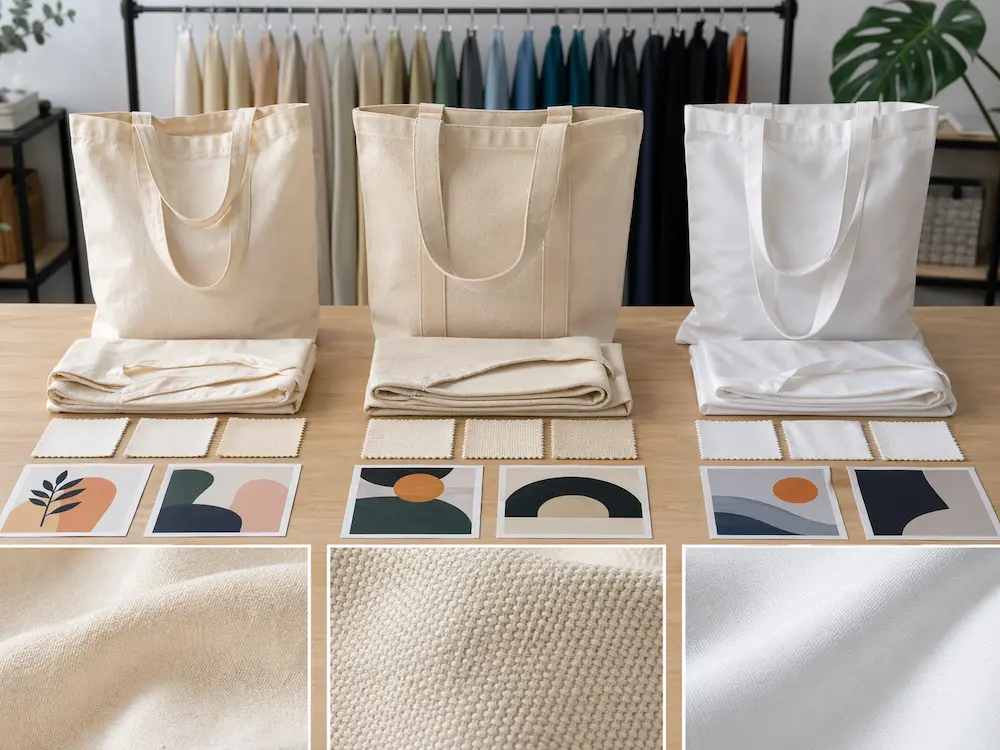
If a business chooses the wrong tote bag material, everything else becomes harder. The print may look right, but the bag may feel weak. The bag may be durable, but it may not match the brand tone. The price may look good, but the product may not stay in use long enough to justify the purchase. That is why understanding tote bag materials is not a small technical detail. It is the basis of the whole sourcing decision.
The three most common materials buyers compare are cotton, canvas, and polyester. They all solve the same basic problem in different ways. Cotton tends to feel softer, lighter, and more natural. Canvas tends to feel stronger, more structured, and more premium. Polyester tends to feel lighter, more technical, and often more resistant to moisture or folding stress. None of them is universally better. The right one depends on the job the bag needs to do.
This guide explains how cotton, canvas, and polyester behave in real commercial use, not just in supplier descriptions. That is the difference buyers actually need.
Why Material Choice Matters More Than Most Buyers Think
Many businesses start tote bag sourcing with artwork and quantity. That is understandable, but it is usually the wrong starting point. Material should come first because it changes how the bag feels, how long it lasts, how it prints, how much it costs to ship, and how likely customers are to keep using it after the first handover.
A tote bag that feels natural and easy to carry often stays in circulation longer. A bag that feels stiff, overly technical, or underbuilt may disappear faster, even if the logo looks good. In other words, material choice influences not only product quality, but also marketing value.
This is why strong branding programs often begin by choosing the right product base before the artwork is finalized. A logo cannot rescue the wrong fabric.
Cotton Tote Bags: The Familiar Everyday Option
Cotton is one of the most common tote bag materials because it is easy for customers to understand. It usually feels soft, natural, breathable, and approachable. That makes cotton tote bags especially strong for bookstores, cafés, museums, lifestyle retail, trade shows, schools, nonprofits, and everyday promotional use where the bag should feel simple and comfortable.
Cotton also works well when the business wants a more natural brand tone without moving into a heavier premium product. A standard cotton tote often fits daily errands, light shopping, office basics, and general public reuse better than more technical materials because it does not feel like equipment. It feels like a normal part of life.
That familiarity is a major commercial advantage. Many customers do not need to be convinced to carry a cotton tote. They already understand where it fits.
What Cotton Does Well
Cotton is usually strong in comfort, print friendliness, and everyday flexibility. It folds well, carries lightly, and feels softer than heavier or more technical bag materials. This makes it especially useful in brand programs where the tote bag should feel approachable rather than overdesigned.
It is also one of the easiest materials for businesses to scale in broad-use programs because it is familiar in the market and works across many categories. This is one reason why products such as custom cotton tote bags are so common in natural-brand, culture-led, and everyday-visibility campaigns. The material supports a message of ease, usefulness, and repeatable public presence.
But cotton is not perfect. It is usually less structured than heavier canvas and less resistant to moisture or folding stress than polyester. That matters when the bag is expected to carry more than light to moderate loads.
Where Cotton Has Limits
Cotton works best when the carrying expectations are reasonable. If the bag needs to hold multiple books, bottles, or heavier grocery items repeatedly, lighter cotton constructions may begin to feel too soft or too weak. Cotton can still be durable, but in many cases it needs stronger weight or better construction to support that use.
This is where buyers sometimes misuse cotton. They choose a light, soft, attractive fabric for a bag that is really supposed to function like a load-bearing shopping tote. The problem is not cotton itself. The problem is forcing the wrong cotton construction into the wrong role.
So cotton is a strong material, but mainly when the bag’s use pattern matches its natural strengths.
Canvas Tote Bags: The Stronger, More Structured Choice
Canvas is usually the material buyers move to when cotton starts feeling too light or too casual. Canvas is still textile-based and still often natural in look and feel, but it usually has more body, more structure, and more long-term carrying confidence than standard cotton. That makes it highly suitable for retail merchandise, bookstore bags, grocery use, premium gifts, museum shops, lifestyle brands, and stronger reusable shopping programs.
Canvas often gives the tote bag a more product-like presence. It feels less like a free handout and more like something worth keeping. That matters because public reuse is often tied to perceived value. A bag that feels strong and intentional is more likely to remain in circulation.
This is why many visible retail and branded merchandise programs eventually shift toward more tailored or stronger canvas-based products such as personalised tote bags when the bag needs to carry more than just the logo.
| Material | Main Strength | Typical Feel | Best Business Use | Main Limitation |
|---|---|---|---|---|
| Cotton | Comfort and everyday flexibility | Soft, natural, familiar | Events, daily use, bookstores, promotions | Less structure for heavier loads |
| Canvas | Structure and long-term durability | Heavier, stronger, more premium | Retail, groceries, premium gifts, merchandise | Higher cost and more freight weight |
| Polyester | Lightweight portability and utility | Technical, smooth, more compact | Travel, sports, events, foldable use | Less natural feel and weaker lifestyle tone |
What Canvas Does Well
Canvas usually performs strongly in load support, shape retention, and public-use confidence. It is often better for books, groceries, mixed shopping items, and long-term daily carry than lighter cotton. It also usually gives branding more physical authority because the bag itself feels more substantial.
That is why stronger brand programs often use custom printed canvas tote bags when they want the tote to behave like retail merchandise or long-term visible brand media. The fabric helps the bag feel like a real product, not just an accessory to the campaign.
Canvas is particularly strong when the bag is expected to be used regularly and visibly in public. It supports that kind of repeated use better than many lighter alternatives.
Where Canvas Has Limits
Canvas is not always the right answer because strength comes with cost. It usually costs more than standard cotton, takes more material, uses more freight space, and may feel unnecessarily heavy for simpler promotional or event uses. A strong canvas tote used for a one-day brochure handout is often wasted product logic.
Canvas can also feel more serious than some brands need. In soft lifestyle or very low-cost awareness campaigns, the extra structure may not actually improve results. It may simply add landed cost.
So canvas is best when the bag really needs the added body, perceived value, or repeat-use durability. If not, the business may be paying for strength that never gets used.
Polyester Tote Bags: The Lightweight Utility Option
Polyester enters the tote bag conversation from a different direction. It is usually not chosen because it feels especially natural or premium. It is chosen because it is practical. Polyester bags are often lighter, more compact, quicker to dry, more tolerant of folding, and sometimes more suitable for weather exposure or travel use than cotton or canvas.
This makes polyester strong in event giveaways, sports-related promotions, travel bags, foldable totes, student campaigns, beach-use accessories, and practical utility merchandise where portability and convenience matter more than tactile naturalness.
Polyester can also create clear branding, but the bag usually communicates function first. It tends to feel more active, more technical, and less lifestyle-soft than cotton or canvas. That can be exactly right in the right category.
What Polyester Does Well
Polyester is usually strongest when the bag needs to be easy to carry, easy to store, and useful in movement-based routines. It often folds smaller than canvas, dries faster than cotton, and performs well in travel, gym, beach, and outdoor settings where a textile bag may face moisture or repeated folding.
This is why polyester and adjacent lightweight bag types often overlap with other portable categories. In some promotional systems, brands compare tote bags directly with drawstring alternatives because the real question is not only about open-top carry, but about how compact and movement-friendly the bag feels. That is where lighter utility products such as tote bags printed on more practical materials can make sense when the goal is broad-use convenience rather than a heavier, more premium product feel.
Polyester is strongest when practicality leads the product logic.
Where Polyester Has Limits
Polyester is often weaker in emotional and tactile terms. It usually does not feel as warm or as natural as cotton. It usually does not feel as sturdy and premium as strong canvas. For bookstores, organic retail, museums, premium gifting, or natural-brand campaigns, polyester can feel slightly out of place unless the brand intentionally wants that more technical tone.
It can also make the bag feel more like a functional extra than a long-term lifestyle object. That is not a problem in sports, events, or travel, but it matters in retail environments where the bag should reflect taste and identity rather than simple convenience.
So polyester should be chosen because its practical strengths matter, not just because it can be cheaper or lighter.
How These Materials Change Brand Tone
Material choice is one of the clearest ways a tote bag shapes brand tone before the customer even reads the logo. Cotton usually says easy, natural, relaxed, and everyday. Canvas usually says durable, product-like, and more premium. Polyester usually says useful, lightweight, and more technical or active.
This matters because the same printed logo will feel different on different materials. A simple logo on cotton can feel calm and approachable. The same logo on canvas can feel stronger and more substantial. The same logo on polyester can feel more functional and movement-oriented.
That is why branding decisions should never be separated from material decisions. The material is already speaking before the print does.
How to Match Material to Business Use
The most useful way to choose between cotton, canvas, and polyester is to start with the job. If the bag is for supermarkets, bookstore use, premium merchandise, or repeated shopping, canvas usually deserves serious consideration. If the bag is for general daily promotions, everyday public branding, schools, cafés, or museums, cotton often makes more sense. If the bag is for travel, sports, youth campaigns, or lightweight outdoor activity, polyester often becomes more relevant.
This is also why many brand programs do not rely on one material alone. A company may use cotton for everyday awareness bags, canvas for premium retail, and polyester for event or outdoor campaigns. Material choice should follow channel and use, not branding habit.
Cost and Freight Considerations
From a cost perspective, material choice changes more than production price. Heavier canvas generally costs more to produce and more to ship. Cotton tends to sit in the middle, depending on weight and construction. Polyester may offer practical savings in some lighter-weight programs because it packs efficiently and supports compact products.
But cost should always be judged against value. A cheaper material that customers do not keep using is not always cheaper in real business terms. A more expensive material that creates stronger reuse and better perception may create much better value over time.
That is why businesses should compare landed cost together with likely public life, not only the initial quote.
| Business Scenario | Usually Better Material Direction | Main Reason |
|---|---|---|
| Trade show giveaways | Cotton or polyester | Cost-efficient distribution and light use |
| Bookstores and museums | Cotton or canvas | Everyday reuse plus stronger lifestyle fit |
| Supermarket and grocery programs | Canvas | Better load support and repeat-use durability |
| Sports, travel, and outdoor promotions | Polyester | Lighter weight and movement-based utility |
| Premium retail merchandise | Canvas | Higher perceived value and better structure |
How to Evaluate a Supplier’s Material Advice
A good supplier should not just say cotton is eco, canvas is premium, and polyester is light. They should explain what the bag is expected to carry, how it will be used, how it will be printed, and whether the selected material actually supports that use pattern. If a supplier cannot connect the material to the real job of the bag, they are usually not giving useful product advice.
Buyers should ask about weight, feel, stitching, handle strength, freight effect, and whether the material still makes sense once the bag reaches the end user. A stronger supplier usually adds more value by preventing the wrong material choice than by pushing the most expensive one.
This is where Youngpack-style sourcing logic matters. The right tote material is the one that aligns customer use, brand identity, and practical supply economics in the same direction.
Conclusion
Understanding tote bag materials is really about understanding product roles. Cotton usually works best when the business wants softness, everyday use, and a more natural approachable feel. Canvas usually works best when the bag needs more strength, more structure, and more perceived value. Polyester usually works best when portability, utility, and light practical performance matter most.
The right material is not the one that sounds best in theory. It is the one that fits the real customer routine and the real brand message once the bag enters actual use. Buyers who choose materials that way usually build better tote bag programs.
How Buyers Should Think About Tote Bag Materials
What this comparison really measures: Cotton, canvas, and polyester are not just three fabric names. They represent three different product directions. Cotton usually supports softness, familiarity, and easy everyday use. Canvas usually supports structure, durability, and higher perceived product value. Polyester usually supports lightweight utility, portability, and more technical practical use.
Why many buyers choose the wrong material: The most common mistake is choosing only by price or by what feels most familiar. That often leads to underbuilt bags in heavy-use situations or overbuilt bags in simple promotional programs. The right material should follow the bag’s real job, not the supplier’s default recommendation or the buyer’s habit.
How businesses should compare materials properly: The strongest comparison method is to evaluate customer routine, load type, print needs, public brand role, and landed cost together. A trade show tote, a bookstore bag, a supermarket shopping tote, and a travel promotion may all use “tote bags,” but they do not need the same material logic.
Options businesses usually weigh: Most buyers compare cotton for approachable daily branding, canvas for stronger retail and repeated-use value, and polyester for movement-based practical use. The better option becomes much clearer once the business decides whether the bag should feel soft and familiar, sturdy and product-like, or light and functional.
Considerations before placing the order: Before finalizing a material, businesses should test actual samples, check how the bag behaves under real weight, compare print presentation, and include freight and storage in the calculation. They should also ask whether the chosen material still supports the brand message once the bag leaves the factory and enters everyday public use.
The broader takeaway: The strongest tote bag material is the one that aligns product feel, user behavior, and brand purpose honestly. That is also where Youngpack naturally fits as a B2B manufacturing and export partner for buyers comparing cotton, canvas, and polyester bag programs while needing practical guidance on customization, durability, and long-term brand value.
FAQ
1. Which tote bag material is best for everyday use?
For many everyday-use situations, cotton is often the best starting point because it feels soft, natural, and easy to carry in normal daily routines. It works well for bookstores, cafés, museums, schools, and casual shopping because customers already understand how it fits into daily life. However, if the bag needs to carry heavier items or feel more substantial, canvas may be the better everyday option. The best answer depends on whether comfort or stronger structure matters more.
2. What is the main difference between cotton and canvas tote bags?
The main difference is weight and structure. Cotton tote bags are usually softer, lighter, and more flexible, which makes them good for lighter everyday use and general promotions. Canvas tote bags are usually heavier, more structured, and more durable-feeling, which makes them stronger for groceries, books, premium retail, and long-term reuse. Canvas often feels more like a product in its own right, while cotton often feels more casual and accessible.
3. Are polyester tote bags good for branding?
Yes, polyester tote bags can work well for branding, especially in travel, sports, event, and outdoor-use programs. They often support clear printed branding and are very practical when the bag needs to be lightweight, portable, or more tolerant of moisture and folding. However, polyester usually creates a more technical and less natural product feel than cotton or canvas, so it is most effective when the brand wants practicality more than a soft lifestyle impression.
4. Which tote bag material is most durable?
Canvas is usually the most durable-feeling of the three common materials in repeated shopping and retail-use terms, especially when the bag needs stronger structure and better load support. Cotton can also be durable when the weight and construction are appropriate, but lighter cotton bags are not designed for the same level of repeated heavy use. Polyester can be durable in portability and weather-related use, but it serves a different purpose than heavy structured canvas. The best durability choice depends on what kind of use the bag actually faces.
5. What should buyers check before choosing tote bag materials in bulk?
Buyers should check how the bag will be used, what it needs to carry, how important print appearance is, how much public reuse matters, and whether the material still fits the brand’s visual tone. They should also compare fabric weight, stitching, handle quality, freight impact, and how the bag feels in real use. The strongest material choice usually becomes clear once the business defines whether the bag is mainly for retail, promotions, daily carry, or lightweight utility use.
References
- Preferred Fiber and Materials Market Report — Textile Exchange — Textile Exchange.
- Textiles and the Environment — European Environment Agency — EEA.
- Green Guides for the Use of Environmental Marketing Claims — Federal Trade Commission — FTC.
- Sustainable Packaging Guidelines — Australian Packaging Covenant Organisation — APCO.
- Fashion on Climate — Global Fashion Agenda and McKinsey & Company.
- Responsible Sourcing and Product Communication in Textile Supply Chains — industry trade reference.
- Retail Packaging and Reusable Bag Sourcing Best Practices — professional sourcing reference.
- Guide to Reusable Bags and Long-Term Use Value — industry best-practice sourcing reference.
Rights Reserved Notice:
All rights to this article, including its wording, structure, and commercial packaging insights, are reserved by Xiamen Youngpack Imp.and Exp.Co.,Ltd.