Introduction
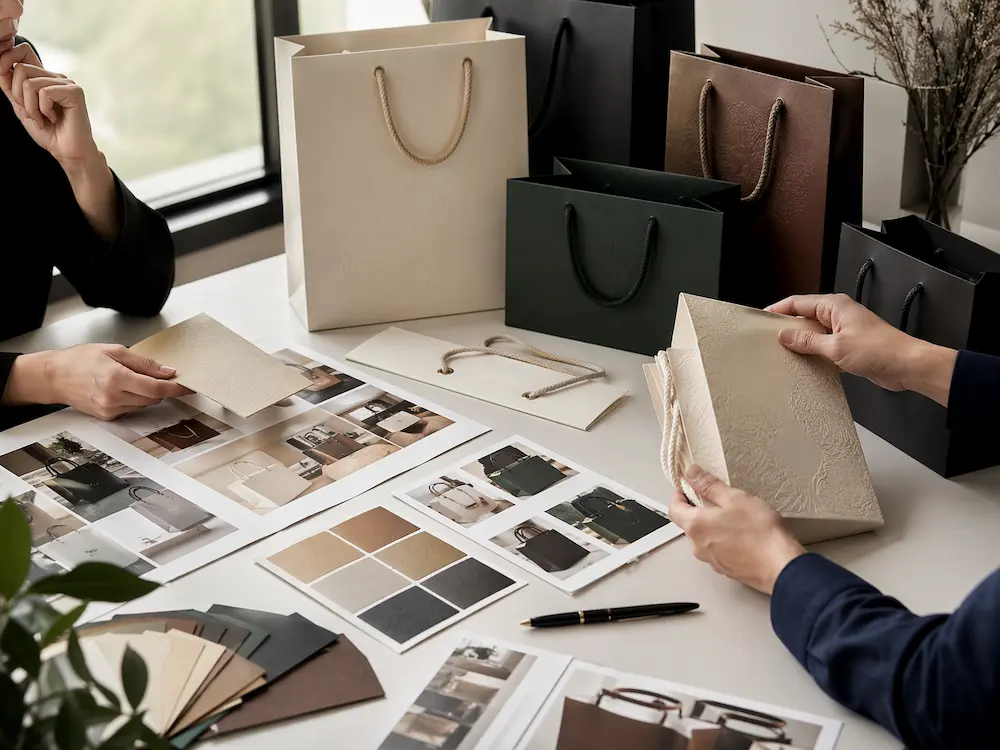
The conversation around modern luxury paper bags has changed. Buyers no longer see luxury paper bags as simple carry packaging. For importers, they are now expected to work as part of the retail image, the unboxing experience, the brand message, and the overall product value. That is why luxury paper bags for importers are judged more strictly than before. Buyers still want the bag to look premium, but they also want it to feel consistent, photograph well, carry comfortably, and support a more credible packaging story.
In practical sourcing, what buyers want from modern luxury paper bags is not just “more luxury.” They want more control. They want better materials, cleaner printing, more refined structure, smarter finishing, and stronger brand alignment. A luxury bag that looks expensive but feels weak is no longer enough. A luxury bag that feels premium but has no clear material logic is also becoming less convincing. For importers, this means the strongest luxury paper bags are the ones that combine appearance, structure, and brand relevance in one clear packaging solution.
Buyers want refined presentation, not visual overload
One of the clearest changes in modern luxury paper bags is that buyers increasingly prefer refinement over excess. In the past, luxury packaging often relied on heavy decoration to signal value. Today, many buyers want luxury paper bags that look expensive because they are well judged, not because they are overloaded with effects.
That usually means:
- cleaner layouts
- stronger spacing
- more confident typography
- better logo placement
- finishes that support the design instead of competing with it
For importers, this matters because buyers are often asking for a more disciplined luxury look rather than a louder one. The most successful modern luxury paper bags for importers are often the ones with strong proportions, controlled branding, and a finish that feels intentional from every angle.
This is also why some buyers increasingly look at more presentation-led formats such as personalised paper bags for refined brand presentation when evaluating how modern luxury packaging should communicate exclusivity. In many real projects, the appeal comes not from how much is added to the bag, but from how well each design decision supports the brand.
Buyers want luxury paper bags that feel premium in the hand
A luxury paper bag is judged by touch before it is judged by analysis. Buyers notice stiffness, texture, edge quality, fold precision, and handle comfort immediately. If the bag looks premium but feels too thin, too soft, or badly balanced, the whole experience weakens at once.
For importers, this means modern buyers usually want luxury paper bags with:
- stronger board feel
- cleaner folding
- better reinforcement
- more comfortable handles
- more stable bottom construction
In luxury paper bags for importers, hand-feel matters just as much as appearance. A bag with excellent print but poor physical structure rarely feels truly premium. Modern buyers often want tactile quality that matches the selling price of the product inside. This is especially true in fashion, beauty, jewellery, fragrance, and upscale gifting.
That is why structure is no longer a technical afterthought. In modern luxury paper bags, the structure itself is part of the luxury signal.
Buyers want a luxury look that still feels contemporary
Not all luxury today is glossy, ornate, or heavily embellished. In many markets, buyers now associate premium value with restraint, clarity, and material honesty. This is one reason natural-looking paper has gained more relevance in higher-end packaging conversations.
Some buyers now review brown paper bags for natural and sustainable packaging when thinking about how modern luxury paper bags can express a quieter and more contemporary kind of prestige. A natural paper tone, when combined with strong structure and refined printing, can feel more modern than a heavily decorated surface.
For importers, this is important because luxury paper bags for importers are no longer judged only by visible decoration. Buyers increasingly ask whether the bag feels current. In many premium categories, a natural kraft-based look, a soft matte effect, or a restrained branded surface may now communicate more confidence than a complex, overstated design.
That does not mean every luxury paper bag should be brown or understated. It means the best modern luxury paper bags are now more often designed around brand identity and market taste rather than a generic idea of “more expensive equals more decoration.”
Buyers want branding that is clear, not forced
Brand visibility is still central to luxury paper bags, but the way buyers think about branding has become more selective. Modern buyers often do not want branding that shouts. They want branding that is unmistakable, balanced, and appropriate for the product tier.
This usually means:
- more precise logo scale
- better logo placement
- fewer competing visual elements
- more disciplined foil or emboss use
- stronger front-panel balance
For importers, this is where many luxury bag projects succeed or fail. A logo that is too large can make the bag feel commercial instead of premium. A logo that is too small can weaken brand presence. Buyers want a brand treatment that feels deliberate and confident.
That is why some buyers also compare branded paper bags for strong brand recognition when judging how modern luxury paper bags for importers should balance luxury presentation with brand clarity. The strongest luxury paper bags are often the ones where branding is highly visible without becoming visually aggressive.
Buyers want handles that feel as premium as the bag body
In luxury paper bags for importers, handles are not just functional. They are part of the value perception. Buyers notice immediately whether the handles feel comfortable, substantial, and visually matched to the body of the bag.
A weak handle can undermine an otherwise premium bag. A handle that is too thin, too rough, too stiff, or poorly proportioned makes the bag feel less considered. That is why buyers usually want handle choices that align with the level of the bag:
- cotton rope for softer premium carry
- ribbon handles for more presentation-led gifting
- woven tape for controlled modern retail
- better-quality paper handles for more sustainable premium use
For buyers exploring more natural premium carry formats, brown paper bags with handles for natural and reliable carry can also help illustrate how handle comfort, structure, and visual simplicity can work together. In many cases, a well-designed natural handle solution feels more modern than an overly decorative alternative.
For importers, the message is clear: in modern luxury paper bags, handles are part of the luxury experience, not an accessory added at the end.
Buyers want material choices that support both premium image and credibility
Modern buyers are increasingly careful about what the bag is made of, not just how it looks. This does not always mean they want the most obviously “eco-looking” bag. It means they want a material choice that makes sense for the brand, the product, and the broader packaging story.
For importers, buyers usually want to know:
- does the material feel premium?
- does it support the right print result?
- does it fit the brand image?
- does it align with current expectations around sourcing and sustainability?
In many luxury categories, material credibility is becoming part of perceived value. Buyers do not necessarily want a bag covered in sustainability messaging, but they do want the material choice to feel thoughtful. This is why modern luxury paper bags for importers increasingly need stronger material logic behind the visual design.
Buyers want sustainability, but not at the expense of luxury
One of the biggest changes in luxury paper bags is that sustainability is now part of the luxury conversation. But buyers do not usually want a bag that looks worthy and underwhelming. They want a bag that still feels premium while also making better material and sourcing choices.
For importers, this means sustainability must be integrated carefully. Buyers often want:
- simpler material structures
- more responsible paper sourcing
- less unnecessary layering
- fewer wasteful design choices
- cleaner and more believable packaging logic
The strongest modern luxury paper bags are often the ones where sustainability is built into the bag quietly, through paper choice, structure, and finish discipline, rather than through loud claims. A luxury bag that looks refined, carries well, and uses more responsible materials usually feels more convincing than a bag that talks about sustainability but performs poorly.
Buyers want print and finishing that are repeatable, not just beautiful in samples
A luxury paper bag sample can be impressive. The real test is whether the same result can be repeated across production. Modern buyers are very sensitive to inconsistency. If the colour shifts, the emboss loses sharpness, the foil varies, or the handle placement moves from run to run, the brand value drops quickly.
That is why one of the strongest things buyers want from luxury paper bags for importers is repeatability. They want:
- stable colour
- consistent finishing
- reliable structure
- accurate handle placement
- repeatable material feel
For importers, this means the best modern luxury paper bags are not necessarily the most complex ones. They are often the ones that can be reproduced well, not just approved once.
Buyers want luxury bags that still make commercial sense
Even premium buyers do not want luxury bags that are difficult to ship, awkward to store, or too fragile for real retail use. Modern buyers still care about operational sense. They want a bag that feels premium but also works in real supply-chain conditions.
This includes:
- better carton efficiency
- cleaner packing stability
- less deformation in transit
- more dependable repeat use
- fewer problems in storage or retail handling
For importers, this is where luxury paper bags for importers are now judged more intelligently. Buyers still want premium packaging, but they no longer separate beauty from practicality as sharply as before. The best luxury bag is often the one that looks refined, feels strong, and performs well across the full order cycle.
Buyers want luxury packaging that fits their market, not a generic luxury look
A major mistake in luxury paper bag sourcing is assuming that every market wants the same style of luxury. In reality, buyers in different sectors and regions often want very different expressions of premium value.
Some want:
- minimalist luxury
- soft natural tones
- stronger fashion-led branding
- higher decoration for gifting
- quieter materials for beauty or skincare
- sharper graphic clarity for modern retail
For importers, this means modern luxury paper bags should be developed for the actual brand and the actual market, not for a generic idea of prestige. The strongest luxury bag programme is usually the one that feels appropriate, not merely expensive-looking.
What buyers reject most quickly
Modern buyers are often quick to reject:
- bags that look busy rather than refined
- weak handles on premium structures
- beautiful samples with poor repeat consistency
- materials that do not match the brand story
- sustainability language that feels vague or forced
- bags that feel heavy on decoration but light on judgement
For importers, this is useful because it clarifies what modern luxury buying is really about. Buyers are not simply looking for “more features.” They are looking for better decisions.
Conclusion
What buyers want from modern luxury paper bags for importers is becoming clearer. They want premium appearance, but not visual noise. They want better materials, but also better judgement. They want handles that feel right, branding that looks balanced, finishes that add value, and structures that perform well in daily use.
For importers, the strongest luxury paper bags are now the ones that combine refined presentation, tactile quality, brand alignment, material credibility, and production consistency. That is what gives modern luxury paper bags their real value today. Not excess, but control. Not only decoration, but coherence. And not just a premium look, but a premium packaging experience that feels believable from first touch to final carry.
How Importers Should Think About Modern Luxury Paper Bag Demand
What buyers really want: Modern buyers usually want luxury paper bags that combine visual refinement, tactile quality, structural confidence, and a packaging story that feels believable in today’s market.
Why this matters for importers: Luxury bags are no longer judged only by decoration. Buyers increasingly compare brand presentation, material feel, carrying comfort, sourcing credibility, and repeat-order consistency together.
How buyers now compare luxury bags: They often look for cleaner layouts, better handles, more disciplined finishes, stronger structure, and packaging choices that feel appropriate to both the product and the market.
What usually performs best: The strongest modern luxury paper bags are often the ones that look premium without visual overload, feel expensive in the hand, and support more specific sourcing language instead of vague “green” positioning.
What importers should watch most carefully: Overdecorated designs, weak hand-feel, inconsistent repeat production, and unsupported environmental claims are usually bigger risks than having “too few” luxury features.
The larger takeaway: Modern luxury buyers are generally rewarding coherence more than excess. The best luxury paper bag is usually the one where structure, branding, finish, and sourcing all feel like one well-judged decision.
FAQ
1. What do buyers want most from modern luxury paper bags?
Most buyers want modern luxury paper bags that combine premium appearance, tactile quality, structural reliability, and more credible sourcing. In practice, they usually prefer bags that look refined rather than overloaded, feel strong in the hand, and support a clearer packaging story. Broader packaging research also shows that packaging preferences vary by country, so luxury bag expectations are not identical across markets.
2. Are modern buyers moving away from heavily decorated luxury paper bags?
In many cases, yes. Buyers still value foil, embossing, texture, and other premium finishes, but they increasingly want these details used with restraint. The broader direction in packaging is toward better-designed, more disciplined packaging rather than simply more decoration.
3. Do buyers care about sustainability in luxury paper bags?
Yes, but usually with more discipline than before. Buyers often want a bag that still feels luxurious while also supporting more specific sourcing or environmental claims. FTC guidance warns against broad, unqualified claims like “green” or “eco-friendly,” while FSC says its labels stand for sustainable sourcing.
4. Why do buyers pay so much attention to handles and structure?
Because the luxury effect is not created by print alone. Buyers judge premium bags by hand-feel, carry comfort, edge quality, and whether the bag remains balanced and composed once loaded. In practice, a bag that looks premium but feels weak or awkward in use usually fails buyer expectations quickly. This is a commercial packaging judgment, and it aligns with the wider shift toward more functional, better-designed packaging.
5. What makes a luxury paper bag feel credible to buyers today?
A luxury bag usually feels most credible when the material, finish, branding, and sourcing story all support each other. Buyers are often more cautious about vague environmental claims, more sensitive to repeat-order consistency, and more interested in market-appropriate luxury rather than one generic premium look. FTC guidance and current packaging research both support the need for clearer claims and more market-specific judgement.
References
- Packaging waste / Packaging and Packaging Waste Regulation — European Commission. The Commission says PPWR 2025/40 entered into force on 11 February 2025 and will generally apply from 12 August 2026.
- Commission publishes guidance to support implementation of PPWR — European Commission. The Commission describes the regulation as addressing packaging sustainability and implementation issues ahead of application.
- Environmental Claims: Summary of the Green Guides — Federal Trade Commission. The FTC says marketers should not make broad, unqualified general environmental benefit claims like “green” or “eco-friendly,” and should qualify claims clearly and specifically.
- Green Guides / Environmental Marketing — Federal Trade Commission. The FTC says the Green Guides are designed to help marketers avoid environmental claims that mislead consumers.
- What the FSC Labels Mean — Forest Stewardship Council. FSC says its labels stand for sustainable sourcing and explains the meaning of FSC 100%, FSC Mix, and FSC Recycled.
- Sustainability in packaging 2025: Inside the minds of global consumers — McKinsey & Company. McKinsey reports that consumer priorities and perceptions toward packaging materials vary by country.
Rights Reserved Notice:All rights to this article, including its wording, structure, and commercial packaging insights, are reserved by Xiamen Youngpack Imp.and Exp.Co.,Ltd.