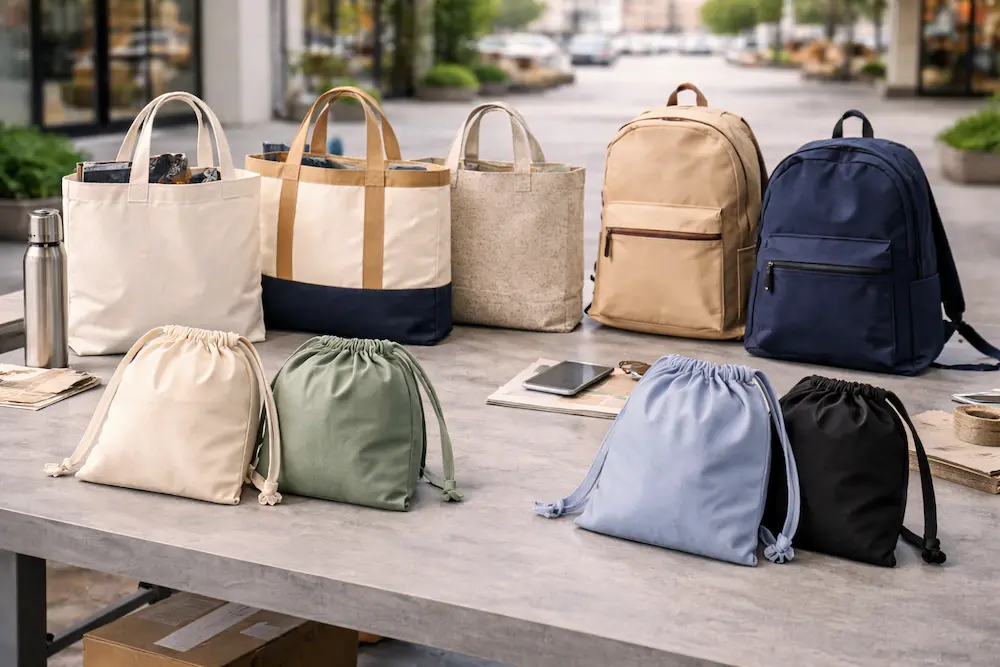
The question of tote bags vs backpacks for daily use sounds straightforward, but in real product sourcing and customer behavior it is more nuanced than that. Both categories are practical. Both can be branded. Both can become part of a person’s daily routine. But they solve the daily-carry problem in different ways, and that difference matters for comfort, product perception, and long-term usability.
A tote bag is often chosen because it is simple, visible, easy to access, and naturally aligned with retail, bookstores, cafés, offices, short commutes, and light shopping. A backpack is often chosen because it distributes weight better, keeps hands free, and supports busier or heavier daily routines such as commuting, campus life, travel, sports, or city movement. Neither is universally better. The right answer depends on what daily use actually looks like.
This matters because many brands and buyers choose by category label rather than by real behavior. A daily-use product should be sourced according to how people move, what they carry, how long they carry it, and what role the bag plays in brand visibility once it leaves the store or event.
What Daily Use Really Means in Bag Buying
“Daily use” is a deceptively broad phrase. For one person, daily use may mean carrying a notebook, lunch, and a wallet between home and office. For another, it means carrying a laptop, charger, bottle, books, gym clothes, and personal items across public transport or campus. For someone else, it means occasional errands, café visits, grocery stops, and a few light purchases on the walk home.
That is why the tote-versus-backpack decision should begin with load pattern and movement pattern. Light carry with frequent access usually favors tote bags. Heavier loads, longer walks, and more hands-free movement usually favor backpacks. If the buyer ignores that difference, the final product may still look attractive but perform poorly in real life.
For brands that want to support simple, visible everyday carry, products like custom cotton tote bags often make sense because they align with casual daily routines and open-top accessibility. But that only works when the carry profile remains moderate enough for the tote format to stay comfortable.
Why Tote Bags Work So Well in Everyday Life
Tote bags are widely used because they are easy. They are easy to grab, easy to open, easy to load, and easy to use in short or moderate daily routines. A tote bag usually works well when the user wants convenience more than compartmentalized organisation. It also works well when the bag should feel integrated into a relaxed lifestyle rather than a technical carry system.
In daily retail and lifestyle settings, totes often feel more natural because they do not overcomplicate the carry experience. They can hold books, light groceries, a sweater, lunch, or office basics without asking the user to unzip multiple sections or shift into more active-use behavior. This is one reason tote bags remain so strong in bookstores, cafés, museums, organic shops, and general city-lifestyle branding.
For brands that want stronger public visibility and broader logo reach, this matters even more. A tote bag presents the brand openly on a large surface. In that sense, a tote can function as both a carry product and a very visible brand panel.
Why Backpacks Often Win in Heavier Daily Routines
Backpacks usually win when the daily routine is heavier, longer, or more movement-driven. Two shoulder straps distribute weight better, reduce strain on one side of the body, and make it easier to carry books, laptops, gym gear, travel items, or school supplies over longer distances. That makes backpacks especially strong for students, commuters, active urban users, and anyone whose “daily use” involves more than a few basic items.
They also create better hands-free utility. Walking, cycling, using public transport, climbing stairs, carrying drinks, managing phones, or moving through crowded spaces usually feels easier with a backpack than a tote. The more physically active the routine becomes, the more backpack logic tends to dominate.
This is why the backpack format is often not competing with totes on appearance alone. It is competing on body comfort and movement efficiency. If the bag needs to stay on the user for long periods, a backpack usually has the structural advantage.
Access and Convenience: Tote Bags Usually Feel Faster
One area where tote bags often outperform backpacks is quick access. A tote bag is usually faster to open, faster to pack, and faster to reach into during short errands, commuting transitions, or day-to-day carry. If the user often puts things in and takes things out throughout the day, a tote can feel easier and less restrictive.
This is especially relevant in office-adjacent routines, retail settings, cafés, small shopping trips, or leisure city use. A person carrying a light load usually does not need the structure of a backpack if the trade-off is slower access and more technical feel.
For everyday brand-led products, especially lighter lifestyle programs, printed textile solutions like printed cotton tote bags often make more sense than backpacks because the bag remains easy, visible, and naturally integrated into casual use without feeling overly active or gear-like.
| Comparison Area | Tote Bags | Backpacks |
|---|---|---|
| Quick access | Usually faster and simpler | Usually slower but more secure |
| Hands-free use | More limited | Much stronger |
| Load comfort | Best for light to moderate loads | Better for moderate to heavier loads |
| Brand visibility | Usually stronger, larger visible print area | More segmented, less open brand display |
| Daily lifestyle appeal | Stronger in retail and casual use | Stronger in commuting and active use |
| Organisation | Simpler, often less compartmentalised | Usually stronger internal organisation |
Comfort: Backpacks Usually Have the Body Advantage
If comfort is judged over time and under weight, backpacks usually pull ahead. A tote bag can feel perfectly comfortable when carrying a few light items. But once the load gets heavier, the single-side or hand-carried nature of a tote usually becomes less comfortable. One shoulder carries more stress. The bag may swing more. The user may need to switch sides or adjust frequently.
Backpacks reduce that problem by balancing the load. This is particularly important for students, commuters, and daily urban users carrying electronics, bottles, books, or multiple items for several hours.
So if the bag will stay on the body for long stretches rather than short transitions, the backpack usually offers the healthier and more functional solution. That does not make totes inferior. It simply means they are stronger in lighter, easier carry patterns.
Brand Visibility and Public Presence: Tote Bags Usually Win
From a branding perspective, tote bags usually have a major advantage. The large flat panels create clearer logo visibility, stronger artwork presence, and more public recognition in everyday settings. A tote bag often behaves like moving media because the branding is immediately readable from the side and front when the user is carrying it.
Backpacks can still be branded effectively, but the shape is more fragmented. Seams, pockets, straps, and body curvature often reduce the clean visible space that tote bags offer so naturally. This does not matter if the bag’s main job is comfort and organisation. But it matters a lot if the bag is also expected to be a public-facing brand carrier.
That is why promotional and visibility-driven campaigns often favor tote formats when the brand wants maximum recognition from simple everyday carry. In larger-scale rollouts, products like custom canvas bags bulk can become more attractive than backpacks because the bag doubles as long-term advertising with relatively simple product logic.
Lifestyle Image: Tote Bags and Backpacks Signal Different Things
Tote bags often signal lifestyle, simplicity, and everyday cultural use. They fit naturally with bookstores, cafés, art spaces, creative work, wellness retail, city shopping, and sustainability-led brand environments. They often feel softer and less technical, which can be a major advantage in markets where the product should look natural, relaxed, and brand-friendly.
Backpacks usually signal utility, movement, and readiness. They are often more associated with commuting, sports, school, travel, and active urban life. This can be exactly the right image for some brands, but it creates a different emotional tone. A backpack usually feels more like gear. A tote bag usually feels more like part of a lifestyle routine.
So the better choice also depends on what image the brand wants attached to the user once the product enters daily life.
When Drawstring Options Complicate the Comparison
In some promotional and lightweight carry programs, the real comparison is not only tote versus full backpack. It may also include lightweight hybrid formats such as drawstring backpacks or drawstring bags. These products often sit between tote bags and traditional backpacks in both cost and use logic.
For example, custom canvas drawstring bags can offer more portability and backpack-like carry than totes while still supporting softer, more eco-conscious branding than technical backpacks. Similarly, in broader promotional merchandise programs, drawstring-based formats can shift the daily-use decision if the user wants lighter hands-free function without a full backpack structure.
This is why buyers should define the daily-use routine precisely. Sometimes the strongest answer is not a tote or a full backpack, but something in between.
When Tote Bags Are Better for Daily Use
Tote bags are usually better when the daily load is moderate, the routine is shorter or more casual, and the user values simplicity, style, or quick access more than body-balanced support. They are especially strong in city errands, bookstore visits, café routines, office-adjacent light carry, shopping, and visible lifestyle branding.
They are also stronger when the bag is expected to contribute directly to brand exposure. A person carrying a tote in public is often carrying a much more readable brand signal than a person wearing a backpack.
So if the routine is light enough and the brand benefit matters, totes can be the smarter daily-use decision.
When Backpacks Are Better for Daily Use
Backpacks are usually better when the load is heavier, the distance is longer, or the user is more physically active. They are stronger for students, long commuters, transit users, people carrying laptops and bottles every day, or anyone whose daily pattern involves more constant movement and less stop-and-go access.
They are also better when organisation matters more than visual openness. If the user needs compartments, security, hands-free convenience, and comfort under weight, backpacks are difficult to beat.
So if the bag is supposed to perform like a daily carry tool first and a brand carrier second, backpacks often make more functional sense.
How Buyers Should Decide
The smartest decision starts with four questions. How much weight will the user carry? How long will they carry it? How often do they need quick access during the day? And how important is brand visibility once the bag is in public use?
If the answers point toward lighter loads, shorter carry periods, easy access, and stronger visible branding, tote bags usually win. If the answers point toward heavier loads, longer periods on the body, hands-free movement, and functional comfort, backpacks usually win.
The decision becomes much easier once the bag’s real daily job is defined honestly. Most bad choices happen when buyers source by category habit instead of by routine.
Conclusion
The comparison between tote bags vs backpacks for daily use is not about one format being universally superior. Tote bags usually win for easy access, visible branding, casual lifestyle fit, and lighter daily routines. Backpacks usually win for comfort, organisation, heavier carry, and more active everyday movement.
The better option is the one that matches the real daily pattern of the user. If the bag needs to feel visible, simple, and lifestyle-friendly, tote bags usually offer more. If the bag needs to feel stable, supportive, and hands-free over longer periods, backpacks usually offer more. Buyers who define that difference clearly usually get a far better product result.
How Buyers Should Think About Tote Bags vs Backpacks for Daily Use
What this comparison really measures: Tote bags and backpacks do not simply represent two bag shapes. They represent two different daily-use strategies. Tote bags usually prioritise simplicity, visibility, and quick access. Backpacks usually prioritise load balance, comfort, and hands-free function. The stronger option depends on the user’s real routine, not the product label.
Why the wrong choice causes weak product results: A tote bag may look attractive in a campaign or store environment, but it can become uncomfortable if the user carries too much weight too often. A backpack may look practical, but it can feel too technical or too visually closed if the user only needs a relaxed lifestyle bag for lighter daily use. The best result comes from matching the product to actual movement and carrying behavior.
How buyers should compare the two: The strongest comparison method is to evaluate weight, carry duration, access frequency, organization needs, and brand visibility together. A bookstore customer, a student commuter, a supermarket shopper, and a tourist buying branded merchandise may all need “daily-use bags,” but not the same kind of daily-use bag.
Options businesses usually weigh: Buyers often compare casual visibility and simple carry against hands-free support and heavier-use practicality. They may also compare tote bags against lightweight drawstring backpack formats when the goal is to balance brand display with more active-use mobility. The right answer depends on whether the user needs an open, visible carry product or a body-balanced transport product.
Considerations before placing the order: Before sourcing either format, businesses should test realistic load use, check how the bag feels after longer carry, and decide whether the product is meant to support a short daily rhythm or a more demanding one. They should also decide how important open logo visibility is once the bag leaves the retail or event environment. These factors usually decide the category more accurately than trend or habit.
The broader takeaway: The best daily-use bag is the one that fits real human behavior. That is also where Youngpack naturally fits as a B2B manufacturing and export partner for brands comparing tote bags, backpacks, and hybrid lightweight carry formats while building stronger everyday-use product programs.
FAQ
1. Are tote bags better than backpacks for daily use?
Not always. Tote bags are usually better for light to moderate daily carry, quick access, casual routines, and stronger public brand visibility. Backpacks are usually better for heavier daily loads, longer carrying time, and hands-free movement. The better option depends on how much the user carries, how far they move, and whether comfort or simplicity matters more.
2. Why do people choose tote bags for everyday use?
People often choose tote bags because they are simple, easy to open, easy to carry for lighter loads, and visually more lifestyle-oriented than backpacks. They work especially well for books, shopping, lunch, and everyday essentials in shorter or more relaxed daily routines. They also create stronger visible branding because the bag surface is more open and readable in public.
3. When is a backpack better than a tote bag?
A backpack is usually better when the user carries more weight, needs both hands free, or moves longer distances each day. Students, commuters, travellers, and active city users often benefit more from backpacks because they distribute weight more evenly and usually offer better internal organisation. The more demanding the daily routine becomes, the more likely a backpack is the stronger practical choice.
4. Which is better for branded promotions, tote bags or backpacks?
Tote bags are usually better when the goal is strong brand visibility, simple everyday use, and broad promotional reach. Backpacks can still work well, especially in student or active-use markets, but they often offer less open brand display and usually cost more. If the campaign depends on the bag being clearly seen in public, tote bags usually have the advantage.
5. What should buyers check before choosing daily-use tote bags or backpacks?
Buyers should check load weight, carry duration, customer routine, brand goals, comfort needs, print visibility, and whether the bag is meant for casual daily use or more active movement. They should also test samples with realistic items inside. The right product is usually obvious once the real daily-use pattern is defined clearly.
References
- Preferred Fiber and Materials Market Report — Textile Exchange — Textile Exchange.
- Textiles and the Environment — European Environment Agency — EEA.
- Green Guides for the Use of Environmental Marketing Claims — Federal Trade Commission — FTC.
- Retail Packaging and Reusable Bag Sourcing Best Practices — professional sourcing reference.
- Responsible Sourcing and Product Communication in Textile Supply Chains — industry trade reference.
- Guide to Reusable Bags and Long-Term Use Value — industry best-practice sourcing reference.
- Fashion on Climate — Global Fashion Agenda and McKinsey & Company.
- Sustainable Packaging Guidelines — Australian Packaging Covenant Organisation — APCO.
Official Website Content:
This article is original content from Xiamen Youngpack Imp.and Exp.Co.,Ltd. It was prepared for our official website and may not be reproduced or redistributed without prior consent.