Introduction
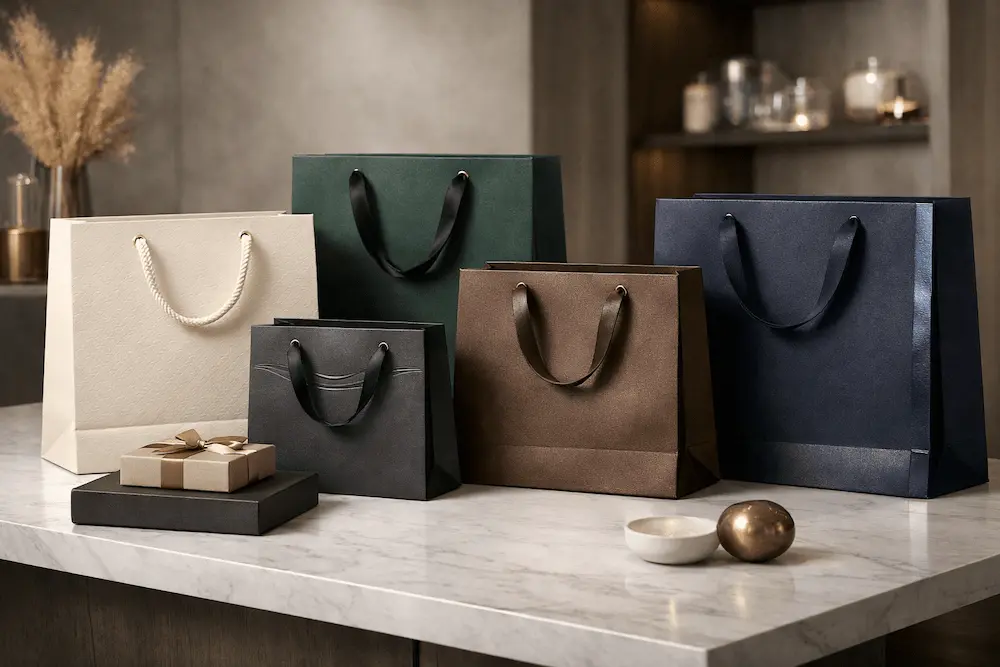
The biggest luxury paper bags trends 2026 are no longer driven by decoration alone. Premium brands still want tactile richness, elegant presentation, and strong visual identity, but they are also under growing pressure to reduce waste, simplify packaging structures, and make sourcing claims more credible. For buyers evaluating luxury paper bags, premium paper bags, and custom luxury paper bags, the real question is no longer whether the bag looks expensive at first glance. The more important question is whether the bag can balance premium feel, structural discipline, stronger brand recognition, and sustainable luxury packaging expectations at the same time. Bain describes this wider shift as a move toward luxury packaging that is becoming smarter, greener, and more purposeful.
That makes luxury paper bags more strategic than before. A premium paper bag is no longer judged only by ribbon, foil, thickness, or visual complexity. It is increasingly judged by how well it balances premium feel, material discipline, recyclability, structural restraint, digital engagement, and brand storytelling. In this context, many brands also look at solutions such as custom printed paper bags for strong brand recognition when evaluating how custom luxury paper bags can still deliver strong visual identity without relying on unnecessary excess. At the same time, the European Commission states that the Packaging and Packaging Waste Regulation, Regulation (EU) 2025/40, entered into force on February 11, 2025 and will generally apply from August 12, 2026, making packaging design discipline even more important for premium brands.
Why Luxury Paper Bags Are Changing
Luxury packaging used to signal status through visible abundance. More layers, heavier materials, and more decorative detail were often treated as proof of prestige. That logic is becoming less convincing. Bain’s 2026 luxury packaging analysis points to a shift where packaging is expected to enhance customer value while also reducing environmental impact, and the EU packaging framework reinforces recyclable design, lower waste, and clearer packaging logic. For luxury paper bags, that means premium value is moving away from obvious excess and toward better decisions in material, structure, and tactile execution.
This does not mean premium packaging is becoming plain. It means the definition of luxury is changing. Instead of obvious excess, many brands now pursue precision, material honesty, tactile detail, controlled embellishment, and coherent sourcing. This is especially visible in gifting, seasonal launches, and premium retail presentation, where some buyers also compare white gift bags for clean and elegant presentation when they want luxury paper bags to feel refined, polished, and visually calm rather than overly decorative. In other words, luxury paper bags trends 2026 are not reducing luxury. They are redefining how luxury is expressed.
Quiet Luxury Is Replacing Obvious Excess
One of the clearest luxury paper bags trends 2026 is the move toward quieter, more controlled design. More brands are shifting from decorative overload to a more disciplined approach to luxury paper bags, where premium value comes from material quality, restrained branding, better finishing, and stronger proportion rather than surface complexity. For buyers of premium paper bags, this means luxury design is becoming more intelligent rather than more excessive. Bain’s framing of luxury packaging as more purposeful strongly supports this direction.
In practical terms, this means cleaner layouts, more disciplined logo placement, subtler foil or embossing, more thoughtful use of color, and less decorative clutter. A luxury paper bag still needs presence, but presence is now more often achieved through confidence rather than noise. This is one reason custom luxury paper bags now depend more on material discipline than on decorative layering.
Tactility Is Becoming a Primary Luxury Signal
As visual excess declines, tactile quality becomes more important. Luxury paper bags are physical brand objects, so the feel of the paper, the sharpness of the fold, the stiffness of the structure, and the comfort of the handle now do more work in expressing value. Mordor Intelligence reports that paper and paperboard held a 43.26% share of the luxury packaging market in 2025 and forecasts continued growth through 2031, which reinforces that fibre-based premium packaging is becoming more central rather than less relevant.
This matters because it changes where luxury comes from. Instead of “more components,” many brands now create premium perception through paper texture, surface control, refined edge quality, and more thoughtful handle integration. Even more natural-looking formats can work in this direction when material quality and bag proportion are handled carefully, which is why some buyers also compare brown paper bags with handles for natural and reliable carry when evaluating how kraft-based luxury shopping bags can still feel elevated without losing practicality. In this sense, tactility is no longer a detail. It is one of the core design tools shaping luxury paper bags trends 2026.
Sustainable Luxury Is Becoming the Baseline
Sustainability is no longer a side message in luxury paper bags. It is becoming a baseline expectation. The European Commission states that the PPWR is designed to reduce packaging waste, and its broader direction emphasizes recyclability, waste prevention, and less unnecessary packaging. The Commission also states that all packaging on the EU market should be recyclable by 2030. For premium paper bags, that means sustainable luxury packaging is moving from a positioning advantage to an operating requirement.
This does not mean luxury is moving toward “plain brown by default.” It means more brands are trying to combine responsible sourcing, tactile quality, elegant branding, and simpler structures in the same bag. Buyers exploring this direction often also compare custom kraft bags for sustainable branding and packaging when they want kraft-based structures to support both sustainability positioning and a refined premium image. This is one of the most commercially important luxury paper bags trends 2026, because it affects design, sourcing, claims, and long-term packaging strategy all at once.
Fibre Sourcing and Certification Are Becoming More Visible
Another major trend is the growing visibility of fibre sourcing. FSC states that every FSC label stands for sustainable sourcing that puts forests and people first, and FSC’s paper and packaging materials present certification as a clear signal for businesses that want to demonstrate responsible fibre choices.
This matters because luxury paper bags now have to satisfy more than design teams. They increasingly need to support ESG narratives, procurement standards, and brand credibility in front of more informed consumers. In practice, this means FSC paper bags, fibre traceability, and material language are becoming more visible within premium retail packaging rather than remaining background technical details. For many buyers, certification is becoming part of the luxury story itself.
Digital Touchpoints Are Entering the Luxury Bag Experience
Bain highlights integrated digital experiences as one of the ways luxury packaging is moving from simply reducing harm to actively enhancing customer value. For luxury paper bags trends 2026, that means the bag is becoming more than a carry item. It can also become a gateway to storytelling, authentication, loyalty, event access, or post-purchase engagement.
That does not mean every luxury paper bag will become visibly technological. The more likely direction is subtle integration. QR-based storytelling, digital craftsmanship narratives, authentication layers, or limited VIP engagement can add value without making the bag feel gimmicky. In the luxury category, the digital layer works best when it feels elegant, quiet, and brand-consistent. This is especially relevant for custom luxury paper bags used by brands that want to extend the customer experience beyond the store.
Brand Recognition Still Matters, but It Is Maturing
Luxury packaging still needs to be recognizable. It still needs to photograph well, work in-store, and reinforce brand memory. What is changing is the method. More brands are moving away from visual overload and toward stronger recognition through restrained structure, better tactile contrast, refined typography, and stronger material coherence.
This is why the newer premium bag often looks simpler but performs better as a brand object. The customer may notice less decoration, yet remember the bag more clearly because the whole experience feels more controlled and distinctive. That is also why luxury paper bags increasingly overlap with broader premium paper bags strategy: recognition now comes less from shouting and more from coherence.
Mono-Material Thinking Is Influencing Premium Design
Mono-material and simplified-structure thinking are becoming more important because recyclability is no longer only an end-of-life issue. It is shaping design decisions much earlier. The European Commission explicitly states that all packaging must be recyclable by 2030 and emphasizes less wasteful packaging and clearer design logic.
For luxury paper bags, this means brands and suppliers are rethinking lamination, decorative add-ons, layered inserts, and mixed-material handle systems. A premium bag may still include embellishment, but each additional element now has to justify itself more clearly. The direction is not anti-luxury. It is anti-unnecessary complexity. This is one of the most structurally important luxury paper bags trends 2026, because it affects how bags are engineered, quoted, and approved.
Lightweighting Must Be Almost Invisible
Another important shift is lightweighting without looking cheap. Premium brands still want bags that feel structured and expensive, but they are becoming more careful about overbuilding the bag just to signal prestige. The wider regulatory and market push toward more disciplined packaging design makes this inevitable, while the luxury packaging market outlook suggests fibre-based premium packaging will continue growing rather than retreating.
The challenge is that lightweighting in luxury packaging has to be almost invisible. If the bag suddenly feels flimsy, the brand loses value perception. That is why paper selection, fold precision, reinforcement placement, and handle engineering are becoming more important than simply increasing material weight. For buyers of custom luxury paper bags, this means supplier capability matters more than ever.
Practical Comparison Table: What Luxury Buyers Will Care About More
| Trend Area | Rising Priority | Declining Priority | Why It Matters |
|---|---|---|---|
| Visual language | Quiet luxury, restraint, clarity | Overdecorated layouts | Premium brands want sophistication without visual noise |
| Material strategy | Fibre-rich, recyclable, traceable structures | Mixed-material excess | Regulation and sourcing scrutiny are increasing |
| Brand expression | Tactile identity, controlled marks | Surface overload | Recognition now depends more on coherence |
| Packaging value | Purposeful customer experience | Decoration alone | Packaging is expected to do more than look expensive |
| Supplier capability | Material intelligence and compliance awareness | Effect-heavy quoting only | Buyers need partners, not just converters |
Regional Relevance Matters More
Luxury brands are also becoming more sensitive to regional differences. As compliance, sourcing conditions, and customer expectations vary across markets, buyers increasingly need suppliers who can protect brand consistency while also understanding regional packaging realities. This is a reasonable inference from the interaction between global premium branding and more region-specific packaging requirements, especially in Europe.
For luxury paper bags, that means one identical premium bag for every market may no longer be the default answer. The stronger approach may be a consistent brand language supported by regionally intelligent material and structural decisions. For export-oriented buyers, this becomes a very practical sourcing issue rather than just a design idea.
How These Trends Change Buying Decisions
For B2B buyers, these luxury paper bags trends 2026 change what should be included in supplier evaluation. It is no longer enough to ask about bag size, paper weight, and foil options. Buyers of luxury paper bags and custom luxury paper bags increasingly need to ask whether the structure is moving closer to recyclable design expectations, whether the fibre sourcing is credible, whether the premium feel comes from strong material decisions rather than excess, and whether the supplier understands how to balance brand image with changing packaging rules. For brands focused on stronger recall, some also compare branded paper bags for strong brand recognition when considering how premium retail packaging can stay memorable while becoming more disciplined.
This is where experienced packaging partners become more valuable. The best suppliers are not only converters. They are translators between premium aesthetics, sourcing credibility, material performance, and compliance direction.
Conclusion
The biggest luxury paper bags trends 2026 are clear. Luxury paper bags are moving toward quieter design, stronger tactile value, fibre-based credibility, simplified structures, and more intelligent brand interaction. The future of premium paper bags is not less luxury. It is a more disciplined and more traceable form of luxury.
For buyers planning custom luxury paper bags, the strongest strategy is to combine premium feel, responsible sourcing, recyclable logic, sensory detail, and brand coherence. That is what will define successful sustainable luxury packaging in 2026 and beyond.
How Luxury Paper Bag Trends Are Changing Premium Packaging Decisions
What the shift really means: Luxury paper bags are no longer judged only by decoration or weight. They are increasingly judged by how intelligently they combine tactile quality, recyclable design, sourcing credibility, and brand storytelling.
Why this matters now: Premium brands still need exclusivity, but they also face stronger expectations around waste reduction, material simplicity, and packaging accountability. That makes luxury packaging more strategic and less forgiving of unnecessary excess.
How buyers should respond: Buyers should evaluate luxury paper bags through material choice, finishing restraint, handle engineering, sourcing logic, and whether the full structure still supports recyclability and premium perception at the same time.
What options make the most sense: Textured papers, disciplined foil or embossing, responsibly sourced fibre, and quieter layouts are becoming more relevant than overbuilt structures. Digital layers such as QR or similar touchpoints are likely to grow where they enhance brand value without making the bag feel gimmicky.
What to watch beyond 2026: The most durable premium bag strategies will likely be those that can satisfy design, regulation, and sourcing expectations together. In practical terms, that means mono-material thinking, supplier transparency, and premium finishes that still feel recoverable and responsible.
The larger takeaway: The future of luxury paper bags is not less luxury. It is a more intelligent form of luxury, where beauty, function, traceability, and circular design increasingly need to work as one system.
FAQ
1. What are the top luxury paper bag trends in 2026?
The leading trends are quieter design, stronger tactile materials, more recyclable structures, clearer sourcing claims, and more digital interaction through packaging. Luxury paper bags are becoming more refined and more materially disciplined at the same time.
2. Are luxury paper bags becoming more sustainable?
Yes. The direction of both market and regulatory change points toward more recyclable, less wasteful, and more fibre-based luxury packaging. That does not mean luxury bags are becoming plain. It means sustainability is increasingly built into premium packaging decisions.
3. Why is fibre sourcing becoming more important for premium paper bags?
Because brands increasingly need credible sourcing claims, not just attractive design. FSC labels help businesses show that their luxury paper bags are aligned with responsible fibre choices.
4. Will digital elements become common in luxury paper bags?
More common, yes, especially where brands want packaging to support storytelling, authentication, or post-purchase engagement. The more likely direction is subtle integration rather than obvious technology.
5. What will matter most when sourcing luxury paper bags after 2026?
The most important factors will be premium tactile quality, recyclable structure, clear sourcing logic, consistent craftsmanship, and a supplier’s ability to balance brand image with changing packaging rules.
References
- Luxury Packaging: Resolving the Tension Between Creativity and Impact — Bain & Company — 2026 Paper & Packaging Report
- Packaging waste — European Commission — Directorate-General for Environment
- Packaging and Packaging Waste Regulation — European Commission — Directorate-General for Environment
- Paper & Packaging — Forest Stewardship Council
- Luxury Packaging Market Analysis — Mordor Intelligence
- Paper & Packaging Report 2026 — Bain & Company
- The EU Packaging and Packaging Waste Regulation — cross-check legal insight on direct applicability from 12 August 2026
- What the FSC labels mean — Forest Stewardship Council
Rights Reserved Notice:All rights to this article, including its wording, structure, and commercial packaging insights, are reserved by Xiamen Youngpack Imp.and Exp.Co.,Ltd